
Duel Casino
Duel Casino Review (Lab): Provably Fair Originals, Sportsbook, and Crypto-First Cashouts
Duel is one of those platforms that feels like it was built by people who actually play fast games. The UX is snappy, the “Originals” section is a real product (not just reskinned templates), and the whole thing is unapologetically crypto-native.
But here’s the ProvablySmart framing: fairness is verifiable, profit isn’t. You can verify provably fair rounds and you can model house edge and promo EV, but variance still decides what your week feels like. So we’re treating this page like a Lab case study: what you can verify, what you can measure, and where you can still get hurt if you overexpose.
Quick internal links: How to Verify, RTP vs House Edge, Variance Explained, Session Rules Template.
Interactive Capital Audit: What You Save on Duel (0% House Edge)
Most crypto casinos (including Stake and Roobet) deduct a 1.00% to 5.00% house edge on every single bet, returning only a fraction in “VIP rakeback.” Use our interactive auditor to calculate your real net loss to house edge vs switching to Duel 100% RTP Originals:
The Wager Leak & VIP Rakeback Auditor
Want a deep dive into the mathematics of zero-margin gambling? Read our pillar audit: Zero House Edge Casinos (100% RTP Audit).
30-Second Verdict
If you like crypto-first speed, provably fair tooling, and in-house instant games with published RTP claims, Duel is a strong “test with disciplined limits” kind of venue. The main risk is the same as always: fast games + high volatility + mood-based bet sizing.
ProvablySmart Lab Scores (practical, not hype):
Verification Depth: High (good provably fair culture, but you still need to actually verify)
Terms Clarity: Medium (promos and limits need calm reading, not “click yes” energy)
Cashout Friction: Low-to-Medium (crypto-native helps, but compliance thresholds can still exist)
Before you do anything impulsive, set your exposure: Bankroll Unit Calculator + Session Rules Template.
ProvablySmart Lab Exclusive: Full Source Code Audit of Duel.com Originals
We got the keys to the vault. Duel’s creator gave us full clearance to pull apart every line of code responsible for randomness in their in-house games. We extracted, decompiled, and audited every cryptographic module powering all 12 Originals titles — directly from their production frontend JavaScript bundles.
This is not a “we read their FAQ” review. This is a line-by-line code audit. Here is exactly what we found.
Source files analyzed:
blackjackFairness-qTk8WM6N.js— Blackjack card generation + shared HMAC-SHA256 primitivesvideoPokerFairness-Drkyg7jr.js— Dice, Mines, Keno, Plinko, Cross Road, Video Poker algorithmsverify-DuBSsjaY.js— Coinflip, Crash, Roulette, Rock Paper Scissors, PF Slots verificationFairnessNextSeed.vue— Seed lifecycle, rotation logic, guest mode implementation
All algorithms are fully readable, commented by the developers themselves, and executed client-side using the browser’s native Web Crypto API. No obfuscation of fairness logic.
Three Fairness Models, Not One
Most crypto casinos slap a single HMAC-SHA256 function on everything and call it provably fair. Duel.com runs three distinct cryptographic models, each chosen for the specific trust requirements of the game type. This is the first thing that stood out during our code review.
Model A — Seed Triple (Solo Games)
Used by: Dice, Mines, Keno, Plinko, Blackjack, Video Poker, Cross Road, PF Slots.
The classic provably fair flow. Before you play, you see a SHA-256 hash of the server seed. You set your own client seed. Every bet increments a nonce. After you rotate your seed pair, the raw server seed is revealed, and you can replay the entire sequence of outcomes locally.
The core primitive driving every solo game is a single HMAC call:
hash = HMAC-SHA256(serverSeed, clientSeed:nonce:cursor)The cursor parameter is the key differentiator from simpler implementations. Instead of generating one hash per bet, Duel.com generates multiple hashes per bet by incrementing the cursor — one hash per card in Blackjack, one per Plinko bounce, one per Fisher-Yates swap in Mines. This means a single seed pair produces a deterministic, verifiable stream of entropy for games that need multiple random values per round.
Model B — drand Beacon (Instant/Multiplayer Games)
Used by: Coinflip, Crash, Castle Roulette.
In multiplayer games, there is no time for each player to exchange a personal client seed before the round starts. Instead, Duel.com pulls randomness from drand — a public, decentralized randomness beacon operated by the League of Entropy (a consortium including Cloudflare, Protocol Labs, and universities).
The formula becomes:
randomness = hexToUtf8(drandSeed)
hash = HMAC-SHA256(serverSeed, randomness:0)
The drandSeed is a publicly verifiable, tamper-proof random value published at fixed intervals. Neither the casino nor the player can predict or manipulate it. This is a meaningfully stronger trust model than standard provably fair for multiplayer contexts.
Why drand matters
In a standard provably fair system, the server seed is generated by the casino itself. You can verify the outcome after the fact, but you’re still trusting the casino to generate the seed honestly. drand removes that trust requirement entirely: the randomness comes from an external, decentralized, cryptographically verifiable source that neither party controls.
Model C — Commit-Reveal (PvP Games)
Used by: Rock Paper Scissors.
When two humans play against each other, neither a server seed nor a beacon is appropriate. Instead, Duel.com uses a classic commit-reveal scheme:
1) Commit phase
Each player locally computes SHA-256(choice|clientKey) and submits only the hash to the server.
2) Reveal phase
Both players reveal their choice and clientKey. The hash is recomputed and compared against the committed hash.
3) Verification
Since there are only 3 possible choices (rock, paper, scissors), anyone can brute-force all options against the clientKey to confirm the committed choice matches. Finding a second preimage for SHA-256 is computationally infeasible — neither player can change their choice after seeing the opponent’s commit.
Cryptographic Safeguards — What We Found in the Code
Beyond the high-level architecture, we examined the low-level implementation for the subtle details that separate a secure system from a broken one. These are the things that matter at the code level.
Rejection Sampling (Eliminating Modulo Bias)
This is the single most important detail in any provably fair implementation, and the one most commonly done wrong. When you need a random number in a range that does not evenly divide 232, a simple modulo operation (value % range) introduces a statistical bias toward lower numbers.
Duel.com handles this correctly in every single game. Here is the pattern, extracted directly from their Dice module:
const MAX_UINT32 = 0xFFFFFFFF; // 4,294,967,295
const RANGE = 10001;          // 0-10000 inclusive
const MAX_FAIR = MAX_UINT32 - (MAX_UINT32 % RANGE);

while (offset + 8 <= hash.length) {
  const value = parseInt(hash.slice(offset, offset + 8), 16);
  if (value < MAX_FAIR) {
    return ((value % RANGE) / 100).toString();
  }
  offset += 8; // Try next 4 bytes
}
The key line is MAX_FAIR = MAX_UINT32 - (MAX_UINT32 % RANGE). Any random value at or above this threshold is discarded, and the next 4 bytes of the hash are tried instead. This completely eliminates modulo bias.
Why this matters
Without rejection sampling, a Dice game with range 10001 would have a bias of approximately 0.00003% toward certain values. Tiny for a single bet — but over millions of bets it becomes statistically detectable and theoretically exploitable. Duel.com’s implementation has zero bias. The probability of exhausting all 32 bytes of a SHA-256 hash without finding a fair value is approximately 1.24 × 10-46 — effectively impossible.
Fisher-Yates Shuffle
For games that need to randomize a set of positions (Mines, Keno, Video Poker, Cross Road), Duel.com implements the Fisher-Yates shuffle — the only mathematically correct way to produce an unbiased permutation from a stream of random numbers.
Here is the core logic from their Mines module:
// Fisher-Yates shuffle (backward)
for (let i = gridSize - 1; i > 0; i--) {
  const range = i + 1;
  const maxFair = MAX_UINT32 - (MAX_UINT32 % range);

  const hash = await generateHMAC_SHA256(
    serverSeed,
    encode(`${clientSeed}:${nonce}:${cursor}`)
  );

  for (let off = 0; off + 8 <= hash.length; off += 8) {
    const value = parseInt(hash.slice(off, off + 8), 16);
    if (value < maxFair) {
      const j = value % range;
      [positions[i], positions[j]] = [positions[j], positions[i]];
      break;
    }
  }
}
Each swap uses its own HMAC hash (via incrementing cursor), and each swap applies rejection sampling independently. The first N positions of the shuffled array become the mine locations, drawn keno numbers, or dealt cards. This is textbook correct.
PCG32 PRNG for Slots
Slots are the most complex game to verify because they require a large number of random values per spin (one per reel position, plus multiplier assignments for special symbols). Instead of generating dozens of HMAC hashes, Duel.com uses a PCG32 (Permuted Congruential Generator) — a fast, high-quality, seedable pseudorandom number generator.
The flow is:
1) Outcome Index
HMAC-SHA256(serverSeed, clientSeedHex:nonce) → first 4 bytes → uint32. This is the master entropy for the round.
2) Tumble Seed
The outcome index is mixed with the round index and tumble index using integer hashing (XOR + multiply + shift). This creates a unique seed for each cascade/tumble within a spin.
3) PCG32 Initialization
The PCG32 generator is seeded with the tumble seed. Because PCG32 is deterministic, the same seed always produces the same sequence.
4) Grid Generation
PCG32 output is used with weighted rejection sampling to fill each reel position according to the symbol weight tables. Multiplier symbols get additional PCG32 rolls to determine their multiplier values.
The entire grid is reproducible from the initial HMAC output. This is fully verifiable.
Web Crypto API — No Custom Crypto
A critical detail we verified: Duel.com does not implement their own SHA-256 or HMAC. All cryptographic operations use the browser’s native crypto.subtle API:
const cryptoKey = await crypto.subtle.importKey(
  'raw', keyBytes,
  { name: 'HMAC', hash: 'SHA-256' },
  false, ['sign']
);
const signature = await crypto.subtle.sign('HMAC', cryptoKey, message);
This is the correct approach. The Web Crypto API is implemented in native C/C++ code inside the browser engine, has been extensively audited, and is resistant to timing attacks. Rolling your own crypto is one of the most common sources of vulnerabilities in provably fair systems — Duel.com avoids this entirely.
Game-by-Game Fairness Breakdown (from source code)
Below is what we found in the code for each Original game. Not what their marketing says — what the code actually does.
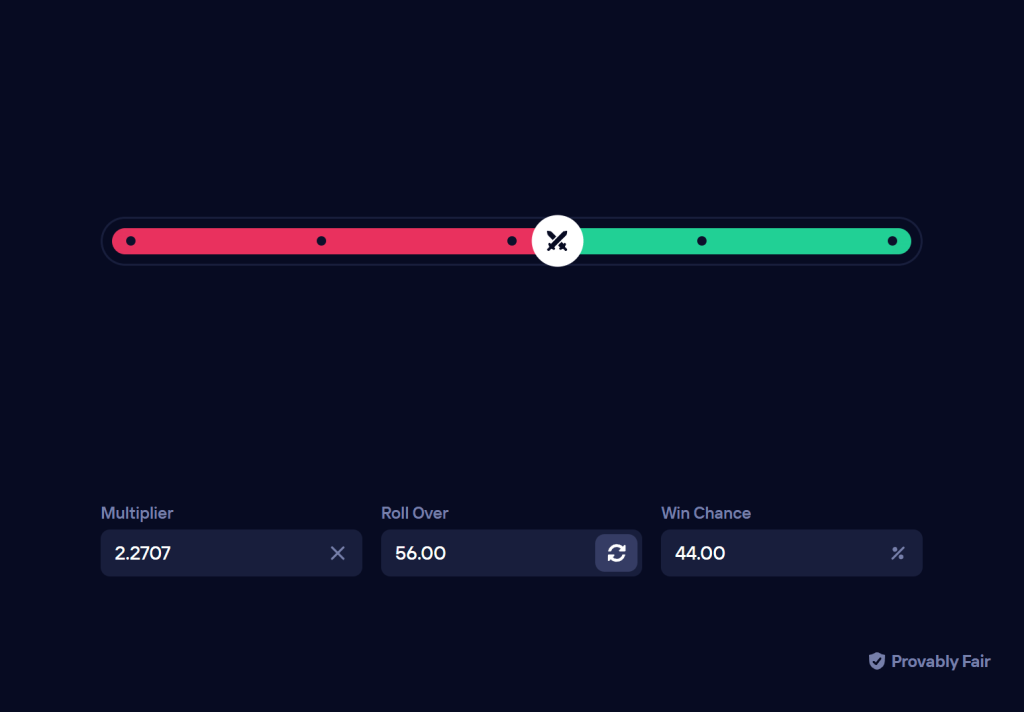
Dice — Range 10001, Rejection Sampling
Generates a result from 0.00 to 100.00 using 10,001 discrete values. The HMAC hash is scanned in 4-byte chunks until a value below MAX_FAIR is found. Result: (value % 10001) / 100. Zero modulo bias.
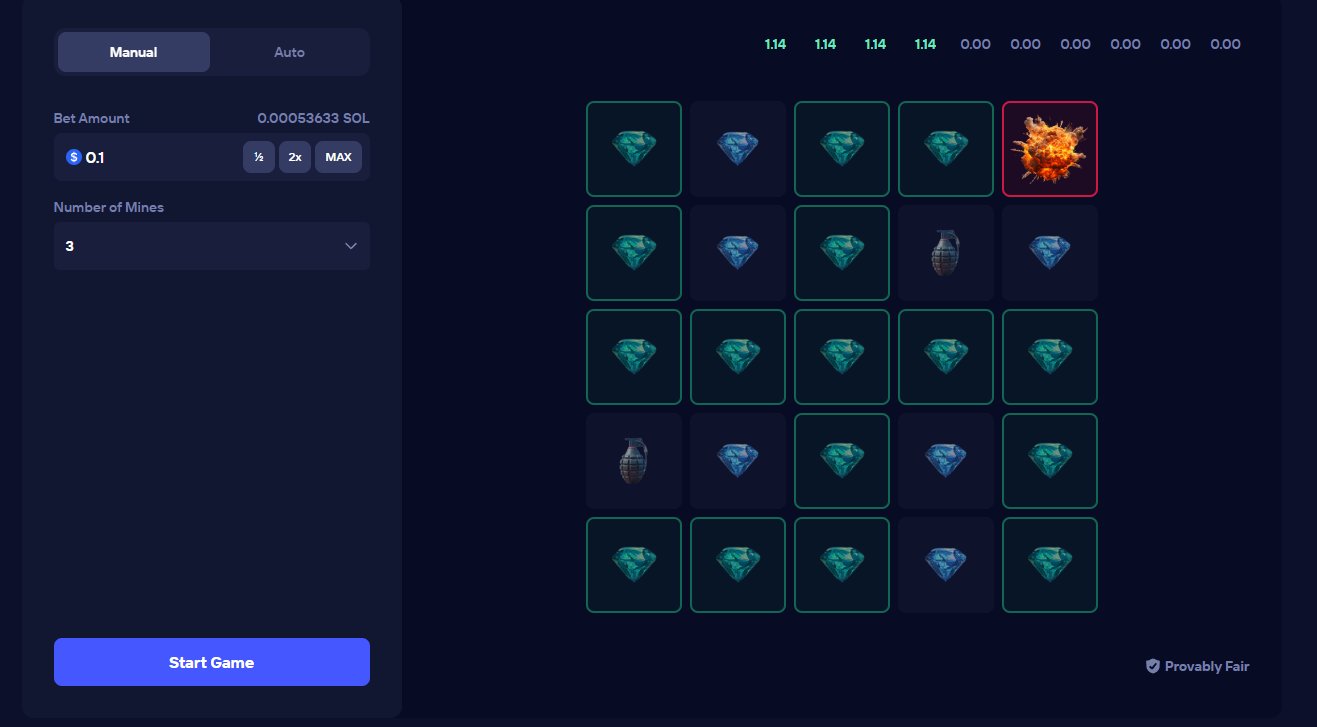
Mines — Fisher-Yates on 5×5 Grid
A 25-element array is shuffled using Fisher-Yates. The first N elements become mine positions (N = your chosen mine count, 1–24). Each shuffle step uses its own HMAC hash with incrementing cursor. Unbiased permutation.
Blackjack — Rejection Sampling per Card
Each card is generated independently: HMAC(serverSeed, clientSeed:nonce:cursor) → rejection sampling over range 52. Up to 50 cards pre-generated per round via cursor incrementation. The entire shoe is deterministic from the seed triple.
Crash — Visible 0.1% House Edge
The house edge is explicitly hardcoded in the source:
const houseEdge = 0.001;
result = (2^32 / (value + 1)) * (1 - houseEdge);
return Math.max(1.0, result);
A 0.1% house edge is extraordinarily low. Roulette carries 2.7–5.26%. Most crypto Crash games sit at 1–3%. This is verifiable against any revealed seed pair.
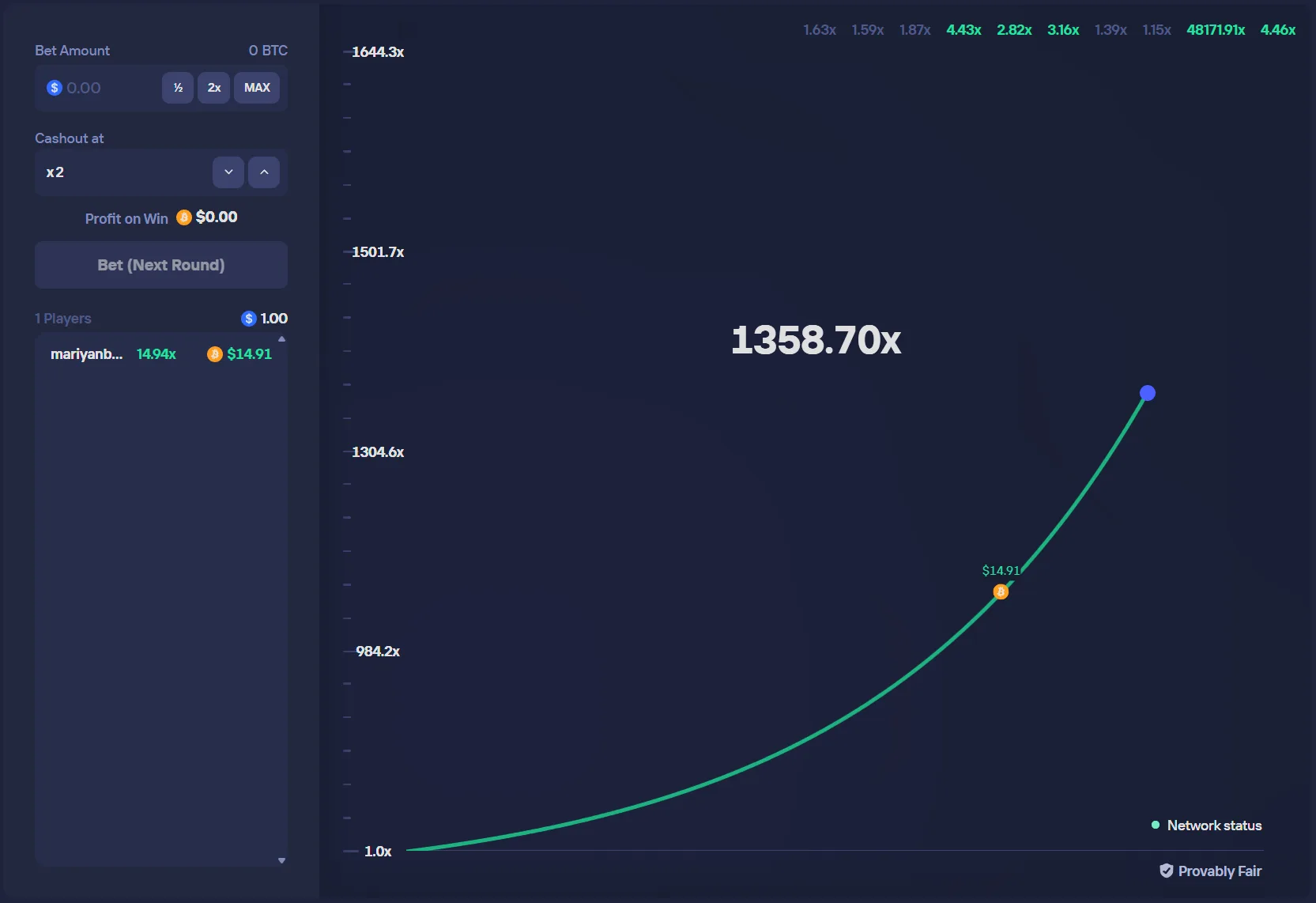
Interactive Crash Predictor Simulator & Provably Fair Auditor
Telegram and TikTok are flooded with fake “crash predictor bots.” Test these signals in real-time against genuine cryptographic hashes and Duel’s decentralized drand entropy:
Crash Predictor Simulator & Provably Fair Auditor
Learn why no bot can reverse a cryptographic hash in our guide: Why Aviator & Stake Crash Predictor Bots Fail.
Coinflip — drand + Modulo 2
The simplest game: value % 2 + 1 where value comes from HMAC-SHA256(serverSeed, drandRandomness:0). Since 232 is perfectly divisible by 2, there is zero modulo bias — no rejection sampling even needed.
Castle Roulette — drand + Range 48
Similar to Coinflip but with range 48 (positions 0–47). Uses drand beacon. Note: 232 mod 48 = 16, so there is a tiny theoretical bias of ~0.0000004% — negligible, but could be eliminated with rejection sampling.
Video Poker — Full 52-Card Deck Shuffle
The entire 52-card deck is shuffled using Fisher-Yates with per-swap HMAC hashes. Initial 5 cards = deck[0:5]. Replacement cards = deck[5:10]. The full shuffle is deterministic — same seed triple always produces same deck order.
Keno — 10 from 40 via Fisher-Yates
Identical to the Mines algorithm but on a 40-element array. After shuffling, the first 10 positions are taken as drawn numbers, converted to 1-indexed, and kept in shuffled order (not sorted).
Plinko — One Hash per Bounce
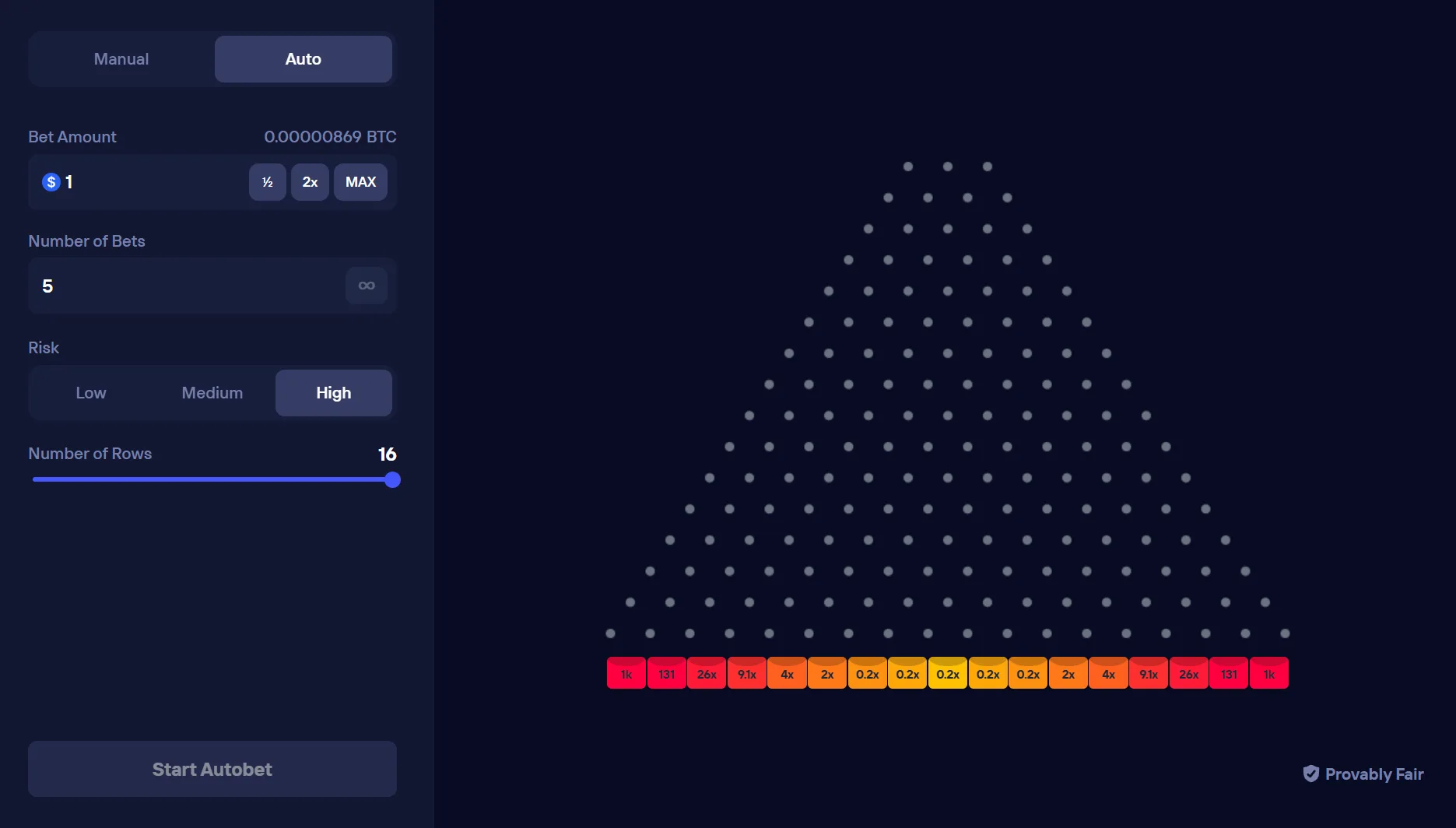
Each row generates a fresh HMAC hash. First 4 bytes determine left (0) or right (1) via value % 2. Final bucket = sum of all right-bounces. Since 232 is even, zero modulo bias on every bounce.
Cross Road — Fisher-Yates Death Points
Identical algorithm to Mines. An array of grid positions is Fisher-Yates shuffled, and the first N positions become “death points.” Difficulty setting controls N. Same unbiased permutation guarantee.
PF Slots — PCG32 + Weighted Rejection Sampling
HMAC → outcome index → tumble seed → PCG32 PRNG → weighted grid fill with rejection sampling per cell. Multiplier symbols get additional PCG32 rolls. Most complex algorithm, but fully deterministic and verifiable.
Rock Paper Scissors — Commit-Reveal SHA-256
Each player commits SHA-256(choice|clientKey) before reveal. Only 3 possible choices means anyone can brute-force verify the committed choice against the hash. No server involvement in outcome determination.
Guest Mode: Seeds Generated in Your Browser
An interesting implementation detail from the FairnessNextSeed component: when you play without an account, Duel.com generates seeds entirely in your browser.
Use our interactive WebCrypto generator below to produce a hardware-backed 256-bit client seed before your next session:
High-Entropy Client Seed Generator & Auditor
WebCrypto CSPRNGwindow.crypto). When combined with the server's committed hash, the casino is mathematically unable to predict or manipulate any future outcome.HMAC_SHA256(ServerSeed, ClientSeed : Nonce). The casino reveals the SHA256(ServerSeed) hash BEFORE you roll. If you keep using a generic default client seed (e.g. "seed_1", "stake"), the operator could theoretically pick a server seed whose hash matches, but whose roll distribution is heavily unfavorable. Injecting a fresh, high-entropy client seed breaks any possibility of pre-generation.- Server Seed: 64-character random hex string, generated locally, stored in
localStorage - Client Seed: 16-character random alphanumeric string
- Nonce: Integer counter starting at 0, increments per bet
- Hashing: Uses
jsSHAlibrary (SHA-256, TEXT input, HEX output)
Seed rotation works identically to logged-in mode: the old server seed is revealed (moved to previousServerSeed), a new one is generated, and the nonce resets to 0. This means even guest accounts can verify every bet, as long as browser storage hasn’t been cleared.
Source Code Audit Verdict
Overall Assessment: Positive. After a line-by-line review of every fairness module in the Duel.com frontend, we found a well-engineered, cryptographically sound provably fair system. The code is clean, commented by the developers, and uses industry-standard primitives correctly.
Green flags (from the code)
- Full code transparency: Every algorithm runs client-side with readable, commented source — no obfuscation of fairness logic
- Web Crypto API: Native browser cryptography instead of custom implementations — eliminates an entire class of vulnerabilities
- Rejection sampling everywhere: Zero modulo bias in every game requiring a non-power-of-two range — this is the gold standard
- Fisher-Yates shuffle: The only mathematically correct unbiased shuffle, used consistently across Mines, Keno, Video Poker, and Cross Road
- drand beacon for multiplayer: Removes trust in casino’s server seed for Coinflip, Crash, and Roulette — publicly verifiable, tamper-proof randomness
- Crash house edge hardcoded at 0.1%: Visible in source code as
const houseEdge = 0.001— no hidden margins - Per-cursor HMAC hashes: Games needing multiple random values per round use unique hashes via cursor — prevents correlation between values
Areas for improvement (honest notes)
- No hash chain: Unlike some competitors (e.g., Stake), Duel.com does not chain server seeds — each seed pair is independent. A hash chain would let players verify the casino committed to a seed sequence in advance
- Castle Roulette skips rejection sampling: Uses
value % 48directly. The bias is negligible (~0.0000004%), but breaks the otherwise perfect pattern across all other games - Slot symbol weights are server-provided: The
symbolWeightsarrays come from the API — players trust the configuration, not just the RNG. Verifying weights requires large-sample statistical analysis
The bottom line: Duel.com’s provably fair implementation is among the strongest we’ve audited. The code quality, cryptographic rigor, and multi-model architecture exceed what we typically find in the crypto casino space. The areas for improvement are minor and don’t compromise the integrity of the system.
If you want to run verification yourself: How to Verify and our Universal Verifier.
What sports can you bet on at Duel?
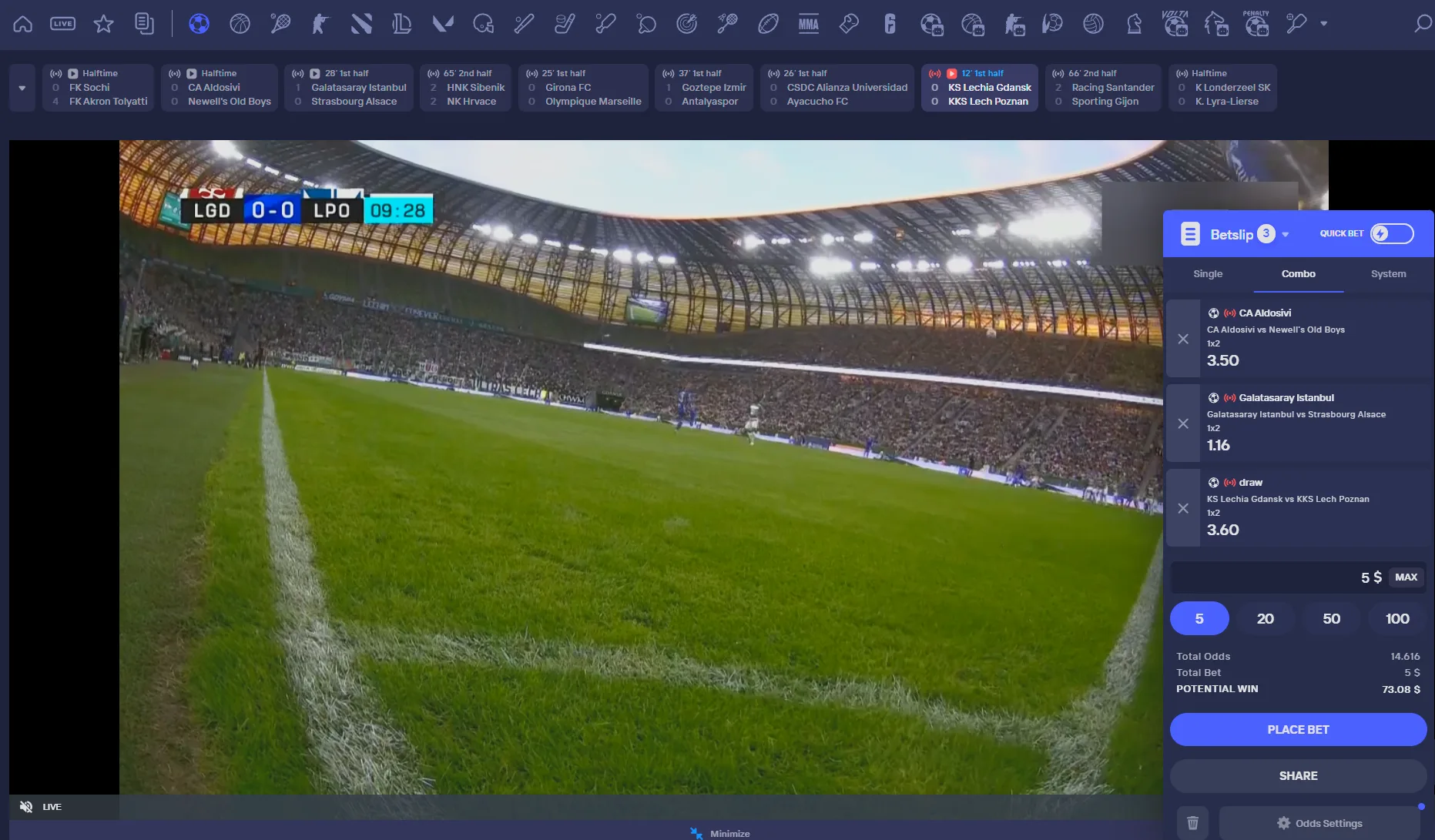
Duel’s sportsbook coverage is broad enough that most people won’t hit the edge of it. Mainstream markets like football and basketball are there, and so are the niche corners that only show up when you’re scrolling at 1:30 a.m. and pretending it’s “research.”
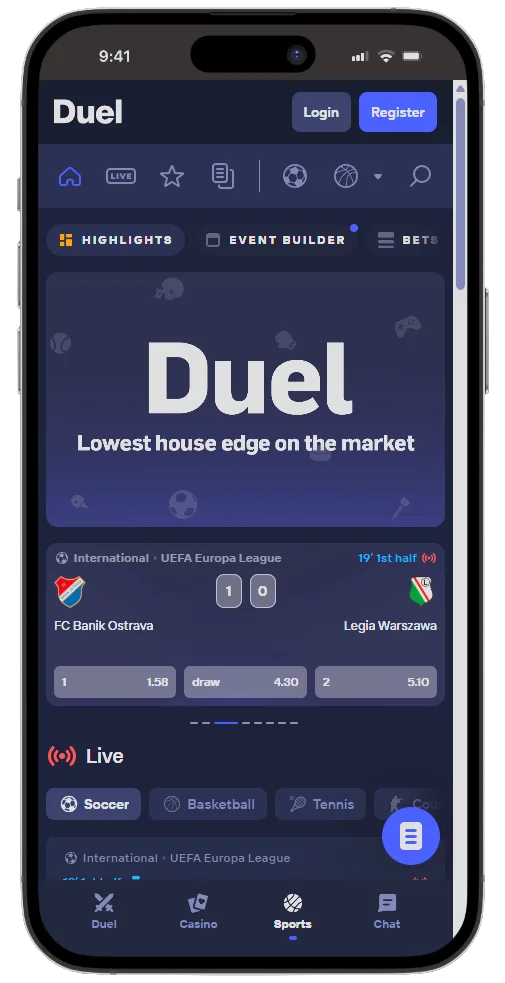
The important part from a UX standpoint is that markets are organized cleanly, odds updates don’t feel sluggish, and the flow from browsing to placing a bet is quick. If you want a dedicated breakdown (sports + esports + market types), use this page: Sports & Esports Betting at Duel.
Practical note
More markets doesn’t mean more edge. It usually means more temptation to overbet. If you don’t have a model, treat betting as entertainment spending and keep units small.
Live betting at Duel
Live betting is where “I’m just watching” turns into “why is my balance moving” in real time. Duel’s in-play interface is fast and readable, which is good UX but also a psychological accelerant: you can place decisions at the speed of emotion.
Odds refresh quickly and the interface generally keeps up with what you’re watching. That reduces the classic pain of “odds changed” loops, but it also makes it easier to fire off bets without a pause. If you’re going to use live betting, timebox it and decide your max exposure before kickoff.
More detail here: Live betting & market navigation at Duel.
Slots, table games, and the normal casino layer
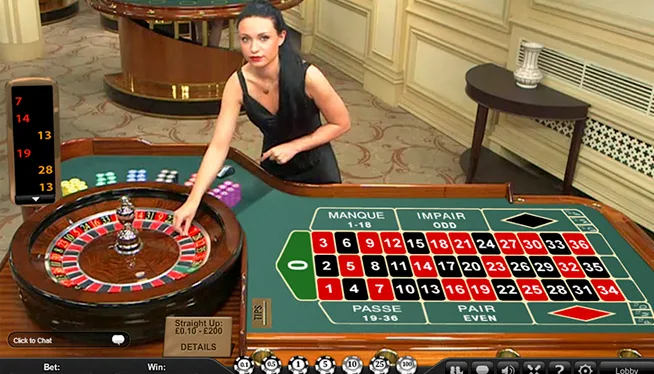
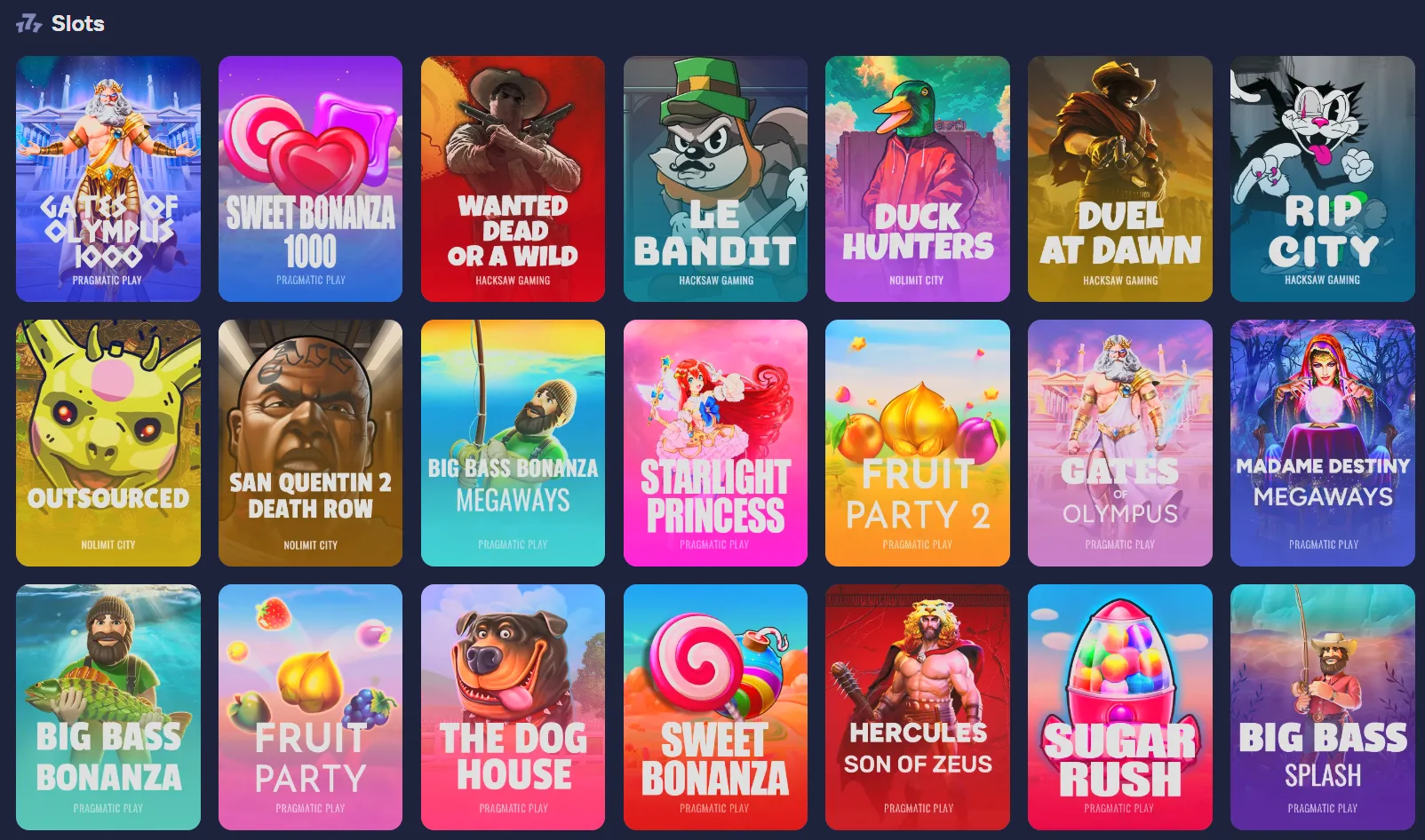
Even if Duel’s identity is “crypto + Originals,” it still covers the standard casino floor: slots, roulette, blackjack variants, baccarat, and usually a mix of live dealer options. Providers can rotate, but the pattern is familiar: popular studio catalogues plus newer releases designed to spike volatility and attention.
Two practical reminders that save money: RTP is a long-run model, and volatility decides how brutal the short run feels. If you want the clean mental model, read RTP vs House Edge and Variance & Volatility before you “judge a game” based on one session.
Crypto banking: deposits, cashouts, and what “fast” really means
Duel is crypto-first. That typically means deposits are quick, and cashouts (when approved) move through the crypto rails rather than card/bank processing. It’s a smoother system than traditional “3–5 business days” casinos, but it’s not magic: networks confirm in blocks, and platforms can still apply compliance checks at certain thresholds.
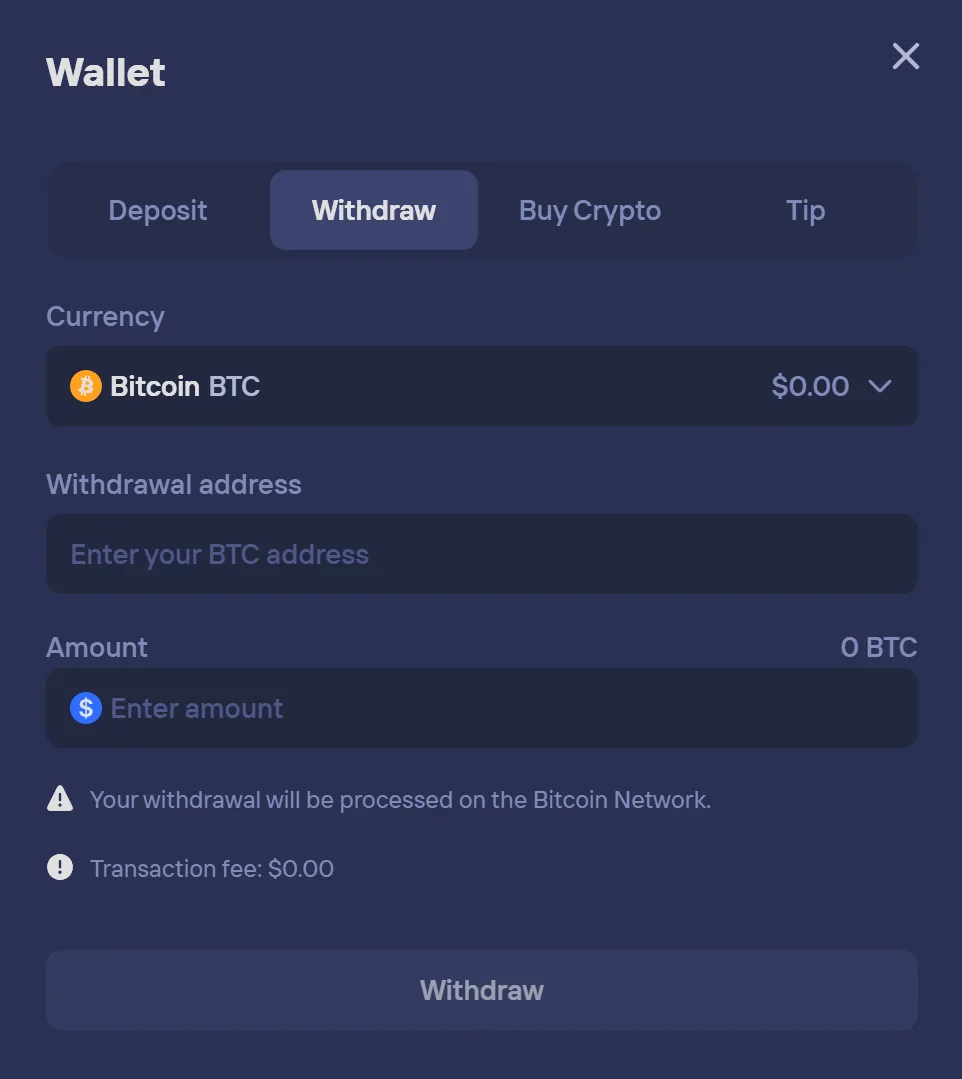
Duel also promotes an on-ramp flow (buying crypto via an integrated provider) so users can fund accounts without already holding coins. Treat that as convenience, not a reason to rush. Convenience is great. Rushed decisions are expensive.
For a concrete breakdown of supported coins, fees/limits, and cashout mechanics, use: Duel Payment Methods.
Cashout sanity rule
If you’re planning to play serious volume, verify the cashout rules and any verification thresholds before you win. “Surprise friction” is where most frustration lives.
Withdrawals: the “is it really that quick?” reality check
In crypto-native venues, withdrawals can feel instant because you’re not waiting on banks. The realistic framing is: approval time + network confirmation time. When there’s no extra review needed, approvals can be fast. When thresholds are triggered (large amounts, pattern flags, compliance checks), speed can change.
The best way to test any platform is boring but effective: do a small deposit, do a small withdrawal, confirm the whole flow, then decide if you trust it with higher stakes. It’s the same “verify first, bet second” mindset, applied to money movement.
Details and practical notes here: Crypto deposits & cashouts at Duel.
How to start playing on Duel
If you’ve used any crypto casino before, the onboarding will feel familiar. The important part is not the clicks, it’s the rules you set before the dopamine starts negotiating.
1) Create an account
Pick a username, set your security basics, and treat it like a finance app: unique password, sane device hygiene.
2) Choose a session bankroll and unit size
Do this before you deposit. Use Bankroll Unit Calculator, then lock your stop-loss/stop-win with Session Rules Template.
3) Deposit crypto (or use an on-ramp if offered)
Crypto deposits are typically fast. If you use an on-ramp, double-check fees and limits so you’re not surprised later.
4) Verify at least one provably fair round early
Make verification a habit, not a panic move after a loss. Use How to Verify and the Provably Fair Checklist.
5) Play one risk profile per session
Don’t “upgrade risk” mid-session. That’s how variance turns into tilt. If you want a deeper reset on this pattern: Tilt Triggers and Chasing Losses.
Duel Originals: what matters (RTP claims, volatility, and speed)
Duel Originals are the platform’s identity: instant formats like Crash, Plinko, Mines, Dice, and a fast Blackjack implementation. Duel tends to publish RTP claims for Originals, often near the “high RTP” end of the spectrum. That’s a positive transparency signal, but remember the rule: RTP is long-run; volatility is short-run reality.
Duel Originals breakdown (as published/claimed)
Crash: high RTP claim, typically high volatility. You’re trading frequent small outcomes for rare large ones. Our code audit confirmed a 0.1% house edge — which translates to 99.9% RTP.
Plinko: high RTP claim, volatility depends heavily on risk settings and board mapping.
Mines: high RTP claim, volatility climbs with bomb count and how deep you push before cashing out.
Dice: high RTP claim, volatility is adjustable via probability slider and target payout.
Blackjack: RTP depends on rules + your decisions; speed increases exposure quickly.
If you want the clean theory behind “high RTP, still losing short-term,” read: RTP vs Volatility.
Original games worth understanding (and how to approach them safely)
Below are practical rewrites of the key Originals. The goal isn’t to “discover a system.” It’s to understand which dial you’re turning: edge, volatility, or speed. Most of the time, the hidden killer is speed.
Blackjack (fast format): decisions matter, speed matters more
Duel’s Blackjack is built for quick rounds. That makes it smooth, but it also means you can place a lot of hands in a short time, which increases exposure. In blackjack, your decisions affect the edge, so this is one of the few casino formats where “playing correctly” actually changes the slope.
If you’re going to play it, use a basic strategy reference and keep your unit size steady. Don’t treat speed as “efficiency.” Treat it as an exposure multiplier.
- Use consistent unit sizing (no mood-based doubling)
- Timebox hands per session (speed is the trap)
- Skip side bets unless you explicitly budget them as entertainment
If you want the fundamentals in plain English: Blackjack Basic Strategy.
Dice: the cleanest “math mirror”
Dice is brutally honest because it strips away most of the spectacle. You choose a win probability and accept the corresponding payout. That’s it. The psychological trap is that “control” can turn into “confidence,” and confidence can turn into overbetting.
Auto-betting features exist on many platforms. They can be fine for structured flat staking, but they are also a fast lane into runaway exposure. If you use any automation, cap the number of bets and cap total loss for the session. Treat it like a timer, not a robot edge.
Our guide is designed to reduce tilt, not sell fantasies: Dice Strategy.
Mines: confidence is the enemy
Mines is a behavioral trap dressed as a puzzle. Clicking feels like skill. The actual edge doesn’t care about your vibe. What you can control is how deep you push each run before cashing out. That choice directly changes your variance profile.
A safer approach is to pick a risk profile at the start of the session and not “push deeper” when you’re down. That escalation is how mines turns into chasing with extra steps.
Read this before you call it “easy”: Mines Strategy.
Plinko: volatility disguised as a cute board
Plinko feels harmless because it looks playful. Mathematically, it’s a payout distribution with a volatility dial. Risk settings can turn it from “steady-ish” to “rare huge hits, long cold streaks.” If you’re playing high risk, your bankroll needs to be sized for long losing stretches without panic decisions.
If you want a practical “lose less” plan: fixed unit size, fixed risk setting, strict timebox. Don’t chase the board.
Guide: Plinko Strategy.
Crash: the cleanest example of “variance is the whole game”
Crash is simple: a multiplier rises until it ends. Your choice is when to cash out. Most players don’t lose because Crash is “rigged.” They lose because they scale risk emotionally after a near miss, or they chase a high multiplier because it feels like it’s “due.”
Our source code audit confirmed that Duel’s Crash uses drand-beacon randomness with a hardcoded 0.1% house edge — one of the lowest in the industry. The fairness is strong. But provable fairness confirms randomness; it doesn’t remove the psychological gravity of watching multipliers climb.
How to approach it safely: pick an auto-cashout target that matches your risk tolerance, keep units small, and stop when your rules say stop. Read: Crash Strategy and How to Verify.
Bonuses & promotions: math vs marketing
Promos can improve EV, but only when the terms are favorable after wagering requirements, contribution rules, caps, and time limits. Don’t evaluate bonuses by headline size. Evaluate them like contracts.

If you’re specifically looking at Duel’s promos, start here: Duel Casino Bonuses & Promotions.
Then apply the universal filters: Wagering Requirements Explained, Max Cashout Traps, and Bonus EV Template.
Why Duel stands out (without the hype)

Most casinos try to win with volume: more games, more banners, more “limited time” popups. Duel’s advantage is different. It feels engineered around fast play, transparent mechanics, and a product core that isn’t purely third-party content.
The strongest signals we care about at ProvablySmart are: provably fair culture (verification tooling that’s usable), published RTP claims for Originals (transparency), and banking flow that doesn’t feel like a maze. Duel checks those boxes better than the average crypto casino, but you still need to manage the real risk: speed + volatility + your own decision quality.
Comparisons that actually matter
Don’t compare platforms by vibes. Compare them by: verification UX, terms clarity, and cashout friction under real behavior. Those are the areas where players usually get hurt.
Red flags and green flags
No platform is “perfect.” Here’s the clean list of what looks pro-player vs what deserves caution.
Green flags
- Provably fair culture backed by auditable source code (we verified it line by line)
- Three distinct fairness models (seed-triple, drand beacon, commit-reveal) matched to game type
- Rejection sampling and Fisher-Yates shuffle in every applicable game — zero modulo bias
- Crash house edge hardcoded at 0.1% — visible in source, extraordinarily low
- Web Crypto API — no custom cryptography, no room for subtle implementation bugs
- Originals with published RTP claims (transparency signal, not a promise)
- Crypto-native deposits/cashouts that can reduce traditional banking friction
- Fast UX that makes verification and navigation feel usable
Red flags
- Fast games amplify exposure; it’s easy to over-bet without noticing
- High volatility formats can create long losing stretches and tilt triggers
- Promos can hide value drains (caps, exclusions, max bet rules, expiry)
- No hash chain for server seeds (each pair is independent)
- Slot symbol weights are server-provided — you trust the configuration, not just the RNG
- Offshore licensing and compliance thresholds may apply depending on jurisdiction and volume
👑 Exclusive High-Roller VIP Fast-Track & Tier Match
Already Bronze, Silver, Gold, or Platinum on Stake or Roobet? Don’t start from scratch. Register via the ProvablySmart VIP link, message Duel live support with proof of your current VIP rank, and request an instant VIP Tier Match to lock in VIP rewards and 0% house edge Originals immediately.
Verdict: Play, Test, or Avoid?
Verdict: Test (with strict limits). Duel looks like a high-quality crypto-first venue with a strong Originals identity, a transparency-forward vibe, and — after our source code audit — one of the most technically rigorous provably fair implementations in the industry. That’s the good news.
The other news is physics: the games are fast, the volatility can be brutal, and no UX polish prevents tilt. If you want to use Duel responsibly, the “edge” is your process: verify occasionally, keep unit size small, timebox sessions, and don’t touch promos unless the contract math checks out.
Start with these guardrails: Unit Calculator, Session Rules Template, and Responsible Gambling.
FAQ
Is Duel.com legit?
Duel positions itself as a licensed offshore operator. That can be acceptable for some users, but it’s not the same as EU-style regulation. Our source code audit confirms their fairness system is cryptographically sound — but always decide your risk tolerance up front, and keep session exposure small while you test cashout behavior.
Can Duel.com rig the outcome of their Originals games?
Not without detection. For solo games, the server seed is committed (hashed) before you play — any change would produce a different hash. For multiplayer games (Coinflip, Crash, Roulette), randomness comes from the drand beacon, which neither the casino nor the player controls. For PvP (Rock Paper Scissors), both players commit hashes before revealing choices. We verified all of this in the source code.
What is the drand beacon and why does Duel use it?
drand is a decentralized randomness beacon operated by the League of Entropy — a consortium including Cloudflare, Protocol Labs, and EPFL. It publishes publicly verifiable random values at fixed intervals. Duel uses it for games where multiple players share the same round (Crash, Coinflip, Roulette), because a traditional client seed model would require each player to submit a seed before every round, which is impractical for fast-paced games.
Is the 0.1% Crash house edge real?
Yes. The formula (2^32 / (value + 1)) * 0.999 is hardcoded in the client-side JavaScript. The 0.999 multiplier is the 0.1% house edge, applied uniformly to every crash point. You can verify this by running the formula against any revealed seed pair.
Can I deposit with crypto?
Yes. Duel is crypto-first and typically supports major coins and stablecoins. For the current list of supported assets, fees, and limits, use: Duel Payment Methods.
Are there withdrawal limits?
Limits can exist based on method, account status, and platform policy, and they may change over time. The safest approach is to verify limits before playing serious volume and do a small cashout test early.
How do I verify a bet on Duel.com?
Open any game, click the Provably Fair shield icon, and you’ll see your active client seed, the hashed server seed, and the current nonce. After rotating your seed pair, the old server seed is revealed. Enter the server seed, client seed, and nonce into the built-in verification tool (or use our Universal Verifier) to independently reproduce the outcome. Duel also provides full verification source code in their fairness modal — you can copy it and run it in any browser console.
Does “provably fair” mean I won’t lose?
No. Provably fair means you can verify that outcomes match the disclosed inputs and algorithm. It doesn’t change house edge or volatility. Fairness is verifiable; profit isn’t. If you want the practical workflow, use How to Verify.
Responsible Gambling note
This Lab is educational. It doesn’t promise profit and it doesn’t encourage gambling. If you feel chasing, hiding losses, or escalating bets, pause and add barriers. Start here: Responsible Gambling.
{
“@context”: “https://schema.org”,
“@type”: “FAQPage”,
“mainEntity”: [
{
“@type”: “Question”,
“name”: “Is Duel.com legit?”,
“acceptedAnswer”: {
“@type”: “Answer”,
“text”: “Duel positions itself as a licensed offshore operator. Our source code audit confirms their fairness system is cryptographically sound. Test with small stakes, verify cashout behavior, and set strict session exposure limits.”
}
},
{
“@type”: “Question”,
“name”: “Can Duel.com rig the outcome of their Originals games?”,
“acceptedAnswer”: {
“@type”: “Answer”,
“text”: “Not without detection. Solo games use committed server seeds. Multiplayer games use the drand decentralized randomness beacon. PvP games use commit-reveal hashing. All verified via source code audit.”
}
},
{
“@type”: “Question”,
“name”: “What is the drand beacon and why does Duel use it?”,
“acceptedAnswer”: {
“@type”: “Answer”,
“text”: “drand is a decentralized randomness beacon operated by the League of Entropy (Cloudflare, Protocol Labs, EPFL). Duel uses it for multiplayer games where individual client seeds are impractical.”
}
},
{
“@type”: “Question”,
“name”: “Is the 0.1% Crash house edge real?”,
“acceptedAnswer”: {
“@type”: “Answer”,
“text”: “Yes. The formula (2^32 / (value + 1)) * 0.999 is hardcoded in the client-side JavaScript. The 0.999 multiplier is the 0.1% house edge. Verifiable against any revealed seed pair.”
}
},
{
“@type”: “Question”,
“name”: “Can I deposit with crypto?”,
“acceptedAnswer”: {
“@type”: “Answer”,
“text”: “Yes. Duel is crypto-first and typically supports major coins and stablecoins. For current supported assets, fees, and limits, check the Duel Payment Methods guide on ProvablySmart.”
}
},
{
“@type”: “Question”,
“name”: “Are there withdrawal limits?”,
“acceptedAnswer”: {
“@type”: “Answer”,
“text”: “Limits can exist depending on method, account status, and platform policy, and may change over time. Verify limits before playing serious volume and do a small cashout test early.”
}
},
{
“@type”: “Question”,
“name”: “How do I verify a bet on Duel.com?”,
“acceptedAnswer”: {
“@type”: “Answer”,
“text”: “Open any game, click the Provably Fair shield icon, view your seeds and nonce. After rotating seeds, the old server seed is revealed. Use the built-in verifier or ProvablySmart’s Universal Verifier to reproduce the outcome.”
}
},
{
“@type”: “Question”,
“name”: “Does provably fair mean I won’t lose?”,
“acceptedAnswer”: {
“@type”: “Answer”,
“text”: “No. Provably fair means outcomes can be verified against disclosed inputs and an algorithm. It does not change house edge or volatility. Fairness is verifiable; profit is not.”
}
}
]
}