
Bankroll Unit Calculator (Bet Sizing Tool): Pick a Unit That Survives Variance
“I only bet small” is a famous last sentence. Balances die quietly, and rarely because someone picked a bad game. The usual culprit is bet sizing: your unit. Get it wrong and every downswing feels like an ambush. Get it right and the same swings become noise you can sit through.
What follows is deliberately unglamorous: enter a session bankroll, pick a unit % you can live with, and get a base bet you repeat until the session ends. There are no staking systems here and no promises of profit — just arithmetic that helps you stay in control and lose less.
Reminder: fairness ≠ profit. A provably fair game can still be negative EV, and variance is short-run reality. Your unit doesn’t change expected value — it changes survivability.
Verify first, bet second. If you’re new here, start with the onboarding: Start Here.
What a bankroll unit actually is — and why it’s the one rule that scales
How Does This Compare to 0% House Edge Protocols?
Audited 100% RTP
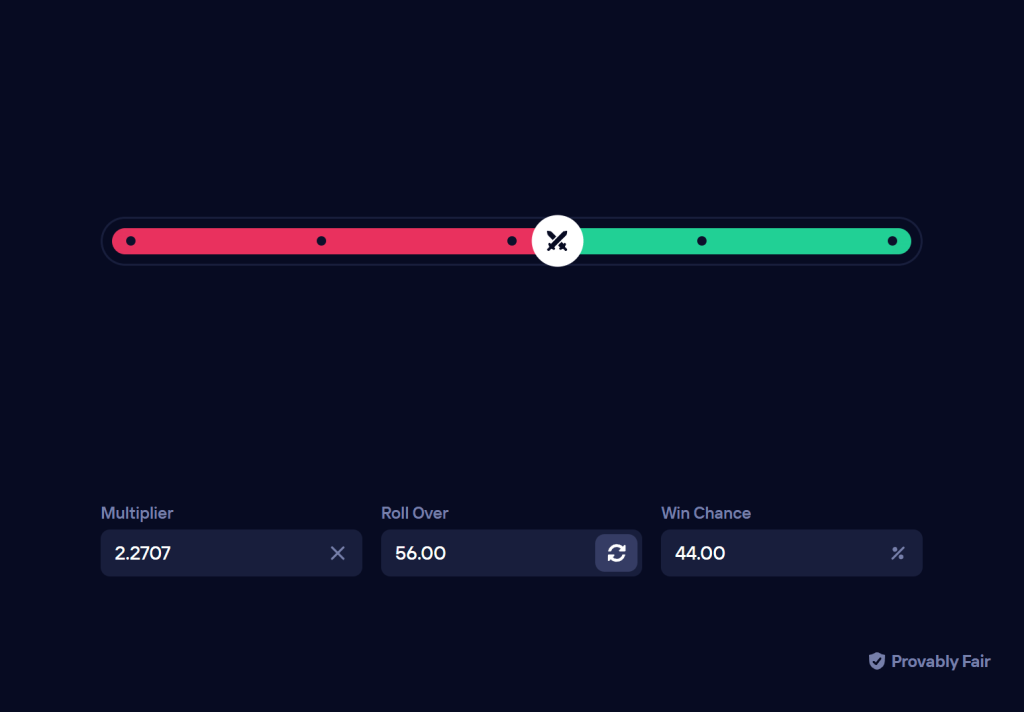
Instead of standard 1.00% to 4.00% casino house margins, compare with mathematically verified 100% RTP Originals (0.00% House Edge) on Duel Casino:

A bankroll unit is your base bet expressed as a fixed fraction of your bankroll. So instead of “$2 sounds reasonable,” you commit to “my unit is 0.5% of this session’s bankroll.” Fixed fractions remove improvisation, and improvisation is where accidental all-ins are born.
Units also make comparisons honest. A $10 wager is pocket change on a $10,000 roll and a genuine hit on $200. Same number, opposite meaning. Units force the context back in.
If you want the deeper framework behind this tool, read: Bankroll Management for Casino Play.
The calculator (manual, but fast)
No scripts needed. Two inputs: session bankroll and unit %. One output: your base unit in money.
Formula
Unit Size ($) = Session Bankroll ($) × Unit %Example: session bankroll $500, unit 0.5% (0.005)
Unit = 500 × 0.005 = $2.50Done in one line. The hard part isn’t multiplication — it’s still betting $2.50 at hour three when the session has gone sideways and every instinct says “bigger.”
Not sure what your session bankroll should be? A good default is: “money you can lose today without creating consequences tomorrow.” If that sentence makes you uncomfortable, that’s a signal — not a challenge.
Pick your unit % (the part people skip)
Your unit % is really a statement about what kind of session you want today: long and quiet, or short and loud. Both are legitimate choices. Only one of them hides its costs well, so here’s the math up front. Treat the table as a guardrail, not a guarantee.
| Unit % of session bankroll | Best for | What to expect |
|---|---|---|
| 0.25% | Long sessions, low stress | More bets before stops, slower swings |
| 0.5% | Balanced play | Still survivable, but swings show up |
| 1% | Shorter sessions | Variance feels loud; stops hit sooner |
| 2% | High-intensity play | Downswings become dangerous quickly |
| 5%+ | Rollercoaster mode | Ruin risk spikes; “one bad run” ends you |
Volatility multiplies everything above. High-volatility formats — most slots, many instant games — stretch the payout distribution, so the same unit % lands harder on your balance. New to that idea? See: Variance & Volatility Explained.
Worksheet you can copy (session bankroll → unit → stop-loss)
Fill this out once, before you play. Its whole purpose is to remove mid-session negotiation — future-you, tilted and down four units, doesn’t get a vote.
Bankroll Unit Worksheet
| Input | Your number | Notes |
|---|---|---|
| Session bankroll | __________ | Only what you can afford to lose today |
| Unit % | __________ | 0.25%–1% is a common survivable range |
| Unit size (money) | __________ | Bankroll × Unit % |
| Stop-loss (units) | __________ | Example: 20–40 units depending on risk tolerance |
| Stop-loss (money) | __________ | Stop-loss units × unit size |
| Timebox | __________ | Time is exposure; exposure is risk |
The reasoning behind stop-losses and timeboxes gets a full treatment here: Session Rules (Stop-Loss / Stop-Win).
Three worked examples (so you don’t have to guess)
Same formula, three bankrolls. These examples show how your settings shape risk — they don’t promise anything about outcomes.
Example A: $200 session bankroll (low-stress)
Unit %: 0.5%
Unit size: 200 × 0.005 = $1.00
Stop-loss: 30 units → $30
A “stay alive” setup: more attempts per dollar, far less emotional whiplash when variance turns cold.
Example B: $500 session bankroll (balanced)
Unit %: 1%
Unit size: 500 × 0.01 = $5.00
Stop-loss: 25 units → $125
Workable — provided you accept that variance occasionally throws its worst punch in the first ten minutes.
Example C: $1,000 session bankroll (high-intensity)
Unit %: 2%
Unit size: 1000 × 0.02 = $20.00
Stop-loss: 20 units → $400
This is loud gambling. If you pick it, pick it consciously — not because a losing streak talked you into chasing.
To sanity-check what repeated play is expected to cost you over time, read: How to Calculate Expected Loss.
How units connect to risk of ruin (the core idea)
Risk of ruin measures the chance you hit a hard stop (or zero) before your session plan plays out. Shrinking your unit shrinks that probability, because ordinary downswings no longer reach your floor. The house edge stays exactly where it was. What changes is whether you survive those swings with your decisions still rational.
For the full explanation (including a simple classic formula), see the guide: Risk of Ruin in Gambling.
Variance is short-run reality. Units decide whether that reality shows up as a bruise or a broken bone.
Common mistakes (and the “do this instead” fix)
Blowups rarely come from one heroic bet. They accrete: small sizing decisions pile exposure onto exposure until the session turns into an argument with yourself.
Common mistakes
- Sizing today’s bets off yesterday’s results (“I was up, so I can go bigger”).
- Inflating stakes mid-session after losses (“just one bigger hit”).
- Applying one unit % across games with wildly different volatility.
- No timebox — more minutes means more bets means more exposure.
- Treating “provably fair” as shorthand for safe or profitable.
Do this instead
- Fix your unit % before playing, based on risk tolerance — never mood.
- Write your stop-loss in both units and money.
- Timebox the session (time is a risk variable).
- Use lower units for higher volatility formats.
- Keep your verification habit: How to Verify Provably Fair Bets.
If math has ever felt useless mid-session, odds are one of these five habits was doing the damage. More on that: Common Gambling Math Mistakes.
Mini tool: converting goals into rules (without chasing)
The quiet trap: players treat their unit as a recovery lever and start raising it mid-session to “get even faster.” That’s chasing wearing a spreadsheet. The cleaner approach is converting each goal into a rule set before play begins.
Goal → Rule conversions
If your goal is longer sessions: drop the unit to 0.25%–0.5%, tighten the timebox, and keep the money stop-loss modest.
If your goal is less tilt: define a maximum drawdown in units (say, 25) and end the session when it hits. No renegotiation clause exists.
If your goal is promo completion: compute exposure alongside EV. Promos are contracts, not gifts — and contracts often increase your required volume.
The underlying promo math lives here: Expected Value (EV) Explained and Wagering Requirements Explained.
FAQ
Should I base units on my total bankroll or session bankroll?
Default to a session bankroll. It forces you to name today’s risk upfront and keeps your full balance from becoming “available to chase.” If you run a larger bankroll across multiple sessions, ring-fence a daily session portion first, then apply the unit % to that slice.
What unit % is “best”?
No universal answer exists. For players prioritizing survivable sessions, 0.25%–1% is a practical band. Going higher isn’t forbidden — but it’s high intensity, and cold streaks will trigger your stops sooner.
Do smaller units make me more likely to win?
No. House edge ignores your unit entirely. Smaller units simply lower the odds that a routine downswing ends your session early. You’re reducing blowups, not manufacturing profit.
How do units work with games that have different minimum bets?
If a game’s minimum exceeds your calculated unit, choose honestly: either raise your session bankroll for that game or pick another. Forcing the unit upward without adding bankroll quietly increases ruin risk.
Does “provably fair” change bankroll math?
Verification lets you trust the randomness; it doesn’t let you beat it. Your bankroll decisions still hinge on EV, volatility, and total exposure. Full explanation: Does Provably Fair Mean Safe?.
What’s the fastest way to reduce risk of ruin?
Cut unit size and cut exposure: timebox sessions, then honor whatever stop-loss you wrote down. Full concept walkthrough: Risk of Ruin.
Responsible Gambling note
This tool exists for harm reduction and clearer decisions — not to encourage more play. If gambling has stopped being fun, if you’re chasing losses, or if you’re wagering money you need elsewhere, step away and seek support. Resources: Responsible Gambling.