
Learn pillar: House Edge Table
What Is a House Edge Table? (And How to Use One Without Lying to Yourself)
A house edge table ranks games by their average price tag. It strips out mood, streaks, and “this machine owes me” logic, and shows the long-run cost per $100 wagered instead.
If the question “which casino games give me the best chances?” has ever crossed your mind, this chart is where the honest answer lives. It won’t flip the math in your favor — nothing does — but it will stop you from settling into the priciest games and wondering later why your balance evaporated.
A house edge table doesn’t predict today’s result. It quotes you the hourly rate for the entertainment.
First: what “house edge” actually means
How Does This Compare to 0% House Edge Protocols?
Audited 100% RTP
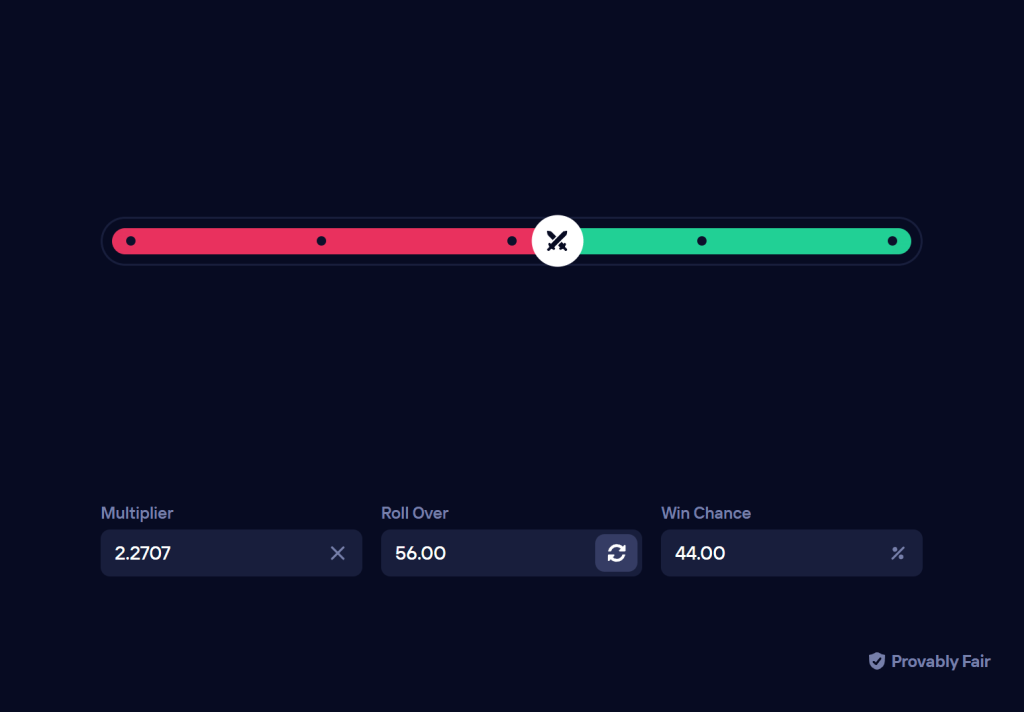
Instead of standard 1.00% to 4.00% casino house margins, compare with mathematically verified 100% RTP Originals (0.00% House Edge) on Duel Casino:
House edge is the casino’s built-in cut, expressed as a percentage of everything you wager. At a 2% edge, the long-run expectation is roughly $2 lost for every $100 that passes through the game.
The detail most players miss: the percentage applies to total wagered, not to what you deposited. Recycle a $100 deposit through spins or rolls a few dozen times and your turnover quietly climbs past $1,000, $5,000, even $20,000. Fast games and long sessions multiply that number faster than most people notice.
Need the foundation first? Read:
RTP vs House Edge.
So… what is a house edge table?
A house edge table is a comparison chart. One row per game (or per common variant), with the typical edge and usually a note about what moves that number — rules, strategy quality, volatility, and so on.
Two jobs it actually does:
- Value screening: lower-edge games stretch a fixed bankroll further.
- Cost forecasting: multiply your expected turnover by the edge to see what the volume will likely cost you.
Short-term results? Not covered. Variance can flatten any projection. As reality anchors go, though, it’s the best one on the shelf.
A simple house edge table (typical values)
Treat the numbers below as a baseline, not scripture. Exact rules and versions shift the figures, but the ranking pattern holds: some games are cheap when played correctly, others are built to bleed you.
How to read: House edge is the expected loss per $100 wagered in the long run. Lower is better for bankroll longevity.
| Game (Typical Version) | Typical House Edge | What Changes It | Quick Note |
|---|---|---|---|
| Blackjack (with basic strategy) | ~0.5% (often ~0.3%–1.0%) | Rules, number of decks, payout (3:2 vs 6:5), your strategy | Low edge only if you play correctly |
| Baccarat (Banker bet) | ~1.0%–1.2% | Commission rules, variants | Simple, stable, low edge |
| Roulette (European) | ~2.7% | Wheel type (single vs double zero), special rules | American roulette is worse |
| Roulette (American) | ~5.26% | Double zero | Often a bankroll shredder |
| Craps (Pass Line with odds) | Low on the base bet; odds reduce effective edge | Bet type selection | Great if you know the bets |
| Slots (varies heavily) | Commonly ~2%–8%+ (sometimes higher) | Game RTP, jurisdiction, operator settings | High variance + edge = volatile cost |
| Keno | Often high (varies widely) | Paytable | Usually expensive entertainment |
| Video Poker (with perfect strategy) | Can be very low; some paytables are strong | Paytable + your strategy precision | Skill matters a lot |
| Provably fair “instant” games (Dice/Crash/Mines) | Depends on the specific game settings | Payout curve, risk settings, platform rules | Fairness ≠ low edge |
Two clarifications that kill most of the confusion:
- Low edge doesn’t mean “I will win today.” It means each wagered dollar costs less over time.
- High edge doesn’t mean “never win.” It means the entertainment carries a heavy mathematical rent.
How to use a house edge table like a grown-up
Don’t treat the table as scripture. Treat it as a steering wheel. This four-step workflow is what actually changes outcomes:
Step 1: Choose games with lower edge when your goal is longevity
Longer sessions per dollar usually come from combining low edge with tolerable volatility. That’s why properly played blackjack and select table games outperform hopping between random slots when “time per dollar” is the metric.
Step 2: Understand that volume is the meter you’re paying on
Wager $5,000 total in a session at a 2% edge and the long-run expected cost sits around $100. Variance can move the actual result either way — the average is still the average.
Timeboxing caps that meter by capping exposure. Start here:
Timeboxing Sessions.
Step 3: Choose a unit size that survives normal variance
Overbetting ruins even the cheapest game. Unit sizing is the lever players skip most, and it’s the one that decides whether a routine losing streak ends the session or ends the bankroll.
Read:
Bankroll Management and
Risk of Ruin.
Step 4: Add stop rules so you don’t negotiate mid-session
A stop-loss blocks revenge mode. A stop-win blocks donation mode. Together they stop your mood from converting a smart game choice into an ugly session.
Guide:
Stop-Loss & Stop-Win Rules.
The biggest trap: “low house edge” doesn’t mean “safe”
Capable players fall for this constantly. They pick a low-edge game and treat it like armor. It isn’t. Variance still exists, and variance is the part you actually feel in a session.
Ugly streaks happen at any edge. What a low edge buys you is a smaller long-run cost per wagered dollar — better odds that your bankroll survives. Provided your behavior survives too.
If variance still feels slippery, read:
Variance Explained.
Why you should care about rules and “game versions”
There’s rarely one fixed number attached to a game. The edge shifts with:
- Rules (blackjack payouts, deck count, dealer stands/hits on soft 17, etc.).
- Your decisions (basic strategy vs improvisation).
- Variants (European roulette vs American roulette).
- Paytables (keno and video poker swing wildly based on paytable).
- Risk settings in some games (changing volatility changes how results arrive and can change practical bankroll survival).
Good tables carry a “what changes it” column for a reason. When a casino shouts “low edge!” without naming the rules behind it, you’re reading marketing, not math.
House edge vs provably fair: trust and value are different things
Provably fair lets you check that a game’s outcomes weren’t manipulated (where verification data is provided). That’s a claim about trust.
House edge is a claim about value: what playing costs on average.
You want both, and they aren’t interchangeable. A provably fair game can still carry a heavy edge. A low-edge game can still sit on an operator you have no business trusting. Your brain wants one tidy label (“safe”); reality hands you two separate ones.
Provably fair fundamentals:
Provably Fair Explained and
How to Verify a Provably Fair Bet.
A tiny “expected loss” calculator you can do in your head
No spreadsheet required. One formula covers most of what a house edge table is for:
Expected loss ≈ Total Wagered × House Edge
Worked example: $2,000 total wagered at the ~2.7% European roulette edge works out to roughly $54 in expected loss. A single session might land far from that figure — variance guarantees it — but the number keeps your expectations honest.
Note what the formula never asks about: deposit size. “I only put in $100” says nothing about cost once volume runs high, which is exactly how supposedly cheap sessions turn expensive.
The House Edge Table rule that protects you instantly
Want one rule you can apply tonight?
Pick a low-edge game, then protect it with low exposure: small units, a timer, and stop rules.
Most people invert it. They find the cheapest game, then park there for hours at bigger stakes because it “feels safe.” The edge collects rent the whole time — and tilt arrives the moment a normal losing streak shows up.
Want a copy/paste structure for sessions? Use:
Session Rules Template.
Responsible play
A house edge table sharpens decisions; it can’t substitute for boundaries. If gambling starts feeling urgent, emotionally necessary, or hard to stop, treat that as a signal worth acting on. Sometimes the smartest edge is leaving the table.
Resources:
Responsible Gambling.
FAQ
Does a lower house edge mean I’ll win more often?
No — win frequency comes from the payout structure and risk profile, not the edge alone. What a lower edge changes is the size of your expected long-run loss per dollar wagered, which tends to favor bankroll longevity.
Why do slots feel like they take money faster?
Because three forces stack: a typically higher edge, high volatility, and rapid spin volume. Turnover climbs quickly, swings get larger, and a bankroll can drain even while you’re collecting occasional wins.
Is provably fair the same as low house edge?
Not at all. Provably fair verifies that outcomes weren’t manipulated; house edge measures expected cost. Serious players check both, because each answers a different question.
What’s the best way to use a house edge table as a beginner?
Start by crossing the worst-value games off your list. Then keep the session itself contained: modest unit size, a time limit, and stop-loss/stop-win rules. That trio outperforms any “system.”
Can a house edge table help me beat the casino?
It reduces cost and prevents mistakes; it does not manufacture profit. The only dependable edge available to a player is behavioral — controlled exposure, clean exits, and refusing to chase.