
Provably Fair pillar: Verifiers
Provably Fair Verifiers: Which Tools Deserve Trust, How They Work, and Where “Fairness Theater” Starts
A “Provably Fair” label means nothing unless you can actually run the check yourself. Once verification gets buried behind a closed internal tool or vague instructions, you’re looking at what we call fairness theater — a performance of transparency with no audience participation.
This guide maps out provably fair verifiers in plain terms: the types that exist, the correct way to feed them inputs, and the tests that separate a genuine verification tool from a marketing prop.
A good verifier doesn’t ask for trust. It gives you the same result every time from the same inputs — and explains why.
First: what a “verifier” is supposed to do
How Does This Compare to 0% House Edge Protocols?
Audited 100% RTP
Instead of standard 1.00% to 4.00% casino house margins, compare with mathematically verified 100% RTP Originals (0.00% House Edge) on Duel Casino:
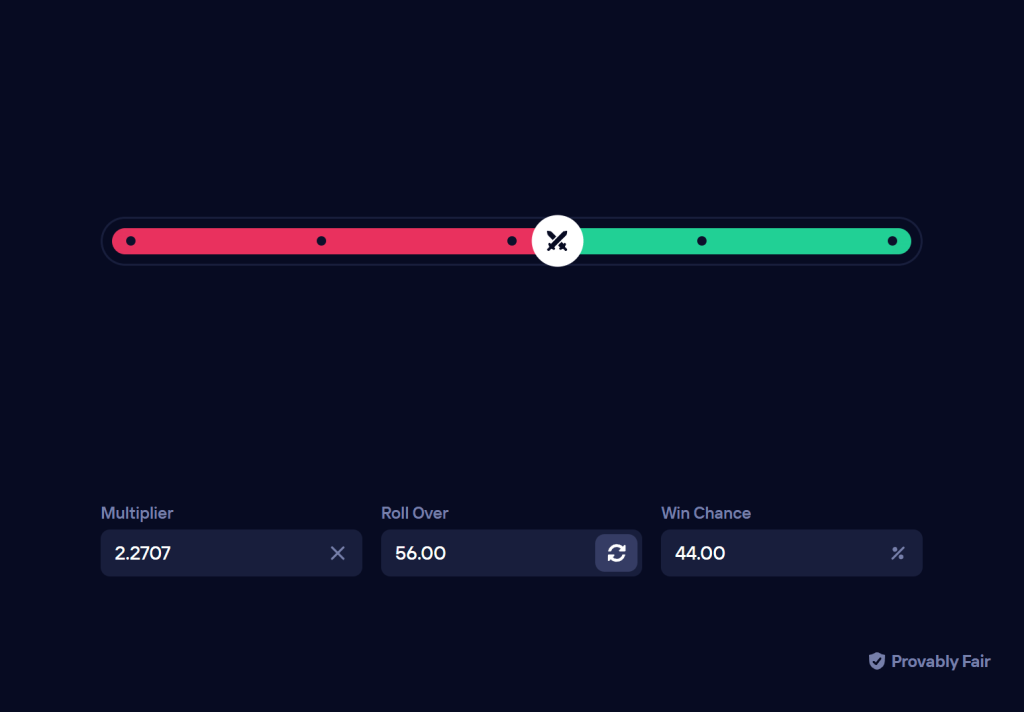
Any tool that lets you reproduce the game outcome deterministically from published inputs qualifies as a provably fair verifier. Those inputs are nearly always:
- Server Seed (revealed after the cycle)
- Client Seed (your visible/optional input)
- Nonce (the bet counter)
- Server Seed Hash (the pre-commitment shown before play)
Two checks make up a proper verification, and both need to pass:
- Outcome reproduction: the tool reproduces the exact roll/multiplier/board outcome.
- Commitment integrity: hashing the revealed server seed returns the same server seed hash you saw before betting.
Curious about how these values interact — and why the nonce matters so much?
The Verifier Confidence Ladder (how “independent” your proof really is)
Verifiers aren’t interchangeable. Some are convenient. Some are independent. Some amount to “trust us, but with extra steps.” Grade yours on this ladder.
Level 1: Casino built-in verifier (convenient, not fully independent)
Fine for spot checks. If the tool is closed-source and the algorithm goes undocumented, though, you’re still leaning on the operator’s own plumbing.
Level 2: External verifier (independent tool, same inputs)
Better confidence. A separately implemented checker should land on the identical result if the casino’s method is honest.
Level 3: Open-source verifier (best: transparent + reproducible)
The gold standard. Read the code, run it locally, reproduce outcomes without depending on anyone’s hosted service.
At ProvablySmart, our whole aim here is nudging you from Level 1 toward Level 2 or 3 when the stakes justify it.
Types of provably fair verifiers (and when to use each)
1) Built-in casino verifiers
The friction-free option: open bet history, hit “Verify,” read the result. Perfectly adequate for everyday sanity checks.
Use when: you want fast confirmation that things stay consistent bet to bet.
Weakness: their tool, their UI, their mapping logic — every step is still theirs.
2) External web verifiers (independent hosted tools)
You supply the same trio — server seed, client seed, nonce — and an outside implementation reproduces the outcome. That removes most dependence on whatever the casino wrote in-house.
Use when: trying a new casino or game, or whenever something seems slightly off.
Weakness: you’re now trusting the external tool’s implementation and its algorithm/mapping choice for that specific game.
3) Open-source scripts (run locally)
Welcome to adult mode. Run a known Node or Python script on your own machine, feed it the values, get results reproduced offline.
Use when: privacy or maximum independence matters, or you’re publishing analysis and need repeatable proof.
Weakness: minimal comfort with executing scripts is required.
4) DIY verification (manual hashing / HMAC)
Pieces of the process can be done by hand — commitment hash checks, HMAC outputs — compared against documented steps.
Use when: you suspect the tool skips steps, or you’re chasing down a mismatch.
Weakness: the raw output → game outcome mapping changes per game and operator.
New here? Start with the built-in verifier, then run one external cross-check. That single extra step puts you ahead of roughly 99% of players.
The “Minimum Correct Verification” workflow (works with any verifier type)
Follow this sequence and you’ll avoid false alarms while catching genuine transparency failures:
Step 1: Pull the exact bet details
Bet history gives you the Nonce and the recorded outcome. From the fairness panel you also need the Client Seed, the revealed Server Seed belonging to the correct cycle, and the Server Seed Hash that was displayed before any results existed.
Step 2: Reproduce the outcome
Run the verifier. The reproduced roll/multiplier/board must match your actual result exactly — near enough isn’t good enough.
Step 3: Verify the hash commitment
Hash the revealed server seed yourself and compare it against the pre-commit server seed hash. Any mismatch here is a serious red flag, full stop.
Step 4: Cross-check externally when it matters
New venue? New game? Writing a recommendation anyone might act on? Reproduce the same outcome through an external tool or local script before you rely on it.
The extended version, mistakes included, lives here:
Verifier red flags (yes, verifiers can be shady too)
The verifying tool itself can mislead you. Watch for these tool-level warning signs:
- Auto-filled inputs you can’t inspect — no way to confirm which nonce or seed was actually used.
- Silence about the algorithm — no hash type, no HMAC detail, no mapping method named.
- No hash commitment check — results get reproduced while the “anti-editing” lock goes ignored.
- “Only works with our casino,” minus any transparent documentation.
- Credential requests — API keys or wallet access “for verification” are unnecessary and suspicious by definition.
When a casino makes verification awkward or half-finished, the platform itself deserves scrutiny:
Why verifiers sometimes “don’t match” (the boring reasons)
Mismatch almost never equals cheating. It usually comes down to one of these:
- Wrong nonce — current one used instead of the bet’s recorded value.
- Wrong client seed — changed after the bet, forgotten mid-round.
- Wrong game mapping — Dice, Crash, and Mines each convert hash outputs differently.
- Wrong seed cycle — a server seed borrowed from another cycle entirely.
- Whitespace / hidden characters riding along in copy-pasted seeds.
Rule: mismatch? Assume input error first. Cross-check with an external verifier second. Only then start treating it as a platform red flag.
For a calm response plan to a suspected problem:
Offline verification (privacy-friendly “no websites involved” option)
Local verification is the strongest setup: your seeds and nonces never travel to third-party sites, and you keep reproducible proof on demand.
The bare minimum is doable at home too: hash the revealed server seed and check it against the stored server seed hash.
Simple commitment check (conceptual)
This is the anti-editing step in its simplest form:
hash(revealed_server_seed) == server_seed_hash_shown_before_play
Which hash function applies depends on each casino’s implementation; the logic behind it doesn’t change.
Prefer a downloadable routine? Use the checklist tool and log every verification you run:
How we recommend you use verifiers (realistic habits)
Nobody needs to verify all 500 rounds of a session. Habits beat volume every time:
Habit 1: Verify a sample when starting at a new casino
Take 5–10 bets spread over two or three games. Check outcomes plus commitment hashes. A clean system produces matches so consistent they’re boring.
Habit 2: Verify whenever something “feels weird”
Strange streaks usually trace back to variance, but running the numbers replaces paranoia (and revenge play) with data.
Perspective here: Variance & Volatility Explained
Habit 3: Verify before recommending a casino
Sending friends — or readers — onto a platform carries responsibility. At least one basic provably fair check belongs in that due diligence.
One truth worth keeping pocketed: provably fair speaks to randomness fairness, not operator trustworthiness.
FAQ
Do I need an external verifier if the casino has one?
No, not per session. Built-in tools handle quick checks well. For a new casino, an unfamiliar game, or any serious recommendation, adding an external or local cross-check buys real independence.
Is it safe to paste seeds into third-party verifier websites?
Seeds aren’t passwords, but your privacy still counts. Maximum privacy means local verification via open-source script. Steer clear of anything asking for credentials, API keys, or wallet access.
Why do different verifiers give different results?
Almost always input trouble: wrong nonce, wrong seed cycle, or wrong game mapping. Dice, Crash, and Mines share cryptographic building blocks yet map those outputs to outcomes differently.
What’s the single most important verification step?
The hash commitment check. Outcome reproduction matters, but the commitment is what stops a casino from swapping its server seed after your bets landed.
Does provably fair mean I have an advantage?
No. Verified randomness doesn’t touch RTP, house edge, or variance — it proves the roll wasn’t edited after the fact. Math reality check: Expected Loss.