
Cashback exists to soften the sting of losing — and to keep you playing. This Cashback EV Calculator examines both loss-based and volume-based rebate schemes, deducts the cost of any attached wagering requirements, and shows what your rebate is actually worth once the math is done (a fuller treatment sits in our article on Cashback Expected Value).
Cashback EV
How casino cashback programs really work
How Does This Compare to 0% House Edge Protocols?
Audited 100% RTP
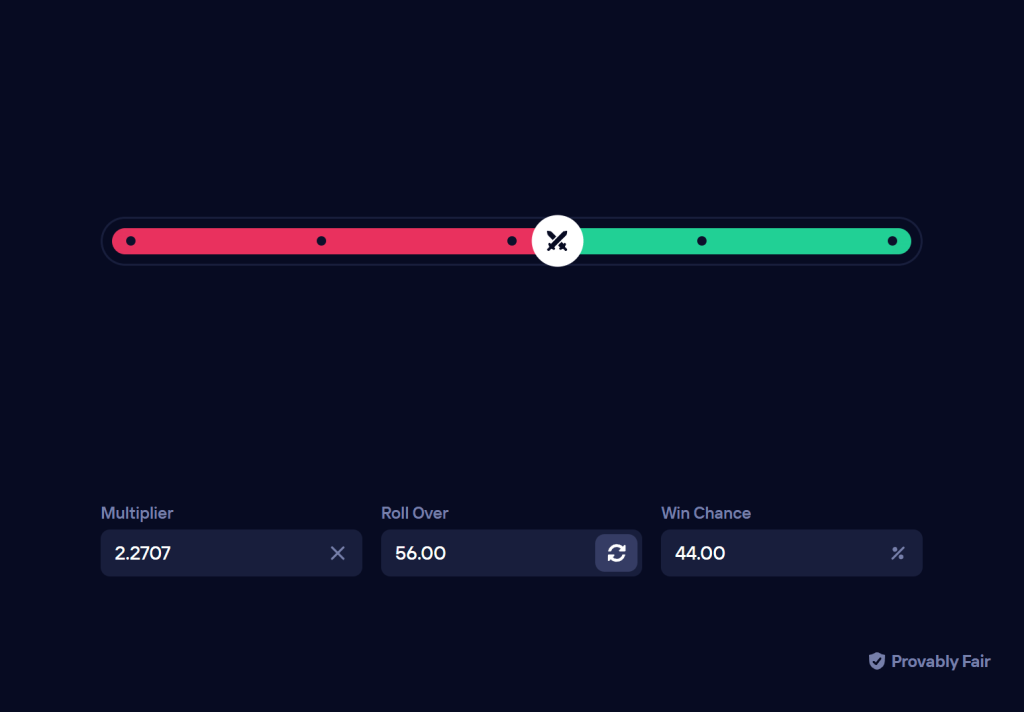
Instead of standard 1.00% to 4.00% casino house margins, compare with mathematically verified 100% RTP Originals (0.00% House Edge) on Duel Casino:

VIP clubs love advertising rebates: “10% back on losses” or “0.5% on every bet.” The pitch makes it sound like a straight discount on the price of play.
The fine print matters more than the headline number. Is the rebate paid in withdrawable cash or bonus funds with a wagering multiplier? Is the loss figure computed from deposits, net balance, or total turnover? This calculator handles both structures and reports the net effect on your expected result.
The formulas: Loss-based vs. Volume-based cashback
Rebate schemes split into two distinct mathematical families:
1. Loss-Based Cashback
Here the casino returns a percentage of net losses accumulated over a defined period. Gross expected cashback:
Expected_Loss = Total_Wagered * House_Edge_Percentage
Expected_Cashback = Expected_Loss * Cashback_Percentage
Since a payout only arrives after you lose, this structure behaves like insurance: it trims variance but can never, by itself, make a negative game profitable.
2. Volume-Based Cashback (Rebates)
Win or lose on each spin or hand, the casino pays a flat percentage of turnover:
Expected_Cashback = Total_Wagered * Rebate_Percentage
3. Factoring in Wagering on the Rebate
When the rebate isn’t raw cash, you have to bet through it first. Its true value:
Wagering_Cost = Expected_Cashback * Wagering_Multiplier * House_Edge_Percentage
Net_Cashback_EV = Expected_Cashback - Wagering_Cost
Worked example: Auditing a VIP Loyalty program
Picture a loyalty offer where you wager $10,000 on a slot with a 3.00% house edge ($RTP = 97%$). The program pays **15% loss-based cashback**, and that rebate carries a **5x wagering requirement** on the same slot.
- Expected Net Loss: $$10,000 times 0.03 = $300$
- Expected Gross Cashback: $$300 times 0.15 = $45$
- Wagering Target to clear the $45 rebate: $$45 times 5 = $225$
- Wagering Cost: $$225 times 0.03 = $6.75$
Netting it out:
Net Cashback EV = $45.00 - $6.75 = +$38.25
So the rebate hands back $38.25 of an expected $300 loss. Your expected cost of play falls from $300 to $261.75, which moves the effective house edge from 3.00% down to 2.62%. A genuine perk — yet the game remains a negative-EV proposition.
Frequently asked questions
Can loss-based cashback create a positive expected value?
On its own, no. The rebate is a fraction of losses already incurred, so the combined system stays negative. That said, layered with other bonuses or during limited promotional windows, the arithmetic can occasionally tip into positive territory.
What is a “rakeback” program in casino terms? (Rakeback functions to reduce the house edge)
Rakeback is volume-based cashback measured against the rake (in poker) or the house edge portion (in casino games) generated by your bets, not against raw turnover. It lands in your account regardless of whether you finished up or down.
Why do casinos add wagering requirements to cashback?
Wagering conditions block an instant withdrawal. You must push the rebate through bets again, exposing those funds to the house edge a second time — the casino gets another chance to claw the money back.