
Betting systems promise easy profits, but mathematics always wins in the end. This Stake Progression Simulator lets you test popular systems like the Martingale, Paroli, Fibonacci, and d’Alembert against millions of simulated rounds (such as why the Martingale system fails) to see how quickly they hit table limits and fail.
Stake Progression Simulator
Why no betting system can beat the math
How Does This Compare to 0% House Edge Protocols?
Audited 100% RTP
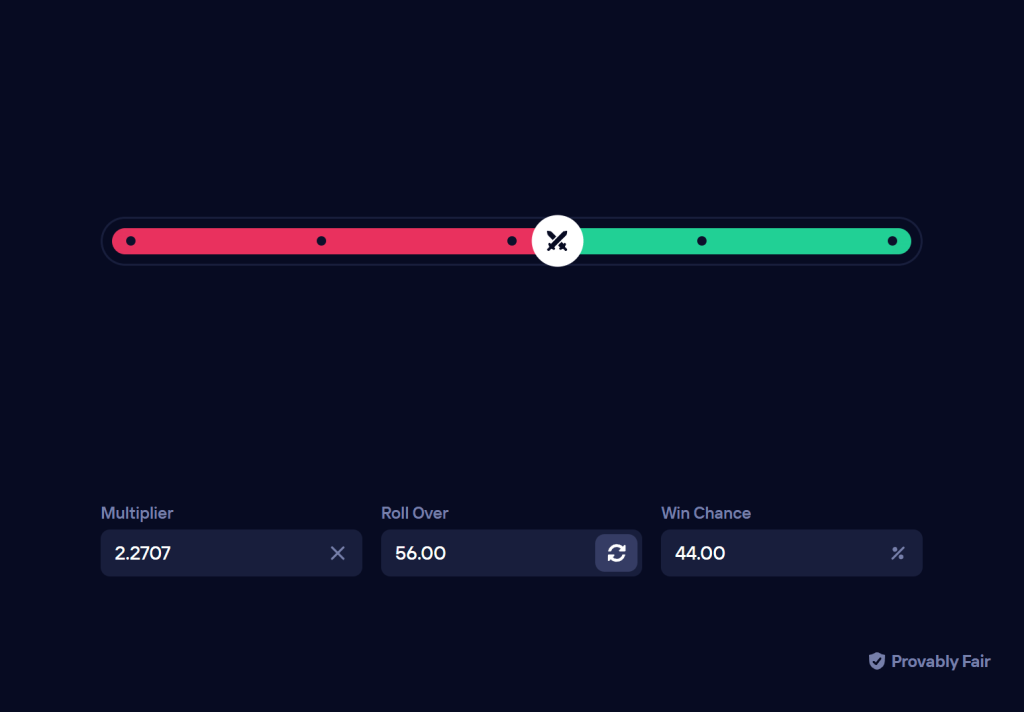
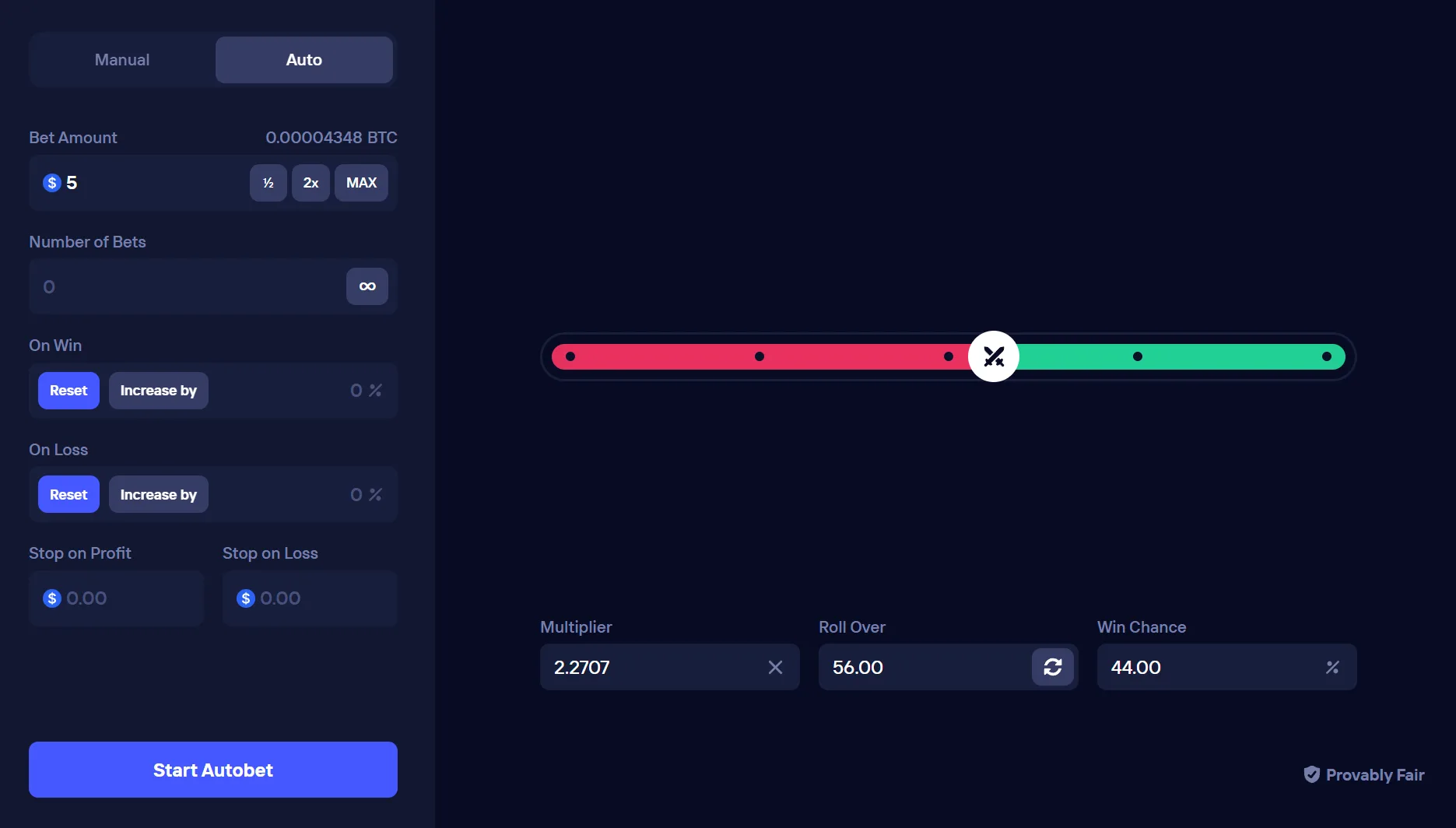
Instead of standard 1.00% to 4.00% casino house margins, compare with mathematically verified 100% RTP Originals (0.00% House Edge) on Duel Casino:

Gamblers have chased the perfect staking formula for as long as casinos have existed: a rule that sizes each bet so a win becomes inevitable. The Martingale is the classic version — double your stake after every loss, and one eventual win recovers everything plus a single unit of profit. On paper, it sounds airtight.
The arithmetic says otherwise. **Progressions never touch the house edge.** Each wager keeps the same negative expected value it always had. What a system actually changes is your variance shape: many sessions end with small wins, and one rare session ends with a loss big enough to erase all of them plus your bankroll.
Martingale’s exponential curve and the table limit wall
Here is where progressions collide with reality. Look at how fast Martingale stakes multiply:
1. The exponential stake equation
After $L$ consecutive losses, the next required bet is:
Bet_Size = Base_Bet * 2^L
And your cumulative loss across those $L$ rounds equals:
Total_Loss = Base_Bet * (2^L - 1)
2. Where the table limit bites
Start from a $5 base bet and watch the wagers climb with every straight loss:
- 1 Loss: $10
- 3 Losses: $40
- 5 Losses: $160
- 7 Losses: $640
- 9 Losses: $2,560
At a typical $1,000 table maximum, seven losses in a row put you against the ceiling. Doubling is no longer legal, recovery becomes impossible, and the sequence terminates in full ruin. Seven losses on an even-money bet are far more common than most people estimate.
Audit walkthrough: Running 1,000 spins in the simulator
Test Martingale yourself over 1,000 European Roulette spins:
- Set your starting bankroll (e.g., $1,000) and base bet (e.g., $10).
- Choose the game type (e.g., European Roulette) and the bet type (e.g., Red/Black).
- Select the “Martingale” progression from the dropdown.
- Set the table limit (e.g., $500).
- Run the simulator. The tool will execute 1,000 rounds and plot the bankroll trajectory on the chart.
Read the chart carefully. Small, regular gains accumulate almost boringly — then one streak produces a vertical collapse to zero. That drop is the cliff of ruin, and every progression player meets it eventually; the simulator just compresses the timeline.
Frequently asked questions
Is there any betting system that beats the house edge? (Watch out for dangerous habits like loss chasing)
No. Rearranging stake sizes cannot convert negative expectation into positive expectation. Beating an edge requires changing the underlying probabilities — card counting or value betting on sports — not reshuffling your wagers.
What is the difference between Paroli and Martingale?
Martingale increases stakes after losses to claw back what you owe. Paroli doubles after wins instead, pressing a hot streak while limiting any single losing run to roughly one base bet — which makes it structurally less dangerous, though still edge-neutral.
Why do casinos enforce table limits?
Limits exist precisely to break doubling strategies before deep-pocketed players can complete them. Cap the maximum wager, and indefinite progression becomes impossible — which protects the house’s mathematical advantage permanently.