
Learn pillar: Common Math Mistakes
Common Gambling Math Mistakes: The Quiet Reasons Players Lose More Than They Should
Losing usually isn’t about playing badly. It’s about quietly trusting ideas that feel true at the table but collapse under arithmetic.
This page tears down the mistakes that cost the most: reading RTP as a guarantee, spotting “patterns” in randomness, betting bigger because a win feels overdue, and running staking plans that multiply risk while promising safety. Fixing these won’t make you a winner. It will stop you overpaying for confusion.

The casino’s edge is small. The player’s mistakes are often huge. Fix the mistakes first.
Mistake #1: Treating RTP like a promise
How Does This Compare to 0% House Edge Protocols?
Audited 100% RTP
Instead of standard 1.00% to 4.00% casino house margins, compare with mathematically verified 100% RTP Originals (0.00% House Edge) on Duel Casino:
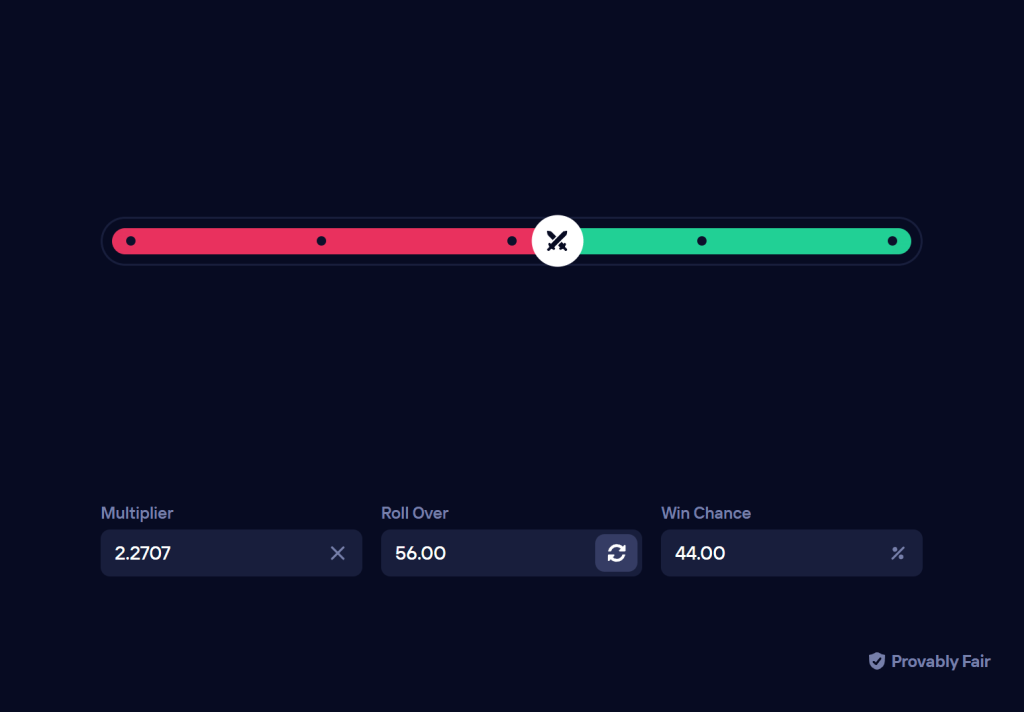

RTP (Return to Player) is a long-run average, not a session forecast. A 99% RTP game can gut your evening. A 96% RTP game can hand you your best night of the month.
The common assumption goes: “High RTP means I’m safe.” The accurate version: “Over millions of rounds, my average result would drift toward this number.” You won’t play millions of rounds tonight. You’ll play an hour with streaks and mood swings attached.
For the clean foundation, read:
RTP vs House Edge.
Mistake #2: Confusing “house edge” with “chance to win a round”
Frequent wins can still hide a house edge. Dice with a high win chance can carry negative expectation: you hit often, but the payout is scaled so the long-run drift favors the house anyway.
This makes “I win a lot, so I’m profitable” a genuinely dangerous sentence. Frequency of winning says nothing about total expectation when the payout structure is designed against you.
A better question to ask: “How much am I wagering in total, and what’s the edge on that volume?” Expected loss lives there, not in your win rate.
Mistake #3: Believing you’re “due” (gambler’s fallacy)
In independent rounds, the game doesn’t owe you balance on your preferred schedule. A losing streak changes nothing about the next round. Neither does a hot one make you lucky.
“I’m due” comforts people because it implies someone upstairs keeps score. Nobody does. Randomness has no memory and no debts.
The fallacy also powers chasing and progressions. If a win feels inevitable, raising stakes looks rational — until normal streaks turn expensive.
Related reads:
Variance Explained and
Chasing Losses.
Mistake #4: Thinking streaks prove rigging
Streaks happen everywhere in random systems. That doesn’t mean every operator deserves trust — trust needs licensing, transparency, and security — but a streak by itself proves nothing.
Swap storytelling for verification. In provably fair environments, individual rounds can sometimes be checked cryptographically. That beats “it feels rigged.” Proof beats vibes.
Start here:
Provably Fair Explained and
How to Verify a Provably Fair Bet.
Mistake #5: Ignoring variance and volatility
Nearly identical RTP can still produce wildly different sessions, because volatility decides how results arrive. Low volatility plays smooth. High volatility plays like extended droughts interrupted by rare spikes.
Players who skip this concept blame themselves or the platform. Frequently, the actual problem is that their chosen risk profile is too aggressive for the bankroll behind it.
If you read one guide on this topic, make it:
Variance Explained.
Mistake #6: Betting too large relative to bankroll (unit size blindness)
This one silently causes most blowups. When each bet takes a big bite out of your session bankroll, ordinary variance turns lethal. Nothing exotic required — just exposure too big to survive normal swings.
People label it bad luck. Usually it’s oversized bets wearing luck as a disguise. The fix is dull and effective: pick a unit size, commonly 1–2% of your session bankroll, then refuse to drift from it.
Deep dive:
Bankroll Management.
Mistake #7: Thinking betting systems change expected value
Betting systems reshape results. They cannot flip negative EV into positive EV. On a game with house edge, rearranging bet sizes rearranges nothing fundamental — the edge survives intact.
Martingale is the classic exhibit: frequent small wins funding rare catastrophic losses. It feels safe right up until it concentrates risk into a single unpayable streak.
Read:
Martingale: Why It Fails.
Mistake #8: Failing to timebox (infinite exposure)
Money limits get planned. Time limits get forgotten — a costly omission in fast games. Without a timer, exposure stretches toward infinite, and “one more round” becomes your priciest habit.
Timeboxing is among the easiest guardrails to install:
Timeboxing Sessions.
Mistake #9: Not using stop-loss and stop-win rules
Stop-loss blocks revenge mode. Stop-win blocks donation mode. Leave either out, and sessions slide into emotional territory where your plan stops being followed.
Guide:
Stop-Loss & Stop-Win Rules.
Mistake #10: Mistaking “near misses” for skill signals
Mines and Crash are engineered — or at least experienced — around intense near misses: “I was one click away.” Those moments light up motivational circuits similar to actual wins, pulling you back into play.
Close calls aren’t lessons. They’re hooks built into the structure of the game. Treat near misses as tilt triggers, and walk away cleanly whenever urgency appears.
Read:
Tilt Triggers.
Mistake #11: Treating volume as “free”
Players count deposits. Casinos count total wagered. Expected loss scales with volume, not deposits — every additional wager hands the edge more room to operate.
That’s why quick games burn money even at modest bet sizes. Hundreds of rapid rounds pile up volume fast, and the edge compounds without fanfare.
We cover this cleanly inside:
RTP vs House Edge.
Mistake #12: Confusing “confidence” with “control”
Confidence arrives after wins; panic arrives after losses. Both push you into the same blunder: adjusting risk mid-session. You raise stakes feeling strong. You raise stakes feeling desperate. Either way, mood sets your exposure.
One rule kills this mistake outright: one risk profile per session. Touch your risk settings or unit size mid-session? End it.
Our template bakes this in:
Session Rules Template.
The “Clean Play Checklist” (quick self-audit)
Want a thirty-second defense against the worst math errors? Run this list before sitting down:
- I know my unit size (1–2% of session bankroll).
- I set a timer (timeboxing).
- I have a stop-loss and stop-win.
- I’m using one risk profile for the session.
- I’m not trying to “get back to even.”
- I understand streaks don’t prove I’m due.
- If I notice tilt triggers, I will end the session.
Prefer copy/paste? Grab the:
Session Rules Template.
Responsible play
Math literacy helps, but it cannot repair harmful behavior alone. When gambling starts feeling urgent, secretive, or emotionally necessary, pause and reach out for support. Sometimes the smartest bankroll move is closing the laptop.
Resources:
Responsible Gambling.
FAQ
What’s the #1 math mistake most players make?
Oversized bets relative to bankroll. Big units convert routine variance into wipeouts. Cutting unit size drops ruin risk sharply.
Does high RTP mean I should play longer?
No. Extra hours mean extra volume, which gives the edge more time to work. High RTP softens the drift but never cancels variance within a single session.
Can any betting system beat the house?
Not on negative-EV games. Systems reshape volatility and outcome distribution, never remove house edge. Plenty just conceal risk until it detonates.
How do I stop making math mistakes during a session?
Remove live decisions: flat staking, timers, stop rules, one risk profile. Spot tilt triggers or bargaining thoughts, and end the session immediately.
What’s the fastest way to improve my results?
Work on behavior, not predictions: smaller units, shorter sessions, stricter stop rules. Outcomes resist control; exposure doesn’t have to.