
Target multiplier game. m = (1 − HE) / U. Clamped at 1.00×.
Limbo
Pick a target multiplier. Round wins if generated multiplier ≥ target. m = (1−HE) / U.
Auto-bet
How dishonest operators rig this game 3 documented tricks
Mechanism. True multiplier is 12.4827× but operator displays "12.48×" and pays 12.48 — a 0.06% skim on every win, compounding across sessions.
Red flag. Re-derive multiplier from (server, client, nonce). Operator must pay to at least 2 decimal places of the true value.
Mechanism. Player targets 100×, round generates 99.97× → instant loss. Operator may "snap to integer" multipliers downward only.
Red flag. Always compute the result yourself for big multipliers. Even single bits of rounding favor the house.
Mechanism. Players with positive long-term EV (e.g. consistent winners) get seeds that produce more sub-1.5× rounds. Identifies +EV players, then bleeds them slowly.
Red flag. Compare your hit-rate at a given target to the theoretical (1 − HE)/target. Long-running negative variance ≠ bad luck.
For the full compendium across all games, see The Book of Casino Dirty Tricks.
—— pending rotation —How Limbo math works
How Does This Compare to 0% House Edge Protocols?
Audited 100% RTP
Instead of standard 1.00% to 4.00% casino house margins, compare with mathematically verified 100% RTP Originals (0.00% House Edge) on Duel Casino:
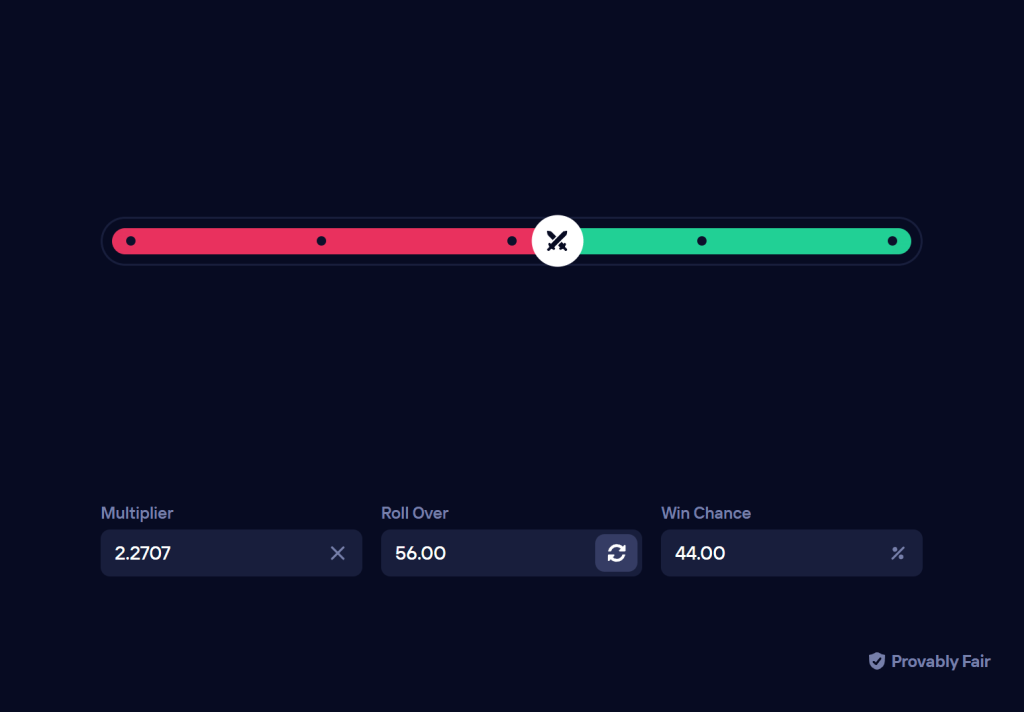

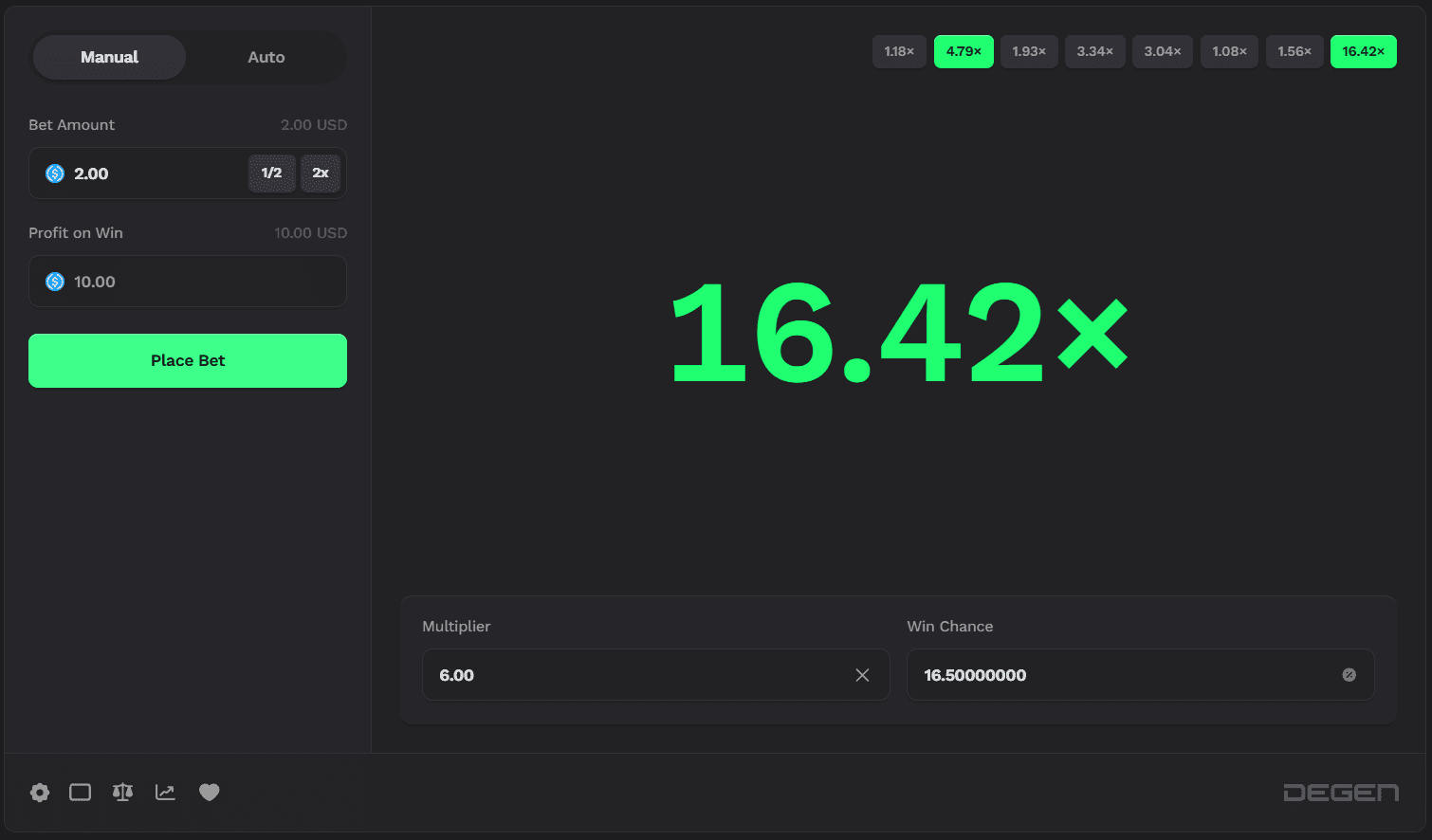
float       = uniform [0, 1) from HMAC float bytes
multiplier  = (1 − HE) / float           // 1% house edge → 0.99/U
clamp       = max(1.00, multiplier)
win         = multiplier ≥ player_target
No other casino game shows a power-law payout distribution this plainly. When the float lands near zero, the multiplier shoots past triple digits; near one, it flattens to the 1.00× floor. The mean is finite — exactly 1 minus the house edge, or 0.99 — yet the variance is infinite. In plain terms: expect stretches of dozens of losing rounds interrupted by one absurd outlier that dominates the session.
The 1% trap
At 1%, Limbo carries the lowest house edge of any in-house game, and that is precisely why it ruins bankrolls. The edge reads like a rounding error. The variance does not. Over hundreds of rounds, 99.9% of players will find themselves far below break-even at some point, no matter which target they pick.
You can watch this happen instead of taking our word for it. Open the Monte Carlo simulator, plug in the variance for your chosen target, and run 1000 trajectories. Count how many paths touch a −50% drawdown even while expected value drifts down almost imperceptibly.
Operator manipulations specific to Limbo
The three patterns documented most often (detailed in the book):
- Multiplier rounding-down. True value 12.4827×, displayed 12.48×, paid 12.48. Skim compounds on every win.
- Target-cashout snap. You target 100×, round generates 99.97×, operator counts as loss without rounding up. Even single bits of rounding consistently favour the house.
- EV-tagged seed picking. Players with positive long-running EV (consistent winners) silently get seeds that produce more sub-1.5× rounds. The trail of “I always lose right after withdrawing” anecdotes is what this looks like.
Strategy reality
Martingale targets, double-after-loss ladders, target-hopping systems — the Limbo strategy canon is crowded, and every entry lands in the same place: −1% of total turnover over time. What an actual strategy changes:
- Time to bust at chosen target. Higher targets mean longer expected runs of losses before the next win. Bankroll must survive the dry stretch.
- Variance management via Kelly. Limbo is −EV, so full Kelly is zero. But fractional sizing relative to your bankroll keeps you in the game longer.
- Stopping rules. Stop-loss and stop-win don’t change EV, but they change session shape. The stop-rules analyzer shows the trade-off.
Frequently asked questions
What’s the most extreme target I can chase?
On paper, there is no ceiling: Limbo’s distribution has an infinite right tail. In practice most operators cap displayed multipliers at 1000× or 10000×. Above that, the operator is paying you from their balance sheet, not from the round math, and the cap may kick in.
Can I confirm a round was honest after the fact?
Yes — once the server seed is rotated and revealed. SHA-256 the revealed seed and check against the previously-published hash. If they match, run HMAC against (your client, the round nonce) and re-derive the multiplier. Operator’s displayed value must match to two decimal places. The Limbo verifier does this for you.
How rare are 1000×+ multipliers?
At 1% house edge, P(multiplier ≥ 1000) = 0.99/1000 ≈ 0.099%. Once every ~1000 rounds. Adjust expectations accordingly.