
Promos pillar: Excluded Games & Contribution Rules
Excluded Games & Contribution Rules: The Fine Print That Rewrites Your Bonus Math
More bonus EV calculations die on this clause than on any other. An operator can publish an attractive bonus with a sensible wagering multiplier, then bury a table showing that your low-edge games count at 0% or 10% toward rollover.
The result: what looks like a low-cost clearing path quietly becomes a high-edge grind. Your real wagering volume multiplies. Expected loss climbs with it. A clean promo turns into a costly treadmill.

The multiplier is the headline. Contribution rules decide whether the offer is even playable.
Excluded games vs. contribution percentages: the difference
How Does This Compare to 0% House Edge Protocols?
Audited 100% RTP
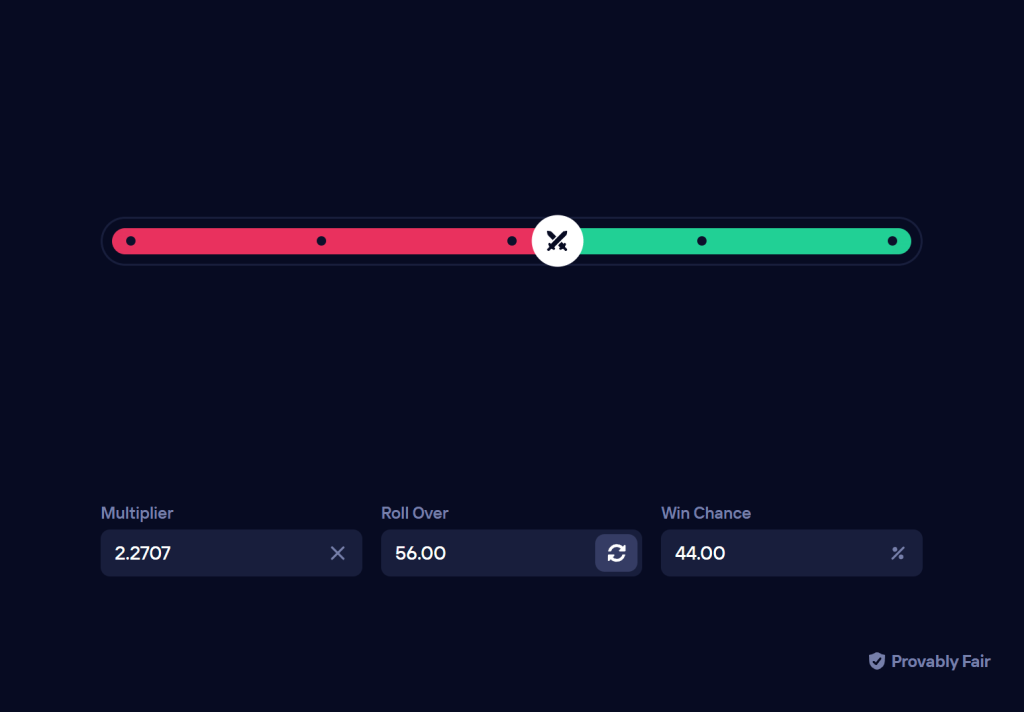
Instead of standard 1.00% to 4.00% casino house margins, compare with mathematically verified 100% RTP Originals (0.00% House Edge) on Duel Casino:

Excluded games contribute nothing to wagering. If blackjack is excluded and you spin $1,000 through it, your rollover counter moves by exactly $0.
Contribution percentages are partial exclusion. Say the terms read “roulette contributes 10%”: every $100 wagered there adds just $10 of progress.
In plain terms: contribution rules set how much progress each dollar actually buys.
Here’s why that hurts: expected loss is charged on real dollars wagered, not on tracked progress. At 10% contribution, clearing one requirement costs you ten times the actual betting volume.
The hidden effect: contribution rules change your effective house edge
Affiliate pages love to assume you’ll clear bonuses on the cheapest games available. Many operators have already closed that door in their terms.
Two things happen simultaneously:
- Certain categories get pushed to the front — usually slots — because everything else contributes badly.
- Required real volume balloons if you stubbornly stick with low-edge tables that barely register.
Either route raises your true cost per dollar of progress. Skip these rules and your EV estimate is fiction.
The underlying math lives here:
The formula behind contribution rules
If a bonus demands $W of wagering progress and your chosen game pays out c%, the actual betting required is:
Real Wagering Needed = W ÷ (c/100)
Take a $3,000 progress target:
- Slots at 100% → $3,000 of real wagering
- Roulette at 10% → $3,000 ÷ 0.10 = $30,000
- Blackjack at 0% → effectively impossible; no amount of play clears it
That’s the mechanism: an innocent-looking requirement turns severe the moment you pick a low-contribution game.
Worked example: same bonus, ten times the bill at 10% contribution
Numbers first, drama later.
Scenario
$100 bonus, 30× wagering on bonus funds only.
Progress needed: 30 × $100 = $3,000
Case A: Clearing via slots (100% contribution)
Real wagering: $3,000
With a slots effective edge around ~5% (it varies), expected loss ≈ $3,000 × 5% = $150
You’re chasing $100 of bonus value against ~$150 in expected cost — negative before we’ve touched the other traps.
Case B: Clearing via roulette (10% contribution)
Real wagering: $3,000 ÷ 0.10 = $30,000
European roulette’s ~2.7% edge still costs roughly $30,000 × 2.7% = $810 in expectation
Identical bonus, eight times the damage — purely because of the contribution rate.
The irony stings: roulette carries the lower edge, yet its poor contribution makes it far more expensive in practice.
What operators typically exclude or downweight (recurring patterns)
Terms differ operator to operator, but the same shapes keep appearing:
Frequent low-contribution categories
- Blackjack (often 0%–10%)
- Roulette (often 0%–20%)
- Baccarat (often 0%–20%)
- Live dealer tables (often 0%–10%)
- Certain instant games (highly variable)
Frequent full-contribution categories
- Slots (typically 100%)
- Selected instant games (sometimes 100%, sometimes not)
None of this is arbitrary. Low-edge games make bonus exploitation profitable, so casinos throttle their contribution as risk management. From your side of the table, it’s the most consequential paragraph in the entire terms document.
The “Contribution Tax” shortcut
A useful mental model is treating contribution penalties as a tax multiplier:
Contribution Tax = 100% ÷ Contribution%
Plug in some rates:
- 100% contribution → tax = 1× (no penalty)
- 50% contribution → tax = 2× (double the required volume)
- 20% contribution → tax = 5×
- 10% contribution → tax = 10×
- 0% contribution → the route simply doesn’t exist
Frame it this way and promos become readable at a glance. Combine a 30× requirement with a 10× contribution tax and you’re staring at 300× turnover in one category. Call that a bonus if you like. I’d call it bait.
Running honest bonus EV under contribution rules (4 steps)
EV math stays honest only if you run it on games that genuinely count. Here’s the workflow, start to finish:
Step 1: Build your “allowed clearing set”
Pull the terms, list everything contributing 50%–100%. Those games are your realistic options; anything below is dead weight or unusable.
Step 2: Estimate that set’s effective edge
No optimistic inputs allowed. If slots are your only 100% route, your cost model runs on slot economics — not blackjack ones.
Step 3: Compute expected loss on real volume
Expected Loss ≈ (Required wagering progress ÷ contribution rate) × edge
Step 4: Stack the remaining traps on top
Cashout caps, deadlines, max bet rules, and sticky structures can finish off a promo even when the contribution arithmetic looked survivable.
The full worked EV page sits here:
Cashback & Bonus EV.
Why 0% contribution exists — and how to respond
A 0% entry means exactly one thing: “play all you want, none of it counts.” The message from the casino is unambiguous.
You’ll find 0% attached mostly to low-edge games and to anything letting players compress variance or trim cost too efficiently.
Treat 0% as a hard boundary, not a puzzle. Mixing excluded games into your session accomplishes nothing except muddying your progress tracking and stretching your playtime past the plan.
Sometimes the sharpest move available is also the simplest: decline the promo and play with cash.
Contribution rules plus time limits: the forced-volume combination
Low contribution inflates required volume. Short deadlines then demand you produce it fast. Together they breed:
- Marathon sessions
- Inflated bet sizes
- Mental fatigue
- Tilt exposure
A promo can look mediocre-but-acceptable on paper and still do real damage through urgency alone. Any bonus that rushes you deserves suspicion.
Useful guardrails:
Timeboxing Sessions and
Stop-Loss & Stop-Win Rules.
The Contribution Reality Check (two minutes, done)
Run this before claiming anything:
- Locate the contribution table. Missing table? Assume hostile numbers.
- Mark everything at 50%–100%. That list is your actual clearing set.
- If it’s slots-heavy, budget for slot-grade edge and slot-grade volatility.
- If your low-edge favorites sit at 0%–10%, stop pretending there’s a cheap route.
- Spot a cap too? Doubly careful: caps cut upside while contribution rules pile on cost.
Natural companion reading:
Max Cashout Traps.
Clearing a bonus without losing discipline
Decided to take the plunge anyway? Keep it sterile. The enemy is “bonus tunnel vision” — playing longer and staking bigger merely because a promo exists.
- Flat staking: fixed unit size; zero recovery bets.
- Timebox: brief sessions; never manufacture volume.
- Stop rules: hard stop-loss and stop-win levels; no renegotiation mid-session.
- One risk profile: resist switching to wilder volatility “to get there faster.”
- Leave on urgency: feeling rushed? Stop, reassess, decide cold.
Grab the fill-in template:
Session Rules Template.
Responsible play
Bonus structures exist to multiply your volume. When an offer starts producing pressure or a sense of being locked in, that isn’t opportunity — it’s a mechanic working on you. Step away, and seek support if gambling ever feels emotionally necessary or difficult to interrupt.
Resources:
Responsible Gambling.
FAQ
What does “10% contribution” mean?
Every $100 bet in that game registers $10 toward wagering. To bank $3,000 of progress at 10%, you’d place $30,000 in actual bets there.
Why do casinos exclude blackjack and roulette from bonuses?
Played correctly, both offer lower house edge and predictable cost, which makes them prime tools for bonus arbitrage. Slashing their contribution protects the margin while funneling turnover into higher-edge titles.
How do contribution rules affect bonus EV?
They inflate the real wagering the bonus demands, and every extra dollar carries its house edge. When the cheapest games barely count, total expected loss often swamps the bonus value entirely.
Can I mix games to clear faster?
Technically yes, but mixing invites bookkeeping errors and stretched sessions. Cleaner: define your 50%–100% clearing set, price it honestly, and hold sessions short and structured.
What’s the fastest way to judge a bonus with contribution rules?
Open the contribution table, isolate games above 50%, and plan around them. Then run expected loss on true wagering volume — never on the raw multiplier alone.