
Games pillar: Baccarat Odds
Baccarat Odds & House Edge: Banker vs Player, Why Tie Is a Trap, and How to Play Without Losing Your Head
Baccarat looks like the gentlest game on the floor. Two hands get dealt, you pick a side, and a glowing scoreboard whispers that a pattern is forming. Then the math quietly invoices you for every hand.
Here’s what this guide covers: how Punto Banco actually runs, the real cost of Banker vs Player vs Tie, how rule variants shift the house edge, why Martingale-style systems fail even in a near coin-flip game, and which session rules keep a small edge from becoming a large bill.

Baccarat doesn’t reward intuition. It rewards restraint — and punishes anyone who thinks the shoe “owes” them a result.
Punto Banco in one honest paragraph: what you’re actually betting on

In standard casino baccarat (Punto Banco), the “Player hand” is not yours. You make zero gameplay decisions during the hand. All you do is back one of three outcomes:
- Player hand wins
- Banker hand wins
- Tie (both hands land on the same total)
Cards come from a shoe, and totals only count their last digit: 15 becomes 5, 26 becomes 6. Nine wins, or gets closest to it.
The third-card drawing rules are fixed by the game itself. Nobody “decides” when to draw — not you, not the dealer reading vibes. So your entire strategic surface shrinks to two things: which bet you place and how you run your session.
For the reason small edges still lose over short stretches, read:
The three main bets priced honestly (Banker cheapest, Tie most expensive)
Math-aware players like baccarat because its main bets carry comparatively low house edge next to much of the casino floor. Low isn’t zero, though — and Tie bets plus side bets are where the tab balloons.
Banker bet
In standard rule sets, Banker holds the lowest house edge of the main bets. That’s precisely why casinos levy a commission (commonly 5%) on winning Banker bets — even after paying it, Banker usually stays the best main option.
Player bet
Player costs slightly more per bet than Banker in edge terms, but remains modest compared with most other table games.
Tie bet
A payout of 8:1 or 9:1 is designed to look generous. The probability behind it is thin, and the house edge is typically steep. Think of it as the dessert menu: attractive, pricey, and terrible as a daily habit.
Baccarat Reality Snack: Lowest cost per bet? You generally live on Banker (or sometimes Player, depending on variant). Highest cost per bet? Chasing Tie and side bets.
To price your own action properly, anchor here:
Why Banker wins a little more often — and where the 5% commission comes from
Banker’s structural nudge comes from the fixed third-card rules, which are resolved after the Player side acts. Across an enormous number of hands, Banker edges out Player in win frequency.
Without commission, Banker would be too cheap relative to Player. Charging roughly 5% on Banker wins restores balance — the casino tunes the payout, not the randomness.
One line worth memorizing:
Baccarat is a paytable game. Your “strategy” is choosing the least expensive paytable and not drifting into the expensive menu items.
Odds by bet type: the small gaps and the one giant gap
Keep the cost picture simple and it stays useful:
- Banker vs Player — a narrow difference in house edge.
- Tie — normally a large leap upward in edge.
- Side bets — extra entertainment sold at premium rates.
There’s no secret pattern hiding in there. Smart play means deciding which prices you’ll accept for the experience you want.
For a tool that makes pricing comparisons automatic, see:
Variant rules that quietly change the math (commission, no-commission, EZ)
Baccarat isn’t a single product. Operators adjust rules to reduce commission friction or bolt on “feature” bets, and those adjustments move the house edge.
Standard commission baccarat (common classic)
Banker pays 1:1 minus commission on wins (often 5%). This traditional setup typically keeps Banker as the best main bet available.
No-commission baccarat
Dropping the commission sounds generous until you spot the catch: payouts shrink in specific spots (for instance, some variants pay only half when Banker wins with a total of 6). The effective house edge often ends up worse than standard commission play.
Warm advice: “No commission” is not automatically better. It’s just a different pricing model.
EZ Baccarat and bonus rules
Variants such as EZ Baccarat remove commission but add mechanisms like push outcomes (for example, certain Banker wins pushing instead of paying). The game feels smoother; the casino keeps its share.
Before you play: inspect the paytable. If a site won’t clearly show variant rules and payouts, treat that as a transparency red flag.
For a transparency checklist aimed at crypto venues:
Roadmaps decoded: Big Road, Bead Plate, and the illusion of trends
Walk past any baccarat table and you’ll see scoreboards: Bead Plate, Big Road, Big Eye Boy, Small Road, Cockroach Pig. Yes, real names.
Roadmaps aren’t evil. They organize history, they look impressive, they give watching the shoe some structure. The trap is that they make pattern worship feel like analysis.
In a fair game the outcomes are random — and randomness produces streaks on its own. A column of seven Banker results isn’t a signal. It’s just noise doing what noise does.
The antidote to “the shoe is due” thinking lives here:
Variance & Volatility Explained
Roadmap rule: Using trends for entertainment — fine. Using trends to justify bigger stakes or longer sessions — you’re feeding a bias, not building an edge.
Martingale, Fibonacci, Labouchere: why systems fail at baccarat specifically
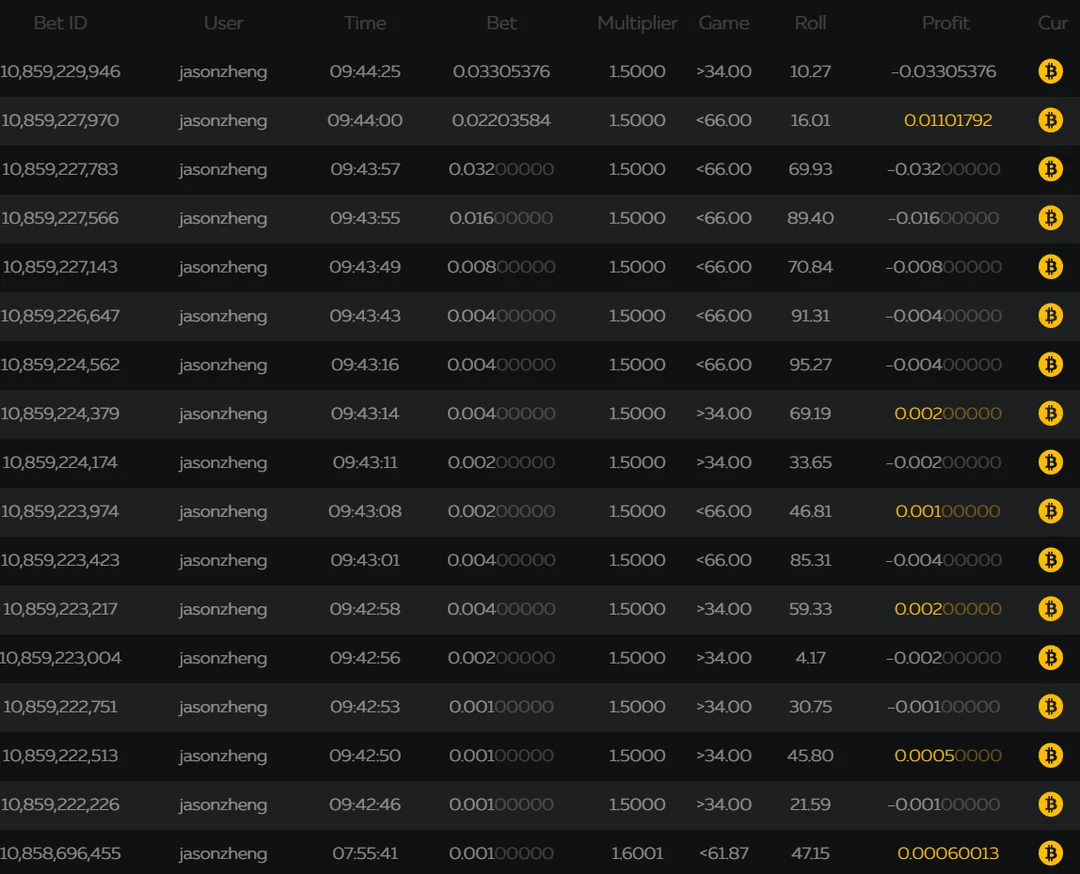
Because Banker/Player sits close to 50/50 in feel, baccarat attracts progression systems the way lamps attract moths. Martingale, Fibonacci, Labouchere, plus endless proprietary sequences promising “low risk.”
The unvarnished truth: no staking system alters expected value. What changes is the distribution of results — usually into “lots of tiny wins and one wipeout loss.”
Baccarat is unusually efficient at trapping system players because:
- streaks are normal (so losing streaks exist)
- bankrolls are finite (so doubling runs out)
- table limits exist (so progression hits a ceiling)
The full autopsy of the most famous one:
Expected loss in a “gentle” game: volume is the enemy, not variance
Baccarat feels slower than slots or crash games. That calm invites marathon sessions. Marathons create volume. Volume is the mechanism that converts a small house edge into actual money leaving your account.
Expected Loss ≈ Total Wagered × House Edge
So real baccarat strategy has nothing to do with hunting the perfect bet. It means capping Total Wagered through hard session rules.
Worked method here:
The Baccarat Calm Meter: a 0–10 self-check against tilt
Mid-session, run a quick internal scan. We call it the Baccarat Calm Meter. No mysticism — just honest self-reporting.
Calm Meter: 0–10
0–3: calm, playful, decisions feel boring (good sign).
4–6: mildly tense; the scoreboard has your full attention.
7–10: you feel due, you want to raise stakes, you’re bargaining with the shoe.
The enforcement rule:
If your Calm Meter hits 7+, the session ends. Not later. Not after “one more.” Now.
Deeper support for these states:
Optimal baccarat play, defined honestly: cheaper bets and smaller volume
You can’t influence the draw rules, so “optimal” in baccarat reduces to one goal: pay less for each unit of entertainment.
1) Prefer the best main bet (usually Banker in standard rules)
In most commission-based games, Banker carries the lowest house edge of the main bets. Player sits slightly behind but stays defensible.
2) Avoid Tie as a regular habit
Tie usually prices far above both main bets. Treat it like dessert: rare, strictly budgeted, and never justified by “it hasn’t hit in a while.”
3) Be suspicious of “bonus” side bets
Side bets buy novelty, often at several times the main-bet edge. If you want them, assign them a fixed entertainment budget and stop when it’s spent.
4) Control volume with session rules
Timeboxing plus hard stop rules is what stops a small edge from compounding into a large bill.
A five-step session blueprint you can copy tonight
No profit promises here — this routine minimizes self-inflicted damage and keeps baccarat parked in the entertainment lane.
Step 1: Confirm the variant and the paytable
Commission baccarat? No-commission with a half-pay on Banker six? EZ rules with pushes? Know the product before placing money on it.
Step 2: Set a session bankroll and a small unit size
Decide the session bankroll first, then pick a small flat unit. No progressions, no exceptions.
Step 3: Choose your bet plan (and lock it)
Disciplined sessions use one main-bet choice and resist roadmap-driven switching. Emotional switching is chasing in a suit.
Step 4: Set stop-loss, stop-win, and a timer
The stop-loss blocks chasing; the stop-win blocks “pressing” while up; the timer blocks volume creep in a game engineered to feel calm.
Step 5: Watch your Calm Meter
Feeling due, irritated, or eager to “fix” the shoe? End it. Baccarat costs least when you’re calm.
Take the template:
Provably fair baccarat: what verification proves and what it doesn’t
Most baccarat products are RNG or live-dealer builds. Provably fair baccarat is rarer than provably fair crash, dice, or mines, because baccarat is usually packaged as a conventional table game.
If you find a provably fair baccarat (or baccarat-style draw), hold onto the key distinction:
- Provably fair can help verify outcome integrity.
- It does not guarantee operator safety (withdrawals, KYC, dispute behavior).
Safety compass pages:
Does Provably Fair Mean Safe?
Provably Fair Common Red Flags
Six-point baccarat sanity checklist
- I know which baccarat variant this is (commission vs no-commission, special rules).
- I’m avoiding Tie as a default habit.
- I’m not using Martingale or progressions.
- I set a session bankroll and a small flat unit size.
- I set stop-loss, stop-win, and a timer.
- If I feel “due,” I stop (Calm Meter rule).
Printable structure: Session Rules Template
FAQ
Which baccarat bet has the best odds?
Across many standard games, Banker posts the lowest house edge of the main bets, commission included. Player usually trails it slightly. Exact figures shift between variants, so read the paytable and rules before betting.
Is the Tie bet worth it in baccarat?
Rarely, as anything more than a splurge. Tie commonly prices well above Banker or Player in house edge terms. If you want it, cap it as entertainment spend — don’t file it under strategy.
Do baccarat roadmaps (Big Road, etc.) help predict outcomes?
They track history attractively, but a fair game offers no reliable predictive signal from past hands. Streaks appear naturally in random sequences; “due” thinking is the classic misread.
Does Martingale work in baccarat?
No. Progressions leave expected value untouched. They manufacture frequent small wins that collapse on an inevitable losing streak, once exponential sizing meets your bankroll and the table limit.
What’s the smartest way to play baccarat?
Select the cheapest variant, take the lowest-edge main bet (usually Banker under standard rules), skip Tie and high-edge side bets by default, and enforce strict session rules — flat staking, stop-loss/stop-win, timeboxing — so volume stays capped.