
One provably-fair seed shared by every player. Bankroll skill is the only variable. A fresh game starts each Monday at 00:00 UTC.
Between weeks
No active challenge right now. A new one starts every Monday 00:00 UTC. Past weeks live in the archive.
Why “same seed for everyone” produces the only honest leaderboard
How Does This Compare to 0% House Edge Protocols?
Audited 100% RTP
Instead of standard 1.00% to 4.00% casino house margins, compare with mathematically verified 100% RTP Originals (0.00% House Edge) on Duel Casino:
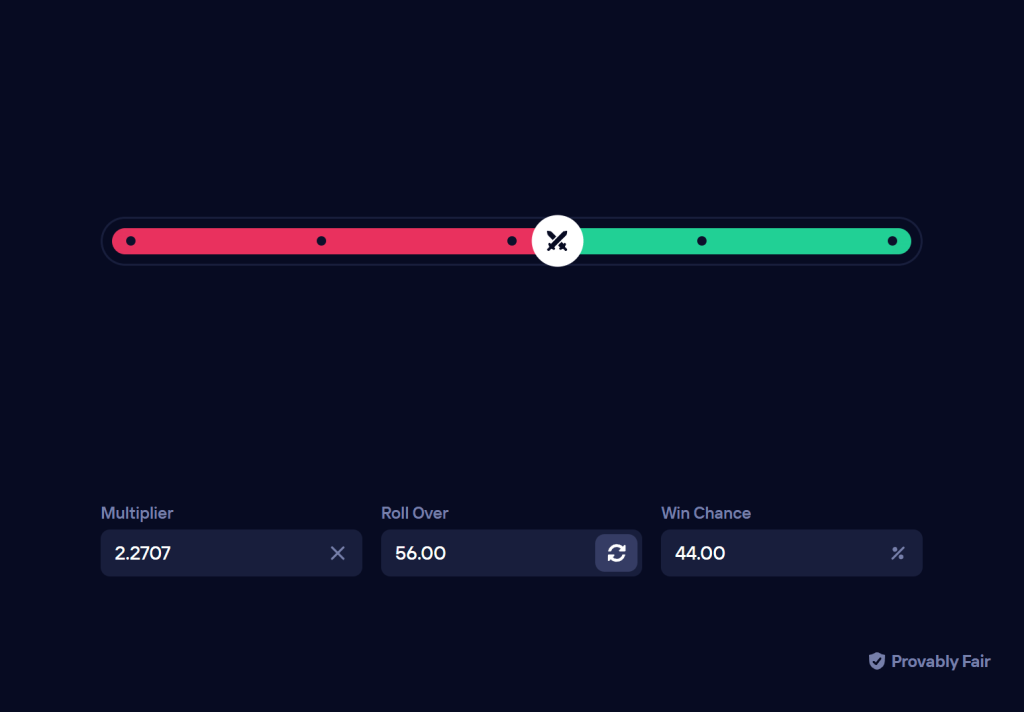
Standard gambling leaderboards blend two variables that belong apart: luck and skill. Two players betting on different rounds, one finishes richer — was that judgment or a friendlier RNG? There’s no way to know, so the ranking tells you nothing.
This challenge removes the ambiguity by handing every participant an identical provably-fair seed. The dice results, crash multipliers, and mine placements are bit-for-bit identical across all players. What differs is decisions: stake sizes, cashout rules, when to stop. The week’s top bankroll wasn’t lucky — it belonged to whoever played the fixed sequence best.
Verifying outcomes: how it works step by step
The server seed for the week sits on the dashboard from Monday morning. That’s deliberate, not sloppy. You can recompute any outcome the simulator will produce, plan your strategy on paper, then play through the real sequence. It’s a deterministic puzzle, not blind guessing.
Once the week closes, submissions get checked:
- The published server seed plus the (also-public) client seed define the exact byte stream.
- The player’s nonces 0 through N define which outcomes their N bets used.
- Their bet sizes are submitted alongside their final bankroll.
- Recomputing each nonce’s outcome and applying those bet sizes must land exactly on the submitted bankroll. A mismatch means the entry was made up.
In v1.1, verification will run automatically on every entry. Until then, submissions carry an unverified label until an admin spot-checks them, and any that fail reproduction get deleted.
Strategy notes before you play
The outcome sequence never changes, so planning ahead is legitimate. Three angles worth considering:
- With full hindsight, deterministic Crash is trivial: wager everything each round, cash out one cent below each bust point. The real game is reconstructing that strategy live, round by round.
- Bet-sizing constraints create actual strategy. Reaction time is finite, so pre-committed cashout targets and stakes that survive the sequence’s worst losing stretch tend to dominate.
- Run sizing ideas through the Monte Carlo simulator against your bankroll first. This challenge shows you one sequence; the strongest strategies hold up across many.
Frequently asked questions
Why reveal the server seed instead of hiding it like a casino would?
This is a strategy lab, not a sportsbook. Concealing the seed would make the task “predict genuinely random outputs” — impossible by definition. Publishing it reframes the exercise as optimal play against a known sequence, which is exactly what we want.
Is more than one submission allowed?
Re-submitting works, but only the highest final bankroll per browser is retained each week. Entries bind to a hashed IP address; switching networks resets that pairing if you want a clean attempt.
What happens to my localStorage state once the week ends?
Nothing destructive — your bankroll and bet log stay in your browser. Challenge state keys off the challenge ID, so when the next one goes live you simply start with a fresh bankroll on a new sequence.
What’s behind the weekly game rotation?
Each game tests a different muscle. Crash punishes poor risk discipline. Dice hinges on bet sizing. Mines comes down to stopping rules. Cycling through all nine over time covers the whole strategy surface, so no single approach can sit atop the leaderboard indefinitely.