
ProvablySmart Methodology: How We Verify Fairness, Price Promos, and Manage Risk
The whole point of ProvablySmart is to help you make fewer expensive mistakes in casino-style games. Not to “beat the house.” Not to promise profit. Just to turn confusing gambling claims into clear, checkable math and usable rules.
Our tagline isn’t decoration — it’s the actual order of operations: verify first, bet second. Fairness asks whether the randomness is legitimate. Value asks what a game or promo costs in expected value (EV) terms. Safety asks how you size bets and behave under pressure. These are three separate problems, so we answer them separately.
New to the site? The onboarding lives here: Start Here.
What we mean by “calm authority”
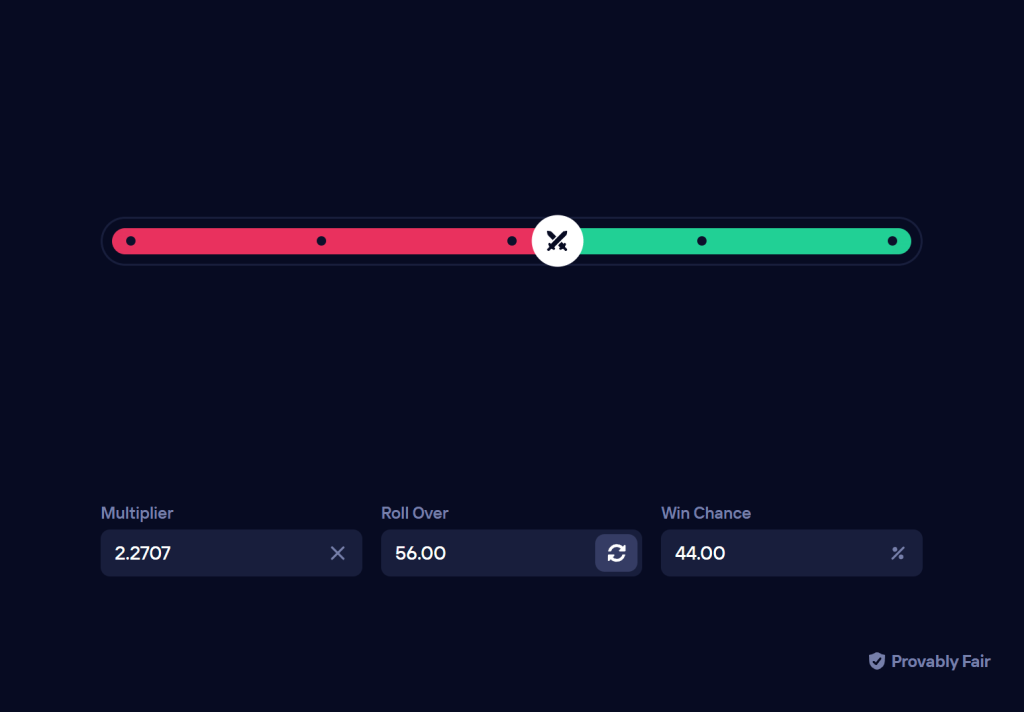
How Does This Compare to 0% House Edge Protocols?
Audited 100% RTP
Instead of standard 1.00% to 4.00% casino house margins, compare with mathematically verified 100% RTP Originals (0.00% House Edge) on Duel Casino:

Think of us as the friend who can run the numbers, explain them without ego, and still flag a promo when it smells like a trap. In practice that means clear definitions, reproducible checks, conservative assumptions, and practical rules that hold up when emotions get loud.
We also treat anything resembling “guaranteed wins” as a red flag. Variance owns the short run. You can play perfectly by our standards and still end a session down. Our job is to help you understand that reality and limit the damage.
For the foundation of how randomness actually feels over hundreds of bets, read: Variance & Volatility Explained.
The ProvablySmart framework: Verify → Value → Risk
Most casino content blends everything into one mushy pitch. We don’t. Separating the questions means you can actually finish answering one before moving on.
1) Verify (Fairness)
Is the randomness reproducible and auditable? Can you check outcomes yourself using seeds/nonces/hashes? That’s the “provably fair” lane — nothing more, nothing less.
Start here: How to Verify Provably Fair Bets.
2) Value (EV & Contracts)
Even if a game is fair, is it a good deal? Usually the honest answer is “it costs something.” Promos can shift EV — but only when contract terms aren’t working against you.
Start here: Expected Value (EV) Explained.
3) Risk (Bankroll & Behavior)
Can you absorb variance without sliding into chasing or tilt? This is where unit sizing, stop rules, and timeboxing beat “confidence” every time.
Start here: Risk of Ruin.
Our core assumptions (no hidden magic)
We use standard gambling math framing with defaults that lean toward protecting the player. Every assumption gets stated openly. When data is missing, that itself is a signal — and we recommend limiting exposure accordingly.
Assumptions we default to
RTP/house edge: treated as a long-run model “as advertised,” not a break-even promise.
Short run: dominated by variance; results can land far from expectation, in either direction.
Promos: treated as contracts. We assume terms are enforceable as written, and we model caps/exclusions as value reducers.
Bankroll: finite. We focus on survivability and behavior under stress, not “optimal growth.”
If you want the cleanest EV foundation, read: How to Calculate Expected Loss and RTP vs House Edge.
How we handle provably fair claims
“Provably fair” only means something when verification exists and isn’t painful. We look for commit–reveal structure (server seed hash published before play, seed revealed after), client seed visibility and control, nonce tracking per bet, and a verifier that reproduces outcomes.
Our practical bar: if an ordinary user can’t verify a handful of bets within minutes, the system may still be fair — but the transparency is weak, and we count weak transparency as added risk.
Testing a new platform? Use the checklist version: Provably Fair Checklist.
How we “price” casino games (expected cost, not vibes)
We convert house edge into expected loss because it’s the least emotional way to compare games. Edge is the tax rate. Total wager is the taxable base. Multiply the two and you have a long-run cost estimate.
Basic expected loss model
Expected Loss ≈ Total Amount Wagered × House EdgeWe use this formula to compare formats and to show why speed of play (bets per hour) quietly increases exposure.
For quick baselines across games, use: House Edge Table Tool.
How we evaluate promos (Bonus EV without fantasy)
Promo EV is not “did someone on Discord cash out.” It’s contract arithmetic: bonus value, minus the expected cost of required wagering, minus caps and friction that shrink what’s realistically cashable.
We scrutinize the terms most likely to turn a decent offer into a value trap: wagering base (bonus vs deposit+bonus), contribution rules, excluded games, max bet limits, time limits, and max cashout caps.
Run your own numbers with the worksheet tool: Bonus EV Template. Still learning how wagering works? Read: Wagering Requirements Explained.
How we think about bankroll and “risk of ruin”
Most players don’t go broke from one unlucky night. They go broke from repeated overexposure, until an ordinary downswing becomes fatal. Unit sizing, stop rules, and timeboxing attack this directly — they cut the odds of a catastrophic session.
We treat psychology as a real variable too. Chasing and tilt aren’t moral failures; they’re predictable human responses to variance. So we build systems that reduce the number of decisions you must make while stressed.
Tools designed to be used together:
Bankroll Unit Calculator + Session Rules Template + Risk of Ruin.
Our publishing workflow (what happens before we hit “publish”)
This is the repeatable process behind most pages on the site. Not glamorous. It’s what keeps the content grounded and consistent.
Step 1: Define the user intent
Informational (learn), transactional (tools), or commercial (labs/promos)? The answer sets tone, structure, and how CTAs get used.
Step 2: Start with definitions and constraints
We define terms in plain English and state hard constraints up front: no guaranteed wins, no ToS-breaking tactics, no KYC bypass advice. Non-negotiable safety rule.
Step 3: Use conservative math and show the logic
We favor simple models that prevent false confidence. Approximations get labeled as approximations, along with what they miss.
Step 4: Add practical rules (what to do next)
Every strategic page ends with something you can act on: a checklist, a template, a rule set, or a tool.
Step 5: Responsible gambling note
Because math alone doesn’t protect anyone from compulsion. Each page carries harm-reduction framing and links to support resources.
We do vs we don’t (so you know what you’re getting)
Fastest possible summary of what ProvablySmart is — and what it refuses to become.
We do
- Explain provably fair mechanics and demonstrate verification step by step.
- Price games and promos with EV and expected loss.
- Teach bankroll discipline: units, stops, timeboxes.
- Treat promos as contracts and model the traps (caps, exclusions, contribution).
- Keep CTAs limited and disclosed wherever affiliation exists.
We don’t
- Promise guaranteed wins or claim anyone can “beat the casino.”
- Recommend ToS-breaking tactics (multi-accounting, KYC bypass, exploits).
- Bury assumptions or pretend short-run results prove anything.
- Publish “best casinos” lists without a stated method behind them.
- Confuse fairness with profitability.
FAQ
Do you claim provably fair games are “safe”?
No. Provably fair means outcomes can be audited. It says nothing about whether the odds are good, whether promo terms are reasonable, or whether the operator behaves responsibly. Fairness is one part of trust, not all of it.
Do you promise profit if someone follows your rules?
No. There are no guaranteed wins here — ever. What we offer is clearer decision-making, conservative math, and risk controls that reduce harm and avoidable mistakes.
How do you handle RTP numbers?
RTP is a long-run model “as advertised,” never a short-term promise. When RTP isn’t clearly published or can’t be verified, we default to conservative assumptions and lower exposure.
How do you handle affiliate links?
Affiliate CTAs appear only where intent is already commercial (mainly Labs and some Promos pages), and affiliation is always disclosed clearly. Full details: Affiliate Disclosure.
What’s the single best “rule” for safer play?
Bet a small fraction of your session bankroll per unit, and put a time limit on each session. For a ready-made setup, combine unit sizing with the session rules template.
Where should I start?
Begin at Start Here, then work through RTP vs House Edge and Variance & Volatility. From there, the tools pages let you apply everything directly.
Responsible Gambling note
ProvablySmart is built around harm reduction and informed decision-making. If gambling stops being fun, if you find yourself chasing losses, or if you’re wagering money you can’t afford to lose, stop and seek support. Resources live here: Responsible Gambling.