
Provably Fair pillar: Common Red Flags
Provably Fair Common Red Flags: How to Spot “Fairness Theater” Before It Costs You
Provably fair verification is a genuinely good invention for online gambling. Its Achilles heel? Almost nobody checks the math. And in any market where nobody checks, marketing departments get inventive.
Think of this page as a filter, not a panic button. It exists so you can tell when a casino waves the phrase “provably fair” like a flag while quietly making verification fiddly, murky, or conveniently half-finished.

Real provably fair feels boringly verifiable. If it feels mysterious, it’s usually not transparency — it’s friction.
What counts as a red flag here — and what doesn’t
How Does This Compare to 0% House Edge Protocols?
Audited 100% RTP
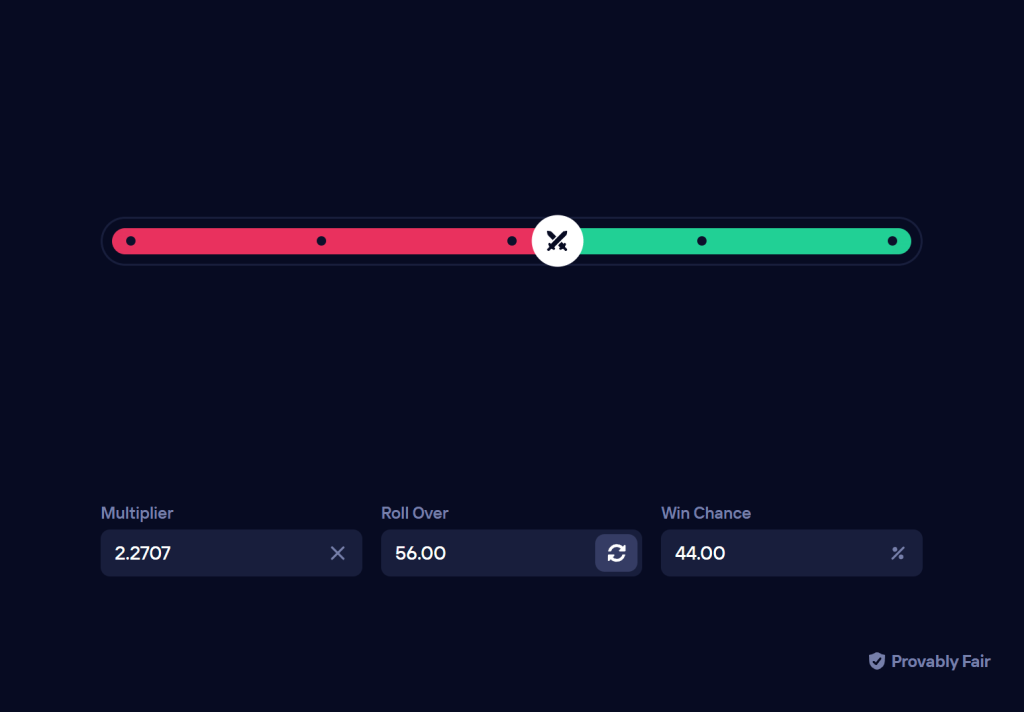
Instead of standard 1.00% to 4.00% casino house margins, compare with mathematically verified 100% RTP Originals (0.00% House Edge) on Duel Casino:

Losing three bets straight is not a red flag. That’s variance doing its usual thing, and fair randomness can absolutely sting.
The flags we catalog are structural: absent data, vague methodology, claims you can’t test, or design decisions that obstruct independent checks without offering a reason.
If streaks have rattled you and you want to recalibrate:
Variance & Volatility Explained
Why High RTP Still Loses Short-Term
The Provably Fair “Baseline” (what honest implementations usually include)
First, calibrate on normal. A provably fair system built for actual verification typically ships with all of this:
- Pre-commitment to a Server Seed Hash (shown before outcomes).
- Access to the revealed Server Seed after a seed cycle (or after the bet).
- Your Client Seed is visible and often editable.
- A Nonce exists and is visible per bet (or per game session).
- A clear verification method (built-in or documented) that reproduces outcomes deterministically.
Take away even one component and the label stops being a proof — it turns into a mood.
Need the mechanics refresher?
Red Flag #1: No server seed hash shown before you play
No Server Seed Hash before outcomes are produced? Then there is no binding commitment scheme.
Here’s why that matters: publishing the hash is the operator’s public timestamp — a way of saying “this secret already exists.” Skip it, and nobody can rule out the casino picking seeds after seeing your bets. You can’t prove they didn’t; they can’t prove they did it honestly.
Healthy behavior: you can find a server seed hash in the fairness panel or settings before your session, and it stays consistent until the seed changes.
Red Flag #2: Server seed is never revealed (or only “sometimes”)
A seed reveal that never arrives is a receipt printer with no paper. Technically present. Functionally useless.
Watch for operators leaning on phrases like “seeds rotate automatically,” then failing to give you the revealed seed from completed cycles — or opening a reveal window so narrow you’d need to be logged in at exactly the right moment.
Genuine transparency looks different: the revealed server seed sits in your history whenever you want it, verifiable on your schedule rather than the casino’s.
Red Flag #3: Nonce is hidden or not tied clearly to the bet you’re verifying
The nonce is just a round counter. Boring input, and precisely the piece that goes missing in sloppy builds.
Without a visible nonce for a given bet, checking becomes a guessing exercise. Some casinos paper over this with an internal verifier that auto-fills every field — which helps only if you can inspect what it filled. When the inputs are invisible, so is the trust.
Healthy behavior: bet history shows the nonce per round (or clearly explains how nonce increments per game).
Full walkthrough of how nonces work:
Red Flag #4: “Provably Fair” is only a logo, not a system
Plenty of sites stamp a badge on the homepage and then offer:
- No seed panel
- No bet-level verification data
- No documented method
- No actual verifier tool
A badge with no backing mechanism isn’t provably fair — it’s decor.
A useful heuristic: real implementation lets you run a check inside a minute. The fake kind expects belief instead of clicks.
Red Flag #5: Verification “works” only inside their own verifier
An in-house verifier is convenient. Convenience alone, however, doesn’t establish anything.
When the operator’s closed tool is the only place results reproduce, and the underlying details aren’t published, you’ve hit a single point of trust:
- Inputs are auto-filled and not visible
- Algorithm is not documented
- Mapping from hash output to game outcome is hidden
- No external verifier can reproduce the outcome
Healthy behavior: you can take the same values (server seed, client seed, nonce) and reproduce the outcome with an independent verifier, or at least follow published steps to do so.
We keep a page listing independent tools for exactly this purpose:
Red Flag #6: The “how it works” explanation is vague or hand-wavy
A legitimate explainer names its parts: which inputs go in, how the hash commitment operates, whether hashing uses plain hash functions or HMAC, and how raw output converts into game results.
Vague versions tend to sound like:
- “We use advanced cryptography.”
- “The blockchain guarantees fairness.”
- “Our RNG is provably fair.” (without showing a method)
- “Results are random and cannot be changed.” (without providing proof steps)
Boring is the goal. Good documentation lists inputs, walks through steps, and tells you where to click.
For the unexciting-but-correct foundation:
Red Flag #7: Seeds change in suspicious ways (or too often) without a clear reason
Rotation itself is fine. What shouldn’t happen is opacity about when it rotates, why, and how you verify results across the boundary.
Treat these as warnings:
- Server seed hash changes frequently mid-session without you triggering it.
- No clear “seed cycle” boundaries.
- Seed reveal doesn’t match the previously shown hash (this is the biggest possible alarm).
There can be innocent causes — you clicked “change seed,” a fresh login reset defaults, or games use individual seeds. An honest setup says so plainly and still lets you check everything.
Red Flag #8: Only some games are provably fair, but marketing implies all of them are
Mixed catalogs are common in this industry:
- In-house instant games are provably fair.
- Third-party slots and live casino are traditional RNG / studio systems (not provably fair).
Nothing wrong there by itself. Trouble starts when promotional copy smudges the distinction and lets readers assume the whole lobby verifies.
Healthy behavior: the casino clearly labels which games are provably fair and which aren’t, and provides verification tools only where it truly applies.
Red Flag #9: Bet history is incomplete or not exportable
You cannot verify what you cannot review. Truncated histories, inaccessible older rounds, or restricted views all make your verification routine fragile.
Honest platforms don’t flinch at their own records. They hand them over.
To keep the routine consistent over months, lean on a written checklist instead of memory:
Red Flag #10: “Provably Fair” is used to distract from other risk
This one isn’t technical — it’s rhetorical, and that makes it harder to spot.
Certain operators stretch “provably fair” into a safety claim. It proves exactly one narrow fact: results weren’t edited after the bet. Nothing about withdrawals, KYC friction, limit enforcement, or dispute resolution follows from that.
When the pitch reads “we’re provably fair, so relax,” answer: “Great. Now show me how cashouts actually behave.”
We dedicated a full page to this misconception:
What to do when you see red flags (a calm response plan)
Flags call for firmer rules, not alarm. Work through four moves:
Step 1: Try to verify one bet properly
Collect server seed (revealed), client seed, nonce, and server seed hash. Use the built-in verifier first. Then cross-check with an external verifier if possible.
Step 2: If verification is unclear, reduce exposure
Shorter sessions, smaller units, and strict stop rules. Transparency feeds trust, and trust should size your risk.
Bankroll guardrails: Stop-Loss & Stop-Win and Timeboxing Sessions.
Step 3: Document inconsistencies
Genuine mismatch? Screenshot the seeds, hash, nonce, and result before anything rotates again. That’s not paranoia — it’s record-keeping.
Step 4: Treat repeated friction as an answer
A venue that makes every check tedious has told you something through UX alone. Real transparency never hides behind effort walls.
Mini-checklist: “Is this provably fair system real?”
- I can see a server seed hash before play.
- I can access the revealed server seed after a cycle.
- I can see my client seed and edit it if I want.
- I can see the nonce tied to the specific bet in history.
- I can reproduce the outcome with a verifier (built-in or external).
- The casino clearly labels which games are provably fair and which aren’t.
Prefers a reusable tool over memorizing? Here:
FAQ
Are red flags proof of cheating?
No — not on their own. Poor interfaces and thin documentation cause plenty of false alarms. But persistent gaps such as hidden nonces, withheld seed reveals, or hash mismatches are structural failures worth taking seriously.
What’s the biggest provably fair red flag?
Without question: a revealed server seed that fails to match the previously published hash. That breaks the commitment scheme at its core and invalidates whatever else the platform claims to verify.
Why do some casinos only make some games provably fair?
In-house titles can be engineered around seed-based verification. Licensed third-party slots and live studios run systems of their own that don’t support client-side checking. The flaw lies in marketing that pretends otherwise.
If a casino is provably fair, is it safe to deposit?
Verification covers result integrity only. Withdrawal processing, KYC conduct, and dispute handling remain separate risks. Read: Does Provably Fair Mean Safe?
What should I do if I can’t verify at all?
Then treat the claim as decoration. Keep sessions short, skip bonuses that trap deposits behind wagering requirements, and spend your money somewhere the data is open and reproducible.