
Math pillar: Expected Loss
How to Calculate Expected Loss in Casino Games (The “Volume Tax” Nobody Talks About)
Expected loss is the average price you pay for playing, measured against turnover rather than deposits. The casino’s edge charges every single bet, not every dollar you load into your account.
Players usually reconcile deposits against withdrawals and call it a day. Operators watch a different figure because it forecasts the result of their business: total wagered. Once that clicks, the puzzle of “I deposited $100, where did it go?” dissolves. Nothing vanished in one dramatic moment. A small edge applied itself, over and over, to everything you put through the game.
Expected loss is not a prophecy. It’s the long-run bill for your volume.
Expected loss in one sentence
How Does This Compare to 0% House Edge Protocols?
Audited 100% RTP
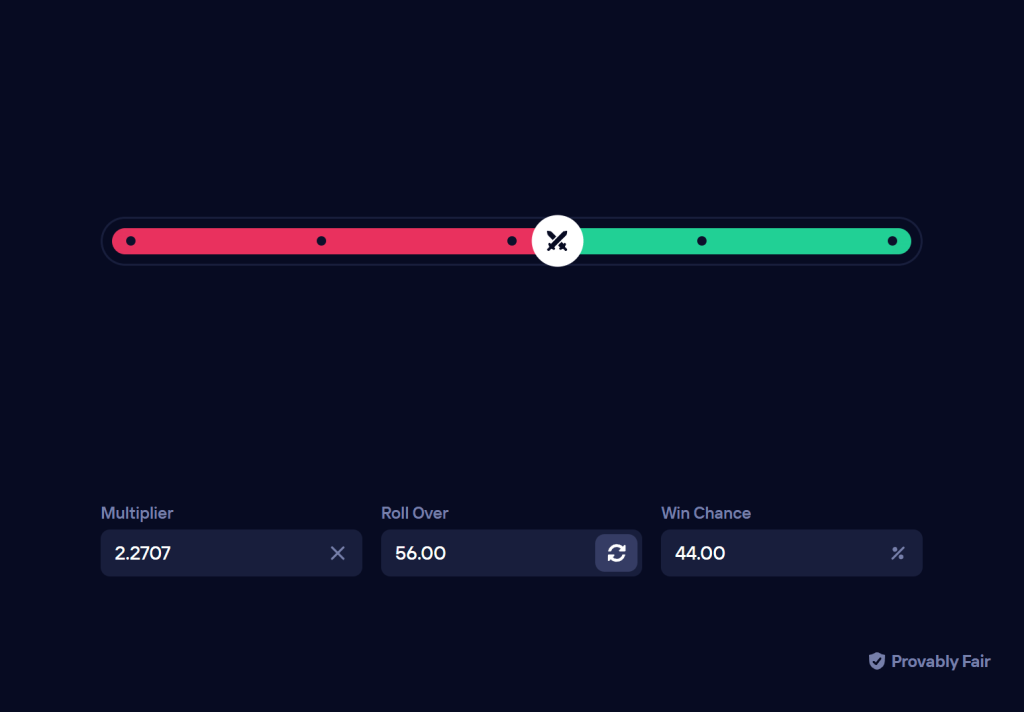
Instead of standard 1.00% to 4.00% casino house margins, compare with mathematically verified 100% RTP Originals (0.00% House Edge) on Duel Casino:

Expected loss ≈ Total Wagered × House Edge
One multiplication. That’s the entire engine. The rest of this page exists to unpack what “total wagered” hides, how to land on a usable edge figure, and why this arithmetic should shape your bankroll rules.
Example: If you wager $5,000 total in a game with a 2% house edge, your expected loss is about $100 on average.
“On average” is doing real work in that sentence. A single session can land far above or below the figure because of variance. Treat expected loss as a long-run anchor, never a short-run promise.
Step 1: Understand “total wagered” (the number that actually drives cost)
Total wagered means every bet added together. Bet $10 a hundred times and your turnover is $1,000, even if you started with a $100 deposit. That gap is exactly where players get ambushed.
Deposits lie, in a sense, because money recycles. Your balance oscillates up and down while the edge takes its cut from each individual wager. Loss scales with turnover, not with what you funded.
Volume reality: Fast games (Crash, Dice, Mines) can generate massive volume quickly. Even “small” bets become big total wagered over time.
It’s also the logic behind timeboxing sessions: cap exposure, and turnover follows exposure down.
Step 2: Get a house edge estimate (good enough beats perfect)
The formula needs an edge number. Three practical sources:
- A house edge table (best for comparing common games): House Edge Table.
- Game RTP (if available) and convert it: House Edge ≈ 100% − RTP.
- For skill games (like blackjack), your strategy quality changes the edge.
Precision isn’t the point. A rough figure is enough to catch the expensive errors—like treating a high-edge game as if it were a bargain.
Step 3: Do the expected loss math (with real examples)
Three worked examples follow. Don’t memorize them. Use them to calibrate your sense of scale, because a number without scale is just decoration.
Example A: European roulette session
Assume house edge ~2.7%. You place 200 bets of $5.
Total wagered: 200 × $5 = $1,000
Expected loss: $1,000 × 2.7% ≈ $27
Variance could hand you +$100 or take −$100 in that session. The long-run sticker price on that turnover is still roughly $27.
Example B: Fast game volume (Dice/Crash/Mines)
You play quickly and place 600 bets of $2.
Total wagered: 600 × $2 = $1,200
If the effective edge is 1%, expected loss ≈ $12. If it’s 2%, expected loss ≈ $24.
Fast games “drain” balances for this exact reason: the edge collects quietly across enormous turnover while each individual bet feels trivial.
Example C: Slots (higher edge + high volatility)
You spin $1 per spin for 1,500 spins.
Total wagered: 1,500 × $1 = $1,500
If the slot edge is 5%, expected loss ≈ $75.
Slots look chaotic because volatility runs high—big hits do land—but the cumulative cost of 1,500 spins tends to be steep regardless.
Expected loss vs actual results (why you can win and still be “paying”)
Expected loss describes an average across many sessions. Any single session can finish above or below that line purely through variance.
Which produces one very common reasoning error:
“I’m up today, so the game must be good value.”
A winning day changes nothing about the game’s underlying expected loss. Variance simply handed you a lucky sample. That’s legitimate—but the same variance can claw it back, often brutally, if you stretch the session and inflate turnover.
If this topic is still fuzzy, read:
Variance Explained.
The “volume tax” insight (why timeboxing is secretly math)
Frame it this way: the house edge functions as a volume tax. Turnover rises, the tax bill rises with it. Every time.
So the best “math-based” bankroll protections turn out to be plain exposure controls, not esoteric systems:
- Timeboxing: reduces volume by limiting session length. Guide.
- Smaller unit size: reduces volume growth rate and ruin risk. Guide.
- Stop-loss/stop-win: prevents emotional volume spikes. Guide.
- No chasing: chasing is volume inflation under stress. Guide.
Notice the pattern: none of these predict outcomes. All of them govern behavior. That’s the only “player edge” that survives contact with reality.
How to estimate expected loss during a session (quick mental method)
Mid-session, a rough estimate takes three quick steps:
1) Estimate bet count
Roughly how many rounds/spins/bets have you placed? 100? 300? 800?
2) Multiply by average bet size
Bet count × average stake = total wagered estimate.
3) Multiply by edge
Total wagered × house edge = expected loss estimate.
The point isn’t guilt. It’s grounding—so that “just a little longer” reveals itself for what it is: another $X of volume tax.
Expected loss and bonuses (where EV finally matters)
Bonus EV has a cost side, and expected loss is it. When a promotion carries wagering requirements, expected loss estimates what that rollover will actually cost you.
Promo EV ≈ Bonus Value − (Required Wagering × House Edge)
That’s the skeleton of bonus analysis. Live promos bury extra traps—max cashout caps, excluded titles, low-contribution games—but this formula is the first reality check before any of that. Bonuses tied to wagering are never free money; the rollover cost always needs to be priced in.
Bonus EV deep dive:
How to Calculate Bonus EV.
The trap: using expected loss as a reason to “recover”
Here’s an odd failure mode: some players learn the formula and then treat the resulting figure as a bill they’re obligated to pay—so they keep playing to “make it worth it.” That’s chasing, wearing a math costume.
Expected loss is information, not a dare. If it motivates anything, it should be shorter, cleaner sessions—not longer, more desperate ones.
If you notice bargaining thoughts, read:
Tilt Triggers and
Chasing Losses.
A clean session structure that respects expected loss
To keep expected loss from graduating into “expected disaster,” borrow the boring structure that holds up:
- Unit size: 1–2% of session bankroll (flat staking).
- Timer: 20–45 minutes (timeboxing).
- Stop-loss: -10% to -20% of session bankroll.
- Stop-win: +10% to +20% of session bankroll.
- Rule: stop at timer OR stop rule — whichever happens first.
Use the copy/paste version:
Session Rules Template.
Responsible play
If gambling feels urgent, emotionally necessary, or hard to stop, please pause and seek support. Math can clarify the game, but it can’t replace boundaries when behavior starts to hurt your life.
Resources:
Responsible Gambling.
FAQ
Is expected loss the same as “what I will lose”?
No. It’s the long-run average cost of your turnover. A given session can beat or crush that number because of variance. Think baseline, not forecast.
Why does expected loss use total wagered instead of deposit?
The edge charges each bet individually. A single deposit can cycle through dozens of wagers, so turnover from $100 can easily reach $1,000 or more.
Can I reduce expected loss without stopping?
Three levers exist: pick lower-edge games, shrink volume with shorter sessions, and reduce unit size. Betting systems that don’t alter EV won’t do it.
Does provably fair change expected loss?
Not directly. Provably fair lets you verify outcomes weren’t manipulated—nothing more. Expected loss is a function of house edge and volume, and a perfectly fair game can still carry negative EV.
What’s the fastest practical use of expected loss?
Two places: pricing the turnover cost mid-session, and auditing bonus wagering requirements. Both keep you grounded when platforms work hard to make volume invisible.