
Provably Fair pillar: Safety Reality Check
Does Provably Fair Mean a Casino Is Safe? (Short Answer: No — Here’s What Actually Matters)
Crypto gambling gave players one genuinely useful tool: provably fair verification, which lets you confirm a result wasn’t altered after your bet was placed.
Then comes the expensive mistake: treating “fair randomness” as “safe operator.” Those are separate concerns with almost no overlap.
A casino can pass every verification check and still fail you where money actually moves: withdrawals, KYC requests, account limits, bonus enforcement, dispute handling, and basic account security.
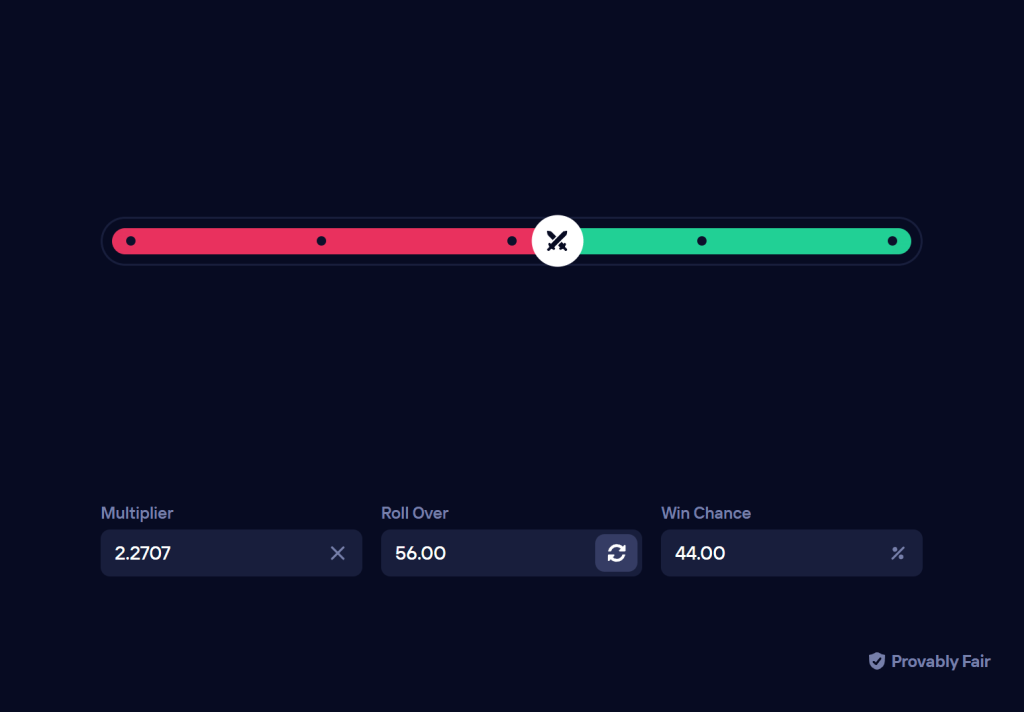
Provably fair proves the dice roll wasn’t edited. It says nothing about whether the house will make cashing out painful.
What provably fair actually guarantees
How Does This Compare to 0% House Edge Protocols?
Audited 100% RTP
Instead of standard 1.00% to 4.00% casino house margins, compare with mathematically verified 100% RTP Originals (0.00% House Edge) on Duel Casino:

Pin down the definition first, before marketing language blurs it.
Provably fair guarantees: given the published inputs (server seed, client seed, nonce), the outcome can be reproduced deterministically, and the casino can’t change the secret server seed after committing to its hash (if the commitment is implemented correctly).
In plain words: you can independently check that a game result wasn’t rewritten after you bet.
Want the mechanics behind that promise?
What provably fair does NOT guarantee (the real safety list)
Outcome integrity is one variable. The items below decide whether a casino behaves fairly with your documents, payouts, and time:
- Fast, reliable withdrawals (and no sudden delays once you win)
- Reasonable KYC behavior (clear rules, not endless document fishing)
- Transparent limits (min/max cashout, fees, processing time)
- Fair bonus enforcement (no trap clauses deployed to void wins)
- Account security (2FA, session controls, sane risk systems)
- Dispute handling (support that resolves issues instead of looping you)
- Regulatory accountability (some framework that punishes misconduct)
So yes: an operator can be provably fair and still feel like withdrawing from a haunted vending machine.
The two-layer model: Fair Game vs Safe Operator
Adopt this two-layer split and shiny labels stop working on you.
Layer 1: Game integrity (provably fair lives here)
The question it answers: “Was the outcome produced honestly by the stated method?”
Provably fair handles this well — particularly for in-house instant games.
Layer 2: Operator integrity (your money lives here)
The question it answers: “Will this casino pay me, apply rules consistently, and treat my account predictably?”
Provably fair can’t fix this layer. Licensing, written policies, support culture, and risk controls either handle it or don’t.
Most player disasters start with a strong Layer 1 score being assumed to cover Layer 2. It doesn’t.
How “safe” casinos actually hurt players (real-world failure modes)
When players call a casino “not safe,” the story usually matches one of these:
1) Withdrawal friction when you win
Deposits clear instantly. Then payouts sit “pending,” “under review,” or in compliance. Occasional delay can be legitimate; friction that consistently follows wins is a pattern worth respecting.
2) KYC escalation after a big win
Verification belongs in regulated gambling. The danger sign appears when requirements materialize only after a win, keep expanding, or serve purely as a stalling tactic.
3) Bonus terms used as a weapon
Some operators wield bonus terms like an escape hatch. You can play entirely straight and still trip over max bet caps, restricted games, or fuzzy “irregular play” wording.
Guard yourself with these pages:
Max Cashout Traps
Excluded Games & Contribution
Wagering Requirements Explained
4) Account restrictions and sudden limit changes
“For risk reasons” — sometimes true, sometimes a blanket excuse. Safe operators publish consistent limits. Unsafe ones rewrite the rulebook when results stop going their way.
Note what’s absent from this list: “the dice was rigged.” Today’s problems are usually not rigged outcomes — they’re policy risk.
Why provably fair doesn’t protect you from policy risk
Provably fair covers the integrity of one game result at a time. Policy risk lives outside that result, inside:
- terms of service
- withdrawal policies
- bonus enforcement
- risk department decisions
- support quality and documentation
An operator can hand you flawless verification data and still say: “We’re holding your withdrawal pending a review.” Provably fair has no counterargument to that. Only accountability does.
Hence our stance: provably fair is a trust filter (a good sign), never a trust conclusion (safe by default).
The “Safe Casino” checklist (practical, not romantic)
Judging safety gets simpler with a checklist. Think pre-road-trip car inspection: you’re removing obvious hazards, not forecasting crashes.
A) Payout clarity
- Clear stated withdrawal times (not vague “instant” claims)
- Clear withdrawal minimums/maximums
- Clear fee policy (network fees vs platform fees)
B) KYC behavior
- KYC rules written plainly
- Requests stay consistent (never endlessly expanding)
- Clear privacy posture (how documents are stored/handled)
C) Bonus risk controls
- Max bet rules visible upfront
- Excluded games listed explicitly
- Max cashout limits disclosed before opt-in
The promo cluster covers the details:
D) Account security
- 2FA available
- Login/session controls (basic account hygiene)
- Anti-fraud systems that don’t punish normal users
E) Transparency culture
- Provably fair data accessible (seeds, nonce, hash)
- Support answers specific questions with specifics
- Policies stay stable (no “we decide whenever” energy)
Multiple failed areas = information, not drama. Fewer risk points is the goal.
“But it’s on the blockchain…” — the myth that keeps people careless
The word “blockchain” relaxes people’s brains like a lullaby. Resist that.
Blockchain can support transparency in certain contexts, yet it enforces nothing about operator conduct. A casino can still:
- delay withdrawals
- enforce vague terms aggressively
- freeze accounts under “risk reviews”
- provide poor support
Provably fair is a cryptographic method. “Blockchain” is a technology stack. Neither substitutes for accountability.
How to use provably fair the right way (inside a bigger safety routine)
This three-step routine is what actually shields players:
Step 1: Verify the game integrity (quick sample)
Run the verifier workflow across a handful of bets and confirm outcomes plus hash commitments. That addresses the “rigged result” fear directly.
Step 2: Reduce policy risk (avoid lock-in behavior)
Skip complicated bonuses until payout behavior earns trust. If you accept promos anyway, run the checklist and play clean.
Step 3: Control exposure (bankroll boundaries)
Even a well-run casino extracts expected loss if you play long enough. Timeboxing, unit sizing, and stop rules keep “fair play” from becoming “slow bleed.”
Timeboxing Sessions
Stop-Loss & Stop-Win
How to Calculate Expected Loss
Calm, boring, repeatable. Those traits are precisely why the routine holds up.
Responsible play note
Safety isn’t only about casinos. It’s also about your state of mind. If gambling feels urgent, emotional, or hard to stop, please take that seriously and seek support.
FAQ
If a casino is provably fair, can it still be a scam?
Yes. Outcome integrity is all provably fair covers. Withdrawals, KYC, bonus enforcement, and account decisions remain operator risks that verification cannot eliminate.
What’s the safest way to use a new provably fair casino?
Verify a small sample of bets first, skip complex bonuses until cashouts prove reliable, and set strict bankroll boundaries — timeboxing plus stop rules. Treat early sessions as testing, not commitment.
Does provably fair mean the RTP is 100%?
No. Verification of randomness is not generosity. RTP and house edge are separate metrics, and a fully verifiable game still carries negative expected value.
What’s the biggest “safety” risk players ignore?
Policy risk: unclear bonus rules, vague “irregular play” clauses, unpredictable KYC and withdrawal behavior. These touch real money far more often than a single rigged-feeling roll.
Where should I go next?
Read Provably Fair Common Red Flags and build a printable routine with Provably Fair Checklist.