
A “100% deposit match” banner looks generous until you read the rollover clause. This bonus EV calculator does the arithmetic for you — deposit, wagering multiple, house edge, cashout cap — and tells you whether a promotion is worth claiming or should be ignored (background reading: the Bonus EV Template guide).
Bonus EV Template
How to audit a casino bonus in 5 steps
How Does This Compare to 0% House Edge Protocols?
Audited 100% RTP
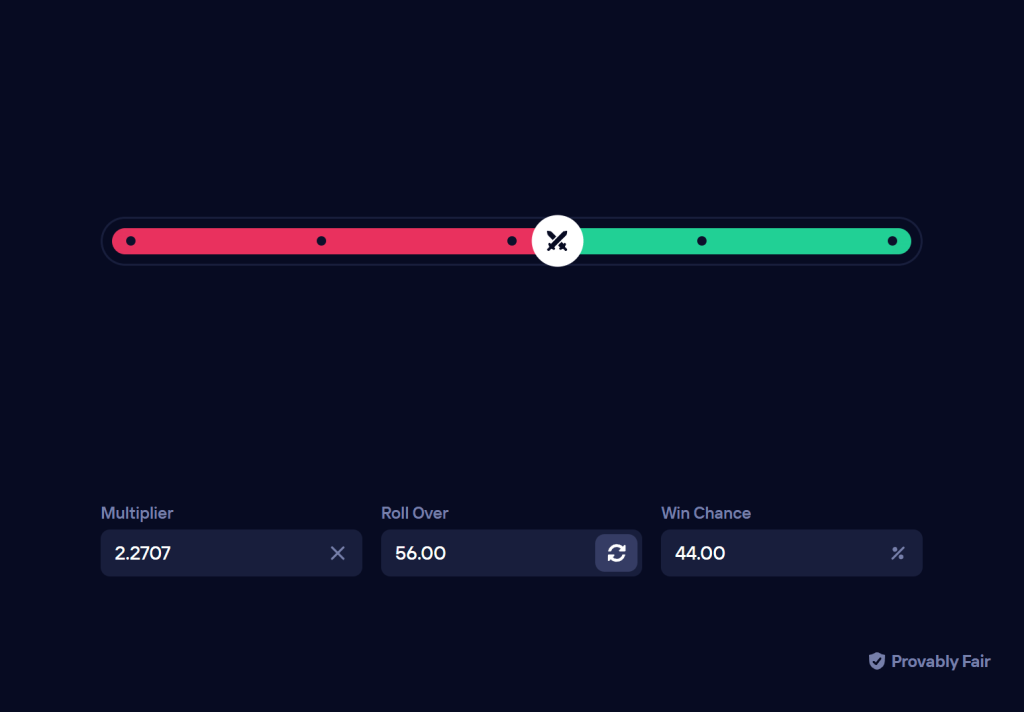
Instead of standard 1.00% to 4.00% casino house margins, compare with mathematically verified 100% RTP Originals (0.00% House Edge) on Duel Casino:

Expected Value (EV) is the average amount you keep once every wagering requirement has been cleared. Pull five numbers from the terms and conditions before you commit a cent:
- Deposit: The cash amount you intend to transfer.
- Bonus %: The match rate. A 100% match on a $100 deposit adds a $100 bonus to your balance.
- Wagering Multiple (×): The rollover figure — commonly 30x, 35x, or 40x.
- Wager Applied To: Does the multiple hit the **Bonus only**, or the combined **Deposit + Bonus** sum? This one line of fine print can double your clearing requirement.
- Game House Edge (%): The edge of whatever game you’ll grind during clearance — roughly 1.0% for blackjack, 2.5% for European roulette.
The math: How Expected Value (EV) is calculated
I once assumed every casino bonus was money on the table. A 40x rollover applied to deposit + bonus, cleared on slots, erased my balance somewhere around bet index 30. Lesson learned: run the numbers first.
Below is the exact procedure that decides whether a bonus is positive expected value (+EV) or negative expected value (-EV).
1. Calculating the total wagering target
First, work out how many dollars of bets stand between you and a withdrawal.
When wagering applies to the **Bonus Only**:
Wager Target = Bonus_Value * Wagering_Multiple
When wagering applies to **Deposit + Bonus**:
Wager Target = (Deposit_Value + Bonus_Value) * Wagering_Multiple
2. Calculating the expected cost of clearing
Every spin and hand pays its tax to the house edge. Multiply total betting volume by that edge:
Expected Cost = Wager Target * (House_Edge_Percent / 100)
Example: $3,500 in wagers on a game with a 1.0% house edge costs $35 in expectation. Not a prediction — an average across many runs.
3. The final EV formula
Subtract expected clearing cost from raw bonus value:
EV = Bonus_Value - Expected Cost
A positive result means the offer is **+EV** — after variance runs its course, the math favors you. A negative result (**-EV**) means the clearance grind costs more than the bonus returns, and skipping it is the correct play.
Strategy: How to clear wagering safely
- Check game weightings first: Low-edge games such as blackjack or baccarat are frequently throttled. If blackjack contributes only 10% toward wagering, your effective rollover target inflates by 10x. Read the promo details before choosing a game.
- Cashable beats sticky: A cashable bonus lets you withdraw leftover funds once wagering completes. A sticky (phantom) bonus lets you play with the money, but strips the bonus portion from your balance at withdrawal time.
- Mind the clock: A $10,000 wagering target at $2 per spin takes 5,000 spins. Confirm the promotion’s expiry window actually fits your pace.
Frequently asked questions
What does a positive EV (+EV) bonus mean?
Over many attempts, the edge sits with the player: on average you finish the wagering requirements ahead. Promo-hunters who take bonuses seriously claim only +EV offers.
Why do casinos offer +EV bonuses?
They are customer-acquisition loss leaders. Operators bank on most players grinding high-edge slots, playing imperfect strategy, or continuing past the clearance point — handing the advantage back to the house.
What is game wagering contribution? (Read our full guide to Wagering Requirements Explained)
Contribution weighting is the share of each bet that counts toward rollover. Slots typically count 100%, so a $5 bet trims the target by $5. Blackjack at 10% means that same $5 bet only trims it by $0.50.