
Games pillar: Plinko Strategy
Interactive Tool: Simulate Stake Plinko Pockets & Bounces
Explore the binomial distribution across 8 to 16 rows and Low/Medium/High risk configurations. Test our Stake Plinko Calculator & Odds Simulator to verify ball bounce paths with provably fair seeds.
Plinko Strategy: Risk Settings, Variance Control, and Bankroll Rules (So You Don’t Drop Your Honey Pot)
A ball drops, clips a dozen pegs, and ends up somewhere you didn’t plan. That’s the entire appeal of Plinko — and also the trap. Each bounce carries the same whispered promise: the next one hits the big slot.
Honest framing first: Plinko offers nothing to solve. It’s a variance engine with a payment table attached. A workable Plinko strategy has three parts — pick a risk profile deliberately, cap how many bets you place, and stay out of chase mode when randomness turns cold.
What follows is the practical version: how the odds are shaped, why streaks feel aimed at you personally, what risk modes actually change (spoiler: your experience, not your expected value), and the session rules that keep both bankroll and mood intact.

Plinko doesn’t reward cleverness. It rewards boundaries. Set them first, then drop the ball.
How Plinko works (and why it feels fair even when it hurts)
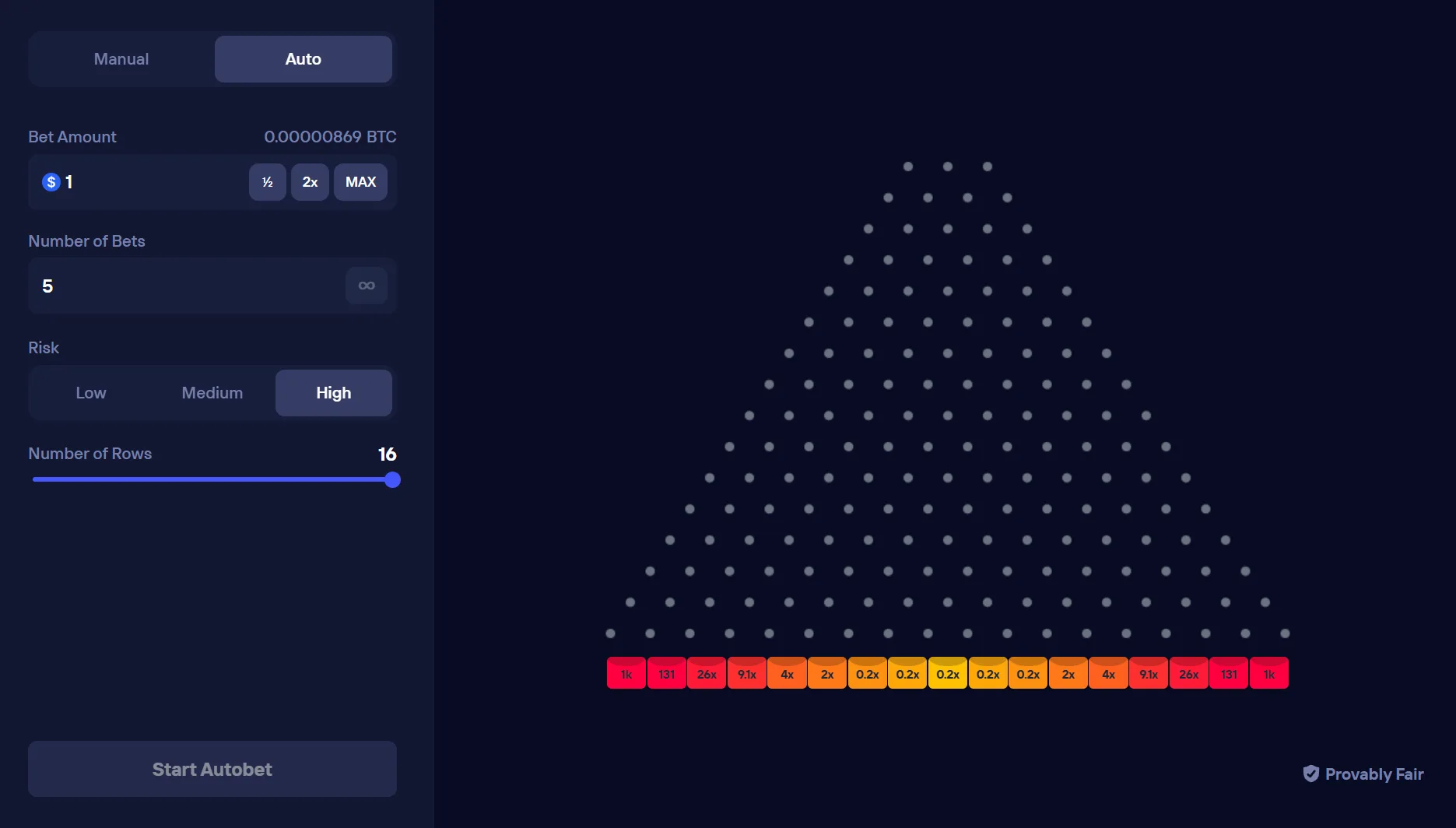
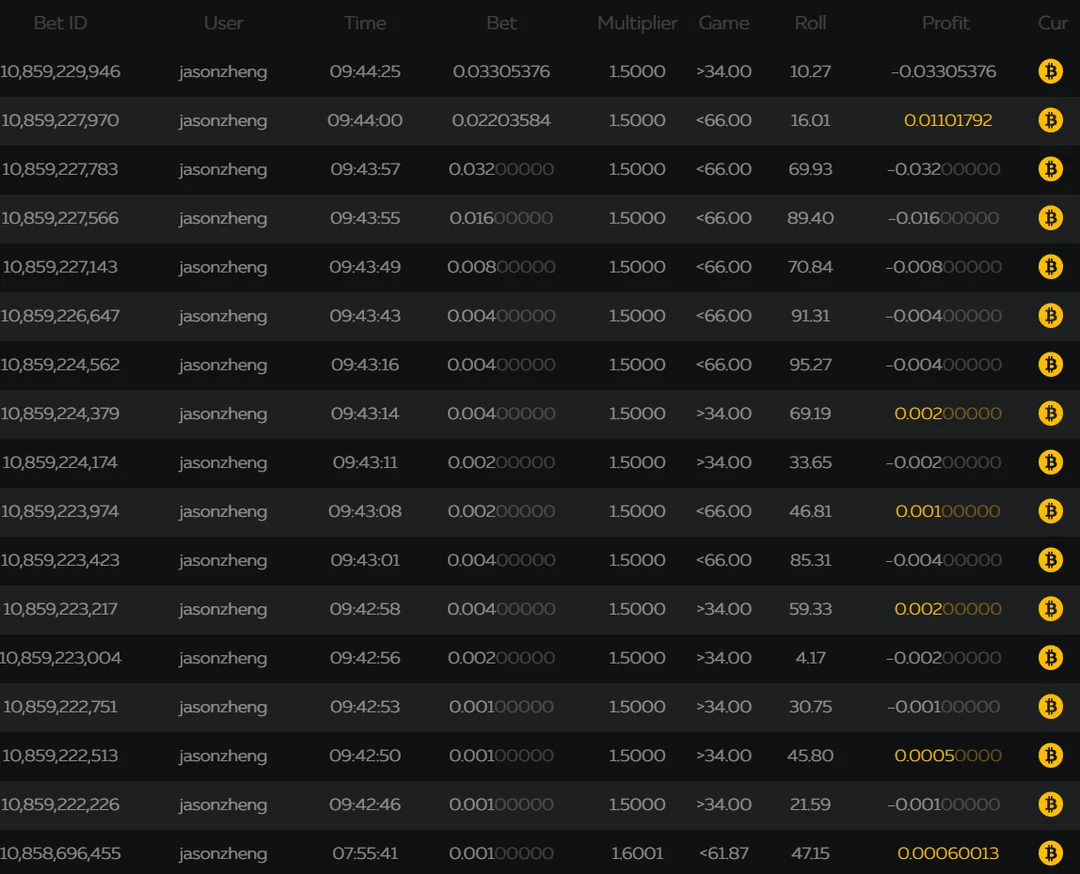
You release a ball at the top of a pegged board. Each row nudges it left or right, and after the final row it settles into one of several multiplier slots. Payout = stake × multiplier — unless the version includes zero or near-zero slots, which most do.
Nearly every online Plinko adds two dials: a risk setting (typically Low / Medium / High) and often a row count. The risk setting rewrites the paytable — low modes smear returns across frequent small results, high modes stack nearly everything onto rare edge outcomes.
On provably fair crypto casinos, each result comes from a deterministic random process you can audit yourself via seeds and nonce. That lets you confirm honest randomness. It does not turn Plinko into a profitable game.
The expensive myth: “There’s a best lane”
“Which drop position wins more?” “Is the right edge running hot?” These questions cost real money once they start driving bets.
In a properly built Plinko game, where you drop the ball is:
- Cosmetic — the server generates the result first and the animation just matches it, or
- Effectively random — even physics-flavored versions give you no stable steering, because randomness still governs the distribution.
So when you catch yourself comparing lanes, read that as tilt knocking on the door. The real decision isn’t where to drop. It’s which risk profile to accept and how tightly you bound the session.
The groundwork for this lives here: Probability Basics for Casino Games.
Plinko as a probability machine (the friendly math view)
Treat each peg as a coin flip between left and right. Stack dozens of those decisions and you get a bell-shaped distribution: center slots collect far more paths than the edges do.
No formulas required. One intuition covers it:
Probability intuition: Common outcomes live in the middle. Big multipliers live on the edges. The edges are rare on purpose.
This explains the game’s signature feeling: “I was this close.” You’ll brush past the fat multipliers far more often than you land on them, and that near-miss pattern is exactly what fuels compulsive clicking.
Reality check for these sensations: Common Gambling Math Mistakes.
The Plinko Risk Dial (Low / Medium / High) — what changes and what stays the same
Risk settings redistribute where results land, not whether an edge exists (unless the operator adjusts RTP per mode — check the rules page and verify).
A useful mental model: think of the three modes as weather forecasts.
Low Risk: “Smooth hills”
Small, regular returns with fewer harsh gaps. The danger hides in the comfort — sessions stretch, volume climbs, and the house edge gets paid in installments while you feel fine.
Best for: calm sessions, practicing discipline, dodging violent swings.
Medium Risk: “Rollercoaster with seatbelts”
Returns arrive less predictably than low mode, but droughts stop short of brutal — provided your unit size respects reality.
Best for: players who want entertainment without turning each session into a stress test.
High Risk: “Thunderstorm”
Nearly all value sits on rare edge multipliers. Extended dry spells aren’t evidence of rigging; they’re the design. Oversized bets will bankrupt you before any big hit shows up.
Best for: short, hard-capped sessions where you knowingly buy adrenaline.
Golden rule: Pick one risk mode for the session and don’t change it mid-session. Changing risk mode is usually chasing with better branding.
The math under “safe mode”: Why High RTP Still Loses Short-Term.
RTP, house edge, and why “low risk” still loses (quietly)
During a pleasant run — especially on low risk — Plinko can seem generous. A friendly personality does not cancel a house edge.
Two pages that convert this from vibes into clarity:
RTP vs House Edge
What Is a House Edge Table?
The lens that matters most for Plinko:
Expected Loss ≈ Total Wagered × House Edge
Plinko plays fast, and auto-bet makes it faster, so total wagered balloons quickly. That’s how low risk feels cozy while quietly draining you across hundreds of spins. Volume control belongs on your safety list alongside volatility control.
Full walkthrough: How to Calculate Expected Loss.
The Drop Budget (your Plinko version of a seatbelt)
“One more drop” is Plinko’s native language. Your brain tracks everything you nearly won and demands a rematch. Randomness owes no rematches, so we use structure instead: Drop Budget.
What is a Drop Budget?
A fixed number of drops per session. When the count runs out, you stop — up, down, or convinced you’re “due.”
It’s not a timer and it’s not a stop-loss. It’s a third guardrail aimed specifically at volume creep.
Deploy it like someone fond of their future self:
- Pick a risk mode (low/medium/high) and lock it.
- Pick a unit size (flat staking) and lock it.
- Set a Drop Budget (example: 50 drops).
- Set a timer anyway (Plinko gets fast when emotions rise).
The full framework behind this: Stop-Loss & Stop-Win Rules and Timeboxing Sessions.
Flat staking: the “boring strategy” that survives real streaks
Flat staking = one bet size (or one small percentage of session bankroll) from first drop to last. It won’t make Plinko beatable. What it does is stop ordinary streaks from turning into catastrophes.
Why Plinko punishes anything else:
- High risk mode can produce long dry spells.
- Even low risk mode has streaks (just less dramatic).
- When you increase bet size under stress, you shrink your bankroll runway.
Bankroll Runway: smaller units = more drops before ruin risk spikes. Runway buys calm. Calm prevents chasing.
If you like precision, start here:
Auto-bet and turbo mode: convenient, yes — but also a volume amplifier
Auto-bet converts Plinko into a faucet — and if nobody governs the faucet, it drains your bankroll drip by drip while you watch something else.
The tool helps only when it enforces rules. It harms when it accelerates emotion:
Good use
Fixed unit, fixed risk mode, a hard stop condition (stop-loss, stop-win, timer, or drop budget). Automation removes temptation instead of adding speed.
Bad use
Auto-bet with no stop conditions, especially in high risk mode. This is precisely how “a quick session” becomes a slow leak while you wait on a miracle multiplier.
Feeling numb or rushed? That’s a tilt signal. Stop. Yes, even if you’re “almost back.”
Helpful pages:
Why Martingale is a terrible Plinko idea (even if it “works” for a while)
Progressions such as Martingale (double after each loss) sell the sensation of manufacturing certainty. What they actually manufacture is one rare loss big enough to erase months of small wins.
Martingale meets Plinko worse than most pairs:
- High risk streaks can be long (normal behavior, not cheating).
- Auto-bet makes those streaks arrive faster.
- Bet sizes explode exponentially, while bankrolls are finite.
The complete breakdown, risks included:
Plinko Session Blueprint (copy/paste structure)
Nothing here makes Plinko beatable — nothing can. What it does make is safer, in five steps. Friendly outside, firm inside. Honey pot stays closed.
Step 1: Choose a session bankroll
Decide the amount you can lose today without emotional consequences tomorrow. This is not your total money. This is your session bankroll.
Step 2: Pick a risk mode (and lock it)
Low, medium, or high. Choose based on how much swing you can tolerate. Don’t change it mid-session.
Step 3: Set a unit size (flat staking)
Choose a small unit relative to your session bankroll and keep it fixed. Many disciplined players use 1–2% for fast games, but smaller is always safer.
Step 4: Add stop rules + a timer + a Drop Budget
Stop-loss prevents chasing. Stop-win prevents overconfidence. A timer prevents volume creep. A Drop Budget prevents “one more” loops.
Step 5: Respect tilt signals
Urgency, anger, bargaining (“just one hit”), lane superstitions — each means stop immediately. Your brain is negotiating with a random number generator. It cannot win that negotiation.
Prefer a printable version?
Provably fair Plinko: what you can verify
On provably fair venues you can check that your Plinko result came from honest generation and wasn’t altered after the bet settled. That’s genuine trust-building.
Keep the categories straight though: verified outcomes say nothing about operator reliability — withdrawals, KYC handling, policy enforcement. For that distinction:
Spotting shaky implementations:
Quick Plinko sanity checklist
- I chose one risk mode and will not switch it mid-session.
- I’m using flat staking with a small unit size.
- I set stop-loss and stop-win rules.
- I set a timer to limit volume.
- I set a Drop Budget (fixed number of drops).
- I will not chase by increasing bet size or switching to high risk “to get it back.”
Printable structure: Session Rules Template
FAQ
Is there a “best” Plinko risk setting?
No universal best. Low risk reduces volatility but can encourage long sessions and high volume. High risk creates rare big hits and long dry spells. Choose the mode that matches your bankroll runway and your emotional tolerance, then lock it for the session.
Does changing the drop position improve my odds?
In most online Plinko implementations, drop position does not reliably create an edge. Either it’s cosmetic or the system is effectively random from the player’s perspective. Treat lane-hunting as a superstition and focus on bankroll and session rules instead.
Can I use auto-bet safely in Plinko?
Yes, but only with guardrails: fixed unit size, fixed risk mode, and hard stop conditions (stop-loss, stop-win, timer, or Drop Budget). Auto-bet without stop conditions is a volume amplifier.
Is Plinko provably fair the same as “safe”?
No. Provably fair verifies outcome integrity, not operator behavior (cashouts, KYC, support, policy enforcement). Read: Does Provably Fair Mean Safe?
Where should I go next?
If you like fast games, read Crash Strategy and Dice Strategy. If you want classic odds, go to Roulette Odds & House Edge.