
Behavior control: Chasing Losses
Chasing Losses: Why It Happens (And How to Stop Before It Eats Your Bankroll)
Chasing losses is where gambling stops being entertainment and quietly becomes a “repair job.” It feels like a reasonable plan while you’re inside it. That’s exactly what makes it dangerous. You aren’t choosing a smarter bet—you’re reacting to discomfort, variance, and the pull of ending things “even.”
Nothing on this page exists to lecture you. Chasing is a predictable human reaction to losing. Fast games are built to keep you clicking, and clicking makes chasing frictionless. What follows is a practical system: catch the urge early, interrupt it, and put rules in place that hold up once your brain starts making excuses.
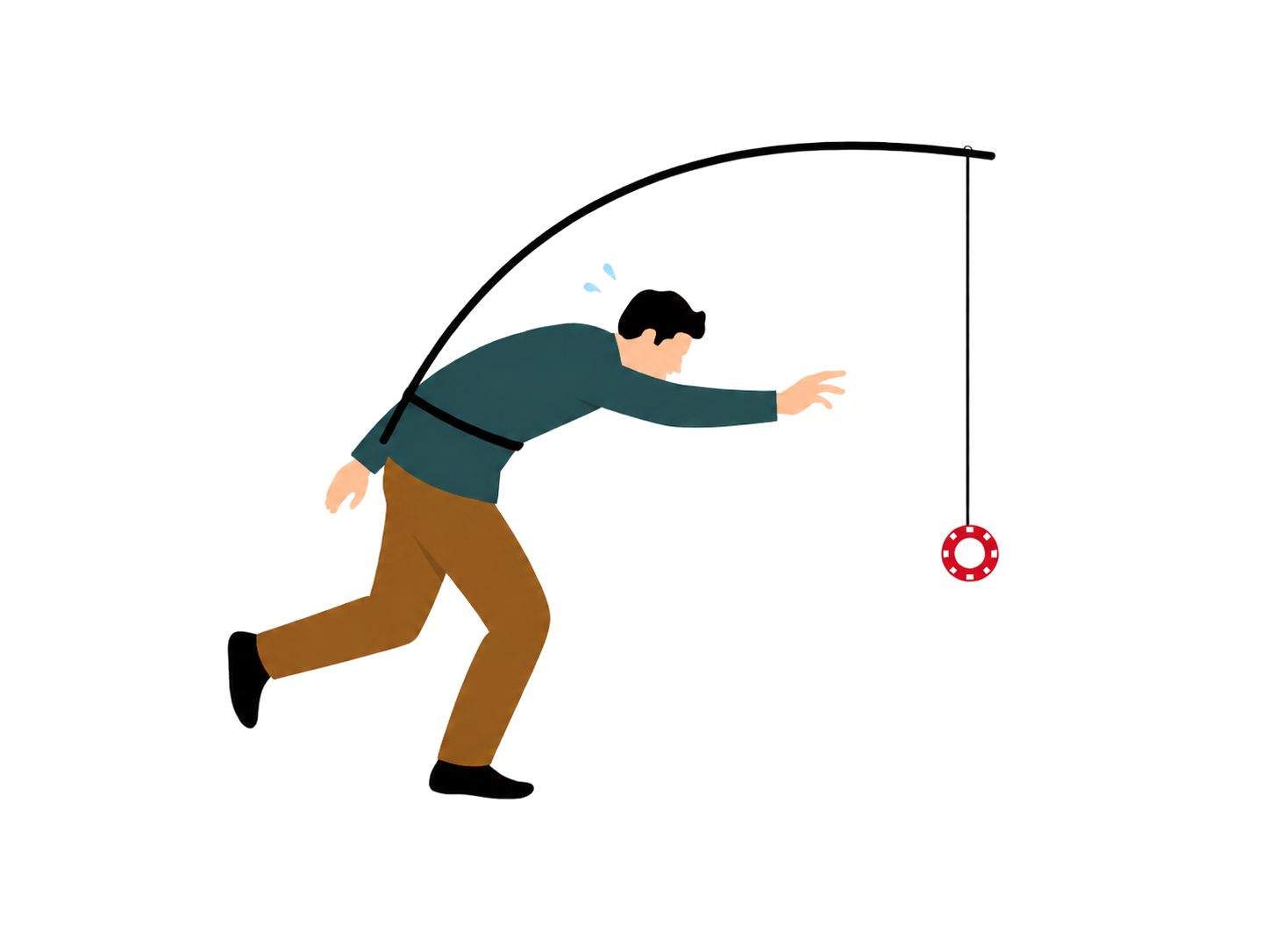
The goal is not to “get it back.” The goal is to stop turning a normal loss into an expensive spiral.
What “chasing losses” actually is
How Does This Compare to 0% House Edge Protocols?
Audited 100% RTP
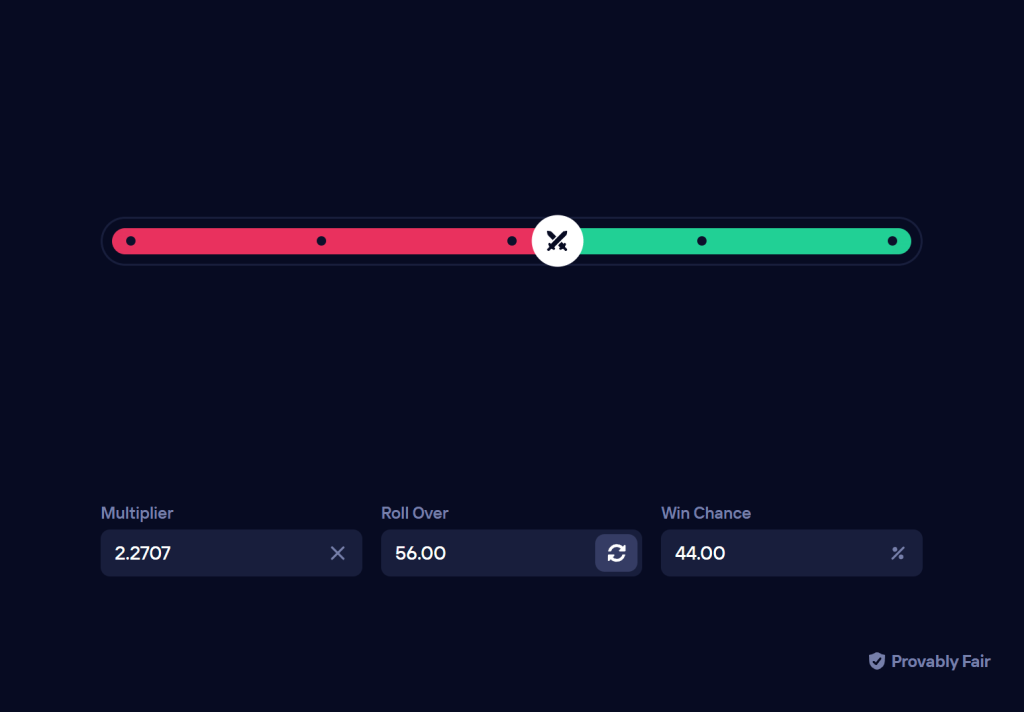
Instead of standard 1.00% to 4.00% casino house margins, compare with mathematically verified 100% RTP Originals (0.00% House Edge) on Duel Casino:

Chasing losses means increasing risk specifically to recover money you’ve lost—by scaling up bet size, dialing in more volatility, stretching the session longer, or moving to harsher game settings.
The part most players miss: chasing isn’t a strategy at all. It changes nothing about expected value. What it does change is your risk of ruin—the probability you hit zero before you planned to stop.
Two pages on this site cover the math underneath: these connect directly.
Why chasing feels “rational” in the moment
Your brain treats a loss as a problem with an obvious solution: “I’m down; I want to close this session without pain.” Fast casino games reward speed over deliberation, and relief feels a lot like recovery when your nervous system is under load.
But recovery here is emotional, not mathematical. While chasing, you aren’t weighing EV—you’re trying to delete a bad feeling. That’s why people chase on games they know are negative EV: the real objective has become “make it stop.”
Here’s the uncomfortable fact that saves money: the fastest route to relief is usually closing the session, not extending it.
The “chasing ladder” (how a normal session turns into a spiral)
Nobody starts chasing by announcing “I’m going all-in.” It begins with one small tweak that looks harmless. Then it climbs from there.
Chasing ladder:
- You lose a few rounds and feel annoyed.
- You extend the session “just a bit” to recover.
- You raise your unit size because you want faster progress.
- You change risk settings (higher volatility, bigger targets, more mines).
- You stop tracking your plan and start tracking your feelings.
- You keep going because stopping feels like accepting defeat.
The ladder never varies much. Which is good news: predictable problems yield to predictable rules.
Chasing is variance + exposure + emotion
Three forces collide to produce chasing:
Variance manufactures streaks and discomfort. Exposure—time and volume—raises the odds you hit an ugly streak. Emotion then pushes you to rewrite your plan mid-session.
This explains why the best anti-chasing tools are not “better predictions.” They’re guardrails:
- Flat staking (stable unit size)
- Timeboxing (a timer that ends exposure)
- Stop-loss (a line you don’t cross)
- One risk profile per session (no volatility upgrades)
Boring? Yes. But boring is what keeps bankrolls alive.
The most important anti-chasing rule
If you feel the urge to chase, the session is already over.
That urge isn’t a prompt to “try harder.” It’s evidence that your decision-making state has shifted. From that state, every additional round is worse for you—statistically and psychologically—than stopping.
Treat it as gentle but firm: the moment you notice the urge, end the session. You can return later, under a fresh timer and fresh limits, once your head is clear.
Chasing triggers (catch it early)
Chasing does its damage when noticed too late. The fix is knowing your own early warning signs—the small shifts that mark a move from “plan” to “repair mode.”
These triggers appear across Crash, Mines, Dice, and Plinko:
- You think: “I just want to get back to even.”
- You increase bet size without writing it down.
- You switch to higher volatility because you’re “not getting anywhere.”
- You stop enjoying the game and start scanning for a “breakthrough.”
- You feel tension in your body and keep playing anyway.
- You start clicking faster.
- You hide what you’re doing or avoid looking at totals.
Spot two or more? Treat that as a stop signal. This idea gets expanded in:
Tilt Triggers (Catch Yourself Early).
How chasing shows up in popular fast games
Each fast game has its own signature chase pattern. Learning the signature makes recognition faster.
Crash chasing
After losses, you lift your target multiplier so one big hit erases the whole session. The effect: higher volatility and fewer wins—precisely while you’re already stressed. Feel that impulse? Best move is ending the session, or dramatically dropping risk next time.
Mines chasing
You add mines or push further before cashing out because “it has to hit soon.” Mines also engineers near-miss pain: you get close, lose anyway, and suddenly need to prove you can finish. That’s determination costume over chasing.
Dice chasing
A cold run convinces you the win chance is “due,” so bets grow or progressions begin. High win chance doesn’t cancel streaks. Progressions merely convert streaks into ruin risk.
Plinko chasing
You flip from low risk to high risk to “recover faster.” This may be the purest chase of all—a volatility upgrade powered purely by frustration. Useful rule: if you touch the risk settings mid-session, the session ends.
The anti-chasing system (simple, repeatable, realistic)
No personality transplant required. You need a structure that shrinks the number of decisions available during emotional spikes. Here’s the version we recommend for most players.
1) Use flat staking (no unit creep)
Set a unit size—commonly 1–2% of session bankroll—and freeze it. Every increase reopens the door to chasing. Shut the door.
2) Timebox the session
A timer works against chasing because it cuts exposure off before you “need” a miracle. No timer means chasing gets unlimited runway.
Timeboxing guide: Timeboxing Sessions.
3) Stop-loss with no exceptions
A stop-loss prevents the recovery spiral—but only the one you actually obey counts. Breaking yours repeatedly? Lower the unit size and shrink the timer until compliance becomes easy.
Stop rules guide: Stop-Loss & Stop-Win.
4) One risk profile per session
No volatility upgrades mid-session. If settings change for the sake of recovering faster, you are chasing by definition. Adopt “settings change = stop session” as law.
5) Add a “tilt exit” rule
Notice the urge to chase—stop immediately. Session complete. No other rule respects how emotions actually distort decisions.
Want this ready-made as a copy/paste plan? Take:
Session Rules Template.
A gentle trick that actually helps: separate “session” from “story”
Chasing feeds on narrative. Once the session becomes a story—“I must fix this”—every outcome feels personal. Detaching the two defuses it.
Say this out loud when the impulse arrives:
This session is one sample. It does not define me. I don’t need to repair it.
Sounds almost silly, but the mechanism is sound: it severs the identity link. Chasing thrives on loss-as-failure framing. Losing isn’t failure—it’s variance plus exposure plus emotion doing their ordinary work.
What to do after a loss session (the clean reset)
Your brain demands closure after a loss. Seek that closure through play and you’ve re-entered the spiral. Get it another way:
- Step away for 10–20 minutes: physically leave the screen if possible.
- Write one line: “Did I follow the plan: yes/no?”
- If “no”: adjust the system (smaller units, shorter timebox, tighter stop-loss).
- If “yes”: you played correctly even if you lost. That’s the win worth keeping.
Reward discipline and chasing weakens. Reward outcomes instead, and chasing becomes guaranteed.
Responsible play
Frequent chasing is among the clearest signals gambling has shifted from recreation toward coping. If playing feels urgent, hidden, or emotionally required, step back and reach out for support. No article substitutes for real boundaries once behavior starts damaging daily life.
Resources and support links:
Responsible Gambling.
FAQ
Is chasing losses always bad?
In practical terms, yes: it raises exposure and ruin risk while leaving expected value untouched. Occasional recoveries don’t rescue a pattern that loses money over time.
What’s the fastest way to stop chasing?
Quit the session the instant the urge appears. Then shrink future exposure through smaller units, timeboxing, and stop-loss rules you actually honor.
Why do I chase even when I know it’s a bad idea?
Chasing runs on emotional relief, not logic. The mission silently becomes “reduce discomfort” rather than “decide well.” Systems beat willpower precisely because of this.
How do I prevent chasing in fast games?
Timebox everything, stake flat, lock a single risk profile, and end the session if you alter settings to catch up. Fast games compress time and burn decision fatigue quickly.
What should I do right after a losing session?
Break first, log one line (“did I follow the plan: yes/no”), and fix the system rather than your mood. Urgent pressure to keep winning means the day is done.