
Games pillar: Keno Strategy
Keno Strategy: Odds, Variance, and the Only “Smart Play” That Actually Holds Up
Keno is the casino’s lottery-style comfort food. Pick numbers, watch the draw, feel that sweet little “maybe this time” flutter… and then reality arrives with the calm efficiency of math.
Straight answer, no hedging: no pattern-based Keno strategy reliably beats the game. Keno is a paytable bolted onto a probability engine. Your real “edge” isn’t secret numbers — it’s picking a sane risk profile, capping how much you play, and refusing the chasing behaviors that quietly turn a fun draw game into a bankroll leak.
Consider this a realistic Keno strategy guide for people who want to play smarter, not louder: how Keno odds work, what spot count actually changes (variance), which levers you control (session rules), and which ones you should stop pretending you control (luck).

Keno is not a game you “solve.” It’s a game you budget — like honey. Enjoy it, but don’t pour the whole jar.
How Keno works (and why it feels “skillful” when it isn’t)
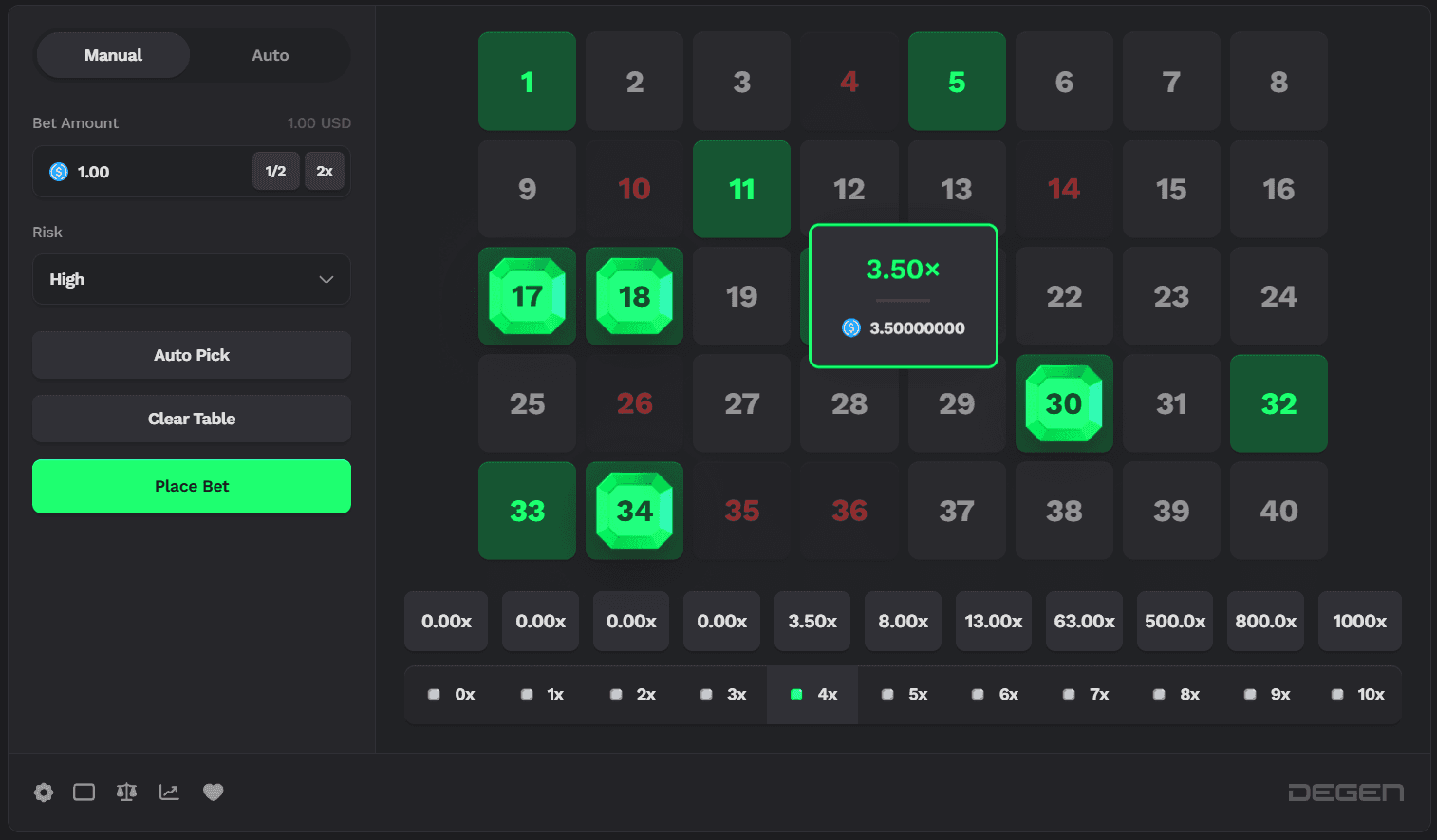
Keno is normally structured as a draw game. You select numbers — your “spots” — and the game pulls winning numbers from a larger pool. Payouts depend on how many of your picks match, and the amounts are set by the paytable.
That last sentence carries the whole page: Keno is paytable-first. Players burn energy on number patterns, but the paytable is what determines the long-term cost of every ticket.
Why does it feel skillful? Because you make choices, and choices feel like control. But when the draw is random, number selection produces no dependable advantage — only a narrative you can get emotionally attached to.
For the clean foundation behind “random outcomes still produce streaks,” read:
Variance & Volatility Explained
Probability Basics for Casino Games
The one truth that saves money: Keno is usually high-edge and variance-heavy
Among casino games, Keno often ranks near the expensive end of the house edge scale — especially next to games where good decisions trim the edge, like blackjack played with basic strategy. Even a session that “felt fine” can bleed money through sheer repetition.
Nobody’s saying don’t play. The point is to treat it as lottery-style entertainment, not a plan for growing money.
Friendly warning: A calm game can still be costly. “It didn’t feel bad” is not the same as “it was a good bet.”
Tools that keep you grounded:
What you can control in Keno (and what you can’t)
Separate the levers that respond to your hands from the myths that only respond to hope.
You can control
- Which paytable/variant you play (some cost meaningfully more than others)
- Your spot count (risk profile and volatility)
- Bet size (bankroll runway)
- Session volume (timeboxing, draw limits)
- Stop rules (stop-loss and stop-win)
You can’t control
- “Hot” or “cold” numbers in a truly random draw
- Patterns that “must” repeat
- Luck “balancing out” inside your short session
- Streaks not happening (they always happen)
For a mental reset aimed exactly at this mistake, bookmark: Common Gambling Math Mistakes.
Spot count is your risk profile (1-spot vs 10-spot isn’t “better,” it’s different)
Your spot count — how many numbers you pick — is effectively the volatility dial. People argue about “best numbers,” but the actual question is simpler: frequent small wins, or rare large ones?
Low spot counts (smaller volatility)
Fewer picks usually means more frequent, smaller wins (paytable permitting). Sessions feel smoother — which is exactly the danger, because smooth invites longer play, and longer play means more volume, and more volume means more expected loss.
Use case: “I want a calm session, and I’ll set a timer so I don’t drift into overtime.”
Mid spot counts (balanced swing)
Mid-range picks feel like a compromise: enough action to stay interested, enough upside to stay hopeful. This is also where players start fiddling with settings halfway through — chasing wearing an optimizer costume.
Use case: “Entertainment, not a jackpot hunt, and I can hold one plan.”
High spot counts (high volatility jackpot vibes)
Many picks usually means chasing rarer, larger outcomes, with long dry spells as the standard weather. Acceptable if you call it entertainment. Expensive if you respond to a dry spell by inflating bets to “get even.”
Use case: “Short session, hard cap, tiny unit size, zero chasing.”
Session rule: pick one spot count per session and leave it alone. Mid-session switching is usually emotion management cosplaying as math management.
The only “real” Keno optimization: paytable awareness
When a casino offers several Keno variants or different payout tables, that’s where the actual differences live. Two Keno games can look like twins and still cost very different amounts over a year of play.
So what do you actually do?
1) Look for published RTP or game info
If the operator discloses RTP (or a house edge figure), use it. If nothing is published, assume the operator isn’t losing sleep over your value proposition.
2) Compare within the same site
“Classic keno,” “power keno,” “super keno” — treat each one as a separate product with its own paytable. Flashy names usually signal a different table, and often a worse one.
3) Treat jackpots as variance boosters, not free value
Jackpots reshape how a game feels, but they also reshape how rare wins are. A jackpot is not automatically a gift. It’s a different risk structure wearing a bow.
If your site has a house edge comparison tool, this is its moment:
Expected loss: why Keno can “feel fine” while still draining you
In any negative-EV game, long-run cost scales with volume. Keno manufactures volume effortlessly — draws are quick, and the next one is always one click away.
Expected Loss ≈ Total Wagered × House Edge
This is why a “safe” bet size alone doesn’t cut it. You need session limits too, or the house edge gets paid through repetition — tiny spoonfuls leaving the honey jar until you look down and it’s empty.
Practical guide: How to Calculate Expected Loss
Keno bankroll rules (variance-first, not ego-first)
For Keno, “strategy” and “bankroll strategy” are nearly synonyms. Here’s the structure that plays without self-sabotage.
1) Use a session bankroll (not your total bankroll)
The session bankroll is the amount you can lose today without turning tomorrow into regret. When it’s gone, the session ends. No negotiating with the draw.
2) Keep unit size small (flat staking)
Flat staking is dull. Dull is protective. It stops normal losing stretches from chewing through your runway.
3) Timebox sessions (Keno is a volume trap)
Set a timer or a hard draw limit. You’re not waiting for the tide to turn — you’re deciding in advance how much volume you’re willing to buy.
4) Stop-loss and stop-win (both matter)
Stop-loss blocks chasing. Stop-win blocks overconfidence and “free-roll” thinking. Together they stop session drift before it starts.
What to avoid in Keno (the classic traps)
Keno doesn’t need clever tricks to take money. Players volunteer it by falling into a short, well-documented list of behaviors.
Trap #1: Chasing “hot numbers”
Hot/cold thinking is your pattern detector begging for a sense of safety. Streaks do occur in random draws — they just don’t hand you a dependable advantage.
Trap #2: Changing spot count mid-session
Switching from low to high volatility because you’re behind translates to: “I need a miracle.” Miracles make poor strategy documents.
Read: Chasing Losses
Trap #3: Martingale and bet progressions
Progressions leave expected value untouched while manufacturing rare, catastrophic losses. Keno’s streaks plus a finite bankroll make this a fast route to a bad afternoon.
Read: Why Martingale Fails
Trap #4: “I’m only down a little, I can fix it”
This sentence is how sessions become marathons — and volume is how negative EV turns into real money leaving your account.
Read: Tilt Triggers
Is Keno provably fair? Sometimes — and it still doesn’t mean “safe”
The typical Keno build is a standard RNG game. Some crypto venues offer provably fair Keno-style draws, where outcomes can be verified through seeds and a nonce.
Provably fair is genuinely useful for trust: it lets you confirm a result wasn’t altered after your bet. It does not make the game profitable, and it does not guarantee the operator handles withdrawals, policies, or support honestly.
Useful pages:
How to Verify a Provably Fair Bet
Does Provably Fair Mean Safe?
Provably Fair Common Red Flags
The Keno Session Blueprint (simple, repeatable, and kind to your bankroll)
Want a routine you run every single time? Here it is. It promises no profit. It promises fewer self-inflicted wounds.
Step 1: Define your session bankroll
Choose an amount you can lose without emotional fallout. That number is the border. Cross it and you stop.
Step 2: Choose spot count as a risk profile
Low, medium, or high volatility — pick one via spot count and hold it. This removes the “I need a miracle” switch from your options menu.
Step 3: Flat stake a small unit
Fix the bet size and forget it. The goal is runway, not revenge.
Step 4: Add stop rules + timeboxing
Set stop-loss and stop-win, then layer on a timer or draw limit so volume can’t quietly balloon.
Step 5: When tilt appears, end the session
Urgency, irritation, bargaining, “due” thinking — any of these means stop. Keno is a calm game that gets expensive exactly when you aren’t.
Printable version:
Quick Keno sanity checklist
- One spot count chosen as my risk profile — no mid-session changes.
- Flat staking with a small unit size.
- Stop-loss and stop-win set before the first draw.
- Timer or draw limit in place to cap volume.
- No hunting “hot numbers” or patterns.
- Chasing thoughts = session over.
If you want zero guesswork: Session Rules Template
FAQ
Is there a real strategy to win at Keno?
Keno runs on a paytable plus probability. Draws can’t be reliably predicted. The workable strategy is damage control: a sensible risk profile (spot count), small flat stakes, and session volume held down by timeboxing and stop rules.
Do “hot” and “cold” numbers matter in Keno?
Streaks show up in random draws, but they confer no dependable advantage. Hot/cold chasing is pattern bias, not a repeatable edge.
Does picking more numbers improve my chances?
More numbers reshapes your volatility and payout structure — it doesn’t make the game “better.” High spot counts typically mean rarer big hits and longer dry spells, which puts even more weight on unit sizing and session limits.
Can I use Martingale or progressions in Keno?
Progressions leave expected value unchanged and can manufacture rare catastrophic losses, since bet size outruns real bankrolls. Keno’s streaks make the failure mode arrive sooner.
Where should I go next?
Fan of quick games? Try Crash Strategy or Plinko Strategy. Prefer a classic odds page? Head to Roulette Odds & House Edge.