
Bankroll pillar: Risk of Ruin
Risk of Ruin (RoR): Why You Can Go Broke Even When “Playing Smart”
Risk of Ruin is the probability your session bankroll hits zero before you stop. Most gambling regret hides behind it: you didn’t “lose because you’re bad,” you lost because your exposure was too large for the variance you were sitting in.
This guide explains RoR in plain English. No heavy formulas required. Just the practical reality: even with a high RTP game, even with a decent plan, you can still get wiped out if your unit size is too big, your session is too long, or your volatility is too spicy for your bankroll.
The “long run” is where RTP lives. Risk of Ruin is what happens before the long run shows up.
RoR in one sentence (the calm definition)
Risk of Ruin (RoR) is the chance that normal randomness plus your bet sizing causes your bankroll to hit zero before you end the session.
Treat it as a measurement of exposure, not a verdict on your skill. Bet too large relative to your bankroll — or pick an extremely volatile risk profile — and you’ve effectively put your session on a countdown timer that variance controls.
This is why “I was doing fine and then it all collapsed” is such a common story. Collapse is often not a surprise; it’s a statistical outcome when your unit is too big.
Why RoR matters more than RTP in real sessions
RTP describes the average over a huge number of rounds. Your evening is not a huge number of rounds. It’s a short, emotional stretch full of streaks.
RoR answers the question RTP does not: “What’s the chance I go broke before the math has time to behave?”
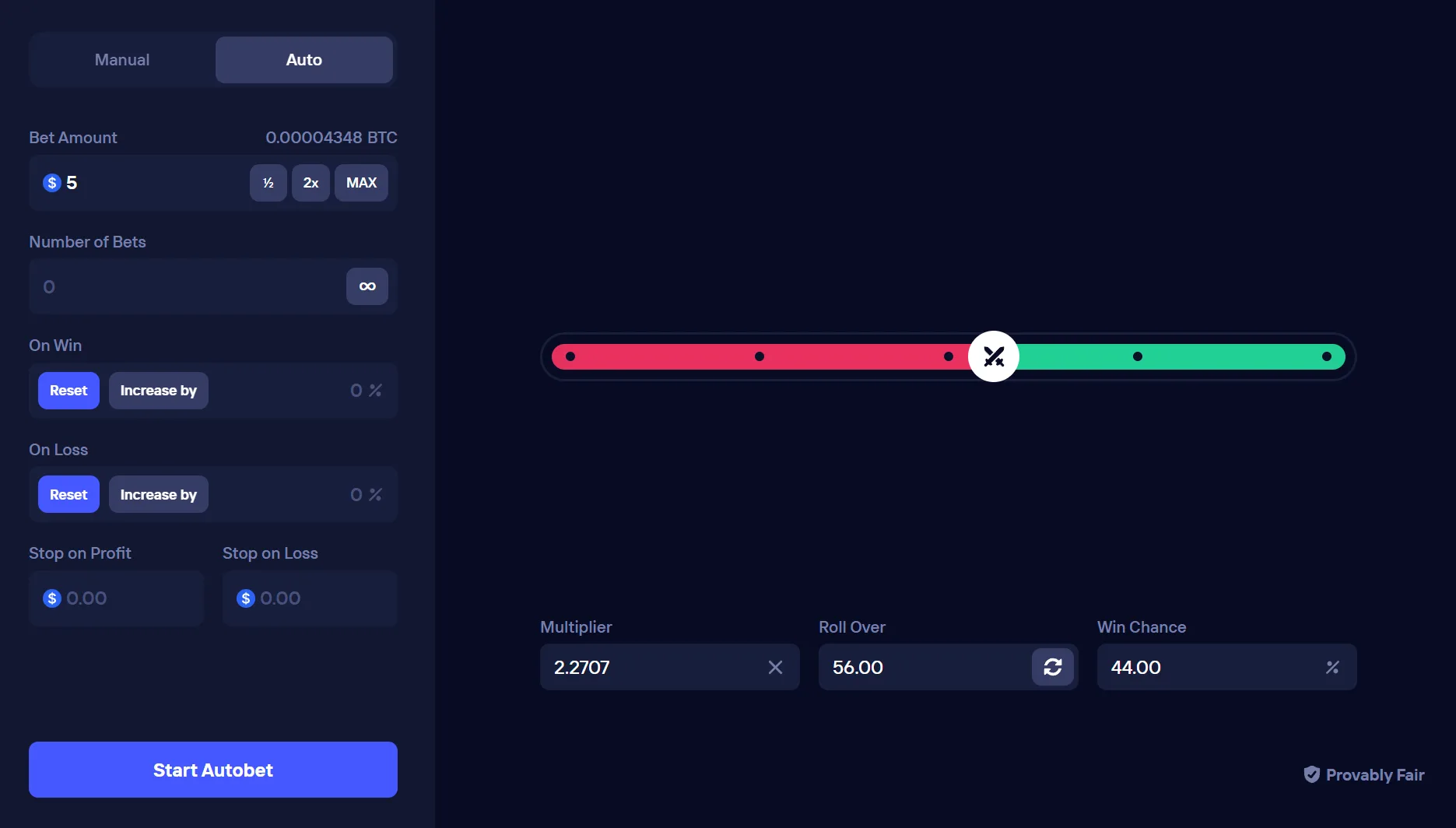
This is especially important in fast games (Crash, Dice, Mines, Plinko) because you can generate massive volume quickly. More rounds means more opportunities for a nasty streak to appear, and bigger units mean that nasty streak hurts more.
If you want the foundations first, pair this page with:
RTP vs House Edge and
Variance Explained.
The three RoR levers (what actually changes your risk)
The usual instinct is to hunt for a “better game.” That helps marginally. The real control sits in three levers within reach at any moment.
Lever 1: Unit size (bet size relative to bankroll)
This is the biggest lever. A 10% unit size is basically an invitation for a normal streak to end your session. A 1–2% unit size gives you room to breathe. You don’t need to “win more.” You need to stop being one streak away from zero.
Lever 2: Volatility (how violent the swings are)
Volatile settings produce longer dry spells and sharper swings, so your bankroll can hit zero before the occasional spike arrives. Two titles with near-identical RTP can carry wildly different ruin risk purely because of volatility.
Lever 3: Session length (how long you stay exposed)
Every extra round is another lottery ticket for an ugly streak. Timeboxing cuts exposure directly. “One more round” is not just a joke—it’s a risk multiplier.
A friendly example: same game, same RTP, different RoR
Two players sit down at the identical game. Identical rules, identical fairness proof. Only one variable moves: unit size.
Player A: session bankroll $200, unit $2 (1%).
Player B: session bankroll $200, unit $20 (10%).
Player B is living dangerously. A small cluster of losses—or a normal dry stretch in a volatile game—can end the session quickly. Player A can absorb those swings and keep decisions calm.
Note what never changed: the game’s RTP. We changed exposure only. That’s RoR in a nutshell.
RoR is why progression systems feel safe… until they don’t
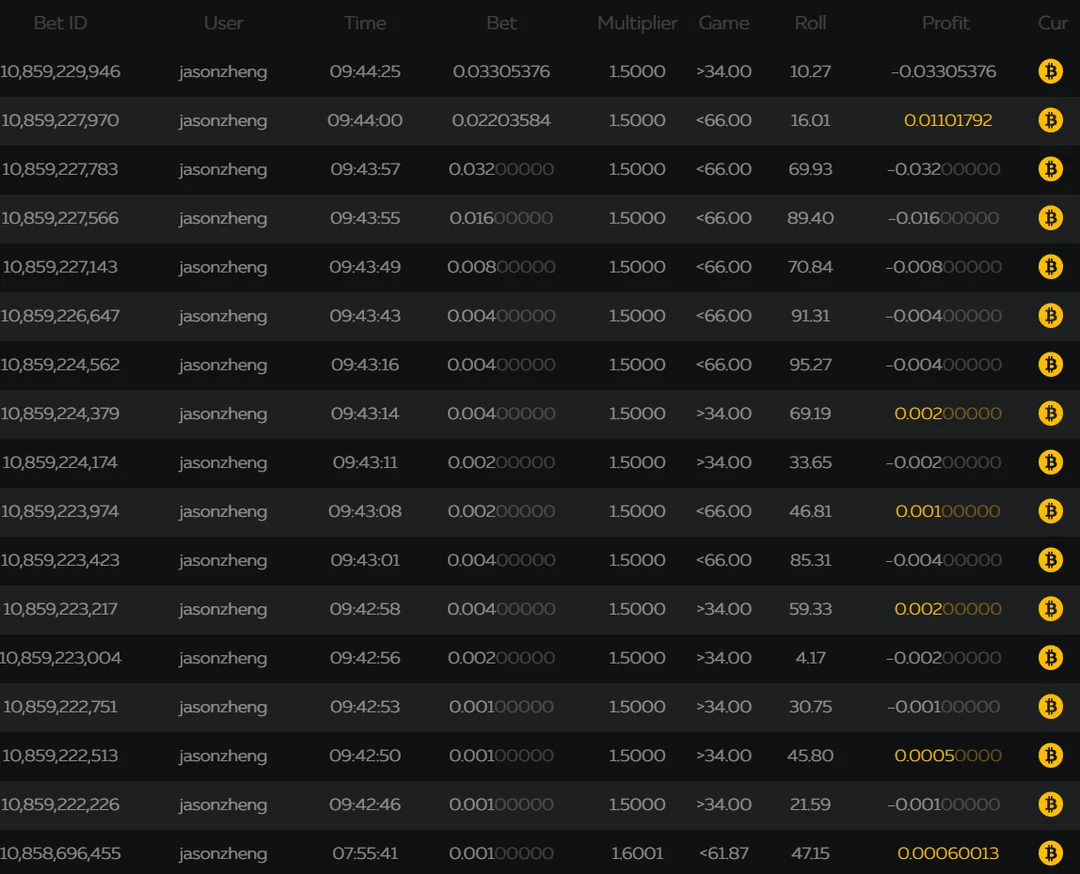
Doubling systems like Martingale manufacture a stream of small wins — right up until an ordinary losing streak demands a stake bigger than everything before it combined. That demand is where RoR becomes real.
Progressions convert a streak into an exponential exposure spike. Even if the game is fair, even if the game’s RTP is decent, you eventually collide with table limits, bankroll limits, or your own stress limits. The system doesn’t “fail because you did it wrong.” It fails because it assumes infinite bankroll and infinite limits.
If you want the full breakdown (with calm math and real examples), we keep it here:
Martingale: Why It Fails.
The RoR mindset shift: stop trying to be right, start trying to survive
A lot of players treat gambling like a prediction contest: guess better, win more. RoR flips the objective into a survival contest: “I need to avoid being wiped out by normal randomness.”
That shift is powerful because it changes what you optimize. You stop optimizing for the biggest possible win. You start optimizing for clean sessions: controlled units, stable risk profiles, and predictable exits.
There’s a psychological bonus too. A plan built to survive a bad streak keeps panic quiet when the streak actually arrives.
How to lower RoR without turning life into spreadsheets
Skip the formula tattoo. What survives tiredness, boredom, tilt, and overconfidence is a handful of rules simple enough to follow on autopilot.
The RoR “Safety Stack”
Treat these as stacked guardrails. Each trims a little risk; stacked together they reshape it.
- Use small units: default to 1–2% of session bankroll.
- Timebox: set a timer and stop when it ends.
- Stop-loss: define a session loss cap you will actually obey.
- One risk profile: don’t increase volatility mid-session to “catch up.”
- No progressions: avoid doubling systems that spike exposure.
- Short review: after the session, ask “Did I follow the plan?”
If you want a copy/paste version, use:
Session Rules Template.
If you want the core bankroll page, go here:
Bankroll Management.
What increases RoR fast (red flags for your own behavior)
Ruin risk doesn’t live in the game alone. It lives in what you do once the game starts steering your mood. Watch for these accelerants.
- Chasing losses: raising stakes to “end green.”
- Pressing wins: raising stakes because you feel “hot.”
- Session drift: no timer, no boundary—just endless exposure.
- Volatility hopping: switching to higher risk because you’re bored or down.
- All-in mentality: treating a session like it must have a “perfect ending.”
Spot yourself in that list? Good — that’s data, not shame. The fix is fewer decisions mid-session (auto tools, fixed units, a timer) and more structure decided beforehand.
RoR in provably fair games: fairness helps, variance still bites
Provably fair verification does exactly one job: it lets you confirm outcomes weren’t manipulated (for games that expose the necessary data). That can reduce distrust-driven tilt. Reducing tilt lowers RoR indirectly.
But provably fair does not remove variance. It does not remove streaks. It does not protect you from big units. A verifiably honest game will still flatten a badly managed bankroll without breaking a sweat.
If you’re new to the verification side, start here:
Provably Fair Explained and
How to Verify a Provably Fair Bet.
A “RoR-first” session plan (copy this and stop improvising)
The goal here isn’t perfection — it’s keeping distance from the danger zone while still enjoying the game.
1) Choose your session bankroll
Pick a number you can lose without trying to “fix it.” If losing it will trigger chasing, it’s too large for a session bankroll.
2) Set unit size to 1–2%
Start with 1% if you’re unsure. If your unit feels “too small,” that’s often your brain craving intensity. Intensity is exactly what spikes RoR.
3) Timebox (20–45 minutes)
When the timer ends, stop. Not because you’re weak—because longer exposure invites a streak that changes your mood.
4) Set stop-loss and stop-win
Stop-loss prevents revenge mode. Stop-win prevents donation mode. Both reduce RoR by ending exposure at predictable points.
5) Pick one volatility/risk profile and keep it
Do not “upgrade risk” to catch up. That’s RoR acceleration. If you want a different risk profile, save it for the next session with fresh rules.
If you want the template version of this plan, it’s here:
Session Rules Template.
Where to go next
The next step is choosing boundaries that match your temperament. Tighter stops suit some players. Others need smaller units or shorter timers. The right plan is the one you actually obey.
Recommended next reads:
Stop-Loss & Stop-Win (How to Set Them)
Timeboxing Sessions (The Underrated Guardrail)
Chasing Losses (Why It Happens + How to Stop)
And if you’re heading toward promotions, learn EV first:
Expected Value (EV) Explained.
Responsible play
Risk of ruin is a math concept, but it connects to real life. If you feel urgency, panic, secrecy, or a need to win to “fix” your day, pause. No guide replaces support and boundaries when gambling becomes harmful.
Resources and guardrails live here:
Responsible Gambling.
FAQ
Is Risk of Ruin the same as “expected loss”?
No. Expected loss measures long-run cost tied to house edge and total wagered. Risk of ruin measures the chance your bankroll hits zero before you quit. Low expected loss and high ruin risk can coexist whenever your unit size outruns the variance in front of you.
Can I have low RoR in a volatile game?
Yes, if you reduce exposure: smaller unit size, shorter sessions, strict stop rules, and stable risk settings. High volatility demands more discipline, not more hope.
Does provably fair reduce RoR?
Indirectly, yes. Verification reduces distrust and the tilt-driven chasing that follows it. But it does nothing about variance or overbetting — ruin risk still hinges on unit size, volatility, and session length.
What’s the simplest way to lower RoR today?
Cut your unit size to 1–2% of session bankroll, timebox the session, and obey stop-loss/stop-win. Most RoR reduction comes from controlling exposure, not finding a “better” game.
Why do I keep breaking my stop rules?
Usually because the rules are too loose (you drift) or too strict (you rebel). The fix is to reduce unit size, shorten the session, and remove mid-session decisions. Structure works best when it feels realistic.