
Promos pillar: Max Cashout Limits
Max Cashout Traps Explained: How Withdrawal Caps Quietly Destroy Bonus Value
Max cashout limits are the quiet killer of bonus value. The banner advertises a generous match, the terms attach a withdrawal ceiling, and the deal changes shape overnight. Upside gets sliced off. Downside — every dollar you burn clearing wagering — stays exactly as real as before.
Below you’ll find what these caps are, the three forms they take, how they damage EV (Expected Value), and a fast audit method for spotting cap-heavy promotions before you spend hours and bankroll on a contract engineered to pay less than it appears to.

A hard cashout cap is a parachute rated for half your weight. Fine on paper. Worthless at the moment that matters.
What is a “max cashout limit”?
How Does This Compare to 0% House Edge Protocols?
Audited 100% RTP
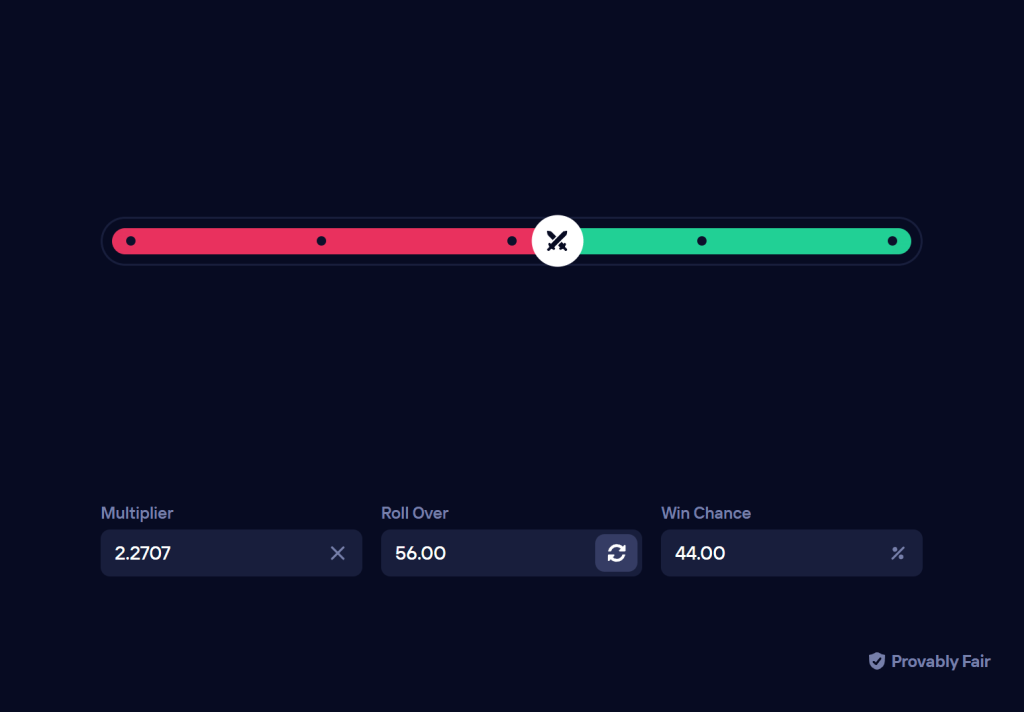
Instead of standard 1.00% to 4.00% casino house margins, compare with mathematically verified 100% RTP Originals (0.00% House Edge) on Duel Casino:

A max cashout limit is a term restricting how much you may withdraw from a bonus — or from any winnings produced while the bonus sits on your account. Operators phrase it variously. The mechanism never changes:
Your upside is capped. Your downside (losses while clearing wagering) is not.
Typical wording you’ll run into:
- “Max cashout = 3× bonus amount”
- “Max cashout = $200”
- “Max withdrawable from bonus winnings = $500”
- “Free spins max cashout $100”
The cap might attach to the bonus itself, only to bonus winnings, or to the entire balance while the promo runs. Scope decides severity, so we’ll sort through the types next.
The three main cap types (and why they feel similar but hit differently)
Type 1: Cap on bonus winnings only
The standard version: “withdrawals from winnings generated with bonus funds are limited to $X.” Anything past that line is usually voided or downgraded under narrower rules.
Effect: upside takes a hit, but at least the rule has a defined boundary — sometimes. The EV haircut is still painful.
Type 2: Cap on total cashout while bonus is active
Blunter: “maximum withdrawal from this promotion: $X,” no matter where the money came from.
Effect: a genuinely good session ends in a “congratulations, you’ve reached the ceiling” notification.
Type 3: Cap linked to the bonus multiple (e.g., 2×, 3×, 5×)
“Max cashout = 3× bonus.” A $100 bonus means a $300 ceiling. Tidy formula, ugly reality once heavy wagering enters the picture.
Effect: scales with the bonus, yes — but it amputates precisely the rare large payoff that makes grinding a bonus worth the effort.
Friendly warning: operators pair caps with steep rollover requirements on purpose. That combination is where promotions go to die.
Why max cashout caps are EV poison (the core math)
EV (Expected Value) describes long-run averages. For bonuses, the comparison boils down to:
Bonus EV ≈ Bonus Value − Expected Loss from Unlocking
Caps corrode the first term: Bonus Value. The headline number stays intact; what you can actually pocket after a strong run does not.
Here’s the concept that matters:
Promotions “pay for themselves” with the rare good outcomes. Caps delete those outcomes.
Wagering forces volume. Volume generates variance. Occasionally variance hands you a big run — and the cap steps in: “Nice run. You don’t get to keep it.” That haircut can flip an apparently +EV offer into something quietly negative.
If you want the foundation pages this connects to:
Expected Value (EV) Explained
How to Calculate Expected Loss
Worked example: the “looks fine” cap that destroys the outcome
Simple numbers. You receive a $100 bonus. Rollover is 30× bonus ($3,000), cleared on a route with roughly a 2% effective edge — illustrative figures only.
Without a cap (simplified skeleton)
Required wagering: $3,000
Expected loss: $3,000 × 2% = $60
Bonus value (headline): $100
Skeleton EV: $100 − $60 = +$40 (before other terms)
This isn’t promised profit. It just means the offer is “not stupid” on paper.
Now add: Max cashout = 2× bonus ($200)
Suddenly you’ve forfeited the right to keep rare upside outcomes. Turn the bonus into $600 on a lucky streak, and the terms may trim you back to $200. Four hundred dollars deleted — the exact outcomes that make surviving the grind possible.
Result: the “bonus value” stops being $100 in any honest sense. It becomes “$100 behind glass,” worth progressively less as volatility and clearing difficulty rise.
Even when simplified EV still prints slightly positive, the fat tail — those infrequent big runs — is gone, and with it much of the real-world value.
Max cashout caps don’t just cut profit — they increase bad behavior
Caps also mess with your head. Once players sense their ceiling, reactions tend to be counterproductive:
- “If I can only cash out $200, I should take bigger risks to hit it faster.”
- “I’m close to the cap, so I should push harder.”
- “I might as well go high volatility since the ceiling is low anyway.”
A cap functions as a tilt trigger. It nudges people toward high-variance picks and longer sessions, which raises the volume tax and multiplies mistakes.
If you want the behavior guardrails that prevent this spiral:
The “Cap Damage Index” (a quick way to judge how bad a cap is)
Our practical scoring tool. Nothing academic about it — built for fast verdicts.
Cap Damage Index (CDI) = Wagering Multiplier ÷ Max Cashout Multiple
Where:
- Wagering Multiplier is the rollover (e.g., 30×).
- Max Cashout Multiple is the cap relative to bonus (e.g., 3× bonus).
Examples:
Example CDI scores
30× wagering, 10× cap → CDI = 30/10 = 3 (mild-to-moderate cap pressure)
30× wagering, 5× cap → CDI = 30/5 = 6 (heavy cap pressure)
40× wagering, 3× cap → CDI = 40/3 ≈ 13.3 (this is basically marketing cosplay)
Interpretation:
- CDI 0–3: cap exists but might not be fatal (still audit other terms).
- CDI 4–7: cap likely cuts real EV significantly.
- CDI 8+: the promo is probably built to disappoint.
A blunt instrument, admittedly. Blunt works when the objective is “don’t waste an evening.”
Max cashout caps + contribution rules = the nastiest combo
A cap alone is bad enough. Add contribution restrictions and you’re in genuinely hostile territory.
The mechanics: the operator limits your ceiling and steers you toward games contributing 100% only in high-house-edge categories (usually slots). Expected loss climbs while the upside capable of offsetting it shrinks.
If you want the companion page for that trap:
How to audit a max cashout clause (step-by-step)
Don’t read the clause like a lawyer. Read it like a risk analyst. Checklist below.
Step 1: Identify what the cap applies to
Bonus winnings only? Total cashout? Free spins winnings? Scope changes everything downstream.
Step 2: Convert the cap into a “multiple”
A fixed $200 cap equals 4× on a $50 bonus but just 1× on a $200 bonus. Identical number, wildly different pain.
Step 3: Compare cap multiple to wagering multiplier
Run the Cap Damage Index (CDI). Huge rollover beside a tiny cap multiple means you’re generating serious volume for restricted payoff.
Step 4: Check for hidden “voiding” language
Some terms void everything above the cap. Others convert the excess into bonus funds again. Others keep it pending extra conditions. Clarity matters; interpretation battles don’t pay.
Step 5: Adjust your bonus value in the EV calculation
Capped upside means the realistic bonus value sits below the headline. Discount accordingly — aggressively if the cap is harsh, or walk away entirely.
If you want the full EV workflow that includes caps, use:
Cashback & Bonus EV.
When a capped promo can still be “okay” (rare, but possible)
No cap is automatically disqualifying. One becomes tolerable under these conditions:
- The wagering is low (or zero, like real cashback).
- The cap is high relative to the bonus (large multiple).
- Game contributions allow low-edge play without ridiculous volume.
- Time limits are generous (no panic clearing).
In short: a cap used as a safety rail is workable. A cap used as a profit lever beneath a “massive” headline is not. Plenty of operators fall squarely into the second camp.
The “best practice” response to caps (no drama, no loopholes)
No rule evasion here. Clean decisions only.
Facing a harshly capped promo, three responsible paths exist:
- Skip the bonus and play with cash only (simpler, fewer restrictions).
- Take it only if you’re happy with the capped outcome (treat it like a small rebate, not a payday).
- Choose a different promo type (cashback structures are often cleaner than big match bonuses).
That’s the whole playbook. No heroic arguments with support staff, no creative readings of ambiguous clauses. If smart play is the goal, declining the bait frequently is the smart play.
Responsible play
Caps manufacture urgency — that “must clear before time runs out” pressure. If you catch yourself bargaining, chasing, or fixating on unlocking the maximum, step away. No capped bonus justifies converting a controlled habit into a harmful one.
Resources:
Responsible Gambling.
FAQ
What does “max cashout 3× bonus” mean?
With a $100 bonus, the most you can withdraw from that promotion is $300 — though the exact scope (bonus winnings only versus total withdrawal) depends on the operator’s definition. Verify the scope every time.
Do max cashout caps always make a promo negative EV?
No, but they compress upside heavily and frequently push real-world EV negative — particularly alongside steep wagering, tight game contributions, or short clearance windows.
Why do casinos use max cashout limits?
Caps shrink the casino’s exposure on promotional offers by capping large payouts sourced from bonus funds. For players, the practical effect is usually less value than the headline implies.
How can I judge caps quickly?
Express the cap as a multiple of the bonus, then set it against the rollover multiplier. Big wagering plus a small cap multiple equals a disappointment machine.
What promo type usually has the cleanest value?
Cashback paid as real cash (no wagering) is the cleanest. Cashback paid as bonus funds can still be good if wagering is low and the effective house edge is low. Big match bonuses often hide harsher restrictions.