
Every bet you place carries a built-in fee. Nobody hands you a receipt for it. This sortable, filterable house edge table shows the exact mathematical margin behind 16 popular casino games — including provably fair titles you can verify yourself — so you can tell cheap entertainment from expensive illusion (a longer explanation lives in our article What is a House Edge Table).
House Edge Table
| Game | Category | House edge | RTP | Variance | Notes |
|---|---|---|---|---|---|
| Crash | Crypto | 1.00% | 99.00% | High | Cash-out before the multiplier crashes. Edge applied to round (~1%). |
| Mines (3 mines / 5×5) | Crypto | 1.00% | 99.00% | Very high | Edge depends on chosen mine count; shown for 3. |
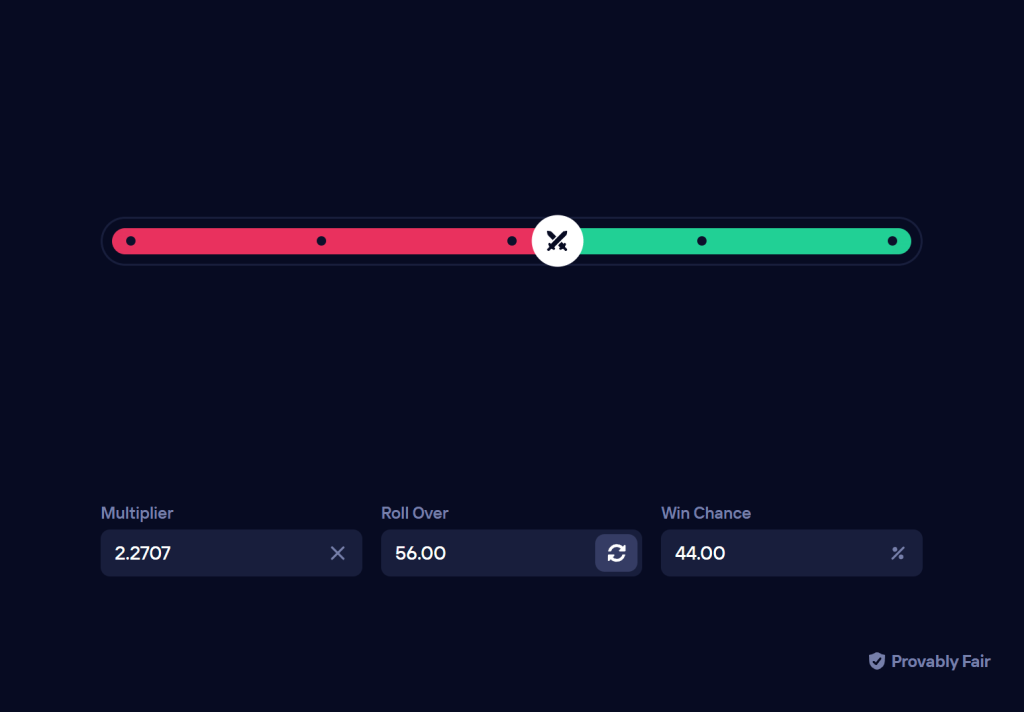
| Dice | Crypto | 1.00% | 99.00% | Medium | Roll under/over a target; edge usually fixed at 1%. |
| Plinko (medium risk) | Crypto | 1.00% | 99.00% | High | Edge varies by risk profile; shown for medium. |
| Limbo | Crypto | 1.00% | 99.00% | Very high | Target multiplier, similar math to Dice. |
| Wheel (medium) | Crypto | 3.00% | 97.00% | Medium | Edge varies by segment count + risk. |
| Roulette — European | Table | 2.70% | 97.30% | Medium | Single zero. Best mainstream roulette. |
| Roulette — French | Table | 1.35% | 98.65% | Medium | European wheel + La Partage on even-money bets. |
| Roulette — American | Table | 5.26% | 94.74% | Medium | Double zero. Avoid where possible. |
| Blackjack (basic strat) | Table | 0.50% | 99.50% | Low | Assumes correct basic strategy + standard rules. |
| Baccarat — Banker | Table | 1.06% | 98.94% | Low | Includes 5% commission on banker wins. |
| Baccarat — Player | Table | 1.24% | 98.76% | Low | Slightly worse than banker. |
| Baccarat — Tie | Table | 14.36% | 85.64% | Very high | Sucker bet. |
| Slots — average online | Slot | 4.00% | 96.00% | High | Typical online slot RTP; verify per title. |
| Slots — high-RTP titles | Slot | 2.00% | 98.00% | High | Top-decile online slots (e.g. some NetEnt, Play'n GO). |
| Slots — land-based | Slot | 8.00% | 92.00% | High | Brick-and-mortar averages 8–12% edge. |
The 10,000-Round House Edge Guillotine (Bankroll Survival Simulation)
See the real-time difference between paying a 1% to 5% casino margin versus a true 0.00% Zero-Edge game. Watch how wagering volume inexorably taxes your bankroll over thousands of rounds:
The 10,000-Round House Edge Guillotine
Every bet you place under a 1% house edge shaves 1 cent off your dollar. Over 10,000 rounds, even the best betting systems suffer total extinction. Duel Casino eliminates this downward trajectory entirely by running mathematically audited 100% RTP Originals (0.00% House Edge). Use code VIP to claim instant VIP Fast-Track status and 4-second instant on-chain crypto cashouts.
How to read the house edge table
Three columns decide everything: edge, RTP, and variance. Learn what each one measures and the table stops being a wall of numbers. One note before we start — how long your money lasts matters more than any single win.
- House Edge (%): The share of total wagered volume the casino expects to retain over the long run. With a 1% house edge, every $100 put through the game returns $1.00 to the operator on average. Not per session — per dollar of turnover.
- RTP (Return to Player %): The mirror image of the edge. A 2.70% house edge equals an RTP of exactly 97.30%. That figure only means something across millions of rounds; short sessions can land anywhere.
- Variance (Volatility): The shape of your swings. Low-variance games such as baccarat or blackjack pay small amounts often, so your balance moves in inches. High-variance games like slots or Limbo pay rarely and huge, so your balance moves in cliffs.
The math: Why a 5% edge costs far more than 5%
For years I treated a slot’s 5% house edge as a modest toll. Five dollars gone from each hundred, roughly. Reasonable, I thought.
Wrong, and the reason is simple: the percentage never touches your starting bankroll directly. It taxes total wagered volume — and volume grows with every spin, win or lose.
Say you sit down with $100, betting $2 per spin on a 5% edge slot. An evening of 500 spins is entirely realistic. Your turnover then looks like this:
Volume = 500 spins * $2 = $1,000
The casino’s cut applies to that $1,000, not your hundred. Expected loss under normal variance:
Expected Loss = $1,000 * 0.05 = $50
Half your bankroll, surrendered to what looked like a minor fee. That’s churn doing its work. Given enough spins, this drag flattens any unhedged bankroll — no luck required, just time at the table.
Strategy: Matching game type to bankroll size
Games don’t suit everyone equally. Pick a variance profile your bankroll can’t survive and you’ll bust out early regardless of how good the edge looks on paper. Which of these two players are you?
- The Grinder (Low Edge, Low Volatility): Blackjack played with basic strategy (0.50% edge) and Baccarat Banker bets (1.06% edge) stretch a session as far as it will go. Your balance stays near baseline, which makes these the sensible picks for working through deposit wagering requirements without courting ruin.
- The Moon-Shot (High Edge, Extreme Volatility): Land-based slots (8.00% to 12.00% edge) or high-multiplier Limbo (1.00% edge, brutal volatility) empty accounts quickly most nights. The trade-off: when they connect, they connect big. Flat, heavy bet sizing on these games is the fastest route to zero.
Frequently asked questions
Is French roulette really better than American roulette?
Demonstrably yes. The American wheel carries both a single zero (0) and a double zero (00), which pushes the house edge to 5.26%. European roulette drops one pocket and lands at 2.70%. French roulette goes further: its “La Partage” rule refunds half of even-money bets when zero hits, bringing the edge down to 1.35% — the best roulette deal you’ll find.
What is the difference between online slots and land-based slots?
Overhead explains most of it. A physical casino pays for floor space, electricity, and staff around the clock, so its machines are tuned to hold between 8% and 12% of wagers. Online operators carry a fraction of those costs, which lets them run slots at a 3% to 5% house edge — the equivalent of 95% to 97% RTP.
Can I beat the house edge using a betting progression? (Rakeback programs can also lower the effective house edge)
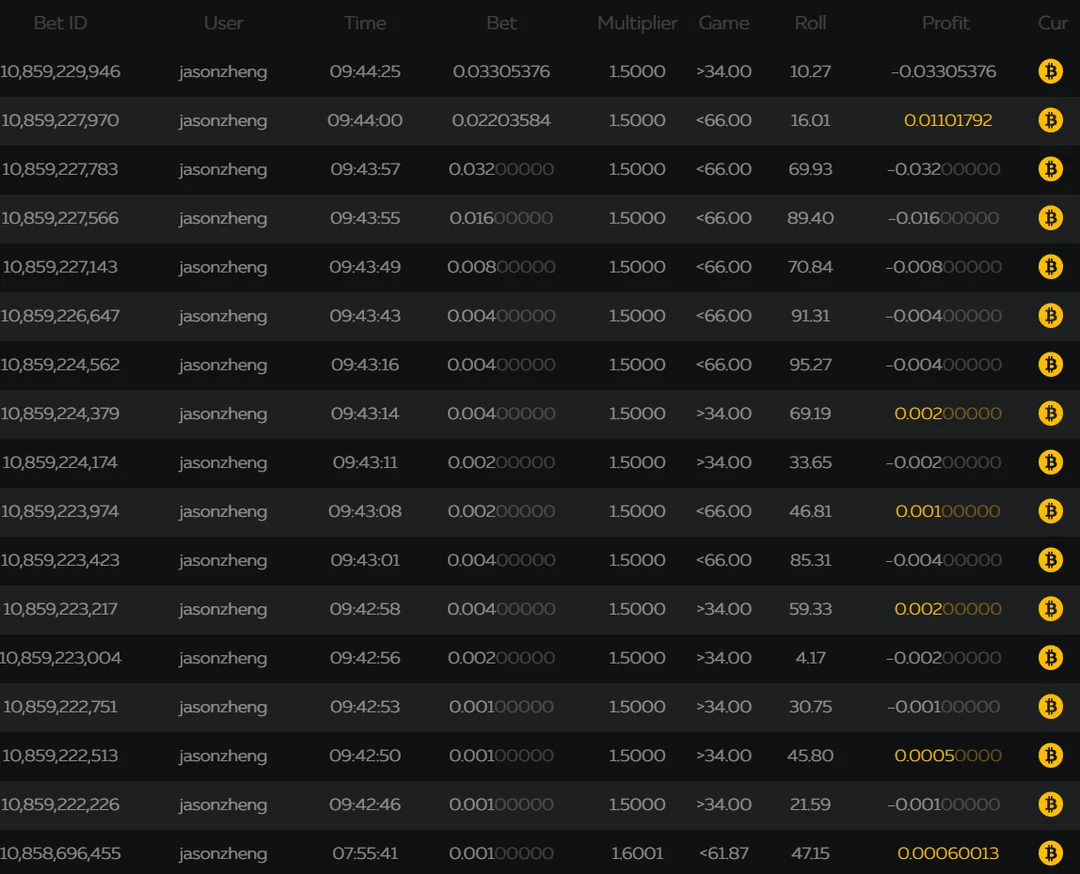
No system manages it. Take the Martingale — doubling after every loss — and check the arithmetic: the expected value per bet doesn’t shift by a single decimal. Progressions reshuffle how wins and losses arrive in the short term, but they collide with table maximums or a drained bankroll eventually, and the result is one loss large enough to erase everything gained.