
Tilt empties bankrolls quietly (see our diagnostic on Tilt Triggers). The Tilt Detector reads your pasted bet log and runs the numbers — escalation ratios, double-up rates, stake trends — to show whether emotion, not strategy, is sizing your wagers and pushing you to chase losses.
Tilt Detector
What tilt looks like in the raw numbers
How Does This Compare to 0% House Edge Protocols?
Audited 100% RTP
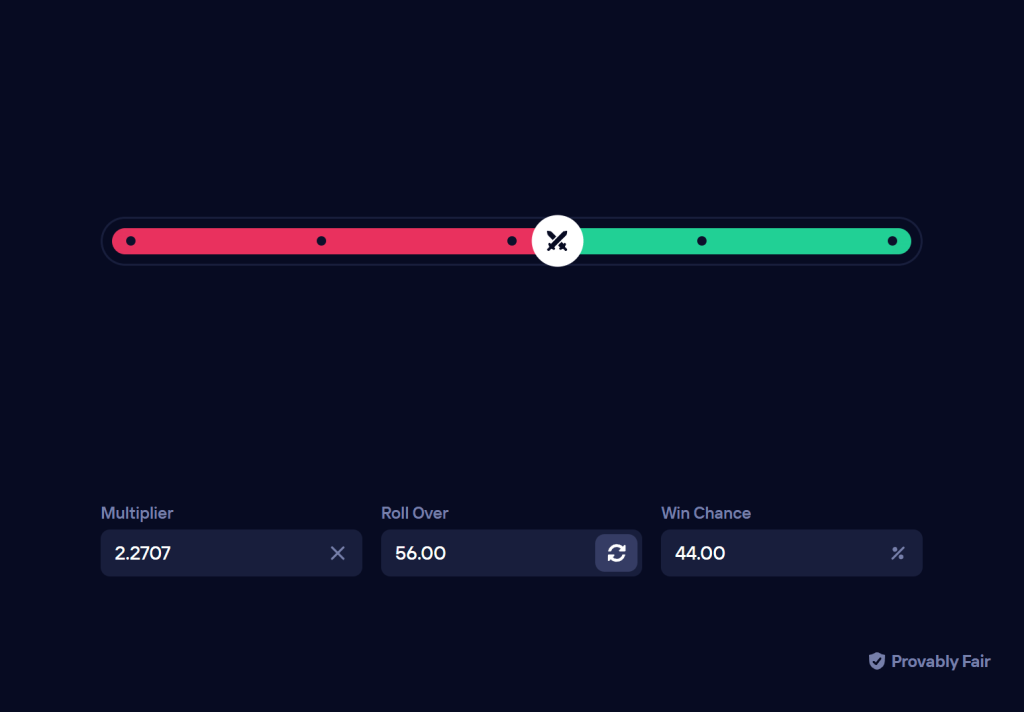
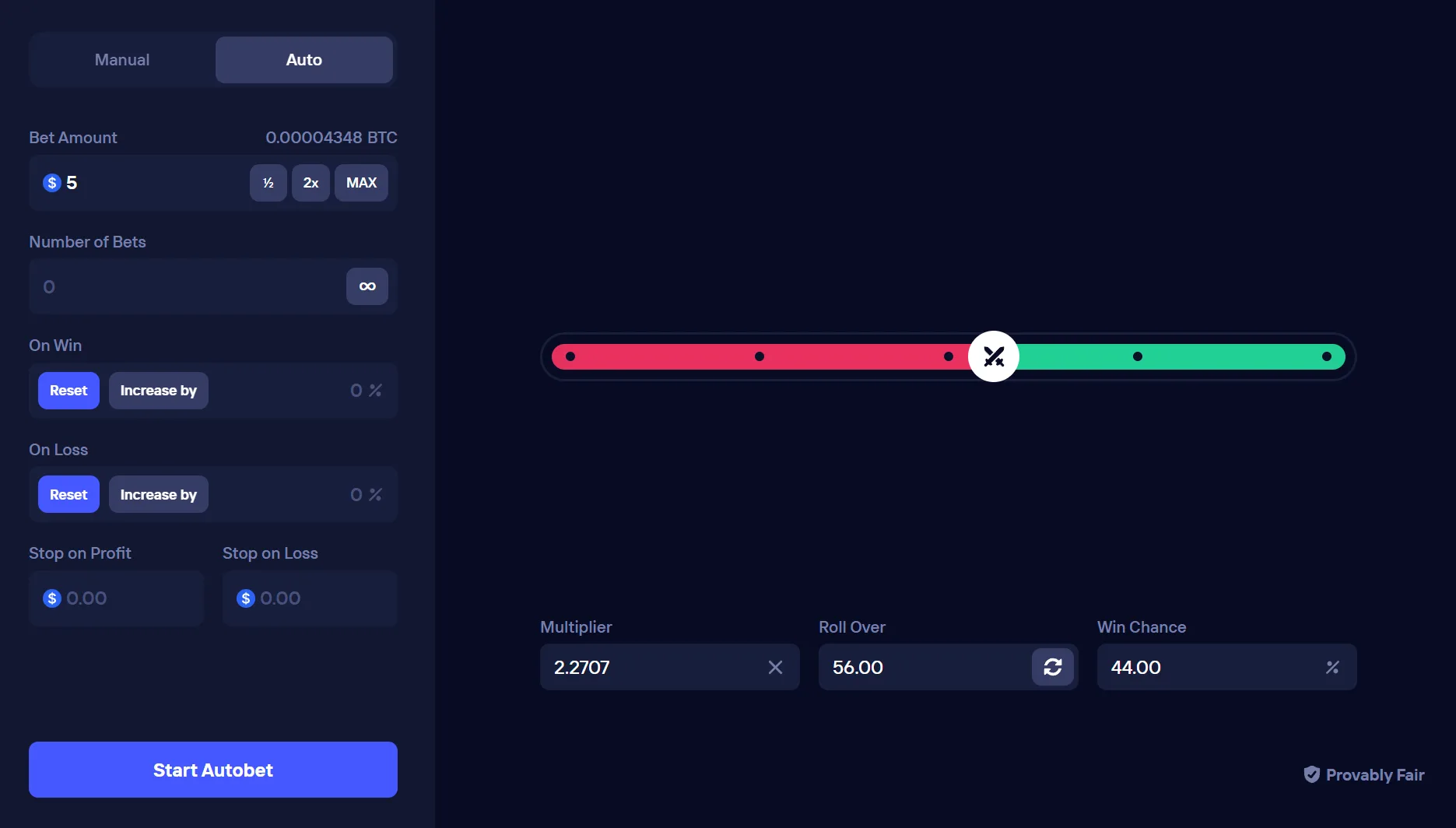
Instead of standard 1.00% to 4.00% casino house margins, compare with mathematically verified 100% RTP Originals (0.00% House Edge) on Duel Casino:

Poker players coined the term: a frustrated mental state where decisions stop being optimal. In casino and sports betting, tilt shows up as **loss-chasing** — an impulsive jump in stake size, driven by the urge to recover losses fast.
Here is the uncomfortable part. While tilting, you feel rational. Your bet history disagrees. Feed the tool a raw CSV of stakes and outcomes and it computes the statistical fingerprints of emotional escalation — an objective audit of what you actually did, not what you think you did.
Three metrics the detector computes
Your pasted log is scored against three statistical markers:
1. The Bet Escalation Ratio
Average bet placed right after a loss, divided by your baseline bet during winning or break-even runs:
Escalation_Ratio = Avg_Bet_Post_Loss / Avg_Bet_Baseline
- Ratio ≤ 1.1: Stable. Your strategy is holding.
- Ratio 1.2 to 1.9: Moderate escalation. Loss-chasing has started.
- Ratio ≥ 2.0: Severe tilt. Doubled stakes or worse after losses.
2. Double-Up Frequency
The share of losing bets followed by a stake at least twice the previous size. High values mean your play resembles a desperate Martingale progression, whether or not you’d admit it.
3. Regression Slope (Trend Line)
A linear regression ($y = mx + c$) is fitted to your bet sizes over time after a major loss. A positive slope ($m > 0$) reveals a systematic upward creep in stakes — tilt with a paper trail.
Running the audit on your own history
Suspicious about your last session? Pull the raw betting history from your casino profile and follow these steps:
- Export the bet log as CSV, or copy the bet sizes and outcomes as a list.
- Paste it into the input block above.
- Hit “Verify.” Each line is parsed and the three metrics are calculated.
- Read the report. A positive slope plus an escalation ratio flagged red (above 2.0) means you’re in a volatile emotional state — lock the account or leave the device now, not after one more bet.
Frequently asked questions
How does a high bet escalation ratio affect my Risk of Ruin?
Exponentially. Raising stakes after a loss exposes your remaining bankroll to larger house edge costs exactly when your capital is thinnest. The number of consecutive losses you can absorb before hitting zero shrinks accordingly.
Is loss-chasing always emotional?
Yes, mathematically speaking. The expected value of the next round is unchanged by your previous losses — the probabilities stay identical. Any stake increase at that moment is emotion wearing a strategy costume.
How can I prevent tilt in real time?
Use the pre-set deposit and session limits built into your casino profile, or apply the **Session Rules Template** to set hard bet-size caps that you are not permitted to breach under any circumstances. Limits set before the session beat willpower during it.