
Provably Fair pillar: Explained
Provably Fair Explained: What It Is, How It Works, and What It Does (and Doesn’t) Guarantee
At its core, Provably Fair makes one promise: the casino’s random results don’t have to be trusted—they can be checked.
Online gambling rarely produces innovations that favor the player, but this is one. Crypto casinos in particular adopted it early. Not because it flips the math in your favor (it doesn’t touch the house edge at all), but because it kills one specific anxiety: “Is this game rigged?”
A regular casino asks you to assume the dealer’s hands are clean. A provably fair game hands you the receipts. And if receipts are your thing—welcome home.
Provably Fair doesn’t make a game profitable for you. It makes the randomness verifiable.
What “Provably Fair” actually means
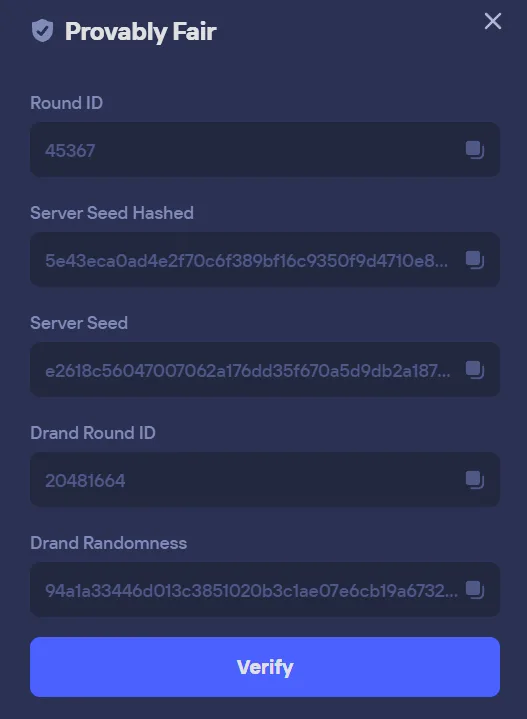
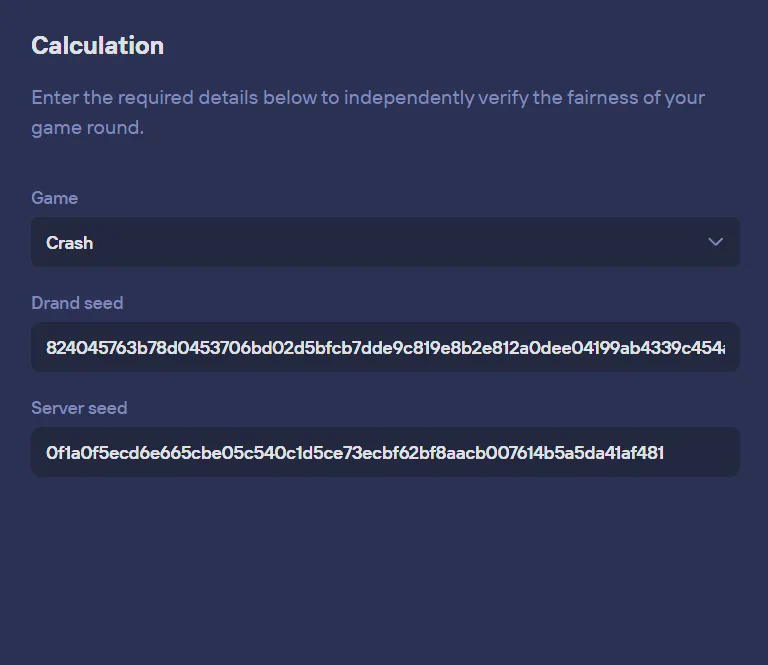
Provably Fair is a cryptographic scheme that lets you confirm two things: the game result was generated by the published method, and nobody altered it after your bet landed.
Instead of “trust us,” the operator hands over the raw ingredients of its randomness. You rerun the calculation yourself and check that the output matches what actually hit your screen.
Key idea: the casino commits to a secret value before the bet, then reveals it after. Any tampering breaks the math.
Nearly every implementation is built on three components:
- Server Seed (secret at first, revealed later)
- Client Seed (visible, often editable by you)
- Nonce (a counter so each round is unique)
Those three deserve their own deep dive, which lives here:
Server Seed, Client Seed & Nonce.
Why provably fair exists (and why crypto casinos adopted it first)
Online gambling has a credibility problem baked into its architecture. The RNG runs on a server you’ll never see. The “shuffle” happens somewhere out of view. That blind spot breeds paranoia—and occasionally, the paranoia is earned.
Crypto casinos, especially those built around “instant” games (Crash, Dice, Mines, Plinko), needed trust that didn’t rest solely on a license file and a brand name. Provably fair was their answer: transparent randomness any player can audit.
Culture played a part too. People already in crypto are in the habit of checking hashes and distrusting centralized assurances. The concept landed on fertile ground.
How provably fair works (the gentle, accurate version)
Implementations differ in the details. The underlying logic does not.
Step 1: The casino generates a secret “Server Seed”
A random string. The casino keeps it hidden for now.
Step 2: The casino shows you the “hash” of that seed
A hash works like a fingerprint—usually produced with a SHA-style algorithm. You can’t reverse it back into the seed, but when the seed is eventually revealed, you can confirm it matches the fingerprint you were shown earlier.
Step 3: You have a “Client Seed”
Your contribution to the randomness. Most casinos let you edit it whenever you like. Leave it alone and it still gets mixed into every result.
Step 4: Each bet uses a “Nonce”
The counter climbs with every round: 1, 2, 3… Same seeds, different nonce, new outcome. That’s what keeps rounds from repeating.
Step 5: Result is computed from (Server Seed + Client Seed + Nonce)
A deterministic formula—frequently HMAC-based—turns the combined data into a number, and that number maps to your outcome: a dice roll, a Crash multiplier, a Mines layout, and so on.
Step 6: After a seed cycle, the casino reveals the Server Seed
Check that the revealed seed matches the earlier hash, then confirm it produces your actual outcomes when combined with your client seed and nonce.
And that’s the whole trick. The casino can’t swap the server seed without breaking its own hash commitment; you can’t engineer outcomes because the server seed is unknown to you. A clean stalemate, enforced by arithmetic.
Ready to run a verification yourself?
How to Verify a Provably Fair Bet.
What provably fair guarantees (and what it absolutely does not)
Here’s where players routinely overreach. The system is powerful, but its power is narrow.
Provably fair guarantees:
The outcome was produced by the published method, using the exact seeds and nonce, with no post-bet changes.
You can detect result manipulation—provided you actually run the check.
Provably fair does NOT guarantee:
That the casino is “safe” about withdrawals, KYC, or account closures.
That the RTP is good or that the game carries positive EV.
That bonus terms are fair (wagering requirements, caps, and exclusions can still be rough).
That you won’t lose short-term to variance. You will, sometimes, by design.
For the blunt version of that “safe” assumption:
Does Provably Fair Mean a Casino Is Safe?
And because fair games still eat bankrolls:
Variance & Volatility Explained and
How to Calculate Expected Loss.
The “verification gap”: why most players never use the superpower
A fire extinguisher under the kitchen sink is a decent analogy. Genuinely useful object. Most owners never touch it until something smells like smoke.
Why players skip verification:
- They can’t locate the data (seeds, nonce, hash).
- They assume it’s “too technical.”
- They don’t keep a verifier tool within reach.
- They extend brand trust—until the day it’s not warranted.
Our answer is a “minimum effort” path: a short checklist, a verifier link saved, and a habit of spot-checking when it matters.
Relevant pages:
Provably Fair Verifiers (Tools & How to Use Them)
Common Provably Fair Red Flags
Provably Fair Checklist (Tool)
Provably fair red flags (yes, even this system can be “abused”)
Correct execution can be proven. Honest design cannot—not automatically. These are the warning signs that a system is technically “provably fair” in name only:
- No clear access to the server seed, client seed, or nonce for individual rounds.
- No hash commitment shown before play—or one that shifts unpredictably.
- Vague verification instructions (“trust our fairness,” with no reproducible method).
- Verifier tools that contradict the documented method—inconsistency is a symptom.
- Selective transparency: some games are provably fair, others are opaque, and marketing blurs the line.
Our full list, with examples:
Provably Fair Common Red Flags.
Does provably fair change RTP or house edge?
No. Verifiability and generosity are unrelated.
A provably fair game can carry a full house edge. It can still be negative EV. It can still be volatile enough to burn through a session’s budget quickly. A verifiable loss is still a loss—merely an honest one.
On why a strong RTP figure doesn’t save short sessions:
Why High RTP Still Loses Short-Term.
How to use provably fair like a calm, competent player
The grown-up version looks like this:
1) Treat provably fair as a trust filter, not a profit engine
It helps you pick venues with transparent randomness. It hands you no edge of your own.
2) Change your client seed occasionally (for hygiene)
Not a winning move—a familiarity move. Rotating it keeps you off defaults and forces you to learn where the settings actually live.
3) Verify strategically
Nobody checks all 4,000 rounds. Verify a sample. Verify when a result looks wrong. Verify before you send a friend to that site.
4) Combine it with bankroll boundaries
Transparency doesn’t shield a bankroll from variance. Unit sizing, timeboxing, and stop rules do that job.
Start here: Stop-Loss & Stop-Win Rules and Timeboxing Sessions.
A gentle warning: provably fair doesn’t protect you from bad operators
Worth saying twice: provably fair certifies the randomness method. It says nothing about:
- fast withdrawals
- reasonable KYC
- fair account decisions
- clean bonus rules
- responsible marketing
The full teardown of that misconception lives here:
Does Provably Fair Mean Safe?
This site doesn’t romanticize casinos. The goal is clearer eyes, then firmer boundaries.
FAQ
Is provably fair the same as “RNG audited”?
Close cousins, not twins. Audited RNG depends on third-party labs and compliance filings. Provably fair depends on your ability to verify results yourself, with math. Related problems, different mechanisms.
Can provably fair games still be “rigged”?
If the implementation is sound and verifiable, the casino can’t quietly rewrite outcomes after your bet. But “rigged” has other meanings—poor odds, harsh rules, predatory bonuses—and provably fair fixes none of those.
Do I have to verify every single round?
No. Most players sample a few rounds, or check in when something looks off. What matters is that verification is possible—and that the casino supplies clear tools and data for it. That availability is the trust signal.
Does changing the client seed help me win?
It doesn’t. A new client seed produces a different sequence of outcomes, not a better one. Without the server seed in advance, no outcome is predictable—so there’s no “seed hack.” There’s just transparency.
Where should I go next?
Start with the hands-on guide: How to Verify a Provably Fair Bet. Then get fluent in the three building blocks: Server Seed, Client Seed & Nonce.