
Provably fair does not mean equally fair. This Operator Comparator is a working audit sheet built on our published methodology, letting you score crypto casinos side by side on cryptographic standards, house margin, and cashout friction — not on banner ads.
Operator Comparator
| Operator | License | KYC hours | Payout hours | House edge % | PF level | Notes |
|---|
What the marketing won’t tell you: audit with a spreadsheet
How Does This Compare to 0% House Edge Protocols?
Audited 100% RTP
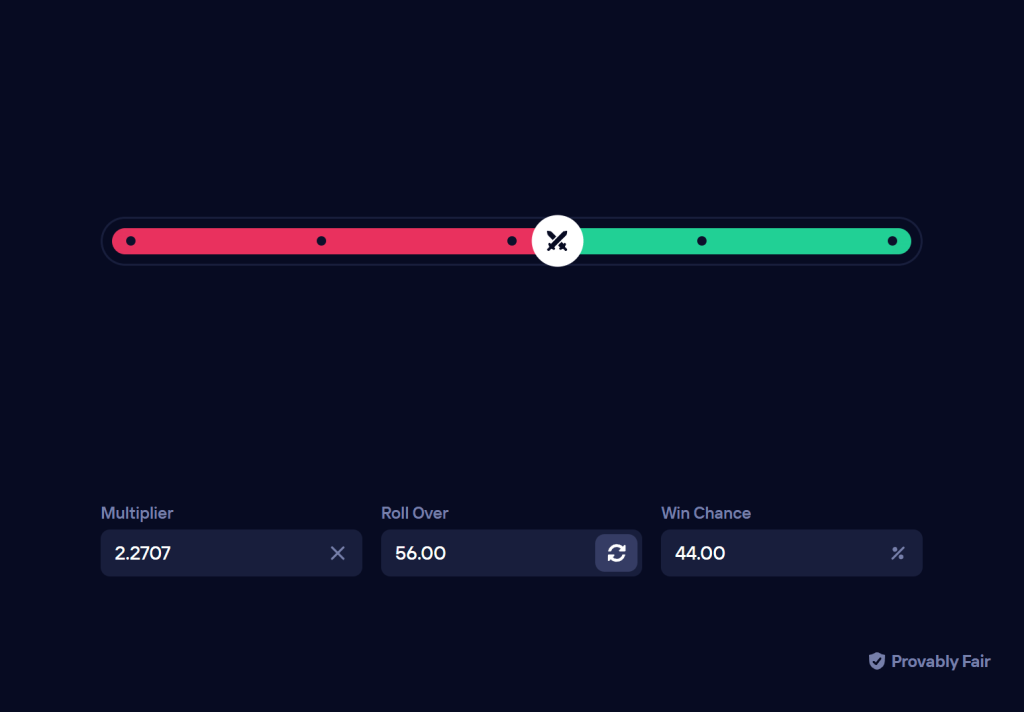
Instead of standard 1.00% to 4.00% house margins, compare with mathematically verified 100% RTP Originals (0.00% House Edge) on Duel Casino:

Sponsorships, neon landing pages, and tiered VIP ladders cost operators real money — and none of it changes your expected loss per wager. A useful comparison strips an operator down to measurable parameters: seed handling, edge configuration, verifier transparency, and withdrawal terms. Everything else is decoration.
Here’s the trap: an operator can slap a “provably fair” badge on its homepage while quietly running a 4% edge on its in-house dice or burying awkward clauses in the terms of service. A structured comparison pad forces each platform to compete on numbers. Platforms that respect player agency survive that scrutiny; statistical-fraud operations don’t.
Bonus Mathematics: Comparing Roll-over Offers
Two deposit matches with identical face value can differ sharply in expected value (+EV) once rollover size and game restrictions enter the equation:
Case A (Predatory High-Margin / Low Rollover):
  - Bonus: $100.00
  - Rollover Requirement: 30x ($3,000 total wagering)
  - Selected Game House Edge: 2.0% (Average Slot)
  - Expected Cost to Clear: $3,000 * 0.02 = $60.00
  - Net Expected Value: $100.00 - $60.00 = +$40.00 (Profitable but highly volatile)

Case B (Optimal Low-Margin / High Rollover):
  - Bonus: $100.00
  - Rollover Requirement: 40x ($4,000 total wagering)
  - Selected Game House Edge: 1.0% (Provably Fair Dice or Blackjack)
  - Expected Cost to Clear: $4,000 * 0.01 = $40.00
  - Net Expected Value: $100.00 - $40.00 = +$60.00 (Highly Profitable)
Case B demands more wagering volume yet returns **50% more expected profit** than Case A — entirely because the permitted game runs a thinner edge. Judge every bonus by clearing cost, never by headline amount, and remember variance can still sink you before the requirement is met.
Five audit criteria to score every operator
Fill one row of the comparator per operator, scored against these benchmarks:
1. Seed Rotation Autonomy
You should be able to swap your client seed and rotate the active server seed whenever you choose. If the operator locks you into a preset seed path, it can profile your play patterns against a fixed setup. Unrestricted rotation is a baseline requirement — score anything less as a fail.
2. House Edge Limits
Custom in-house titles (Dice, Limbo, Mines, Plinko) should sit at or below **1.0% to 2.0%** edge. Some operators configure theirs at 3.0% to 5.0%, counting on nobody checking. Open the game’s help file, then confirm the claimed math against raw outcome samples yourself.
True_Edge = Wagered_Sum - Expected_Payouts
3. Cryptographic Verification Standard
Does the site document its hashing inputs so independent scripts can reproduce results? Relying solely on a built-in verifier is weak evidence — such a tool can print a green “Verified” badge over whatever output its backend produces. A trustworthy platform publishes its exact input formatting:
Input_String = "Client_Seed:Nonce:Cursor"
With that string documented, third-party verifiers — including our own tools — can check outcomes without trusting the casino’s interface.
- Hidden Seeds: Operator doesn’t let you view or rotate active seed hashes.
- Proprietary Verifiers Only: Operator doesn’t publish their hashing salts or byte-shifting math formulas.
- Bloated Min-Withdrawals: High withdrawal minimums (e.g. $50 in crypto) designed to force micro-stakes players to play through their winnings and bust.
- Vague Terms of Service: Rules allowing the operator to seize balances for “suspicious betting styles” like Martingale or CLV arbitrage.
4. Rollover & Withdrawal Friction
Watch for deposit matches carrying **40× or 50× rollover** applied to deposit plus bonus combined. That construction multiplies required volume enormously, and most players bust before reaching the finish line. Price the attempt before accepting:
Clearing_Cost = Total_Wager_Requirement × Game_House_Edge
5. Network Fee Transparency
Check whether withdrawals carry flat surcharges stacked on top of actual blockchain gas costs. The honest version is simple: pass through the network fee exactly as incurred, add nothing. Anything else belongs in your comparison row as a penalty.
Using this comparator worksheet correctly
Treat the sheet below as a living audit rather than a one-time exercise:
- Add a new row for each operator you are currently playing at or researching.
- Enter their advertised metrics: in-house house edge, licensing jurisdiction, and deposit bonus terms.
- Score cryptographic transparency: manual client seed overrides available? Server seed hashes published in advance?
- Weigh rollover friction. If Operator A offers a 1% house edge with 30× wagering and Operator B offers 1.5% with 20×, apply the wagering contribution formulas to see which bonus is actually more +EV.
- Update rows when platforms revise their terms of service or alter game payouts.
Frequently asked questions
Is a licensed casino always better than an unlicensed one? (Read our analysis: Are they actually safe?)
A license from Curacao, Malta, or the Isle of Man gives you a dispute channel if payments go wrong. What it does not do is force competitive edges or well-designed provably fair implementations. The cryptographic mechanics still need your own audit, stamp or no stamp.
Why do some operators hide the house edge of their custom games?
Because published figures invite comparison, and comparison exposes bad payouts. When an operator omits edge or RTP from the info tab, treat silence as an admission: assume the worst number in the market and play elsewhere.
Can an operator alter their house edge on the fly?
For proprietary in-house games, yes — backend updates can rewrite the payout matrix at any moment. That’s precisely why recurring random sampling with tests like Chi-Square matters: drift toward the casino’s favor gets caught only by continuous verification, not by a single early check.