
Math foundation: RTP + House Edge
RTP vs House Edge: What Casino Games Really Cost (Plain English)
Think of RTP as the sticker price and house edge as what actually leaves your wallet. This page separates the two, calmly and with real numbers—so streaks, gut feelings, and “100% RTP” banners stop making decisions for you.
Nobody here will promise outcomes. Short sessions can go your way on nearly any game, and they can collapse on even the statistically friendliest ones. What RTP and house edge give you is a sense of direction over thousands of rounds—and an honest price tag on the volume you push through.
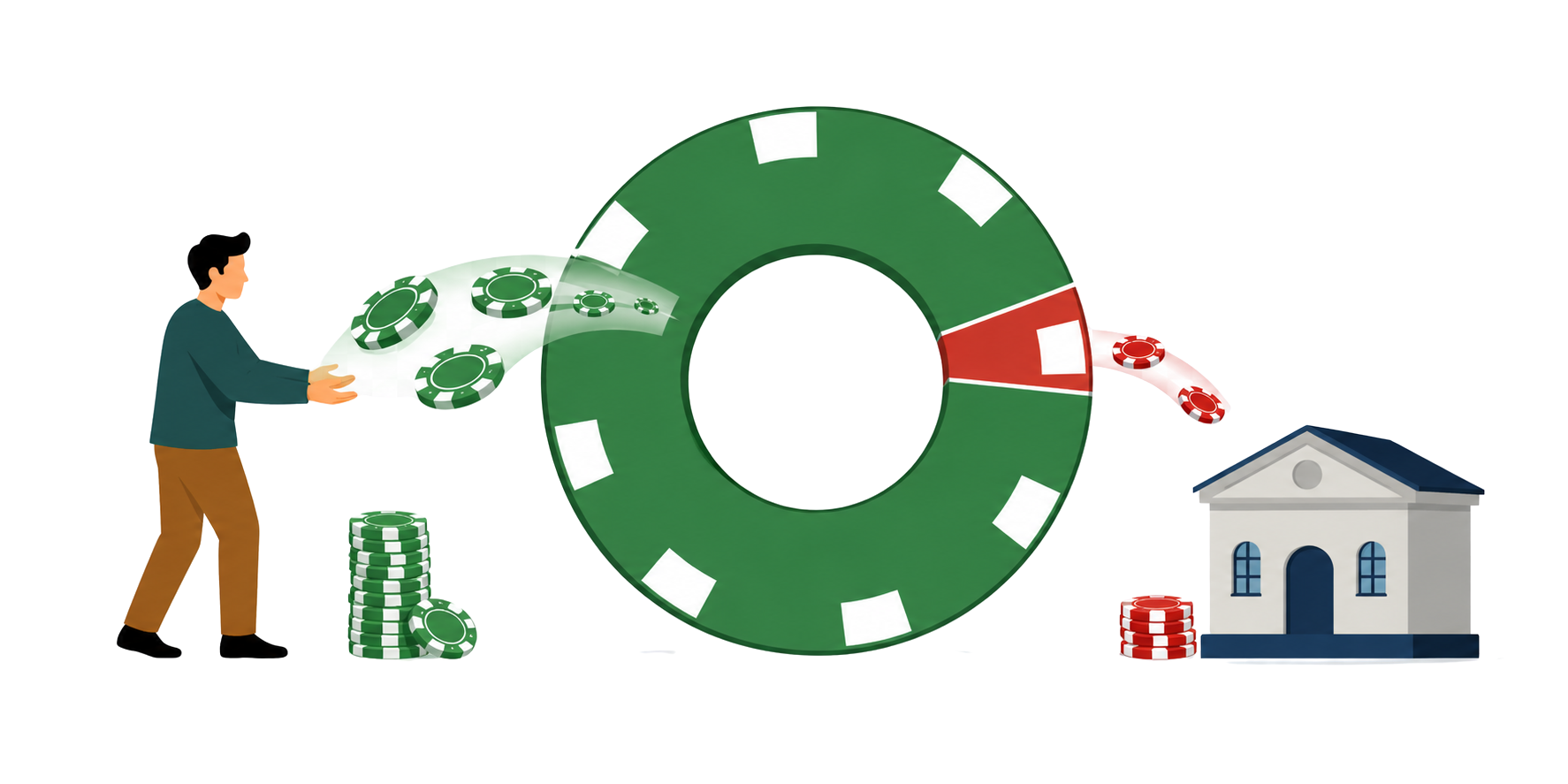
RTP describes what a game pays back across a massive sample. House edge describes what it keeps. Your Tuesday night is neither of those things—it’s variance.
First: the one sentence definitions
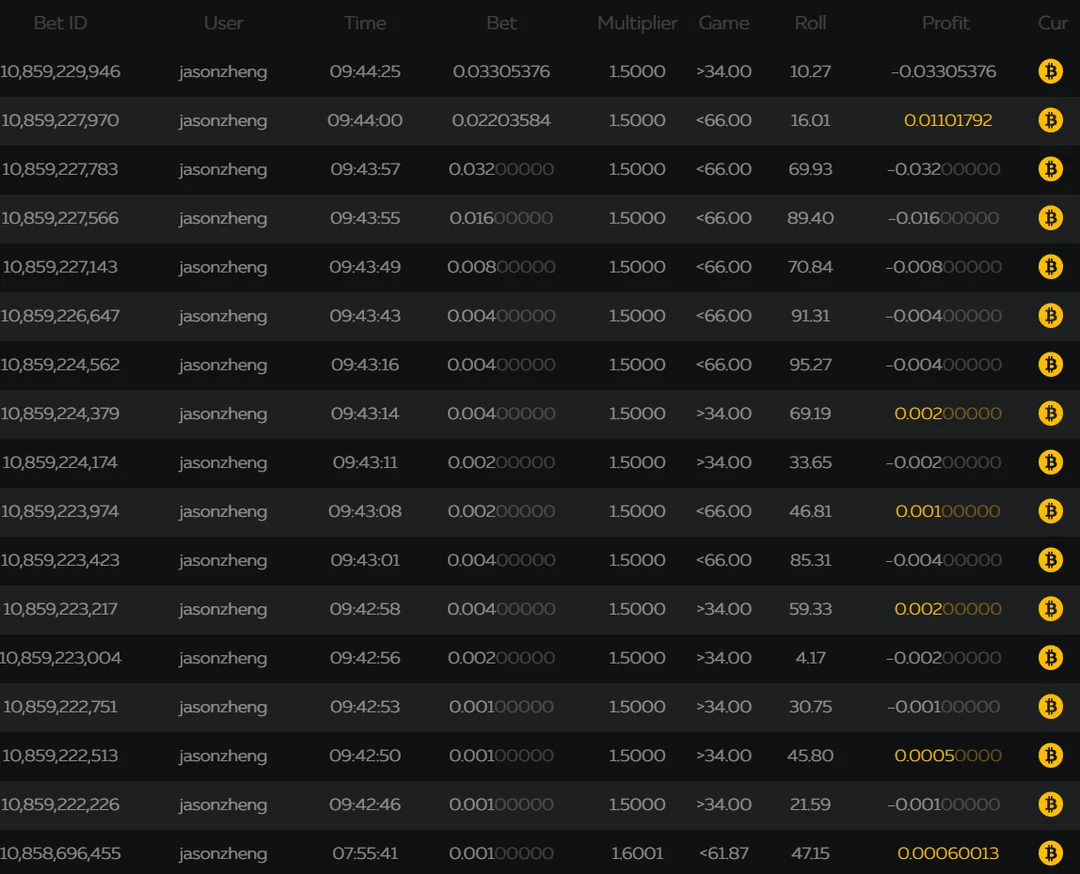
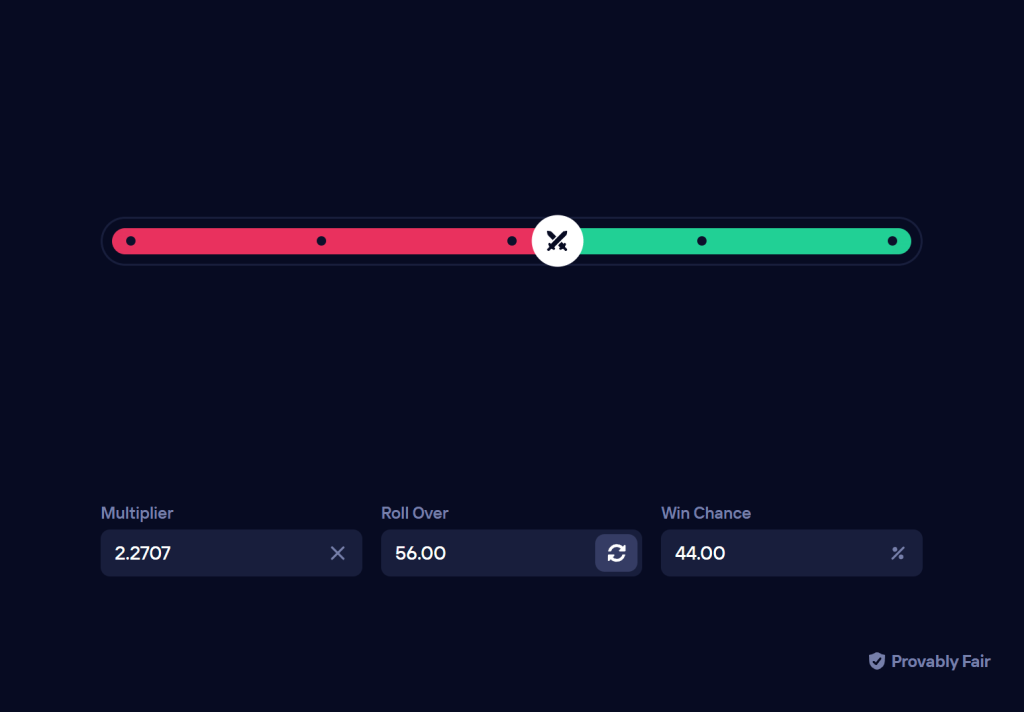
RTP (Return to Player) is the share of all money wagered that a game is built to hand back to players once the round count gets very large.
House edge is the mirror image: the share of total wagers the game is designed to retain for the operator as the sample grows.
In the simplest model, house edge ≈ 100% − RTP. A game paying back 96% keeps roughly 4%. That 4% is not a per-session fee. It’s the point where results drift if you keep feeding rounds into the machine.
Why people get burned: confusing “long run” with “tonight”
RTP makes no promises about your next 200 bets—and in plenty of games it barely says anything useful about the next 2,000. It’s a property of the payout structure itself, not a forecast. Any individual session is governed by variance, streaks, and how aggressively you size bets.
That’s why two people playing the identical game at the identical RTP can walk away with opposite stories. One triggers a rare bonus round early and calls the game loose. The other endures a cold stretch and calls it rigged. In a genuinely fair system, both outcomes happen all the time.
A workable mental model: RTP is gravity, variance is weather. Your bankroll rules determine whether you’re still standing when gravity finally gets a word in.
The most useful formula you’ll ever learn
If casino math gets one slot in your memory, make it this one:
Expected loss ≈ Total amount wagered × House edge
The load-bearing phrase is total amount wagered. Not deposits. Not net loss. Every dollar you put at risk, counted each time it’s bet. This is why games that feel cheap per click turn expensive fast—the volume multiplies while nobody’s watching.
Example (simple on purpose):
Example: You stake $2 per round on a game with a 4% house edge (≈ 96% RTP). After 500 bets, you’ve wagered $1,000 in total. Expected loss sits around $40—4% of $1,000. You might finish the sample up $200 or down $200; variance doesn’t care. But the long-run pull is toward $40 lost per every $1,000 wagered.
This one line of math dismantles the “I only bet small” defense. Small stakes times enormous volume equals serious exposure.
RTP is not the same as “good for grinding”
Many players treat RTP like a leaderboard, assuming top score means safest play. Half right. RTP fixes the long-run price tag; it stays silent about how rough the short-run ride gets. That second quality is volatility.
Two games can post near-identical RTP and feel nothing alike. One drips out frequent small wins and almost never spikes. The other goes quiet for long stretches, then detonates. Same long-run average, wildly different session texture—and dramatically different risk of ruin along the way.
We treat these as two separate skills for exactly this reason. RTP is the price. Variance is the ride. For the concept explained so it sticks, bookmark: Variance Explained.
“100% RTP” claims: how to think without getting hypnotized
You’ll run into banners promising “100% RTP” or “zero house edge.” The sober reading: even a break-even design only balances out over a huge sample. It does not mean your next 500 rounds wash out. Expected value nears zero; realized results still swing hard.
Practical takeaway? A high-RTP environment is a decent place to practice discipline—flat staking, stable risk, firm session boundaries. What it can never do is substitute for bankroll management. Overbet on a low-edge game and it will still empty you quickly.
When “100% RTP” flashes by, ask two questions:
- Is it verifiable? If the game is provably fair, can you check rounds and parameters yourself, consistently?
- What’s the variance profile? How fast can it swing against you before the sample evens out?
High RTP is pleasant. Controlled behavior is what pays.
House edge isn’t the only “cost”
The statistical edge is baked in, but live sessions carry extra costs players tend to ignore until they sting:
Terms and limits can hollow out promotion value or push you into awkward wagering patterns. Fees on deposits and withdrawals, minimum bet floors, and max cashout caps all bend reality away from what the spreadsheet promised.
This is why, whenever we evaluate promotions later, we compute EV after reading the terms—not after admiring the marketing. Next steps after this page: Expected Value (EV) Explained and Wagering Requirements Explained.
How to use RTP and house edge like a smart adult
Here’s how to put these numbers to work without turning every session into accounting homework. You’re not trying to guess outcomes. You’re trying to avoid quietly sabotaging yourself.
1) Estimate the house edge (rough is fine)
Given RTP, subtract from 100%. Given house edge, take it at face value. Precision isn’t required to make better choices—just stop treating cost as invisible.
2) Think in “total wagered,” not deposits
Count your volume. A quick-paced game can spin a small deposit into $1,000 of wagers faster than you’d expect. Expected loss tracks volume; if volume never crosses your radar, cost won’t either.
3) Pair RTP with a variance plan
A generous RTP attached to wild swings—or wild behavior—remains dangerous. Choose your risk profile before sitting down and hold it steady all session. Raising stakes mid-session isn’t variance management. It’s fuel.
4) Use bankroll rules to survive the short run
RTP needs time to express itself. Bankroll management buys that time. Without it, the long run is theoretical because your balance hit zero first. For the clean framework, go next to: Bankroll Management.
Common myths (and the calm correction)
Budgets die here: in myths that sound clever and feel reassuring. The four biggest, each with a correction worth memorizing.
Myth: “High RTP means I can’t lose much.”
Correction: High RTP trims long-run cost, but short-run variance doesn’t shrink to match. Overbetting or chasing burns through high-RTP balances just fine.
Myth: “I’m due after a losing streak.”
Correction: Gambler’s fallacy. Independent rounds carry no debts. All a losing streak changes is your mood—and your odds of doing something reckless next.
Myth: “Small bets keep me safe.”
Correction: Tiny stakes stacked into enormous volume equal big exposure. Track total wagered. Volume is the multiplier hiding under the table.
Myth: “RTP guarantees break-even if I play long enough.”
Correction: RTP describes expectation, not a promise. Zero balance arrives before long-run averages do, sometimes. That’s risk of ruin.
What to do instead (simple rules that survive stress)
For a beginner-proof rule set that transfers across nearly every game, use this list. Nothing here is exciting—which is precisely why it holds up.
- Flat staking: fix a unit (commonly 1–2% of session bankroll) and refuse to move it.
- Timebox sessions: a timer beats willpower at stopping “one more round” creep.
- Stop-loss and stop-win: write down exits before emotions get a vote.
- One risk profile per session: escalating volatility to “catch up” is chasing with extra steps.
- Verify when possible: provably fair tools only protect players who actually use them.
Want it ready-made? Copy ours: Session Rules Template.
Responsible play
Casino math informs decisions; it can’t steady shaky hands. If play starts feeling urgent, secretive, or like relief for stress, step away. Occasionally the optimal strategy is closing the tab.
Guardrails and support resources: Responsible Gambling.
FAQ
Is house edge always exactly 100% − RTP?
Usually close enough. Certain rules, side bets, or strategy errors shift the effective edge in some games. Treat RTP as the baseline number, then adjust for how you actually play.
Why do I sometimes win on low RTP games?
Variance produces wins on negative-EV games regularly. That’s randomness doing its job, not math being wrong.
What matters more: RTP or variance?
Different jobs. RTP sets long-run cost; variance sets short-run swing size. Bankroll rules decide whether those swings get to knock you out first.
What’s the fastest way to improve my results?
Quit resizing bets based on mood. Flat staking, timeboxing, and hard stop rules first. Add EV analysis once promotions enter the picture.