
Games pillar: Limbo Strategy
Limbo Strategy: Set a Multiplier, Tame Variance, and Stop the “One Big Hit” Fantasy Before It Eats Your Bankroll
Think of Limbo as Crash without the theatrics. There is no rising graph to time and no panic button to fumble. You set a target multiplier, bet, and the round either clears your target or it doesn’t.
The clean, binary design is also what makes Limbo treacherous. A game this simple invites bargaining: “Raise the target a little, recover the session.” That’s not strategy — that’s wishful thinking wearing a calculator.
This guide covers how Limbo actually resolves each round, why your multiplier choice shifts volatility rather than expected value, and which bankroll and session rules stop Limbo from quietly draining funds at machine speed.

Limbo doesn’t reward prediction. It rewards boundaries. Pick your target before you bet — and don’t renegotiate with randomness.
How Limbo works (in plain English)
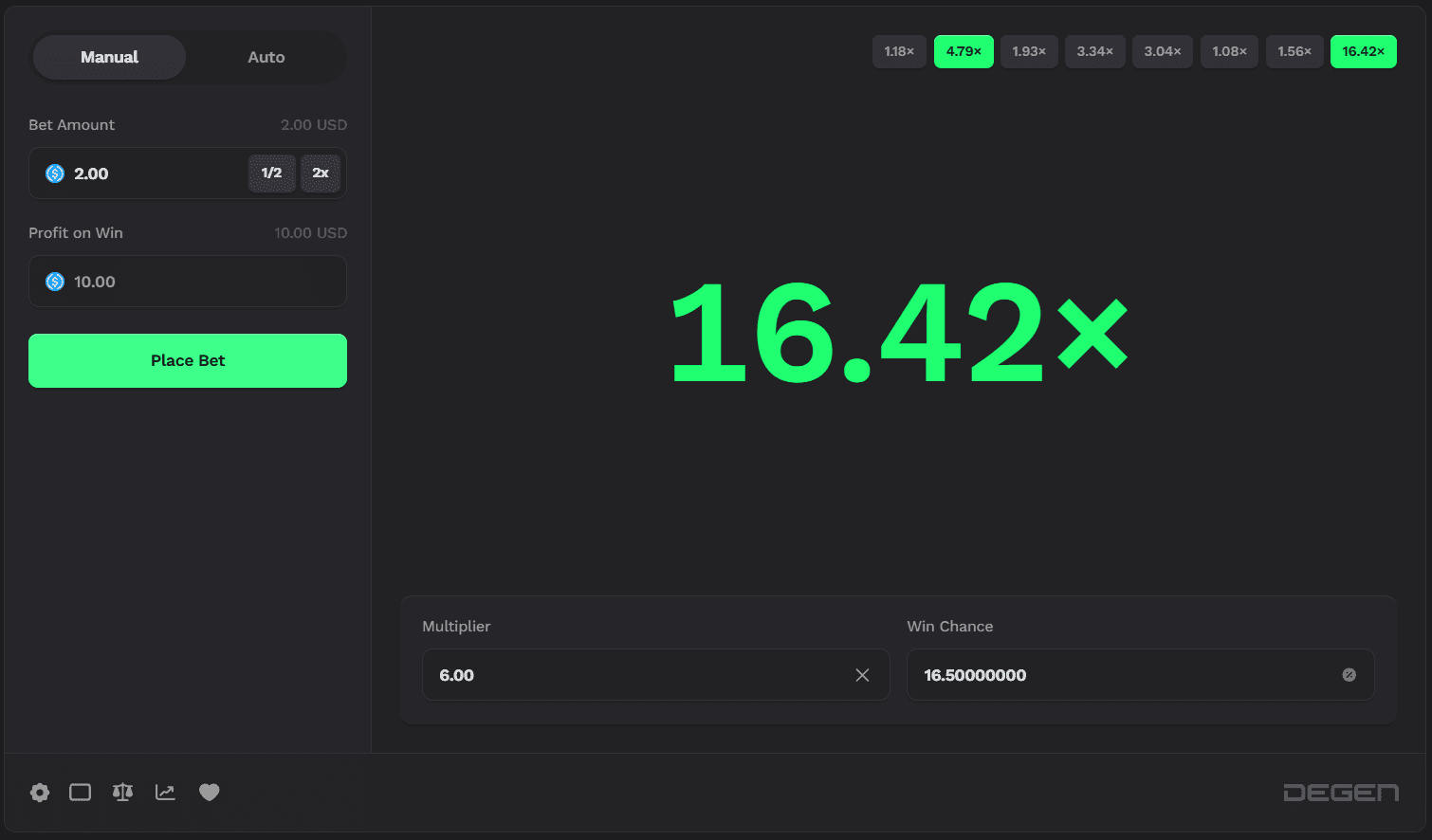
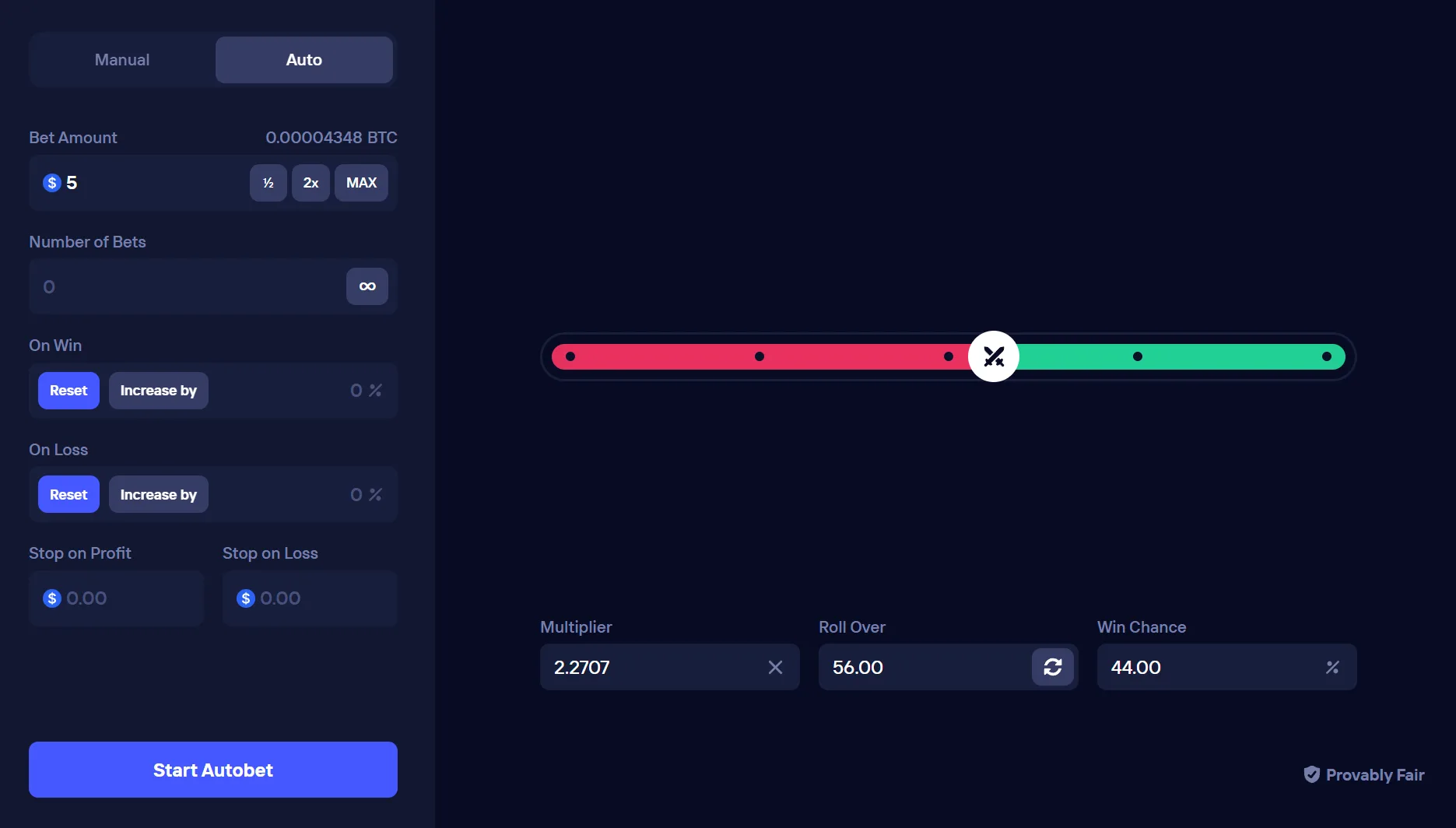
Every round produces a result multiplier — 1.18x, 2.07x, 19.4x, whatever the randomness serves up. Before betting, you declare a target. Land at or above it and you’re paid stake times that target (or the displayed payout); fall short and the stake is gone.
No timing element exists. You make one decision per round, before it starts.
A large share of crypto casinos run Limbo as a provably fair title: results are derived from server seed, client seed, and nonce, so you can recompute them yourself afterward. Verifiable outcomes matter, and this is the rare genre where checking is genuinely easy.
Provably Fair Explained
How to Verify a Provably Fair Bet
Server Seed, Client Seed & Nonce
The Limbo myth that burns the most money: “There’s a best multiplier”
Here’s the expensive misconception. Players scan for some hidden “sweet spot” target as if the payout table had a secret door in it. In most implementations, though, the house edge lives inside the payout structure itself, so moving your target changes volatility, never expected value.
Put gently: rearranging the furniture doesn’t cancel the rent.
Limbo truth: A lower target wins more often but pays less. A higher target wins less often but pays more. Over time, the expected value stays negative if the game has a house edge.
Want the underlying math spelled out? These two pages do it:
Limbo math you actually need (one friendly formula)
The interface hands you two figures every round: target multiplier and win chance. They’re linked by an approximation worth internalizing:
Win Chance ≈ (1 − House Edge) / Target Multiplier
You rarely need to calculate it yourself — most UIs print it. But knowing the shape helps:
- Double the target multiplier → about half the win chance.
- Chasing huge multipliers → means accepting long losing stretches as normal behavior.
- “It didn’t hit for 40 rounds” can be perfectly normal at high targets.
Understanding streaks builds a real emotional shield:
The Limbo Risk Dial (Low / Medium / High) — choose once per session
Your target multiplier is effectively a volatility dial. Give each setting an honest name, then commit to it before emotions get involved.
Low volatility Limbo (low target multipliers)
Wins arrive often and pay little. It feels relaxing — dangerously so, because relaxation extends sessions. The threat here isn’t size of loss; it’s volume.
Best for: short, structured sessions where you timebox and stop on schedule.
Medium volatility Limbo (moderate targets)
Payouts become meaningful while wins thin out. Many players feel “in control” here, which is precisely when they creep the target upward after losses.
Best for: players who can lock a target and keep unit size stable.
High volatility Limbo (high targets)
Dry spells dominate and payouts spike. Oversized units burn through your runway long before any big result shows up.
Best for: tiny units, short sessions, strict stop-loss, and no bargaining.
Session rule: Pick one target multiplier for the session and lock it. If you feel the urge to change it mid-session, that’s a tilt signal — end the session.
Limbo’s real “strategy”: bankroll runway + session structure
No target setting manufactures an edge, so genuine improvement comes from cutting self-inflicted damage. Concretely:
- smaller unit size (more runway)
- timeboxing sessions (less volume)
- stop-loss and stop-win (less chasing and overconfidence)
- no progression systems (less catastrophic failure)
The groundwork for each item:
Bankroll Management
Risk of Ruin (RoR)
Stop-Loss & Stop-Win Rules
Timeboxing Sessions
The “Multiplier Hunger” trap (why Limbo makes people chase)
Limbo trains a specific belief: that one large multiplier can retroactively repair a losing session. The math sometimes agrees. Your behavior usually won’t survive contact with that idea.
Once “one hit fixes it” takes root, watch for these tells:
- raising the target after losses (“I need a bigger hit”)
- increasing bet size (“I can’t wait that long”)
- extending session time (“it’s coming”)
Multiplier Hunger Meter: If you feel “I’ll stop after I hit X,” your meter is high. High meter = high chance of chasing.
If any of that sounded like your last session, start here:
Auto-bet in Limbo: useful guardrail or volume amplifier?
Most Limbo clients ship auto-bet, turbo mode, and on-win/on-loss rules. Automation amplifies whatever system feeds it — discipline or destruction.
Good use
Auto-bet with a fixed unit size, fixed multiplier target, and hard stop conditions (stop-loss, stop-win, timer, or bet-count cap). You’re using automation to remove temptation.
Bad use
Auto-bet with any progression system (increase after loss), especially at high targets. That’s how “just a few bets” turns into a bankroll leak at high speed.
Limbo volume warning: expected loss grows with total wagered, not with how dramatic the game feels.
Learn the formula once and it applies everywhere: How to Calculate Expected Loss
Why Martingale fails in Limbo (and fails faster at high multipliers)
Progression systems sell certainty. Their fine print assumes infinite bankroll and unlimited max bets. Neither survives contact with reality.
High targets make the collapse quicker: long loss runs mean doubling sequences slam into the wall fast — your balance runs dry or the site’s bet ceiling blocks the next step.
The complete teardown:
Limbo vs Crash vs Dice (choose the right tool for your brain)
Coming from our other fast-game guides? Here’s where Limbo sits:
Limbo
One decision per round: pick a target, accept the odds, endure the streaks. Cleanest format of the three — and easiest for “I can fix it” players to abuse.
Crash
Timing creates the illusion of skill, which raises emotional temperature. Auto-cashout adds discipline without adding EV.
Dice
Finest-grained risk control via the win-chance slider — and therefore the biggest magnet for betting systems. Flat staking keeps it sane.
Match the game to your emotional stability, not to a profit daydream. That’s the actual optimization.
The Limbo Session Blueprint (copy this; it’s boring on purpose)
Boredom is a feature here. This routine repeats reliably because nothing in it depends on how the session feels.
Step 1: Set a session bankroll
Decide on money whose loss tomorrow-you won’t care about. That number is the wall. Touching it ends play.
Step 2: Pick a target multiplier (risk profile) and lock it
Low/medium/high — choose one for the session. Your multiplier is not a mood dial.
Step 3: Choose a small unit size (flat staking)
Same bet every round. Small units buy runway, and runway buys calm during ordinary losing stretches.
Step 4: Add stop-loss, stop-win, and timeboxing
Stop-loss protects you from chasing. Stop-win protects you from overconfidence. Timeboxing protects you from volume creep.
Step 5: If tilt appears, stop immediately
Common tilt thoughts: “I’m due,” “one big hit fixes it,” “I’ll raise the multiplier just a bit.” Treat these as exit signals.
The same framework generalizes to other games:
Provably fair Limbo: what it proves (and what it doesn’t)
Verification answers one question well: was this result generated honestly and consistently? Recompute seeds, check outputs, confirm integrity.
It says nothing about withdrawal speed, KYC handling, limit policies, or dispute resolution. Outcome fairness and operator trustworthiness are separate audits.
Work through both halves here:
Does Provably Fair Mean Safe?
Provably Fair Common Red Flags
Provably Fair Verifiers
Quick Limbo sanity checklist
- I chose one target multiplier for the session and I will not change it.
- I’m using flat staking with a small unit size.
- I set stop-loss and stop-win rules before I started.
- I set a timer or bet-count cap to control volume.
- I will not use Martingale or “increase after loss” automation.
- If I feel multiplier hunger (“one big hit”), I end the session.
Take the same checklist to any game: Session Rules Template
FAQ
Is there a best multiplier to pick in Limbo?
No universal winner exists. Your target mainly shifts win frequency and volatility. With a house edge present, retuning targets won’t produce positive expected value — only a different flavor of variance.
Does Limbo have patterns or “hot streaks”?
Randomness generates streaks all by itself, especially at speed. They look meaningful and predict nothing. Hot/cold reasoning is a cognitive trap dressed as observation.
Can I use auto-bet safely in Limbo?
Yes, if it enforces discipline: fixed unit size, fixed multiplier target, and hard stop conditions (stop-loss, stop-win, timer, or bet-count cap). Auto-bet without stops just multiplies volume.
Is provably fair Limbo the same as a safe casino?
No. Provably fair covers outcome generation only. Withdrawals, KYC, support quality, and dispute handling need separate evaluation.
Where should I go next?
Fan of fast games? Continue with Crash Strategy and Dice Strategy. Prefer classic tables? See Roulette Odds & House Edge.