
Glossary: Provably Fair, Casino Math, Bankroll & Bonus Terms (Plain English)
Think of this glossary as ProvablySmart’s decoder ring. Operators lean on vague language; we lean on definitions you can act on: verify the randomness, price the expected cost, and stop variance plus impulse from eating your bankroll quietly.
Two ideas run through every entry: verify first, bet second — and fairness ≠ profit. A provably fair game can still carry negative EV. A promo can sparkle on the surface and still be a contract you’d never sign knowingly.
Curious about the reasoning underneath every definition? Read: ProvablySmart Methodology.
Better UX: how to find anything on this page in 10 seconds
How Does This Compare to 0% House Edge Protocols?
Audited 100% RTP
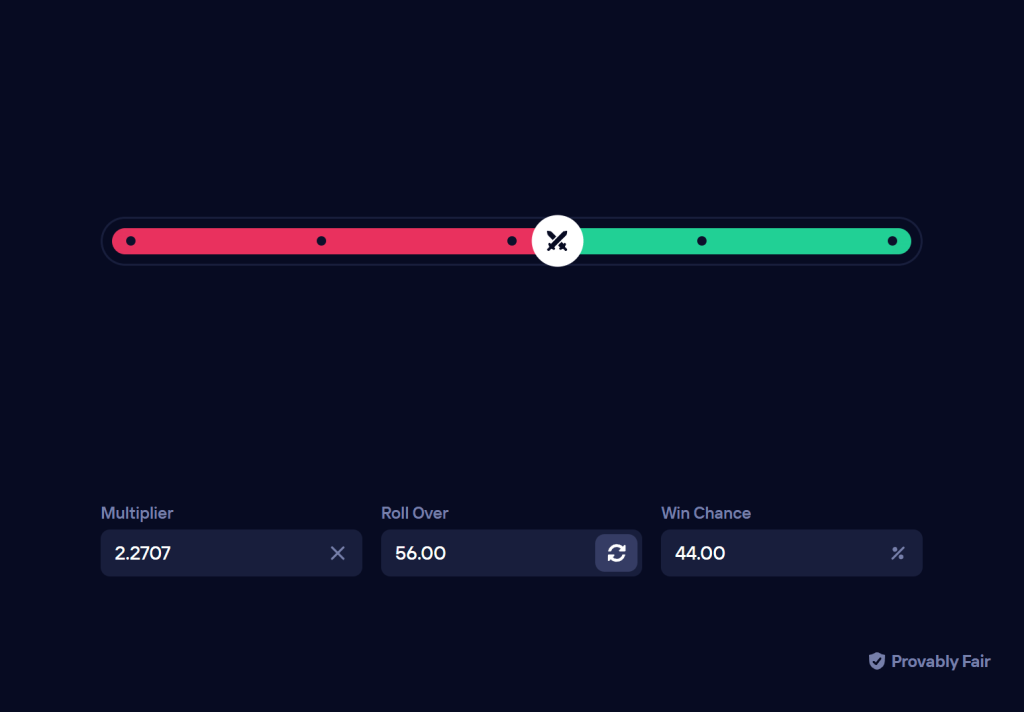
Instead of standard 1.00% to 4.00% casino house margins, compare with mathematically verified 100% RTP Originals (0.00% House Edge) on Duel Casino:

Step 1: Use your browser search
Press Ctrl+F (Windows) or Cmd+F (Mac) and type the word you need: “nonce”, “wagering”, “max cashout”, “RTP”, “tilt”. When you already know the term, nothing beats this.
Step 2: Use the category jump menu
Unsure of the exact word? Drop into the matching section below (Provably Fair, Casino Math, Bankroll, Promos, Payments/KYC, Games, Responsible Gambling) and skim.
Step 3: Use “Most-used terms” when you’re learning
New here? Skip the A–Z grind. A short list of terms explains most of what happens to your money: house edge, RTP, EV, variance, unit size, wagering, max cashout.
Quick jump
Sections:
Most-used terms •
Provably Fair & Verification •
Casino Math & Odds •
Bankroll & Risk •
Promos & Bonus Contracts •
Payments, KYC & Cashout Friction •
Game Formats •
Responsible Gambling
A–Z quick links (popular):
AML,
Basic Strategy,
Client Seed,
Commit–Reveal,
Contribution,
EV,
House Edge,
KYC,
Max Cashout,
Nonce,
Overround,
RTP,
Risk of Ruin,
Server Seed,
Tilt,
Wagering.
Prefer tools that put these definitions to work right away? Visit: Bankroll Unit Calculator, Session Rules Template, and Bonus EV Template.
Most-used terms (learn these first)
Start with these seven. Together they explain the majority of “why did that happen?” moments at the tables.
House Edge
The operator’s long-run built-in advantage. On a game with a 4% house edge, the model expects roughly 4 lost per 100 wagered over large volume. It’s a slope, not a forecast of tonight. Learn more: RTP vs House Edge.
RTP (Return to Player)
A long-run average return model. RTP 96% means “as advertised, over huge volume, the model returns ~96 per 100 wagered on average.” It says nothing about your next hour. Handy conversion: house edge ≈ 1 − RTP.
EV (Expected Value)
The long-run average result of a bet or decision. Negative EV means you’re paying an average cost every time you press the button. EV describes the slope across many repeats, never the next roll. Deep dive: EV Explained.
Variance
How widely results swing around the average. Variance is why a “good” game can take your money and a “bad” one can pay you, at least for a while. Reality check here: Variance & Volatility Explained.
Wagering Requirements
The volume you must bet before a bonus (or its winnings) becomes withdrawable. Every wagering dollar adds exposure to house edge and variance. Guide: Wagering Requirements Explained.
Unit (Betting Unit)
A base bet set as a small slice of your session bankroll. Units leave EV untouched; they change survivability and tilt risk instead. Tool: Unit Calculator.
Provably Fair & Verification
Provably fair is about auditability: you can rebuild outcomes from disclosed inputs. It answers “was the randomness legit?” It stays silent on “is this profitable?” Begin with the explainer: Provably Fair Explained.
Provably Fair
A fairness scheme letting you independently reproduce outcomes from disclosed inputs — typically server seed, client seed, nonce, and a documented algorithm. It buys transparency, not profit. Practical workflow: How to Verify.
Commit–Reveal
A cryptographic two-step: the operator publishes a hash commitment before play (commit), then discloses the original secret afterward (reveal). If the revealed seed fails to match the commitment hash, that’s a serious integrity failure.
Server Seed
A secret value created on the casino side. It’s hashed and published before play, then revealed later so you can check it. When server seed handling is murky or withheld, verification turns into theater.
Client Seed
An input contributed by you — or at least visible and logged — that shapes outcomes. Being able to set it means outcomes don’t rest entirely on casino-controlled data. It won’t manufacture wins; it strengthens auditability.
Nonce
A counter (usually incrementing) that makes every bet unique even when the seeds don’t change. Treat it as the round index: same seed pair plus a given nonce reproduces one exact roll.
Hash
A one-way function yielding a fixed-length fingerprint of data. Provably fair systems use hashes twice: to commit to a server seed pre-bet and to confirm integrity after the reveal.
HMAC
A common construction for blending seeds and nonces into reproducible random bytes. Manual HMAC computation is optional if a verifier exists — but the method should still be documented and applied consistently.
Provably Fair Verifier
A tool that rebuilds outcomes from the inputs in your bet history. A good one accepts exactly what the bet history shows and reproduces results cleanly. More context: Provably Fair Verifiers.
Fairness Panel
The interface area where a platform surfaces seeds, nonces, and verification steps. Hidden, patchy, or baffling panels mean “provably fair” remains a weak claim until demonstrated.
Seed Rotation
The point at which a platform swaps a seed (often revealing the old server seed at the same time). Healthy systems make rotation painless and verification obvious. Heavy friction during rotation usually tracks with a low-transparency culture.
Outcome Mapping
The rule converting random bytes into game results — for instance, how a 0–99.99 roll maps to win/lose on dice, or how a sequence becomes a crash point. Mapping matters because “provably fair” isn’t only seeds; it’s also the translation layer into outcomes.
Provably Fair Red Flags
No nonce history, no pre-bet commitment hash, an undocumented algorithm, a verifier that only handles cherry-picked rounds, or “trust us” phrasing. Full list: Common Provably Fair Red Flags.
Want the checklist version for actual use? Provably Fair Checklist Tool.
Casino Math & Odds
Here we price bets. Not spiritually — numerically. For a structured start, see: RTP vs House Edge and Expected Loss.
Expected Loss
A working cost model: expected loss ≈ total wagered × house edge. Not a guarantee for any single session — it’s how you compare formats and promos without fooling yourself. Guide: How to Calculate Expected Loss.
Volatility
The player-facing face of variance: how violent the swings feel in practice. Two games can share near-identical RTP and behave completely differently. High volatility usually means longer losing runs and rarer large hits.
Hit Frequency
How often a game returns any payout — not necessarily a profit. Frequent small wins can feel safer, yet if the payouts are tiny, the bankroll still drains at a steady clip.
Sample Size
The number of bets or rounds under observation. Small samples are pure noise. Big conclusions drawn from tiny samples are how “the game is hot” stories get invented.
Independent Events
When one outcome leaves the probability of the next untouched. Most casino outcomes are modeled this way. Believing a streak makes the reverse result “due” is one of the oldest traps in the book.
Gambler’s Fallacy
The conviction that a streak makes the opposite outcome more likely (“red is due”). Under genuine independence, the next result owes the past nothing whatsoever.
Paytable
The mapping from outcomes to payouts. Paytables can swing EV dramatically — video poker is the classic example. Two games wearing the same name can be mathematically different products.
Fixed vs Player-Dependent Edge
In some games the edge is fixed by arithmetic (roulette main bets). In others it depends heavily on your decisions (blackjack strategy, video poker strategy, side bet selection). Playing a decision-heavy game casually? Assume your real edge is worse than the published best case.
Overround (Sportsbook)
The margin baked into sportsbook odds markets: the implied probabilities total more than 100%. The surplus is the bookmaker’s pricing margin — also called “vig” or “juice”.
Vig / Juice
The bookmaker’s cut, embedded directly in the odds. Think of it as house edge’s sports-betting cousin — applied through pricing rather than a fixed game formula.
Implied Probability
The probability encoded in the odds. Without converting odds to implied probability, comparing price and value across bets is guesswork.
Need a baseline cheat sheet across games? House Edge Table Tool.
Bankroll & Risk
This is where “math” becomes “survival.” Variance is not yours to control; exposure is. Begin here: Bankroll Management and Risk of Ruin.
Bankroll
Money set aside for gambling that you can genuinely afford to lose. If losing it would touch rent, food, bills, relationships, or mental health, it isn’t a bankroll — it’s a risk you shouldn’t carry.
Session Bankroll
A slice of the bankroll reserved for one session or day. This single boundary blocks the slow drift of “I’ll just use a bit more.” It’s among the strongest harm-reduction habits available.
Unit Size
Your base bet expressed as a small fraction of session bankroll (something like 0.25%–1%). Proportional sizing keeps bets in check and reduces blowups. Tool: Bankroll Unit Calculator.
Stop-Loss
A rule ending the session after a defined loss (best expressed in units). It functions only when it can’t be renegotiated mid-session. Template: Session Rules.
Stop-Win
A rule ending the session once you’re up a set amount. It doesn’t “lock in profit” — it breaks the cycle: up → greedy → giveback → chase.
Timebox
A fixed session length, or a cap on bet count. Time is exposure, and exposure is risk. Timeboxing keeps “one more round” from becoming a slow, extended bleed.
Risk of Ruin
The probability your bankroll reaches zero (or a hard stop) before you quit. Smaller units and tighter exposure cut ruin risk; neither changes the house edge. Guide: Risk of Ruin Explained.
Drawdown
The distance your bankroll has fallen from its peak. Drawdowns tend to trigger tilt well before full ruin, so tracking them helps you spot “I’m not thinking straight” early.
Tilt
The emotional state where decision quality collapses and betting turns reactive. Under variance and stress, tilt is predictable. Know your triggers: Tilt Triggers.
Chasing Losses
Raising risk after losses to “get back to even.” Chasing converts negative EV into a personal debt narrative. If that sounds familiar, read: Chasing Losses.
Kelly Criterion (why it’s mentioned, and why it’s often misused)
A bet-sizing formula for positive EV situations aimed at maximizing long-run growth. Most casino bets are negative EV, which makes “Kelly” usually irrelevant or misapplied here. On this site, unit sizing plus exposure control is the practical focus.
Common confusion (quick fix)
Confusion: “Lower unit size makes me more likely to win.”
Fix: Shrinking your units leaves the house edge exactly where it was. What changes is the odds that a routine downswing pushes you into tilt decisions or early ruin. Survivability, not sorcery.
Promos & Bonus Contracts
A promo is a contract — that’s the mental shift. Reading wagering, contribution, caps, and max bet terms isn’t paranoia; it’s reading the document that determines whether value exists at all. Start here: Wagering Requirements Explained.
Wagering Requirements (Playthrough / Rollover / Turnover)
The betting volume required before bonus funds (or winnings from them) can be withdrawn. More wagering means more exposure to house edge and variance. “Rollover” and “turnover” are often used interchangeably, depending on the operator.
Wagering Base (Bonus Only vs Deposit+Bonus)
What the multiple applies to. When wagering is calculated on deposit+bonus rather than bonus alone, required volume can jump enormously. This one line frequently decides a promo’s viability.
Contribution Rate
How much a game counts toward wagering (slots 100%, live games 10%, some 0%). Low contribution inflates the effective wagering you must complete — and with it, expected loss. Guide: Excluded Games & Contribution.
Excluded Games
Games that contribute nothing toward wagering. Exclusions tend to strip out low-edge titles, herding you toward higher-edge or higher-volatility formats. A classic value drain buried in the terms.
Max Cashout (Withdrawal Cap)
A ceiling on withdrawals from bonus-derived winnings. Caps cut your upside while you still absorb the full wagering cost. Guide: Max Cashout Traps.
Max Bet Rule (During Wagering)
A cap on individual bet size while clearing wagering. Breaching it can void winnings outright. Even when enforced fairly, max bet rules frequently stretch the time and exposure needed to clear a bonus.
Time Limit (Bonus Expiry)
The window you get to finish wagering. Short deadlines push binge-wagering, which multiplies variance exposure and raises tilt risk.
Sticky Bonus
A structure where funds are locked, or where cash and bonus balances interact in ways that complicate withdrawals. Sticky mechanics tend to add friction and confusion — and even the “fair” versions are easy to misplay.
Non-Sticky Bonus
A structure keeping cash and bonus funds more cleanly separated (implementation varies by operator). Usually simpler to follow — though wagering, caps, and exclusions still determine the actual value.
Bonus Balance vs Cash Balance
Many platforms track bonus money apart from real cash. Which balance is consumed first, and which winnings are withdrawable, depends entirely on terms. Unclear here? Expect friction later.
Free Spins
Operator-granted spins, usually tied to named games and conditions (wagering, max cashout, expiry). They can be fun; their real worth depends on the attached restrictions and caps. Never treat them as free money.
Cashback
A percentage of losses (or net losses) returned over a set period. Cashback can soften drawdowns, but on its own it rarely flips negative EV to positive. Guide: Cashback EV.
Bonus EV
An estimate of a promo’s expected value once wagering cost and friction (caps, exclusions, max bet rules) are priced in. Tool: Bonus EV Template.
“We may change terms” clauses
General flexibility language appears in most terms and conditions. What counts is whether key promo conditions stay stable and clearly communicated. Vague terms? Assume elevated friction risk and cap your exposure.
Promo sanity filter (before you opt in)
Enormous wagering, excluded low-edge games, a strict max bet, and a cashout cap stacked together usually mean one thing: generous-looking, small-paying. Run the offer through the worksheet: Bonus EV Template.
Payments, KYC & Cashout Friction
A platform can pass every fairness check and still make cashing out miserable. This section covers practical friction: verification, limits, fees, queues, and compliance steps that shape how — and whether — money actually moves.
KYC (Know Your Customer)
Identity verification many operators require, often before any withdrawal. KYC itself is standard in regulated markets. The user-facing danger isn’t the check — it’s unclear requirements, surprise document requests late in the process, or account details that don’t match.
AML (Anti-Money Laundering)
Rules built to prevent money laundering. AML checks can trigger added verification or delays, particularly around large deposits/withdrawals or unusual activity patterns. Plan ahead: keep account details consistent and never treat withdrawals as a surprise event.
Source of Funds / Source of Wealth
Some operators may ask for proof of where your money originates, especially at higher limits. Expect possible bank statements, payslips, or similar documentation. It’s a compliance layer rather than a “gotcha” — still friction, though.
Withdrawal Limits (Daily/Weekly/Monthly)
Caps on withdrawals per period. Limits can shift with VIP tier, payment method, or verification status. Check them before playing serious volume — not after.
Processing Time
How long the operator needs to approve a withdrawal — blockchain or bank settlement excluded. “Instant withdrawals” is marketing copy unless backed by consistent, user-visible processes.
Chargeback
A payment reversal initiated through a card issuer or bank. Chargebacks are serious disputes that can lead to account restrictions. This is not a tactic and not something to deploy casually — it’s a last-resort mechanism with real consequences.
Reversed Withdrawal
A withdrawal canceled and returned to your casino balance — sometimes because of verification requirements, method mismatch, or system rules. Treat it as a friction signal: pause and clarify the terms before going further.
Fees (Deposit/Withdrawal/Network)
Fees may come from the operator, the payment provider, or the network (crypto especially). Each fee nudges EV slightly; repeated fees damage cashout comfort substantially.
Cashout Friction
An umbrella term for delays, unclear documentation, shifting limits, confusing bonus restrictions, or queues that make withdrawals stressful. Friction isn’t always deliberate — but it always costs time and mental energy.
Account Verification
The full set of identity, address, and payment-method checks an operator requires. Verify early, not after a win — late verification is precisely where the stress spikes.
Game Formats (Instants + Classics)
Game titles are marketing. The substance lives in the payout distribution, the edge, the volatility, and the speed of play. For “lose less” strategy guides, browse the Games section (crash/mines/dice and more) on the site.
Crash Game
An instant game where a multiplier climbs until it crashes; cash out beforehand to win. Crash runs hot emotionally and invites chasing. Your “strategy” mainly alters exposure and behavior — never the house edge.
Mines
An instant game of picking tiles while avoiding mines. Payout grows with each safe pick, and so does the chance of losing the run. The decisive variable is when you cash out — which is really a dial on variance exposure.
Dice (Roll Under/Over)
You choose a target probability and receive a payout scaled to it. Many implementations embed the house edge by trimming the payout slightly below fair odds.
Plinko
A ball-drop game mapping landing spots to multipliers. Risk settings can swing volatility dramatically. Plinko is deceptively quick — and speed is exposure.
Limbo
You pick a target multiplier and win if the generated result exceeds it. High targets are a volatility dial: thrilling, brutal, and dangerously easy to chase.
European vs American Roulette
European (single zero) generally carries a lower house edge than American (double zero). The wheels look alike; the pricing doesn’t. Always confirm the variant before sitting down.
Basic Strategy (Blackjack)
A decision chart built to minimize house edge for a specific rule set. No guaranteed wins — just a better long-run slope. Every misplay adds cost.
Side Bet
An optional wager sitting outside the main game. Side bets typically carry a steeper edge. If you take them, treat them as entertainment purchases, never value bets.
Speed of Play
Bets placed per hour. Faster play compounds exposure to both house edge and variance. This is why “fast” games drain bankrolls even when the edge looks tolerable.
RNG (Random Number Generator)
The mechanism producing random outcomes. Traditional casinos validate RNG fairness through audits and regulation; provably fair systems instead let players reproduce outcomes when inputs and algorithms are properly disclosed.
Responsible Gambling & Safety Terms
These terms exist because arithmetic doesn’t shield anyone from compulsion. When gambling stops being fun, the answer isn’t “optimize” — it’s adding barriers and finding support. Start here: Responsible Gambling.
Reality Check
A periodic on-screen reminder showing time spent and money wagered. A small friction layer — but one that can break autopilot.
Timeout / Cooling-Off
A temporary lock on gambling access (hours, days, or weeks). Useful as a pause button when tilt or compulsion starts climbing.
Self-Exclusion
The stronger barrier: you block yourself from a platform — or a group of licensed platforms — for a set period. Among the most effective harm-reduction tools, because it removes choice exactly when willpower is lowest.
Deposit Limit
A cap on deposits within a period. These limits do the most good when they’re strict and genuinely difficult to raise on short notice.
Loss Limit
A cap on losses in a period. Like stop-loss rules, it protects you only if enforced — and only if it can’t be sidestepped by hopping to another venue.
Blocking Tools
Software that blocks gambling sites and apps across your devices. Blocking works as a “layer 2” defense: it cuts off impulse access when emotions run high.
Harm Reduction
A pragmatic stance: shrink the damage even while full abstinence hasn’t arrived yet. In practice: smaller units, tighter timeboxes, hard stops, and external barriers.
Common mistakes this glossary is designed to prevent
These are the costliest misunderstandings we keep running into. Avoid even half of them and you’re already ahead of most of the internet.
Common mistakes
- Treating “provably fair” as a synonym for “safe” or “profitable.”
- Reading RTP as a short-term promise rather than a long-run model.
- Disregarding volatility, then blaming fairness when the downswing lands.
- Opting into promos without pricing the contract (wagering + caps + exclusions).
- Sizing bets by emotion instead of by unit size and exposure limits.
Do this instead
- Verify fairness when testing a platform: Provably Fair Checklist.
- Price the cost: Expected Loss + House Edge Table.
- Control exposure: Unit Calculator + Session Rules.
- Price promos like contracts: Bonus EV Template.
- When gambling stops being fun, choose barriers and support: Responsible Gambling.
Mini FAQ
Is this glossary trying to teach me how to win?
No. Nothing here promises profit or “beating the casino.” The aim is clearer decisions, fewer traps, and tighter exposure control. Fairness ≠ profit.
What’s the best “starter pack” after reading definitions?
Begin with RTP vs House Edge, then Variance & Volatility. Then put it to work with the Unit Calculator and the Session Rules Template.
Why do you repeat “verify first, bet second”?
Because most people invert the order: bet first, trust later. Verification is a habit. It guarantees nothing about outcomes, but it raises your trust floor whenever randomness is in play.
What if a term isn’t here yet?
Try Ctrl/Cmd+F first. If the term genuinely isn’t listed, note the gap — and treat that missing definition as a reason to slow down before betting real volume.
Responsible Gambling note
This glossary is educational. It doesn’t encourage gambling and it doesn’t promise outcomes. If gambling is harming you, put barriers and support ahead of “playing smarter.” Resources: Responsible Gambling.