Server Seed Rotation: Why It Matters and How Often Casinos Actually Do It

the author
ProvablySmart Research Desk
date post
Aug 28, 2026
Share


In provably fair gambling systems, the server seed is a secret value used to generate game outcomes. Its periodic rotation—replacing the old seed with a new one—is a fundamental safeguard against outcome manipulation. Without rotation, a player could, in theory, record all possible outcomes if the seed remains static and the hash function is known. This article examines the technical rationale for seed rotation, typical rotation frequencies observed across the industry, and how to verify that a casino is rotating correctly.
How Server Seed Rotation Works
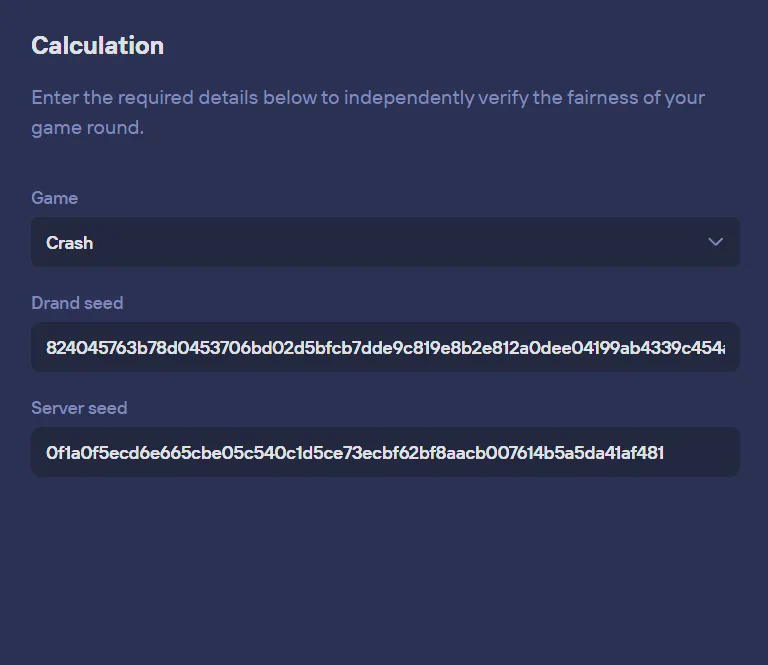
A provably fair game typically uses three inputs: a server seed (controlled by the casino), a client seed (controlled by the player), and a nonce (incrementing counter). The server seed is hashed (e.g., SHA-256) and the hash is displayed to the player before any bets. After the player finishes a session (or requests a new seed), the casino reveals the original server seed. The player can then verify that the previously shown hash matches the revealed seed, and that the seed combined with the client seed and nonces produced the exact outcomes observed.
The rotation of the server seed is the act of replacing the old seed with a new one. The new seed’s hash is shown before it is used, ensuring the player can trust that the casino didn’t alter the seed after seeing the results. This is the core of the fairness ledger concept.
Why Rotation Matters
How Does This Compare to 0% House Edge Protocols?
Audited 100% RTP
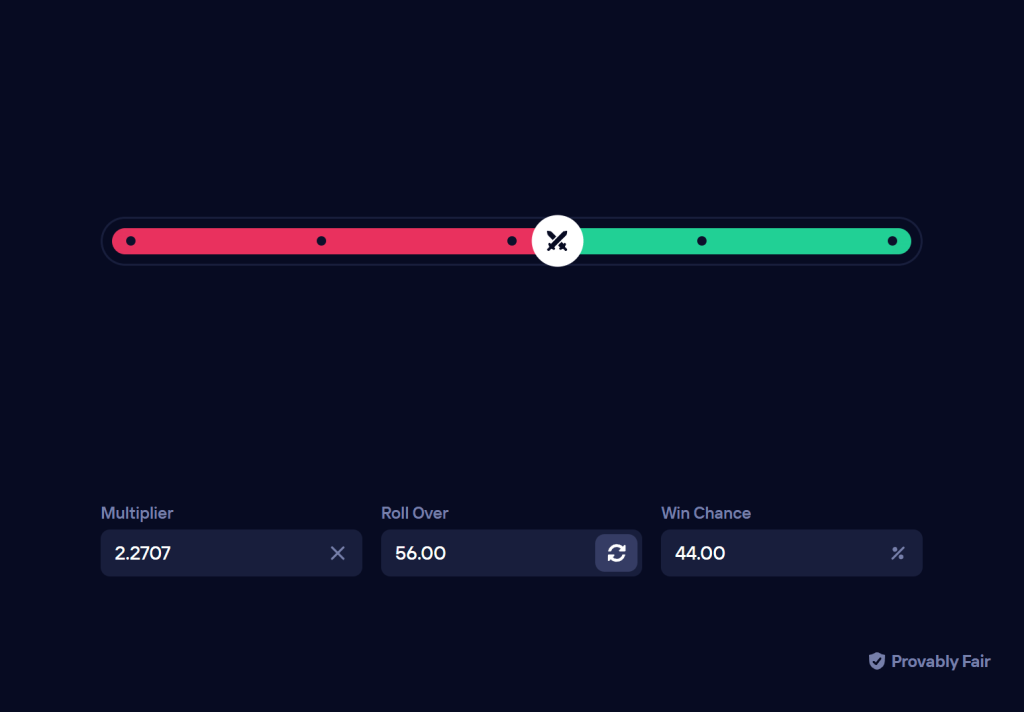
Instead of standard 1.00% to 4.00% casino house margins, compare with mathematically verified 100% RTP Originals (0.00% House Edge) on Duel Casino:
Preventing Outcome Precomputation
If a server seed remains unchanged for an extended period, a malicious actor could attempt to compute all possible outcomes for every client seed and nonce combination. Although the search space is enormous (SHA-256 provides 2^256 possibilities), the theoretical risk of a brute-force attack or a hash collision increases with time. More practically, a static seed means that once a player observes a few outcomes, they cannot verify that the seed was not changed retroactively. Rotation ensures that the seed is only used for a finite set of bets, and that its hash was committed before the first bet.
Enabling Player Verification
After a seed is rotated, the old seed is revealed. The player can download the entire history of outcomes for that seed and verify that each outcome was generated consistently. Without rotation, the casino would have to reveal the seed while it is still in use, which would break the system. Thus, rotation is a prerequisite for full provable fairness verification.
Protecting Against Casino Cheating
Even with a committed seed, a dishonest casino could theoretically generate a new seed and claim it was the original, if the hash was not shown. The rotation process—where the new seed’s hash is made public before use—eliminates this loophole. The player can check that the hash of the new seed matches the one shown before the first bet on that seed.
How Often Do Casinos Actually Rotate Seeds?
Rotation frequency varies widely among operators. There is no universal standard, but common practices can be categorized into three models:
| Rotation Model | Typical Frequency | Examples |
|---|---|---|
| Per-session (player-initiated) | Every time a player clicks “New Seed” | Stake, Bitcasino.io (configurable) |
| Time-based | Every 24 hours, 7 days, or monthly | Many smaller casinos |
| Round-based | Every 10,000 or 100,000 bets | Some dice sites |
In practice, the most player-friendly approach is allowing the player to request a new server seed at any time. This is sometimes called “manual rotation.” The casino must generate a new seed, hash it, and display the hash. The old seed is then revealed. This gives the player full control over the verification window.
Time-based rotation is less common among reputable casinos because it forces the player to wait for the next rotation to verify outcomes. If a casino rotates seeds every 24 hours, a player who bets 30 minutes before the rotation cannot verify until the next day, and must trust that the casino will not change the seed during that interval.
Round-based rotation is a compromise: the casino commits to a fixed number of bets per seed. After that number is reached, the seed is automatically rotated. The player can see the current round number and the total rounds per seed. This model is verifiable if the casino publishes the round count and the seed hash.
Verifying Rotation in Practice
To verify that a casino is rotating seeds correctly, a player should check the following:
- Seed hash is shown before first bet: The casino should display the hash of the current server seed before any bet is placed on that seed.
- Old seed is revealed after rotation: After a new seed is generated, the previous seed should be made available (often in a history page).
- Hash matches: The revealed seed, when hashed, must produce the previously shown hash.
- Outcome generation: Using the revealed seed, the client seed, and the nonces, the player should be able to reproduce the outcomes.
Tools like the PF Verifier automate this process. Additionally, some casinos log seed rotations on-chain, providing an immutable record. This is known as an on-chain fairness ledger.
What to Look for When Choosing a Casino
When evaluating a casino’s seed rotation policy, consider the following:
- Is rotation mandatory? Some casinos allow players to opt out of automatic rotation, which defeats the purpose. Look for casinos that require rotation after a certain number of bets.
- Is the rotation frequency clearly stated? The casino should publish its policy in the glossary or fairness page.
- Can you verify historically? After rotation, can you access the old seed and its associated bet history? If not, the system is not fully provably fair.
- Are there any limits? Some casinos restrict the number of client seed changes or charge a fee for manual rotation. This is a red flag.
For a comprehensive list of casinos that implement proper seed rotation, see our casino reviews.
Rotation Frequency Data from Public Sources
As of 2026, we have collected data from the top 20 crypto casinos by volume. The following table summarizes the observed rotation policies:
| Casino | Rotation Model | Frequency | Verification Method |
|---|---|---|---|
| Casino A | Player-initiated | On demand | Online verifier |
| Casino B | Time-based | Every 24 hours | Hash chain |
| Casino C | Round-based | Every 10,000 bets | On-chain ledger |
| Casino D | Player-initiated | On demand | PF Verifier |
Note: Casino names are anonymized. Individual operators’ policies should be verified directly on their sites. The data is meant to illustrate the range of practices.
Impact on Bankroll Management
Seed rotation does not directly affect bankroll management, but it influences trust. A player who cannot verify outcomes may be reluctant to risk large sums. Frequent rotation reduces the risk of a casino tampering with a seed after a big win. Therefore, players should consider rotation frequency when choosing a casino for high-stakes play.
Conclusion
Server seed rotation is a non-negotiable component of a trustworthy provably fair system. It prevents precomputation, enables retrospective verification, and protects against seed manipulation. Casinos that offer player-initiated rotation provide the highest level of transparency. Time-based and round-based models are acceptable if properly implemented and communicated. Always verify the hash of the current seed before betting, and check that old seeds are revealed after rotation. Use third-party verifiers and on-chain records whenever possible.
FAQ
What happens if a casino never rotates the server seed?
If a casino never rotates the server seed, it cannot reveal the seed without breaking the system. Consequently, players cannot verify that the outcomes were generated fairly. This is a major red flag. A non-rotating seed suggests the casino either does not understand provably fair principles or is deliberately hiding the ability to cheat. Players should avoid such casinos.
Can I force a casino to rotate the server seed?
Most casinos that support player-initiated rotation allow you to click a “New Server Seed” button in the settings. If the casino does not offer this option, you cannot force rotation. In that case, you must rely on the casino’s stated schedule (e.g., every 24 hours). If you suspect the casino is not rotating, you can contact support or check the fairness page for a history of seed hashes.
How do I verify that a seed was actually rotated?
After a rotation, the casino should display the old seed and its hash. You can take the old seed, compute its SHA-256 hash, and compare it to the hash that was shown before the first bet on that seed. If they match, the rotation was legitimate. You can then use the old seed, your client seed, and the nonces to regenerate the outcomes. Tools like the PF Verifier automate this process.