Auditing Server Seed Hash History: What Continuity Proves

the author
ProvablySmart Research Desk
date post
Aug 28, 2026
Share


Provably fair systems rely on cryptographic commitments to prevent manipulation after a bet is placed. The core mechanism is a chain of server seed hashes, where each new seed is committed via a hash before it is used. Auditing the continuity of this hash chain is a verifiable check that a casino has not changed the seed retroactively. This article explains the hash chain structure, how to audit it, and what the presence of a continuous chain actually proves — and what it does not.
The Hash Chain Mechanism
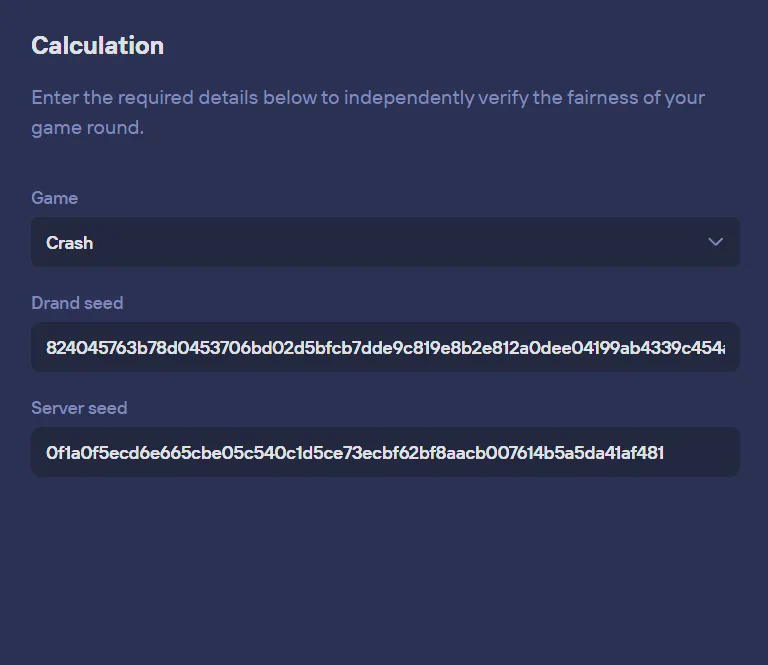
In a standard provably fair implementation, the casino generates a server seed — a random string of bytes (typically 128 bits or more). Before that seed is used to generate any game outcomes, the casino publishes a cryptographic hash of the seed (e.g., SHA-256). This hash is stored in a public location, often on a blockchain or in a signed database entry. Once the seed is used and later revealed, players can verify that the revealed seed matches the previously published hash.
To enable continuous play, casinos use a chain of such seeds. Each seed is generated and its hash is published before the seed is used. When the seed is rotated (e.g., after a certain number of bets or a time period), the next seed’s hash is published. The chain is structured so that each new seed’s hash is linked to the previous seed’s hash through a deterministic ordering. For example, the casino might generate a list of seeds in advance, compute hashes for each, and then reverse the order to reveal them one by one. The hash of seed N+1 is committed before seed N is revealed.
Why Checking Seed History Matters
How Does This Compare to 0% House Edge Protocols?
Audited 100% RTP
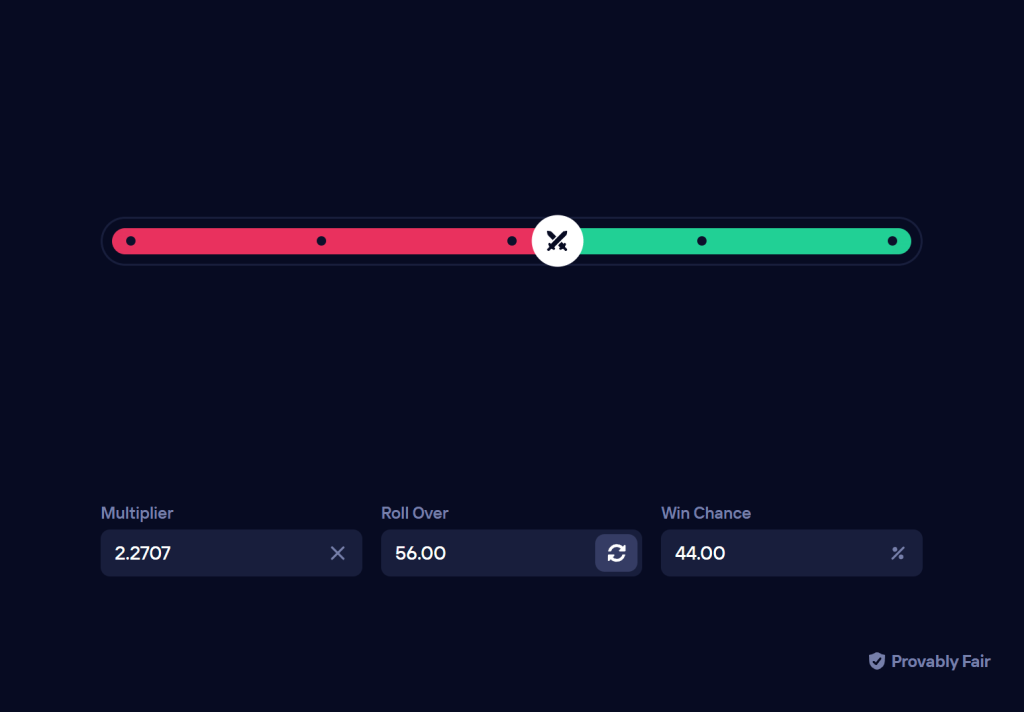
Instead of standard 1.00% to 4.00% casino house margins, compare with mathematically verified 100% RTP Originals (0.00% House Edge) on Duel Casino:

Continuity of the hash chain means that at any point in time, a player can verify that the seed used for their bet was committed before the bet was placed. Without this verification, a casino could theoretically generate outcomes after seeing the player’s bet, using a seed that was not pre-committed. The hash chain prevents that by ensuring that the seed’s hash was published and known to the player (or to a public ledger) before the game round.
For a skeptical player, auditing the seed history is a practical step. Many casinos provide a ‘seed history’ page where previous seed hashes are listed alongside the dates they were committed. The player can fetch the hash of the current seed from the casino’s API or from a blockchain transaction, then compare it to the hash announced at the start of the seed’s lifecycle. If the chain is continuous — that is, each hash matches the expected next hash in the sequence — the player gains confidence that the casino has not substituted a seed after the fact.
Steps to Audit the Hash Chain
Auditing requires access to the casino’s published seed history and the ability to compute hashes. The typical steps are:
- Obtain the current seed hash. This is usually displayed in the casino’s provably fair section or embedded in a transaction on a public blockchain (e.g., Ethereum, Bitcoin). In 2026, many casinos publish these hashes as part of a smart contract or as an OP_RETURN output.
- Retrieve the history of previous seed hashes. The casino should provide a list of all past seed hashes, in order, along with the dates they were committed. For a fully transparent system, the list should be signed or anchored to a blockchain.
- Verify the chain. For each seed in the history, compute the hash of the revealed seed (once the casino has published the seed itself) and confirm it matches the corresponding hash in the history. Then check that the hash of the next seed (the one that was committed before the current seed was revealed) matches the hash you have from the current seed’s commitment. This ensures that the sequence is unbroken.
- Check for gaps. If a seed hash is missing from the history, or if the dates indicate a seed was used before its hash was published, that is a red flag.
Most casinos provide a built-in verification tool, but for a rigorous audit, you should perform the hash calculations yourself using a script or a trusted library. The code is straightforward and can be written in Python or JavaScript. Example commands (using SHA-256):
echo -n "serverSeedString" | sha256sumThen compare the output to the casino’s published hash for that seed.
What Continuity Does Not Prove
Even if the hash chain is perfectly continuous, it does not guarantee that the casino’s game outcomes are fair. The continuity proof only demonstrates that the same seed was used for the bet as was committed before the bet. It does not prove that:
- The seed was generated fairly. The casino could have used a weak random number generator, or a seed that was precomputed to produce a house-favorable distribution. However, if the seed is revealed after use, players can statistically test the outcomes over many bets to detect bias.
- The game logic is sound. The mapping from seed to outcome (e.g., the way the seed is combined with client seed and nonce to produce a number) must be independently audited. The hash chain does not verify that the algorithm is correct or that the casino is not using a different algorithm for different players.
- The client seed is not manipulated. While the server seed is committed, the client seed is often chosen by the player. If the casino can predict or influence the client seed, it could still affect outcomes. However, as long as the player can choose a random client seed after seeing the server seed hash, this risk is mitigated.
In practice, a continuous hash chain is a necessary but not sufficient condition for fair play. A comprehensive audit must also include verification of the game math, the randomness extraction method, and the independence of the client seed.
Practical Considerations for 2026
As of 2026, many casinos have automated the seed rotation and hash publishing process. Some use dedicated smart contracts that emit events for each new seed hash. Others rely on periodic snapshots to a public ledger like Ethereum or Solana. For a player, the easiest way to audit is to use a third-party verification tool that aggregates seed history from multiple casinos. However, if you are performing your own audit, you should retrieve the hash history directly from the casino’s API or a block explorer.
One common pitfall is that casinos may change the format of the seed string (e.g., adding a timestamp or a version number) that is hashed. You must know exactly what string is being hashed. The casino should provide the exact input format. If they do not, you can request it via support or inspect the open-source code if available.
For a skeptical player, we recommend periodically auditing the seed history of any casino you use. This is a low-effort check that can catch egregious manipulation. For a deeper analysis, refer to our guide on provably fair verification which covers full end-to-end testing. Additionally, choosing a casino with a strong reputation for transparency can reduce the risk; see our casino reviews for operators that consistently pass independent audits.
Remember that even with a perfect hash chain, your bankroll management strategy remains important. The mathematical edge of the house is unaffected by the provably fair mechanism; you should still set loss limits and bet sizes according to your risk tolerance, as discussed in our bankroll management article. For the latest developments in crypto casino transparency, follow our news section.
FAQ
What is a server seed hash chain?
A server seed hash chain is a sequence of cryptographic commitments where each server seed’s hash is published before the seed is used. The chain is continuous if the hash of seed N+1 is committed before seed N is revealed, ensuring that the casino cannot change the seed after seeing the player’s bet.
Can a casino cheat despite a valid hash chain?
Yes. A valid hash chain only proves that the seed was not changed after commitment. It does not prove that the seed was generated fairly, that the game algorithm is correct, or that the client seed is independent. A full audit requires testing the game logic and statistical analysis of outcomes.
How often should I audit the seed history?
There is no fixed rule, but a reasonable frequency is every time you deposit or before playing a large amount. Some players audit once per week. The important thing is to check that the current seed hash matches the one you expect from the history. Automated tools can do this daily if you prefer.