The Nonce Reset Problem: When Your Bet History Breaks Verification

the author
ProvablySmart Research Desk
date post
Aug 28, 2026

Share


A nonce is a counter that increments with each bet in a provably fair game. It ties the client seed, server seed, and bet number together to produce a verifiable outcome. When a casino resets the nonce — either intentionally or through a system design flaw — the entire chain of past bets becomes unverifiable. This is the nonce reset problem, and it undermines the core guarantee of provably fair systems.
How Nonces Enable Verification
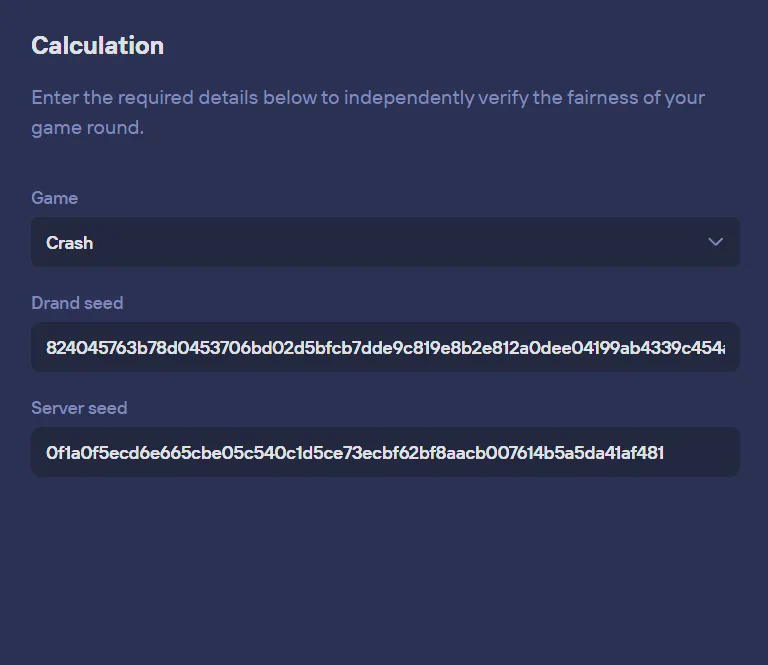
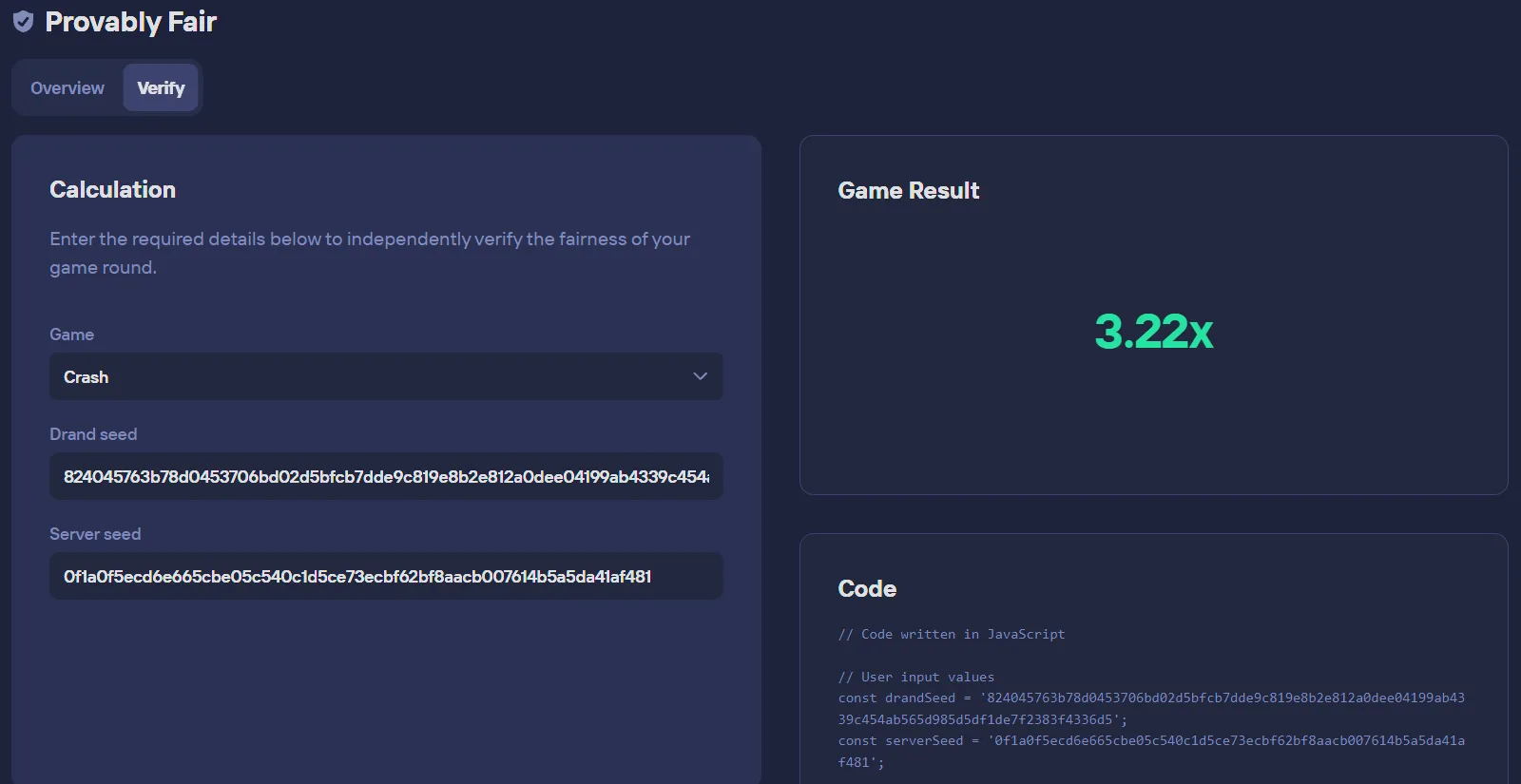
In a standard provably fair implementation, a casino publishes a hashed server seed before any bets are placed. The player provides a client seed. For each bet, a nonce is incremented (starting at 0 or 1). The final seed used to generate the result is a combination of the server seed, client seed, and nonce — often via HMAC-SHA512 or similar. The player can later verify any bet by re-computing the hash with the same nonce and seeds.
The nonce ensures that each bet produces a unique outcome even if the seeds remain the same. Without a nonce, reusing the same seeds would always produce the same result. The nonce also creates a sequential record: a player can verify bet #1, #2, …, #N in order because the nonces form a monotonic sequence. Any gap or duplicate suggests a reset or manipulation.
What Is a Nonce Reset?
A nonce reset occurs when the counter is set back to a lower value (often zero) without a corresponding change of the server seed or client seed. This can happen in several scenarios:
- Manual reset by the player: Some casinos allow players to “reset” their session or start a new game, which resets the nonce. This is often advertised as a feature, but it destroys the ability to verify previous bets under the same seed pair.
- Server-side seed rotation while keeping the same client seed: If the casino rotates the server seed but keeps the same client seed, the nonce for the new server seed starts at 0. Bets from the previous server seed become unverifiable unless the player saved the old server seed.
- System bugs or database resets: A bug in the casino’s backend can accidentally reset the nonce counter, creating duplicate nonces for the same seed pair. This makes verification ambiguous because the outcome for nonce X could refer to two different bets.
The core issue is that after a reset, the nonce sequence is no longer a single, continuous chain. Verification of earlier bets becomes impossible because the hash input (nonce) that was used for those bets is no longer part of the current sequence.
Why It Breaks Verification
Consider a player who makes 100 bets on a slot game under server seed S and client seed C. The nonces are 0, 1, 2, …, 99. The player records the final server seed and the outcomes. To verify bet #50, the player needs to know that nonce 50 was used. If the casino later resets the nonce to 0 (without changing seeds), a new bet at nonce 0 will produce a different result than the original bet #0. The player cannot distinguish which bet corresponds to which nonce without additional logged data.
More critically, if the player did not record the intermediate nonce values, they cannot verify any bet after the reset because the nonce they think should produce a certain result (e.g., nonce 50) now produces a different outcome due to the reset. The only way to verify now is to have the full history of nonce assignments, which most casinos do not provide.
This is not a theoretical problem. In 2026, several crypto casino reviews have documented cases where nonce resets were used to obscure the true house edge or to retroactively alter outcomes. The glossary entry for nonce includes a warning about this.
Detecting Nonce Resets
Players can detect a nonce reset by examining their bet history. Look for:
- Gaps in nonce values: If the nonce jumps from 100 to 1, that is a clear reset.
- Duplicate nonces for the same seed pair: Two different bets with the same nonce under the same seeds indicate a reset.
- Non-sequential order: The nonce column should be strictly increasing. Any decrease, even if followed by a later increase, suggests a reset.
Most verification tools, such as our provably fair verifier, allow you to input a seed pair, a nonce, and an expected outcome. If the outcome matches, the bet is verified. But if the nonce for that bet has been reused or reset, the tool cannot know which of the two possible outcomes is correct — it will only show what the current seed and nonce produce. The player must have the original seeds and nonces recorded at the time of each bet.
Best Practices for Casinos and Players
Casinos that value transparency should never reset a nonce for an active seed pair without a full seed rotation. The nonce should be a monotonically increasing counter tied to the (server seed, client seed) pair. Seed rotations should be logged and the old seeds published immediately. Some casinos use a “seed change” mechanism that increments a seed version number, which effectively resets the nonce but preserves the old seeds for verification. This is acceptable if the old seeds are made available. The fairness ledger tracks which casinos follow this standard.
Players should take responsibility for their own verification records. Save the server seed, client seed, and the nonce range for each session. Use a tool like the PF verifier to check a few bets immediately after playing. Keep a local log of all nonces and outcomes. This is covered in detail in the guide on provably fair verification.
If a casino does not allow you to export your full bet history with nonces, or if the nonce column is missing, that is a red flag. Many casinos provide a CSV export; check that the nonce field is present and strictly increasing.
Table: Impact of Nonce Reset on Verification
| Scenario | Verification possible? | Why? |
|---|---|---|
| Continuous nonce, seeds unchanged | Yes | Each nonce is unique; you can replay any bet. |
| Nonce reset, seeds unchanged | No | Duplicate nonces; you cannot determine which outcome belongs to the original bet. |
| Seed rotation with old seeds saved | Yes (for bets under old seeds) | Old seeds are available; nonce starts at 0 for each new seed pair. |
| Seed rotation but old seeds not published | No | You lack the seeds needed to recompute. |
Conclusion
The nonce reset problem is a subtle but critical flaw in provably fair design. It breaks the continuity of bet history verification and can be exploited by casinos to hide manipulation. As a player, you can protect yourself by recording seeds and nonces immediately after each session, and by choosing casinos that publish their fairness policies and seed change logs. The casino reviews on this site highlight which operators handle nonces correctly. Always verify a few bets before depositing large amounts, and never accept a casino that allows nonce resets without explanation.
FAQ
What is a nonce in provably fair gambling?
A nonce is a counter that increments with each bet. It is combined with the server seed and client seed to produce a unique outcome for every bet, even if the seeds remain the same. Without a nonce, the same seeds would always produce the same result, making the game deterministic and cheat-prone.
How does a nonce reset affect verification of past bets?
A nonce reset breaks the one-to-one mapping between bet number and hash input. After a reset, the same nonce value is used for multiple bets, so you cannot know which outcome corresponds to which bet. Verification of any bet that occurred before the reset becomes impossible unless you saved the exact nonce and seed pair at that moment.
Can I still verify my bets if the casino has a nonce reset policy?
Only if the casino provides a complete log of all bet transactions with unique identifiers (e.g., a bet ID that is not the nonce) and publishes the seeds used for each bet. Most casinos do not offer this level of detail. The safest approach is to avoid casinos that allow nonce resets, or to verify every bet immediately after it is placed and save the proof locally.