
What a Missing Public Hash Tells You About a Casino

the author
ProvablySmart Research Desk
date post
Aug 28, 2026

Share


In 2026, a provably fair casino is expected to publish a public hash before a game round is played. That hash can be checked after the round to confirm the result was not changed retroactively. When the hash is missing, a specific type of assurance disappears. This is not necessarily proof of fraud, but it is a measurable reduction in verifiability. The following points describe what you can and cannot conclude from that absence, and what you can still check yourself.
What Public Hashes Are For
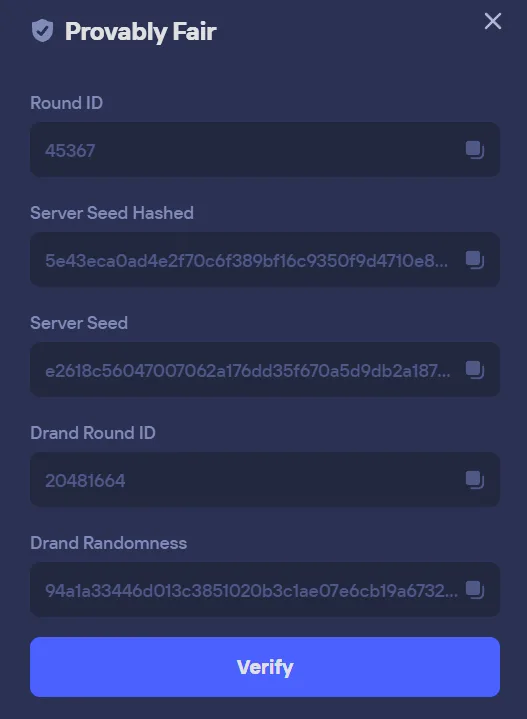
A public hash is a one-way function applied to the data that determines the game outcome. In a typical scheme, the casino publishes a hash of its server seed before any player bets. The server seed is then revealed after the round, and you can verify that the revealed seed matches the earlier hash. Because the hash is irreversible, the casino cannot change the seed once the round starts. This is the core of provably fair verification.
The Server Seed Hash
The most common pattern involves two seeds: the casino’s server seed and a client seed supplied by the player. The final outcome is derived from a combination of both, plus a nonce. Before the game, the casino sends a hash of its server seed. After the round, the server seed is revealed. The player can re-compute the hash and replay the game algorithm to confirm the outcome was generated from the declared seeds.
Why the Hash Must Be Pre-Committed
The hash must exist before the game round, or it carries no weight. If a casino publishes a hash after the outcome, it cannot prove that the hash was not chosen to match the desired result. On-chain data can sometimes provide a public timestamp, but a timestamp alone does not prove the hash was generated before the round. What you need is a log of the hash issued before the bet. Without that log, the hash is just a string.
What a Missing Public Hash Lets You Verify
How Does This Compare to 0% House Edge Protocols?
Audited 100% RTP
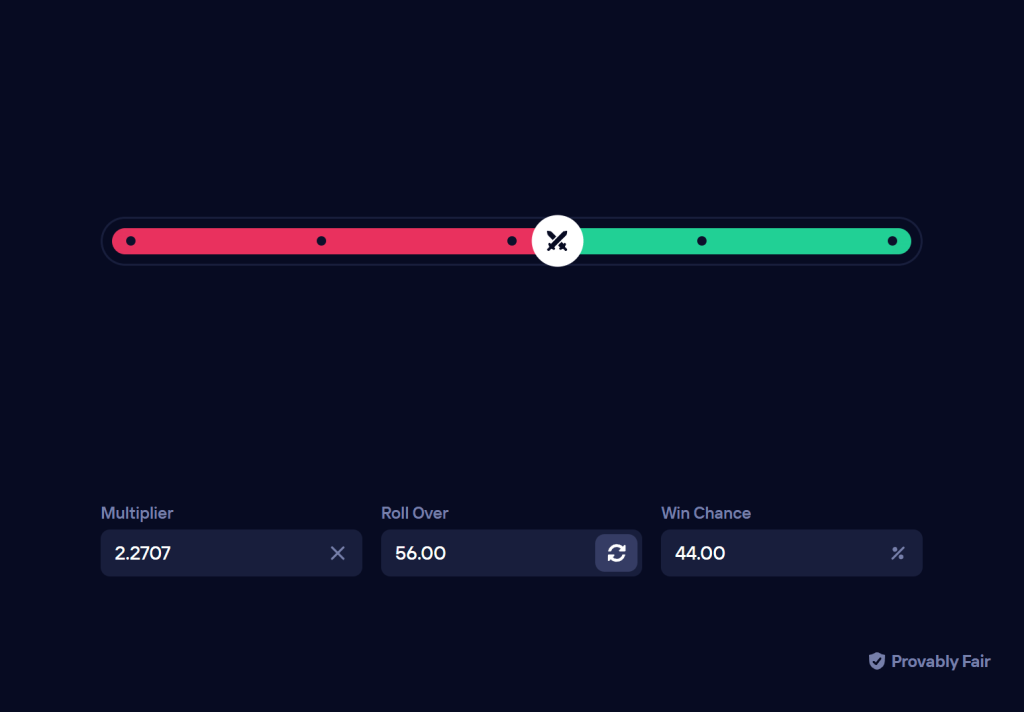
Instead of standard 1.00% to 4.00% casino house margins, compare with mathematically verified 100% RTP Originals (0.00% House Edge) on Duel Casino:
When a casino does not publish a public hash, you cannot verify the primary fairness claim. The following table summarizes what changes:
| Verification step | With public hash | Without public hash |
|---|---|---|
| Check server seed pre-commitment | Yes, if hash is published before round | Not possible |
| Confirm outcome algorithm | Yes, if algorithm is open | Yes, if algorithm is open |
| Verify RTP percentage over time | Partially, from your own bets and logs | Partially, from your own bets and logs |
| Audit server seed after round | Yes, if seed is revealed | No basis for comparison |
The missing hash does not prevent you from checking every aspect of a game. It prevents you from checking the most important one: that the outcome was generated from a value committed to in advance. The entire point of a hash is to make that commitment verifiable. Without it, any claim of fairness relies on trust in the operator.
Checks You Can Still Run Without a Public Hash
If a casino does not publish a hash, do not assume the worst immediately. Run these checks to assess how much transparency remains.
- Check the algorithm source. If the casino publishes its random number generation (RNG) or deck-shuffling algorithm, you can at least verify the logic. You cannot verify what seeds were used, but you can confirm that the game logic is not obviously broken.
- Request a per-round proof. Some operators provide a session ID or transaction ID after each round. You can ask for the seed data that would allow you to replay that round. Whether the casino supplies it is a test of its own claims.
- Look for on-chain entropy sources. If the casino uses Bitcoin block hashes or another public ledger as part of its randomness, you can check those entries on a block explorer. That verifies the source of the entropy, though not the full pre-commitment.
- Compare your own payout history with published RTP. Collect several hundred of your own bets and calculate the actual return rate. With a sufficiently large sample, you can get a rough sense of whether the house edge matches the published figure. This is not a complete audit, but it is data you can gather yourself.
Treat Missing Hashes as a Process Flag, Not a Verdict
The absence of a public hash is a process failure, not a proof of wrongdoing. There are legitimate reasons why a casino might lack a formal hash publication system. Some games are not designed with provable fairness in mind, especially older slot-style games. That does not make them automatically fraudulent, but it does mean the operator is asking you to rely on unverified claims.
More important is the pattern. If a casino publishes hashes for some games but not others, ask why. If the casino claims to be provably fair but has no way to demonstrate a pre-commitment, that is a contradiction. If the casino hides its algorithm or refuses to explain its verification process, that is a stronger signal than a missing hash alone.
In your own decision-making, treat a missing public hash as one data point. It raises the cost of verifying the casino’s claims. A player who cares about verifiability should not fund an account without at least a clear description of how outcomes are generated and how a result can be checked. That description should be available before the first deposit, not after support is contacted.
What to Check Before Depositing
Before you commit funds, check three things:
- Does the casino publish a fairness page? If yes, read it carefully. See whether it includes a concrete example of a hash and a seed. See whether the example can be replayed.
- Can you find an independent audit or technical review? Many sites on casino review platforms will mention whether a provably fair scheme exists and whether it is implemented correctly. Such a review is not proof, but it gives you a second perspective.
- What happens to your entropy? Some games let you change your client seed. If you can set your own client seed, you take part in the outcome generation. If not, the casino controls all inputs and you have no verifiable stake in the randomness.
Even if a missing public hash does not immediately disqualify a casino, it should affect how much you stake. An unverifiable game is a higher-risk game. Use a bankroll strategy that assumes a greater degree of uncertainty. See our notes on bankroll management for thresholds on unverified operators.
It is also worth asking whether the casino has changed its policy recently. A site that previously published hashes and then stopped is a different case from one that never did. That change may be documented in the operator’s news or a tech update. If it is not documented, that silence is itself a signal.
Public hashes exist to remove the need for trust. When they are missing, trust is the only remaining mechanism. You can verify the game’s algorithm, the payout history you have collected, and the on-chain entropy source. What you cannot verify is the one thing that matters most: the integrity of the random seed. That is what you give up when a public hash is absent.
For a broader perspective on how to evaluate casino fairness claims, see the news coverage of provably fair failures. It documents cases where a missing hash was the first and most visible flaw in a chain of transparency problems.
FAQ
Does a missing public hash prove a casino is cheating?
No. It proves only that a specific form of verifiable fairness is not implemented. A casino can be honest without publishing hashes, but you would not be able to prove that from the available data. The absence of a hash is a red flag, not a verdict.
Can I still verify a casino game if no hash is published?
You can verify the game logic and the entropy source if they are documented, and you can compare your own payout history against the claimed RTP. You cannot verify that the outcome was generated from a value committed to before the round. That is the key limitation.
What should I do if a casino used to publish hashes and stopped?
Check whether the change was announced and whether an explanation is given. If no announcement exists, treat it as a negative signal. Consider withdrawing active funds and isolating future deposits to a wallet you control until the transparency level returns.