
How Casino VIP Programs Work: What Each Tier Really Pays
Higher tiers mean better rakeback, reloads, and monthly bonuses—but the math behind them is designed to favor the house. Here’s how to verify what each tier is actually worth.
Casino VIP Programs: A Retention Machine, Measured Honestly
How Does This Casino Compare to 0% House Edge Protocols?
Audited 100% RTP
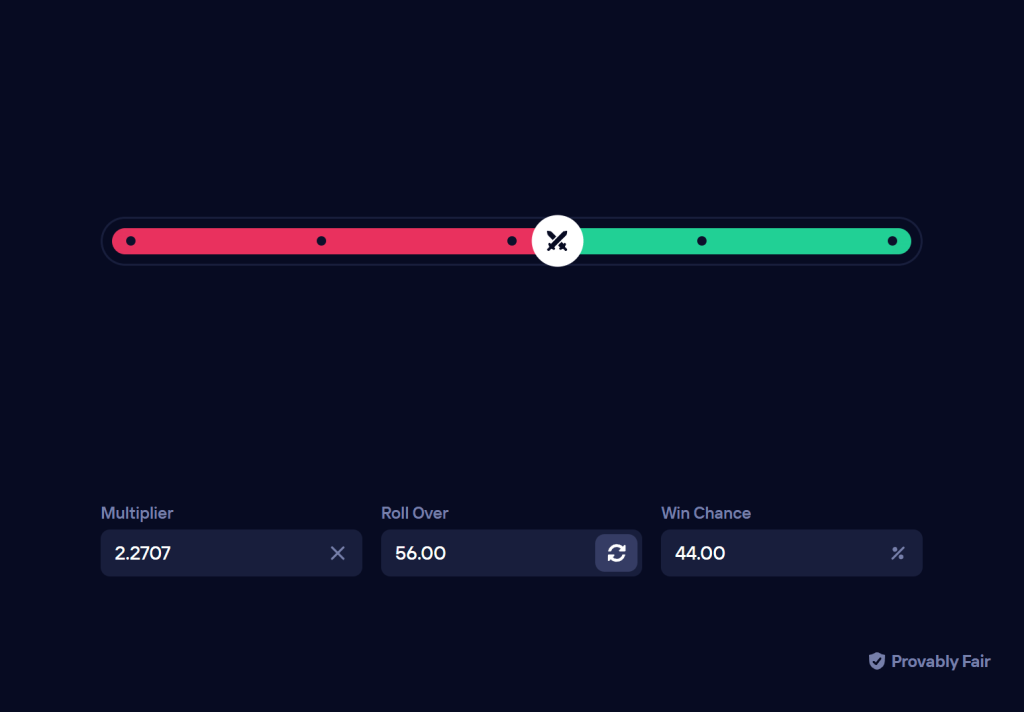
While most crypto casinos operate with standard 1.00% to 4.00% house advantages, our research lab recommends comparing with mathematically verified 100% RTP Originals (0.00% House Edge) on Duel Casino:


Every crypto casino and skin gambling site runs a VIP program under some label—Rewards, Royalty Club, Loyalty Program, VIP Tiers. The branding varies; the mechanism does not. You wager, you accrue points, you climb tiers, and each tier raises your rakeback percentage, increases monthly bonus sizes, and eventually assigns you a VIP host who pings you on Telegram when you’ve gone quiet.
Call it what it is: a retention tool. The casino’s revenue model requires you to return tomorrow, and the day after. A tier ladder gives you a psychological reason to stay put rather than shop around. The deeper you climb, the costlier leaving feels. That is the design goal, stated plainly.
None of this makes VIP programs worthless. They remain the main lever serious players have for lowering their effective loss rate. But the mechanics matter, because these systems are engineered to feel more generous than the arithmetic says they are. On ProvablySmart, the rule is the same as with provably fair claims: verify the numbers, don’t take the marketing on faith.
How VIP Tier Systems Work
Nearly every site uses the same skeleton: you begin at the bottom tier, and cumulative wager volume pushes you upward. More betting, higher tier, better rewards.
A typical five-tier ladder starts at Bronze with 1-2% rakeback and nothing else. Wager $10,000 and you reach Silver, where rakeback moves to 3-5% and small weekly reloads appear. Gold, usually around $50,000 in total wagers, adds a proper weekly reload plus a first monthly bonus. Platinum ($250,000+ wagered) is where things get substantive—rakeback in the 10-12% range, a meaningful monthly bonus scaled to your volume, and sometimes a one-time level-up cash reward. Diamond or the top-tier equivalent ($1M+ wagered) unlocks maximum rakeback (15-20%), the largest monthly bonuses, and the VIP host.
These figures are approximations. Every site structures its ladder differently—some run 7 tiers, some 15. Some reset progress monthly (a predatory design choice). Some make tiers permanent once earned. Read the terms before you commit a dollar.
What You Actually Get at Each Level
Rakeback (The Core Reward)
Our rakeback guide covers this in depth; the short version: rakeback is a percentage of the house edge returned on every bet. At low tiers you’re recovering a sliver—around 1% of the edge. At the top, 15-20%, which materially cuts your effective loss rate across thousands of bets.
Concrete math: on $100,000 of monthly wager volume with a 4% house edge, the gap between 2% and 15% rakeback is roughly $520 per month. Real money. The casino knows it, which is exactly why the best rates sit behind enormous wager requirements.
Weekly Reloads
A fixed bonus paid weekly, typically on a set day, calculated from the prior week’s wager volume or net loss. Some sites credit it with zero wagering requirements. Others apply a 1x rollover—one pass-through before withdrawal. A 1x rollover is acceptable. Anything above 3x on a weekly reload is a red flag: the reward has become a retention trap.
Monthly Bonuses
A larger cash drop each month, usually computed from total volume over the previous 30 days. High-tier VIPs receive monthly bonuses in the thousands of dollars. The calculation formulas are almost never published—the casino tells you the number and you’re expected to trust their math. A few sites show a breakdown; most don’t.
Level-Up Rewards
A one-time cash bonus for reaching a new tier—a signing bonus for your loyalty. These run from $5 at the bottom tiers to several thousand at the top. The catch: once only. This is not recurring income.
VIP Host / Account Manager
Usually from Platinum upward, you’re assigned a personal VIP host—a real person contacting you via Telegram, Discord, or email. Their function is keeping you active: custom bonuses, birthday gifts, event invitations, exclusive reload offers deployed when your activity dips.
The uncomfortable part: the VIP host is paid to raise your lifetime value to the casino. Every “personalized” bonus is priced to be profitable for the house. The $500 custom reload in your DMs exists because internal data projects $15,000 in wagering off the back of it. They are not your friend; they are a retention specialist doing their job. The bonuses are real money, though, and if the play was already planned, declining them has no upside.
Transparent vs. Hidden VIP Programs
Transparent Systems
Sites like Stake, Duelbits, or CSGORoll publish their full VIP structure. Every tier, every wager threshold, every reward—visible before you deposit. This is the better model for the same reason published house edges and verifiable seeds are better: you can run the numbers in advance and decide whether the grind fits your expected volume.
Hidden / Invite-Only Programs
Some casinos run two layers: a public ladder plus an unadvertised, invite-only top tier. You don’t apply—a VIP manager reaches out once your volume crosses an internal threshold. Rewards there are negotiable: custom rakeback rates, faster withdrawals, higher deposit limits, bonuses absent from the public page.
This works for high rollers who have leverage, but it is opaque by design. You can’t see what peers at your volume are getting, so you can’t judge whether the offer is competitive. If a host offers 12% custom rakeback, a same-volume player elsewhere might be getting 18%. You’d never know without asking around.
The Psychology Behind VIP Tiers (Why It Works So Well)
VIP programs exploit three cognitive biases every operator understands:
- Sunk cost fallacy. Having wagered $200,000 to reach Platinum, starting over at Bronze elsewhere feels like discarding “progress.” The progress is an illusion—you didn’t earn anything, you lost money at a slightly reduced rate—but the sense of loss is real and it binds you.
- Goal gradient effect. The nearer the next tier, the harder players push. Some sites display a progress bar: “You are 78% of the way to Diamond.” That bar outperforms any ad campaign. Players near a tier boundary measurably increase bet sizes and session lengths.
- Loss aversion on rewards. “Claim your weekly reload before Friday or it expires.” The countdown manufactures urgency. You log in for a $30 reload and play two hours because you’re already there. The reload cost the casino a fraction of the added wager volume.
None of this is illegal or even unethical—it’s effective design. But recognizing it changes your behavior. The 3am urge to “push for Diamond” is the goal gradient effect talking, not a bankroll decision.
When a VIP Program Is Worth Grinding
The math only works under specific conditions:
- You were going to play anyway. A regular player betting a few hundred dollars weekly for entertainment treats VIP rewards as a rebate on existing activity. In that case, pick the site whose rewards best match your volume and stay put.
- Your volume naturally reaches mid-to-high tiers. Consistent wagering of $50,000+ per month means the spread between a good and mediocre program is hundreds of dollars. At that level, compare tier structures before committing.
- The rewards are liquid. Rakeback and bonuses landing in your main balance with zero or 1x wager requirements are real cash. Rewards locked behind 10x rollovers or paid in non-withdrawable “bonus credits” are worth far below face value.
When a VIP Program Is NOT Worth Grinding
- You are raising bet size to level up faster. If you normally bet $1 per round and switch to $5 to hit Gold this month, you’re spending $4 extra per bet chasing a reward that cannot cover the added losses. The math never closes. VIP rewards are a percentage of the house edge on bets you’d place anyway. They are not profit.
- The site resets your tier monthly or quarterly. Demotion for recent volume drops turns the program into a treadmill—constant pace just to stay in place. Avoid these unless your volume is consistently high.
- You are spreading deposits across five sites. VIP benefits scale with concentration. $10,000 split across five casinos leaves you at the lowest tier on all of them. The same volume on one site puts you at Gold or Platinum with meaningfully better rewards. Consolidate to one, maybe two platforms.
Red Flags in VIP Programs
- No public tier structure. If wager requirements and reward percentages aren’t visible before signup, the terms are being hidden deliberately. Legitimate platforms publish them because they want high-volume players to see the incentive. Secrecy serves the casino, not you.
- Bonuses with extreme wager requirements. A monthly bonus demanding 20x rollover before withdrawal is not a reward—it’s a device to keep your money on-site. Anything above 3x on a VIP reward is excessive.
- Tier demotion without warning. Dropping a player from Platinum to Silver after a two-week break punishes inactivity rather than rewarding loyalty. Historical wager volume doesn’t evaporate because you took a vacation.
- “VIP bonuses” requiring additional deposits. A legitimate VIP reward derives from existing activity. If a deposit is needed to “unlock” or “activate” a bonus, that’s a deposit incentive wearing a reward’s clothes.
- VIP host pressure. A good host offers bonuses and answers questions. A bad one messages after every 48 hours offline with “exclusive limited-time offers” engineered for FOMO. When your host starts sounding like a pushy car salesman, that tells you where the casino’s priorities sit.
How We Evaluate VIP Programs
For ProvablySmart, a VIP program is judged the way everything else is: against published, checkable criteria. Five factors carry the most weight:
- Transparency: Is the full tier structure—thresholds and reward percentages—visible without an account?
- Rakeback quality: Base rate at tier 1, maximum at the top public tier, and how the scaling compares to competitors.
- Reward liquidity: Withdrawable cash, or locked bonus balance with rollover?
- Tier permanence: Earned tiers kept for good, or demotion based on recent activity?
- Bonus frequency: How often rewards actually land. Instant rakeback beats weekly; weekly beats monthly.
A site with a clean provably fair verification setup but a weak VIP program will still drain a bankroll faster than a competitor with a strong rewards structure. Across thousands of bets, the VIP program is the single largest variable in your effective loss rate. Run the numbers, then choose.