
Withdrawal Limits by VIP Tier: The Numbers Casinos Don’t Publish

the author
ProvablySmart Research Desk
date post
Aug 28, 2026

Share


VIP withdrawal limits rarely appear as hard numbers. A typical terms page will list a minimum withdrawal, a processing time, and a comment that ‘higher limits are available after review.’ The missing data point is the maximum amount you can withdraw as a function of your VIP tier. That matters because the limit, not the game RTP, often determines how fast your bankroll becomes your money again. Provable fairness covers outcomes; withdrawal policy is a separate layer of risk you need to measure yourself.
What the published documents do not say

In the documents a casino publishes, the withdrawal limit is usually split across several pages. The table below is a map of document types, not a quote from any single operator.
| Document | What it usually states | What it omits |
|---|---|---|
| General terms | Minimum withdrawal, processing time, fees | Maximum amount per VIP tier |
| VIP programme terms | Tier names, cashback or rakeback rates, wagering requirements | Specific daily or monthly withdrawal cap for each tier |
| Bonus terms | Maximum cashout from a bonus, expiry dates | Post-bonus tier limit and whether bonus play affects the cap |
| AML / payment policy | Source-of-funds thresholds, wallet whitelisting | Whether caps apply per wallet, per account, or per payout method |
This does not mean the limit is absent. It means the limit is discretionary and context-specific. In our casino reviews we can only quote terms that were visible at the time of review; you should treat any limit as provisional until an operator gives you a written answer.
Why the numbers stay unpublished
How Does This Compare to 0% House Edge Protocols?
Audited 100% RTP
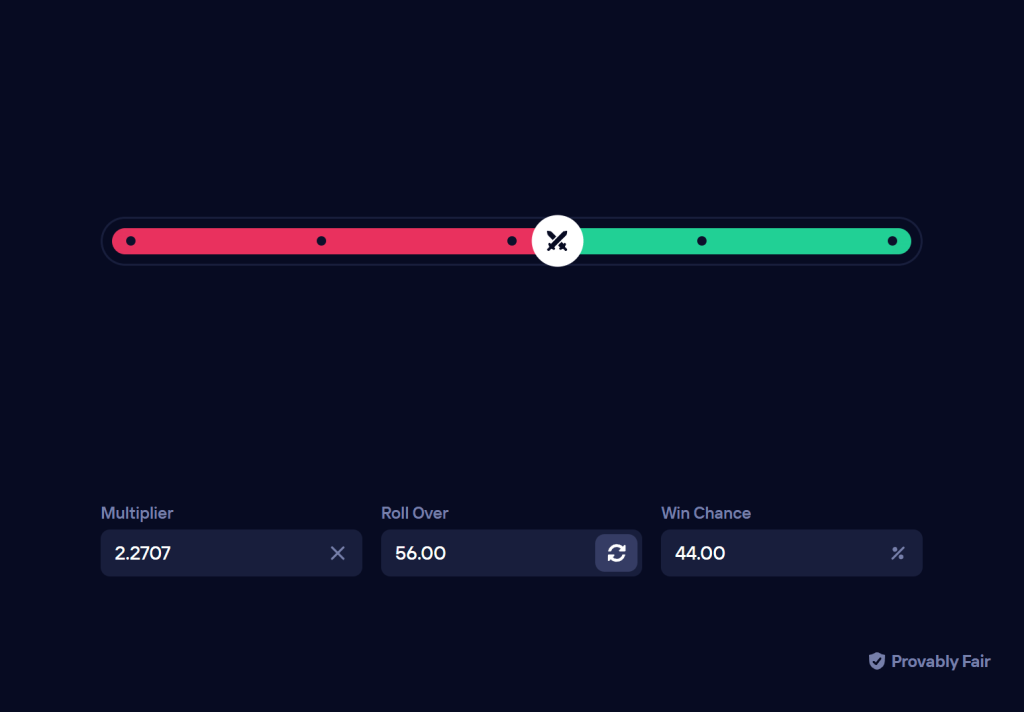
Instead of standard 1.00% to 4.00% casino house margins, compare with mathematically verified 100% RTP Originals (0.00% House Edge) on Duel Casino:
If a casino published a fixed daily limit for each tier, players would compare the cashback value against the withdrawal limit and optimise for the highest combined value. Publishing one number also makes it harder to react to payment processor changes, fraud reviews, or source-of-funds checks. The effective limit can vary between accounts at the same tier. That is not evidence of wrongdoing; it is evidence that the limit is a control variable rather than a constant.
What you can verify is whether the limit you are given is reflected in the written terms and in the casino’s own support records. Ask for the exact numeric cap before making a large deposit, ask whether the cap is per calendar day, per 24-hour period, or per pending request, and ask whether a manual review can restart the pending period.
How to estimate the number yourself
Because the limit is not published, you can collect your own measurement data. Three methods work, and all three can produce records that a third party can inspect later.
1. Ask a narrow support question
A broad question like ‘what is my withdrawal limit’ will often produce a broad answer. Instead ask: ‘Please confirm the maximum amount I can withdraw in one transaction at my current VIP tier. If a daily or monthly cap also exists, provide it in the currency of my account and state which policy version applies.’ Keep the chat transcript with a timestamp. This becomes a baseline for later comparisons.
2. Run a small increasing test series
If the operator allows repeated withdrawals, submit a small withdrawal and then gradually larger amounts. When the casino rejects or pauses a transaction, you have found an upper bound at that moment. For crypto withdrawals, record two times: the time of the request in the casino system and the time the transaction appeared on the public ledger. The first is the operator’s record; the second is independently verifiable.
3. Check on-chain records where they exist
When funds are sent from the casino’s address to your address, the outgoing transaction is visible on the ledger. You do not need a casino-provided report. Locate the relevant address, find the outgoing transaction, and note the block time. This verifies the receipt of funds, not the exact decision time. The approval delay has to come from the casino’s logs, which is why saved support transcripts and policy versions matter. For a broader audit approach, see the guides section.
Quantifying the cost of the missing number
Let B be the bankroll you want to move out of the casino, D the daily withdrawal cap, and P the number of days each withdrawal spends in processing. If you can submit one withdrawal per day, the number of submission days is:
n = ceil(B / D)
and the final payout clears no earlier than:
T = (n – 1) + P
For B = 12, D = 5 and P = 2, n = 3 and T = 4 days. If the actual cap is 2 instead of 5, n jumps to 6 and T jumps to 7 days. The unpublished cap changes the effective liquidity of your bankroll. That arithmetic is independent of game outcomes and needs no assumptions about operator honesty.
That estimate should be part of bankroll management before a high-stakes session. The same logic applies to monthly caps; divide the monthly cap by the number of withdrawals you expect to make and compare it with your planned stake size. A mismatch between your bankroll and the withdrawal cap is a constraint you should price before depositing, not after.
Verification asymmetry
Game results can be checked by re-rolling the server seed and nonce from the provably fair algorithm. RTP math and game hashes are the intended audit surface of a casino. Withdrawal limits are not. They exist in the administrative layer, not the game layer. The only publicly verifiable pieces are the blockchain transaction itself and the correspondence between the amount requested and the amount received. The approval decision remains inside the operator’s system, which is why you should collect terms, support answers, and transaction records before a dispute, not after.
FAQ
Is it legal for a casino not to publish withdrawal limits by VIP tier?
In most cases, yes, unless a licence specifically requires all contract terms to appear in the published terms. A discretionary review is not the same as a refusal to pay. What you can check is whether the casino gives you a numeric answer when you ask, and whether that answer is compatible with the bonus terms you activated.
Can a VIP tier withdrawal limit change during a bonus?
Only if the terms allow it. This is why the support answer should include the policy version and date. If the answer says ‘up to’ without a number, treat the limit as unknown and make a conservative estimate from the largest withdrawal you have already tested.
What proof do I have if a withdrawal is rejected?
The rejection message is evidence by itself; keep it. Also keep the support transcript, your withdrawal address, and the corresponding on-chain history if one exists. This cannot force a payout, but it turns a vague policy into a dated factual conflict. If the operator publishes a hash of its terms page, save that hash at the same time you receive the rejection.