Why Originals Games Publish Seeds and Slots Never Will

the author
ProvablySmart Research Desk
date post
Aug 28, 2026

Share


In 2026, the difference between an "Originals" game and a standard slot is not just gameplay. It is the difference between a verifiable probability function and a sealed black box. Originals titles — in-house dice, crash, keno, or mines games — routinely publish server seeds, client seeds, and nonces before and after each round. Slots, even when described as provably fair, do not expose the data that would allow an independent player to recalculate the outcome of a single spin. This asymmetry is structural, not accidental. Below is what you can check, what you cannot, and why the gap persists.
What Publishing a Seed Actually Proves
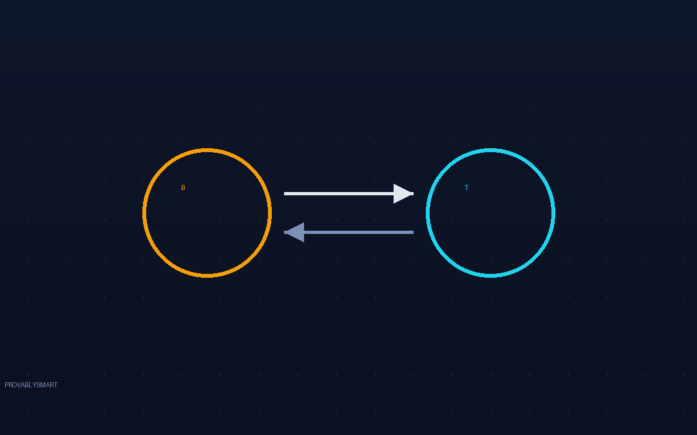
The canonical provable fairness scheme used by Originals games is a three-part commitment.
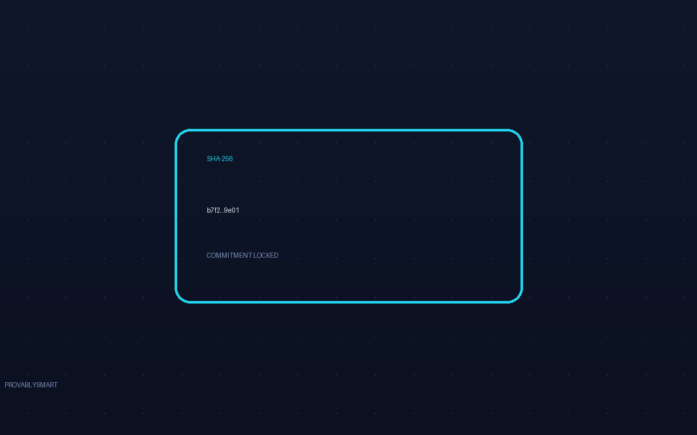
- The server selects a secret seed and publishes its SHA-256 hash before any betting round.
- The player selects a client seed, often a random string of their own.
- After the round, the server reveals the original server seed. The player combines it with the client seed and a nonce, runs an HMAC-SHA256 or similar function, and obtains an integer.
That integer gets normalized to the game’s output range. Because the server seed was committed in hash form before the round, the operator could not have switched seeds after seeing the player’s action. The exact calculation is described in our fairness guide, but the outline is enough for this discussion: every Originals round is independently reproducible from public data.
This works because the game’s logic is a pure function of seeds and nonce. There is no hidden state, no side effects, and no proprietary mapping. That is why a player can, with a small script, verify every round in a session.
Why Slots Cannot Do This Without a Redesign
How Does This Compare to 0% House Edge Protocols?
Audited 100% RTP
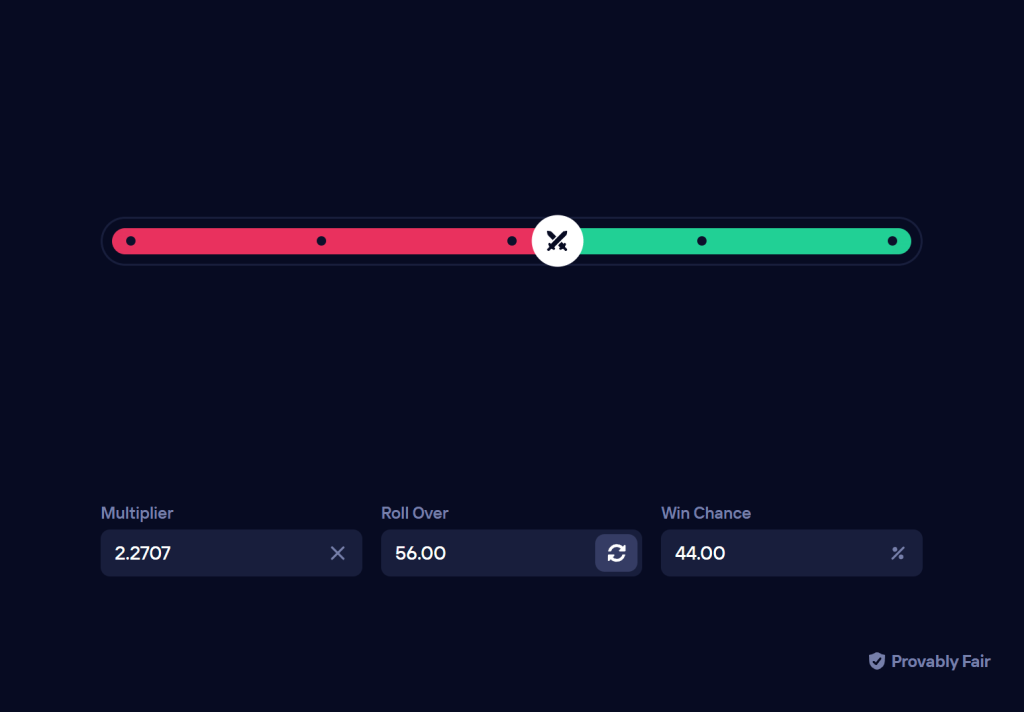
Instead of standard 1.00% to 4.00% casino house margins, compare with mathematically verified 100% RTP Originals (0.00% House Edge) on Duel Casino:
Slot machines are not pure functions of a single seed and a nonce. A modern slot consists of multiple independent RNG calls, each mapped through a reel strip layout, a paytable, a scatter configuration, and a free-spins state machine. The final displayed combination is the result of a sequence of decisions, some of which depend on prior outcomes within the same spin. For a seed to be useful, the developer would have to publish the entire state machine, all symbol weights, and the exact algorithm that maps random numbers to symbols. None of the major slot providers do this.
There is also a proprietary layer. Slot providers license their RNG and mathematical models to casinos. The casino itself often cannot access the raw seed or the internal state, because the game runs in a protected environment. Even if a provider wanted to add transparent seeds, the implementation would need to be certified again in every jurisdiction, because the seed handling alters the game’s code. That is an expensive process, and there is no regulatory requirement forcing it. In 2026, most regulators accept a certification from a testing laboratory as sufficient evidence that the RNG is statistically random. That certification does not let a player verify a specific spin. Any change in that standard would show up in industry news, but as of mid-2026 no major market has mandated round-level slot seeds.
Sanity Check: What an RTP Number Does Not Tell You
For an Originals game, if you know the seeds and the function, you can derive the exact probability distribution and the house edge. For a slot, the advertised RTP is a theoretical value computed from hidden symbol probabilities and paytable entries. A slot with 96% RTP could be exactly that, or could be a different version on the same casino. You do not have the data to distinguish. When you see a server seed on a slot screen, it is usually a session-level seed that resets after a set number of spins, not a round-level seed. The nonce may be hidden in the audit log, and the spin number is not tied to a public counter.
This is not a claim that slots are rigged. It is a claim that they are not independently verifiable. The difference matters.
What to Verify: A Side-by-Side
| Object | Originals games | Slots |
|---|---|---|
| Server seed pre-committed | Yes, hashed before the round | No or session-level only |
| Client seed | Player chooses or edits | Usually none |
| Nonce | Public, increments per round | Not exposed |
| Outcome calculation | Deterministic from seeds | Proprietary RNG plus state |
| RTP audit | Derivable from algorithm | Provided by vendor, not independently checkable |
Practical Checks for the Skeptical Player
If you want to avoid making an act of faith, here are the checks you can run yourself.
- For Originals: in the game history, copy the server seed, client seed, and nonce. Use any online HMAC-SHA256 tool or a five-line Python script to compute the result. Compare it with the recorded payout.
- For slots: open the game’s information panel and note the RTP. Check whether the provider publishes the RNG algorithm or a testing certificate. That certificate is an assurance that the RNG is not biased, but it does not allow you to verify a particular outcome.
- On the casino side: look for a page listing historical server seeds and hashes. If a casino cannot produce a list of old seeds that matches its game history, that is a weak point. Our casino reviews include this check, but the operator’s own fairness page should also provide it.
One more practical consequence involves bankroll sizing. For an Originals game, the exact variance is often computable, so you can size your stakes from a closed-form expression. For a slot, variance is hidden; the published hit frequency and RTP are not enough to estimate the extremes of your curve. As a result, the prudent approach is to treat slots as unknown-variance instruments and apply more conservative protection. We cover the relevant formulas in our bankroll management guide.
FAQ
Are there any slots that publish per-spin seeds?
A small number of crypto-native slots, often branded as "provably fair", offer client seeds and server seed hashes. Inspect them carefully: some expose the seed before the game, but the number of random draws per spin is not fixed, and the mapping function is not fully documented. You can verify that the seed was pre-committed, but not that the displayed payout corresponds to that seed.
Can I calculate RTP for a slot from its seed?
No. RTP depends on the paytable and the symbol probability matrix. Those are not published as part of the seed. Even if you saw the seed, you would have no way to verify the symbol weights. External lab tests give a statistical confidence interval, not a per-round proof.
Does publishing seeds give players an edge?
No. In a correct implementation, the server seed is retired after it is revealed. Publication applies only to completed rounds; the hash commitment prevents the casino from retroactively changing them. Future rounds use a new server seed, so verification of the past is possible while prediction of the future is not.