What a 97% RTP Really Does to a $100 Bankroll (Math, Not Vibes)

the author
ProvablySmart Research Desk
date post
Aug 28, 2026
Share


A 97% RTP figure looks healthy on a game info screen, but what does it actually do to a $100 bankroll? The honest answer is about $3 of expected loss for every $100 wagered — not for every $100 you deposit. The rest is variance, and variance is where most players get lost. This article walks through the math with numbers you can check yourself.
RTP Is Not a Return on Your Deposit
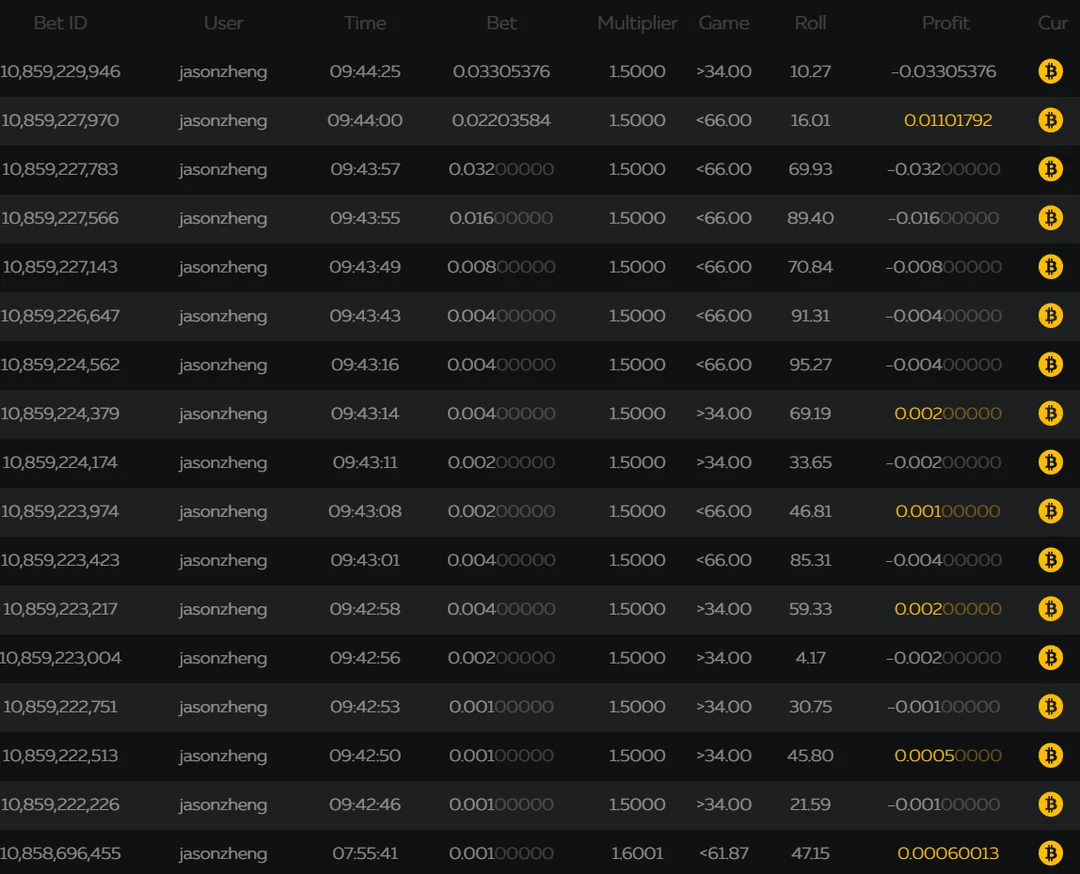
Return to Player (RTP) is the theoretical percentage of each wagered unit that is returned to players over an infinite number of rounds. A 97% RTP game has a house edge of 3%. That edge applies to turnover, not to your initial bankroll. If you place bets totalling $100, the expected loss is $3. If you place bets totalling $1,000, the expected loss is $30. The $100 in your account is simply a container for a much larger stream of wagers.
This distinction matters. Players often ask “How much do I lose with $100?” The correct question is “How much do I expect to wager before I stop?” Because you can recycle the same $100 through many bets, your total wager can easily reach $500 or $1,000 in a single session. The expected loss grows with total wagers, not with the starting balance. See the glossary entry on RTP for a formal definition.
What a $100 Bankroll Actually Does
How Does This Compare to 0% House Edge Protocols?
Audited 100% RTP
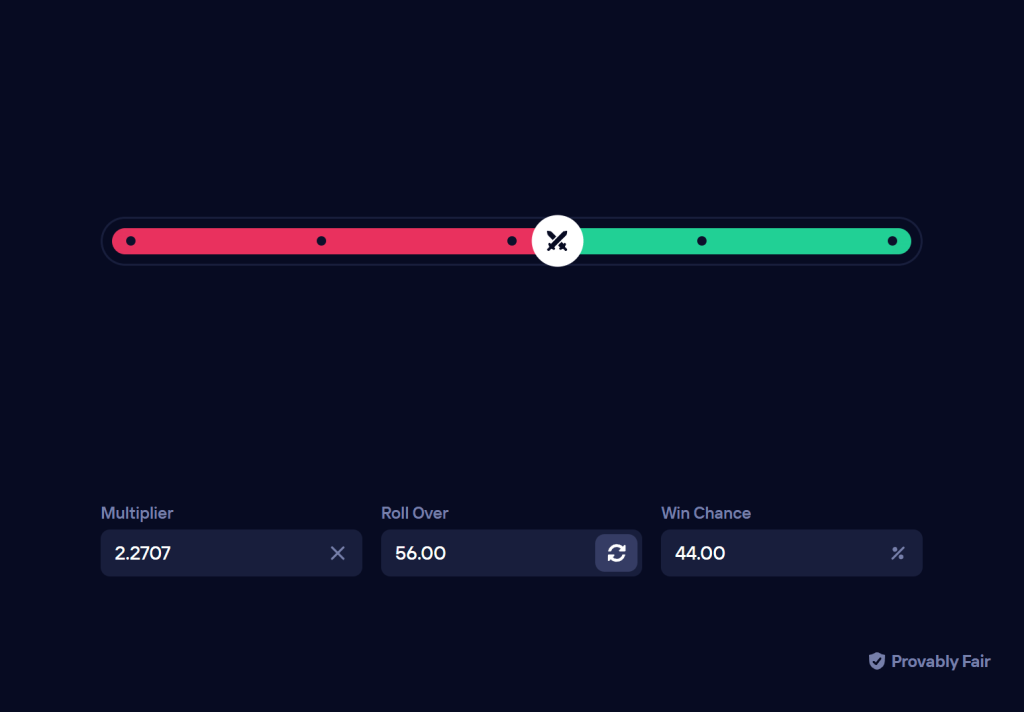
Instead of standard 1.00% to 4.00% casino house margins, compare with mathematically verified 100% RTP Originals (0.00% House Edge) on Duel Casino:
Consider a simplified even-money game with a 97% RTP. That means the probability of a win is 0.485 and the probability of a loss is 0.515 for a $1 bet that pays even money. Each bet has an expected value of −$0.03. The table below shows the expected loss and the approximate chance of finishing ahead for different total wager amounts using a $100 starting bankroll.
| Total wagered | Expected loss | Approx. chance of being ahead |
|---|---|---|
| $100 | $3 | ~35% |
| $500 | $15 | ~22% |
| $1,000 | $30 | ~15% |
| $5,000 | $150 | ~1.5% |
| $10,000 | $300 | <0.5% |
These probabilities come from a binomial approximation of the even-money game. They are not exact for a modern video slot, but they capture the core relationship: as turnover increases, the chance of being ahead falls toward zero. The three percent edge is small per spin, but it compounds in a probabilistic sense over many wagers.
The Ruin Problem: Doubling Your $100
Using the same even-money approximation, we can calculate the probability of turning $100 into $200 before going bust. The gambler’s ruin formula gives:
P = (1 − (q/p)^S) / (1 − (q/p)^T)
where p = 0.485, q = 0.515, S = $100, and T = $200. Plugging in the numbers yields approximately 0.25%. That is roughly a 1-in-400 chance. Even in a game that returns 97 cents on every dollar wagered in the long run, the path to doubling your bankroll is statistically narrow. The math kills the “I just need to double once” mindset.
Session Length, Bet Sizing, and Expected Erosion
The expected loss for a session is simply 3% of total wagers. So the levers you control are bet size and number of bets. If you play $1 spins, every 1,000 spins carries an expected loss of $30. That is an average. In practice, the standard deviation of net profit after 1,000 even-money bets is about √1,000 × $1 ≈ $31.60. A single session can easily produce a loss of $60 or a profit of $0. The edge only becomes reliable after tens of thousands of spins.
This is why bankroll management is not about chasing wins. It is about aligning your session length and bet size with the expected loss you are willing to absorb. For a $100 bankroll and a $1 bet, the median session busts long before you can play 3,333 spins. The median outcome is a loss, and the distribution has a long tail of quick busts. Detailed stop-loss formulas for negative-expectation games appear in our bankroll management guide.
What You Can Verify — and What You Cannot
In 2026, most licensed online slots display their theoretical RTP in the game info screen. That number is generated from millions of simulated rounds. You cannot verify a 97% RTP by playing 100 spins. You can, however, verify that each spin was generated fairly using provably fair seeds and hashes. On a crypto casino, you can take the server seed, client seed, and nonce from any bet and run them through our provably fair verifier to confirm the outcome was not tampered with.
Some casinos publish historical payout data in a fairness ledger. Treat those figures as a record of past outcomes, not as a promise about future results. A ledger that shows 98% actual payouts over 10,000 spins is still consistent with a 97% theoretical RTP, because variance is wide at that sample size. When you are evaluating a casino’s claims, look for independent certification and the game provider’s official documentation. Our casino reviews explain what evidence to check for specific operators.
Use the 3% Edge, Not the Vibes
A 97% RTP game costs you $0.03 per dollar wagered on average. That is the price of the entertainment and the chance of a short-term win. A rational session plan starts with a number: the total amount you are willing to lose. Divide that by the average bet size to estimate an expected number of wagers. Do not expect the RTP to protect you from variance, and do not expect a few winning sessions to prove the RTP is wrong.
The most useful takeaway is this: your $100 bankroll is not a $100 wager. It is fuel for a turnover engine, and that engine burns 3% of every gallon you push through it. That is the math. The rest is noise.
FAQ
Does a 97% RTP mean I get $97 back from my $100?
No. RTP applies to total wagers, not to a single deposit. If you wager $100 total, the expected return is $97 and the expected loss is $3. If you wager $300 total, the expected loss is $9. Your starting bankroll is not your total wager.
How long can I play with a $100 bankroll in a 97% RTP game?
That depends on bet size and variance. With $1 even-money bets, the expected loss per spin is $0.03, so the average loss reaches $100 after about 3,333 spins. However, actual outcomes vary widely; around 15% of players will still be ahead after 1,000 spins, and a few will bust before 500 spins.
Can I verify a game’s 97% RTP in practice?
The theoretical RTP is published by the game provider and shown in the game info screen. To verify fair outcomes, use a provably fair verifier with the disclosed seeds. That checks randomness, not the RTP itself. Confirming an RTP claim requires millions of spins, so no single-session record can prove it.