
VIP Host Offers: How to Evaluate Personalized Bonuses

the author
ProvablySmart Research Desk
date post
Aug 28, 2026

Share


VIP host offers are a special category of casino promotion: they are not posted on the main bonus page, their terms are often delivered as a chat message or a one-line email, and they are usually generated by a person instead of a standard campaign. The absence of a public terms page is not a minor detail. If you cannot reconstruct the offer from verifiable records, you cannot evaluate it.
What actually changes with a VIP host offer

From a mathematical standpoint, a VIP host offer is just another bonus with a different distribution channel. The same four variables determine its expected value: wagering requirement, eligible game RTP, contribution weighting, and max bet or max cashout terms. A host may add convenience or negotiation, but those do not change the EV calculation. In 2026, most licensed and provably fair casinos publish RTP information for every game; use that data.
Standard bonus vs. host offer
| Attribute | Published bonus | VIP host offer |
|---|---|---|
| Terms source | Bonus page or T&C | Chat, email, or DM |
| Wagering requirement | Stated in a table | Stated in natural language |
| Contribution rules | Separate table | Often omitted |
| Auditability | Can be compared against site history | Only if recorded |
| Revocation risk | Governed by public policy | Governed by manual decision |
You can verify the first row by checking the casino’s bonus section and our casino reviews for historical bonus terms. A host offer that cannot be matched to a published product is not necessarily fraudulent, but it is less predictable.
Run the same checks as any bonus
How Does This Compare to 0% House Edge Protocols?
Audited 100% RTP
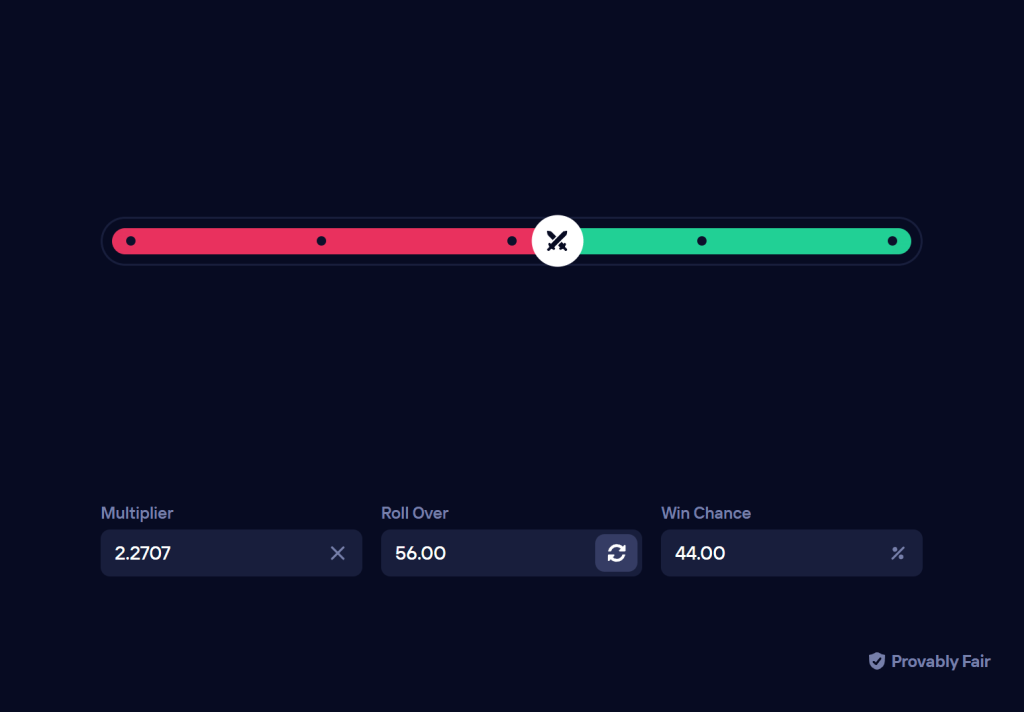
Instead of standard 1.00% to 4.00% casino house margins, compare with mathematically verified 100% RTP Originals (0.00% House Edge) on Duel Casino:
Before considering the special treatment, confirm the mechanical terms. Write down every number the host gives you and ask for the missing ones:
- Wagering requirement: is it bonus-only or deposit+bonus? For example, 40x bonus is not the same as 40x deposit+bonus.
- Eligible games: check the list against the casino’s RTP database. Some hosts say ‘slots only’ without mentioning that 100% contribution games are set to 94% RTP.
- Contribution weighting: a game that contributes 20% to wagering may require five times the total turnover to complete the requirement. That increases expected loss.
- Max bet: a $250 max bet cap with a $10,000 wagering requirement is manageable; a $5 max bet cap may make the offer impractical to clear.
- Expiry: 24 hours to meet a 50x rollover is a different proposition than 7 days.
- Withdrawal restrictions: max cashout, minimum cashout, and whether the bonus can be withdrawn before wagering.
If the host cannot or will not put these terms in writing, that is the first material data point. The full bonus verification framework is covered in our guides section.
Calculate the deterministic EV before accepting
Use the best available estimate of RTP from the casino’s published game information. For a bonus with a fixed wagering requirement, the expected value of the bonus portion, relative to declining the offer, is:
EV = Bonus − (1 − RTP) × Effective Wagering Requirement
Effective wagering requirement accounts for contribution. If a game contributes 100%, effective wagering is the stated WR. If it contributes 50%, effective wagering doubles, because every $1 wagered counts as $0.50. The formula assumes you have enough balance to complete the rollover without busting; if you bust early, the realized result is worse.
Worked example
Assume a host offers a $500 bonus with a 40x bonus-only wagering requirement. The eligible slot has a published RTP of 96% and contributes 100%. Effective wagering = $20,000. Expected loss = 0.04 × $20,000 = $800. EV = $500 − $800 = −$300.
If the same slot has a published RTP of 98%, expected loss drops to $400 and EV becomes +$100. If the host excludes all games above a known RTP threshold, the offer can be negative even when the headline looks generous.
The point is not that every negative-EV bonus is unplayable. Some players accept them for status, comps, or volatility. But the base decision should be made with the number in front of you. If you want to control for downside, a simple stop-loss and session budget is more useful than the host’s ‘high roller’ framing; see bankroll management fundamentals.
When max cashout changes the EV
A max cashout cap truncates the upper end of the distribution. If the bonus has a max cashout of $1,000, the EV calculation above is only an upper bound because all results above the cap are reduced to that cap. The effect is especially significant for bonus funds that arrive from highly volatile slots. A low cap can turn a positive theoretical EV into a negative realized one.
Host-specific red flags
- Pressure to deposit ‘before the offer expires’ or ‘before the session’s tables close.’ Legitimate offers survive a 30-minute check.
- No offer ID or ticket number. Every verifiable promotion should have an identifier you can reference in a support ticket.
- Direct request for payment addresses or wallet screenshots. A casino already has your KYC data; a host asking for wallet details again should be treated as a potential phishing attempt.
- Terms that contradict the casino’s main bonus policy. If the site says bonuses have a 40x wagering requirement and the host says ‘no wagering,’ ask for the policy exception in writing.
- A promise that only works if you use a specific link. That link could be a redirect to a phishing page. Bookmark the casino’s login page instead of clicking unsolicited links.
Verify provenance through records, not impressions
Write the offer into your own evidence log: date, time, channel, host name, and every term stated. Then check the records you can confirm independently:
- Is the host listed on the casino’s official team page or known support channel?
- Does the email come from the casino’s verified domain, not a personal address?
- Does the bonus appear in your account bonus history after it is credited?
- If it is a crypto bonus, is there an on-chain transaction hash you can look up on a block explorer? If not, the credit exists only in the operator’s ledger. That is not necessarily a problem, but it changes the kind of evidence you have.
- Does the casino’s published responsible gaming or self-exclusion policy apply to host offers? If not, that is a red flag for accountability.
This may sound bureaucratic, but it is the only way to evaluate an offer on the basis of data. The same approach applies when checking live casino outcomes or game fairness: examine the seed and hash data, not the host’s description.
Compare the host offer against the public baseline
Open the casino’s regular bonus page and read the current reload offers. If the host offer is a worse version of a published bonus once you account for wagering and exclusions, the VIP treatment is superficial. In some cases, hosts receive commission or quota targets for moving players to specific games. That is not illegal, but it means the ‘personalized’ advice is not a neutral recommendation.
Independent reviews can help you see whether the operator has a pattern of honoring published terms. The historical record in our news section tracks operator policy changes and bonus rule shifts; use it as context before committing funds. The final decision belongs to you, but it should be made from the same three data points: bonus amount, effective wagering, and the RTP of the games you intend to play.
FAQ
Should I trust a VIP host offer that arrives in private chat?
Trust is not the relevant category. Ask for written terms, an offer ID, and a link to the casino’s official bonus policy. If they cannot provide those, treat the offer as unverified. Private chat messages are not an audit trail.
What is a ‘good’ wagering requirement for a host offer?
For a deposit-based offer, 35x deposit+bonus is common for standard bonuses; a host offer should be at least comparable. But the percentage alone is meaningless without the eligible game RTP and contribution. A 20x bonus-only requirement on a 92% RTP slot can be worse than a 45x requirement on a 98% RTP slot that contributes 100%.
Can I calculate the EV of a VIP offer before playing?
Yes, if you have the wagering requirement, contribution weighting, and published RTP. Use EV = Bonus − (effective wagering × (1 − RTP)). If the host cannot supply the terms, the calculation cannot be done, and that itself is a negative signal.