How to Verify a Crash Round in Under 60 Seconds (Step by Step)

the author
ProvablySmart Research Desk
date post
Aug 28, 2026

Share


Any crash round that uses a provably fair system leaves enough raw data for an independent check: the server seed, the client seed, the nonce, and the round hash. Verifying a round means reproducing the exact multiplier from those inputs. In most games this takes less than 60 seconds. This guide shows the steps, the data fields you need, and common reasons why a round might not verify correctly.
What You Need Before You Start
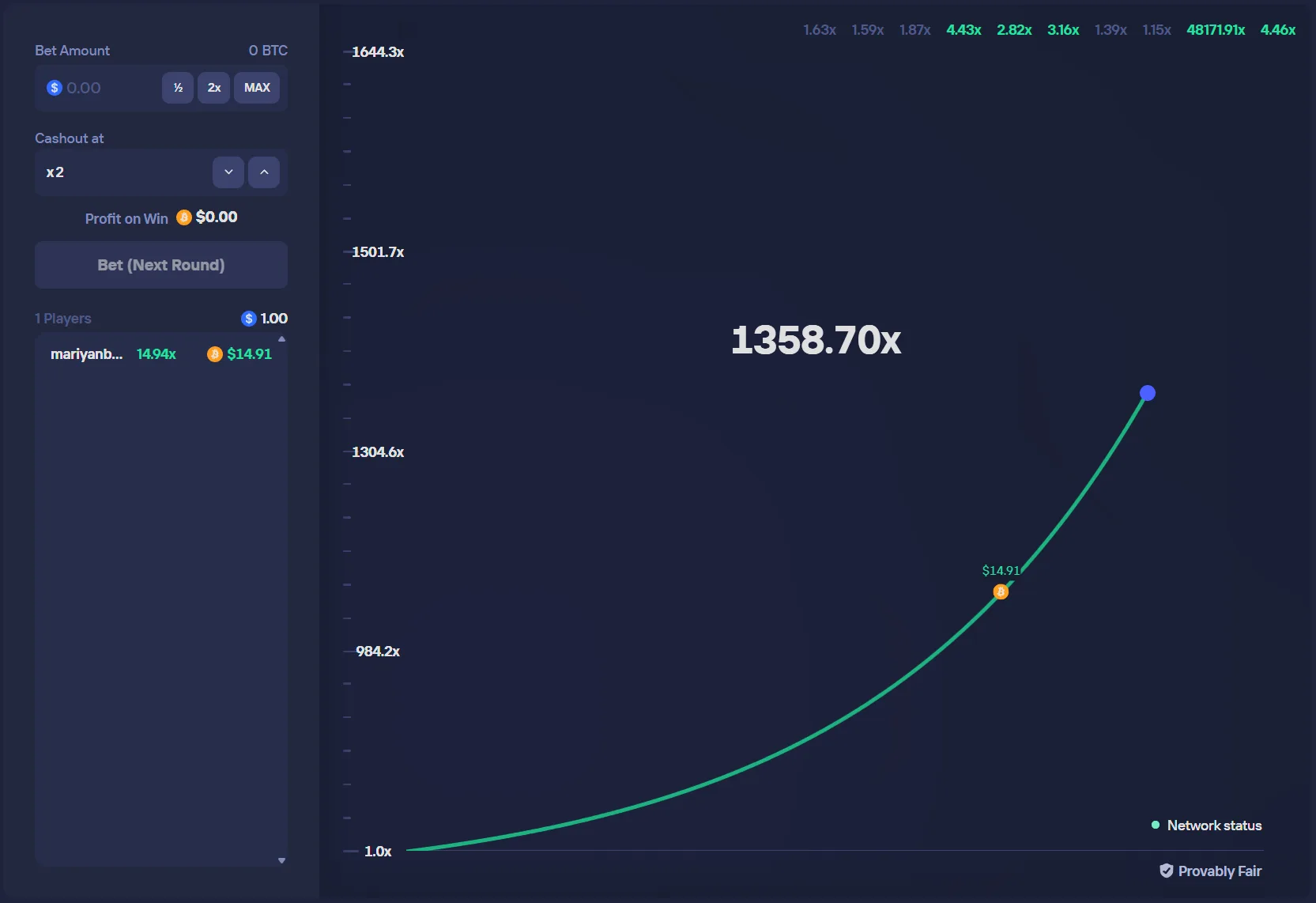
Before you can verify anything, you need to collect the specific values that the game used to generate the crash point. These values are usually visible in the round history or in the casino’s fairness ledger. The exact naming may change from site to site, but the underlying fields are the same. If you are unfamiliar with what a seed or nonce is, refer to the glossary first.
- Round ID or hash: a unique identifier for the crashed round, often a long hex string.
- Server seed: the operator’s committed seed, sometimes revealed only after the round ends.
- Client seed: your own session string, which you can usually change in the game settings.
- Nonce: the integer bet counter for that specific wager.
- Hashed server seed: if the raw seed is hidden, the ledger often shows its SHA-256 hash so you can later confirm that the revealed seed matches the commitment.
For rounds in a seed chain, the server seed for the current round is typically published immediately after the round closes. You can inspect the chain and compare it to the committed hash in the casino’s fairness ledger.
The 60-Second Verification Workflow
How Does This Compare to 0% House Edge Protocols?
Audited 100% RTP
Instead of standard 1.00% to 4.00% casino house margins, compare with mathematically verified 100% RTP Originals (0.00% House Edge) on Duel Casino:
Follow these steps in order. If any step fails, do not move on until you have resolved it.
Step 1: Copy the Round Hash and Seeds
Open the game history and find the round you want to verify. Copy the round hash. Then find the server seed and client seed associated with that round. Some interfaces show the client seed only in your account settings; if so, make sure the seed you copy is the same one that was active when you placed the bet. A seed change after the round invalidates that copy.
If the round history shows only a server seed hash, copy that hash. Once the round ends, the actual server seed will be available. Confirm that the SHA-256 hash of that revealed seed equals the hash shown in the round details. This proves the server did not choose a new seed retroactively.
Step 2: Confirm the Nonce
The nonce is the bet counter for your account. It increments automatically each round. It is normally displayed next to the round, either as a small number or as part of the round hash string. Using a nonce that differs by even one will produce a completely different multiplier, so copy the exact value shown in the round record. If you changed your client seed in the middle of a session, the nonce may reset to 0; confirm against the fairness ledger rather than guessing.
Step 3: Run the Verifier
Open a provably fair verifier such as the PF verifier, and enter the server seed, client seed, and nonce from the round. Do not paste the round hash into the seed field; the verifier uses those three values to calculate a hash, not the other way around.
Most crash games use a one-way hash function, typically HMAC-SHA256, over the seed and nonce combination, then convert the hash output to a number between 0 and 1. That number is then mapped to a multiplier through a formula that the casino publishes. The entire calculation is deterministic: the same inputs will always produce the same output. You can verify this yourself by running the same hash and arithmetic in a local script. The verifier just does that work for you.
Step 4: Compare the Generated Multiplier to the Round Multiplier
After clicking verify, the tool will output a crash multiplier. Compare it directly to the multiplier displayed on the round in the game history. If the two match to the decimal place used by the game, the round is confirmed as generated from your seeds. If the values differ, move to the troubleshooting section below.
Step 5: Check the Bet Amount and Payout
A matching multiplier is necessary but not sufficient. You must also verify that the stake shown in the round history equals your actual wager, and that the payout is the stake multiplied by the crash multiplier, adjusted for the house edge and any payout cap. The house edge is usually stated in the game rules. For example, with a 1% house edge, a 2.00x crash point should pay 1.98x per unit staked, rounded to the site’s configured precision. If the payout deviates by more than a rounding step, there is a separate issue that the verifier will not catch.
| Item | Where to find it | What to check |
|---|---|---|
| Round hash | Game history row | Matches the verifier output for the given seeds and nonce |
| Server seed | Fairness ledger / round details | Revealed seed hashes to the committed seed hash |
| Client seed | Account settings | Same as the one active during the round |
| Nonce | Round details | Exact bet counter number for that round |
| Payout | Bet history | Stake × multiplier × (1 − house edge), subject to rounding |
Common Reasons a Round Fails Verification
If the generated multiplier does not match the round, do not assume fraud. Several routine factors can cause mismatches.
- Wrong nonce: the nonce may start at 0 on one site and at 1 on another. If you manually changed your client seed, the counter may have reset. Always use the nonce shown in that specific round record.
- Stale server seed: the round may have used a previously revealed server seed, especially if the casino rotates seeds after a fixed number of rounds. Check the fairness ledger for the seed chain of the round timestamp.
- Algorithm version change: some crash games tweak the hash-to-multiplier formula after a software update. The online verifier may only implement the latest version. Look for the casino’s published algorithm spec and run that exact mapping.
- Rounded multiplier: the game may cap the multiplier at 1.00x in a crash or round it to two decimal places. The verifier may show a more precise raw value, making a match appear to fail when the rounding is the only difference.
What If the Round Still Does Not Verify?
First, re-enter all values from scratch using the round record, not your memory. Run the verification in an offline script with the exact algorithm version specified by the casino. If the result still differs, contact support and ask them for the exact server seed, client seed, nonce, and algorithm identifier for the round hash. In a genuinely provably fair game, they can supply these details. If they cannot, treat the round as unverifiable. Before depositing more, review the casino’s reputation in the casino reviews for similar reports. Keep your round history and the verifier output as a permanent record.
As of 2026, the underlying mathematics of provably fair crash games have not changed. The same HMAC-based process and seed chain checks apply across major crypto casinos. Once you understand these five steps, you can verify most rounds in under 60 seconds, without needing to trust the website’s display.
FAQ
Can I verify a crash round without knowing the server seed?
Yes, if the round is in a game with a revealed seed chain, the server seed for that round is disclosed after the round concludes. If the ledger only shows a seed hash, verify that the revealed seed hashes to that value before using it. If the server seed is never revealed, the game is not provably fair.
Why does my verifier show a different multiplier than the game?
The most common causes are a mismatched nonce, an old server seed, or an algorithm version difference. Enter the exact nonce shown for that round and confirm your verifier uses the same hash-to-multiplier mapping as the casino. Many casinos document the algorithm on their fairness page; use the same constants and rounding rules.
What should I do if the round fails after all checks?
Preserve the round data and verify again using a local script rather than an online tool. Then contact support with the round hash and ask for the raw inputs. If they cannot produce a matching multiplier, report the issue to the casino and consult player reviews before depositing further.