Tokenized Casino Rewards: Real Utility or Marketing Gimmick?

the author
ProvablySmart Research Desk
date post
Aug 28, 2026

Share


Casino rewards are increasingly paid in the issuing site’s own token. The stated cashback rate is not the real cashback rate. Whether tokenized rewards have actual utility depends on liquidity, token supply mechanics, and the casino’s willingness to exchange the token for something else of value. This article lists the checks a player can perform before treating tokenized rewards as part of expected value.
What a tokenized reward actually is
A reward token is not the same as a reward. A slot casino with a 1% house edge that advertises “1% cashback in CasinoCoin” is claiming a player can neutralize the house edge before variance. That claim only holds if the token can be sold at the advertised value with no delay, no vesting, and no additional wagering. In practice, one or more of those conditions fails.
Reward structures fall into two broad categories:
- Internal ledger entries, often labeled points or credits, that cannot be sent to a personal wallet. These are not tokens in a cryptographic sense. They should be evaluated as promotional credit, not as tokenized rewards.
- Blockchain tokens, usually ERC-20 or BEP-20, that are claimable to a self-custodied wallet and are at least nominally transferable. Only these can be checked on-chain.
If a casino “reward token” cannot be withdrawn to a wallet, the secondary-market price quoted in the dashboard is irrelevant. The only relevant question is how much cash can be extracted from the casino, and under which conditions.
Utility is not redemption
How Does This Compare to 0% House Edge Protocols?
Audited 100% RTP
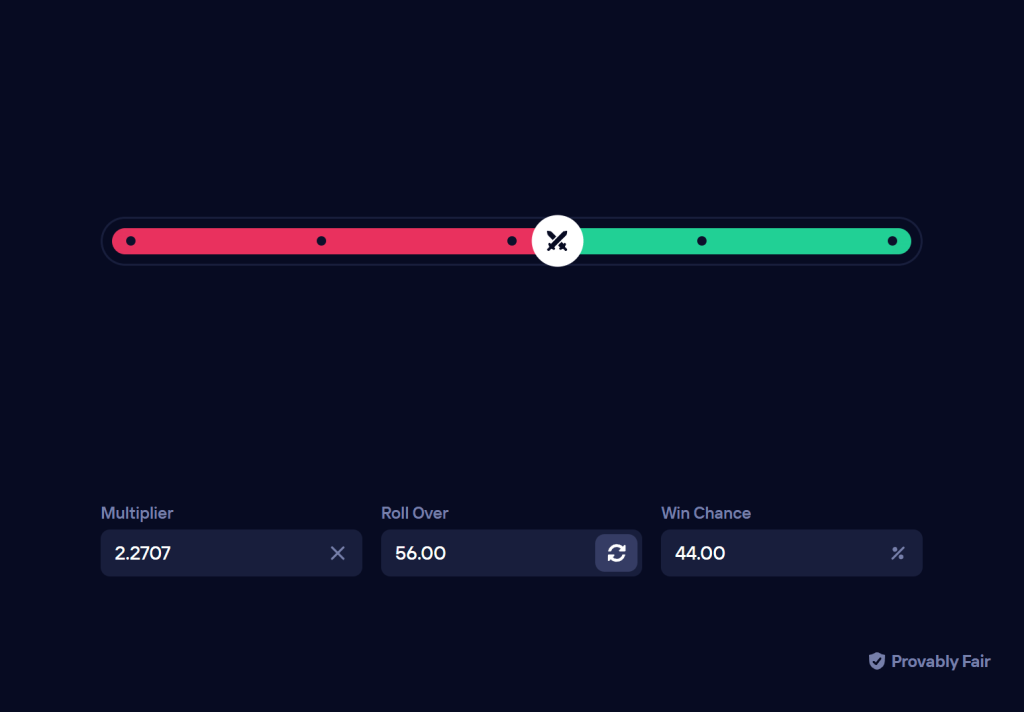
Instead of standard 1.00% to 4.00% casino house margins, compare with mathematically verified 100% RTP Originals (0.00% House Edge) on Duel Casino:
Common utility claims for casino tokens include staking, fee discounts, governance, buyback-and-burn, or external DeFi integration. These features can be real, but they do not automatically make a token valuable. The key is the source of demand:
- Staking rewards paid in new tokens dilute existing holders, including the player who received the initial reward.
- Buyback-and-burn is a redemption mechanism, not an independent use case. It depends entirely on casino revenue.
- Governance of a casino token rarely grants control over real money or financial policy.
- External DEX access simply makes selling easier; it does not create demand.
A token has real utility when the holder can consume it to access a service that would otherwise cost money, and when that service is not funded by the token holder’s own future losses. For casino tokens, this is rare.
What to verify for each utility claim
| Claim | What to check | Marketing pattern to ignore |
|---|---|---|
| Buyback and burn | Burn address, transaction hash of actual burns, and whether the burned supply volume is meaningful relative to circulating supply. | “We burn tokens quarterly” without public burn transactions or with burns smaller than new emissions. |
| Staking | Whether staking rewards come from casino profits or from inflationary token minting. Check the token emission schedule on-chain. | “50% APY staking” paid in the same token that is being emitted at an even higher rate. |
| Redemption | Does the casino itself buy tokens back at a fixed price? Is there a published redemption address? Are there daily limits or minimum amounts? | “Instant redemption” followed by long queues or terms that let the casino suspend redemptions at any time. |
| DEX liquidity | Liquidity pool depth and daily volume. A $50,000 pool cannot absorb large reward payouts without extreme slippage. | Price charts with no volume, or pools where the casino itself is the only counterparty. |
A useful audit starts with the token contract. On the block explorer, check whether the contract has a mint function, who holds the ownership role, and whether transfers can be paused or blacklisted. A mintable token means supply can be expanded at any time. A pauseable token means the casino can freeze withdrawals of the reward. Either feature increases the risk that the token’s price will not reflect its dashboard value.
The math of token cashback
Let Cstated be the cashback rate expressed as a percentage of wagers, and let x be the token’s price decline between the moment the reward is credited and the moment the player sells. The realized cashback rate is:
Crealized = Cstated × (1 − x)
This formula assumes the player can sell immediately after claiming and that the reward is free of wagering requirements. If the token must be wagered, the effective value falls further because every wagered dollar is exposed to the house edge.
| Token price decline before sale | Realized cashback | EV against a 1% house edge |
|---|---|---|
| 0% | 1.00% | Break-even before variance |
| 25% | 0.75% | −0.25% |
| 50% | 0.50% | −0.50% |
| 80% | 0.20% | −0.80% |
| 90% | 0.10% | −0.90% |
A reward subject to a 10x wagering requirement and a 1% house edge has an expected conversion cost of 10% of the reward amount, before any token price movement. The math should be done in fiat terms, not in dashboard units.
For a fuller framework on how to account for volatile rewards in a betting plan, see our bankroll management guide.
Signs that the reward is mainly a gimmick
- The dashboard shows the token’s value in USD, but the casino does not buy the token back and there is no deep external market.
- The token’s circulating supply grows with every wager, while its use cases stay static.
- The token is non-transferable or can only be redeemed for more wagering credit.
- The casino treasury controls a large share of supply and has a history of releasing locked tokens into the market.
- The terms state that the token has no economic value and the casino is not obligated to redeem it. This single clause makes any quoted price speculative.
If a casino issues its own token, the operator has an incentive to delay selling pressure, pay rewards in non-cash units, and create a private market where the house can determine prices. This does not mean every tokenized reward is fraudulent. It means the burden of evidence should be on the casino.
How to evaluate a specific casino
Start by reading the casino review for the site in question, particularly the terms on withdrawals and reward conversion. Reviews can flag whether a casino allows players to withdraw a reward token to a self-custodied wallet and whether the token is listed on a meaningful exchange.
Then run a small live test:
- Earn a small amount of the reward token through ordinary play.
- Withdraw it to a personal wallet.
- Swap it on a DEX or exchange and record the actual output.
- Calculate the realized cashback rate from the exact USD value received, not from the token count or the casino dashboard.
This test answers more than a hundred pages of tokenomics documentation. Re-run it every few months because token liquidity and redemption terms change. Follow casino news for announced changes to reward programs rather than relying on the version you first read.
The same logic applies to other guides on this site: a promotional offer has value only after it is converted to a stable asset. If the conversion path is long, the quoted rate is a hypothetical.
FAQ
How do I verify the real USD value of tokenized casino rewards?
Use the market price from a live DEX or centralized exchange order book, not the price shown in the casino dashboard. Swap a small amount and record the slippage. Then apply the formula: realized cashback = stated cashback multiplied by the ratio of the sell price to the issue price, adjusted for any vesting period or wagering requirement.
Are casino reward tokens ever real utility?
They can be, but only when demand comes from outside the casino’s promise to buy back tokens. For example, a token accepted by external merchants or used as a genuine payment method has independent utility. In most cases, the “utility” is staking paid in the casino’s own token, which is economic recycling, not cash flow. Inspect the token contract and the source of staking rewards to distinguish the two.
What should I do if rewards are paid in a token with an obvious sell-off?
Sell immediately if the token is transferable and you are not locked in. If the casino imposes a lock-up, do not count the reward as part of your expected value; count it as a high-risk asset. In all cases, keep the reward amount small relative to your bankroll and treat token price risk as part of the cost of playing.
As of 2026, no token makes a negative house edge positive by itself. The only number that matters is what you can convert into cash or stablecoins after all restrictions and market effects.