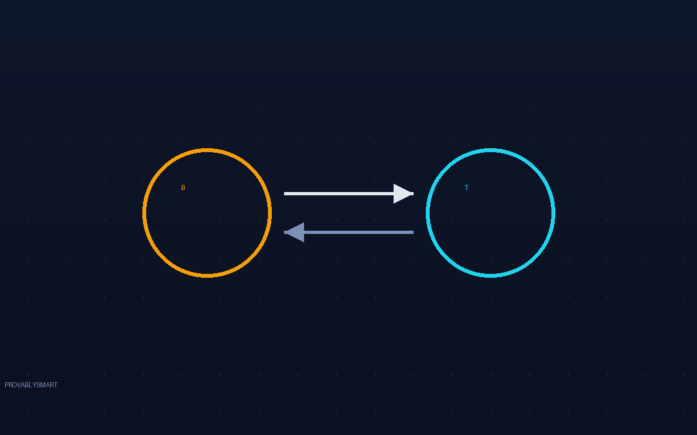
Third-Party Verifiers vs In-Browser Tools: Which Should You Trust?

the author
ProvablySmart Research Desk
date post
Aug 28, 2026

Share


Every provably fair casino game rests on the same core claim: the player can reconstruct each outcome from public seed data. The practical question is where that reconstruction takes place. In-browser verification tools run inside the casino’s own page. Third-party verifiers run in a separate environment, often a standalone web tool, a browser extension, or a local script. This article compares their trust assumptions, failure modes, and the checks you can perform yourself.
The trust boundary
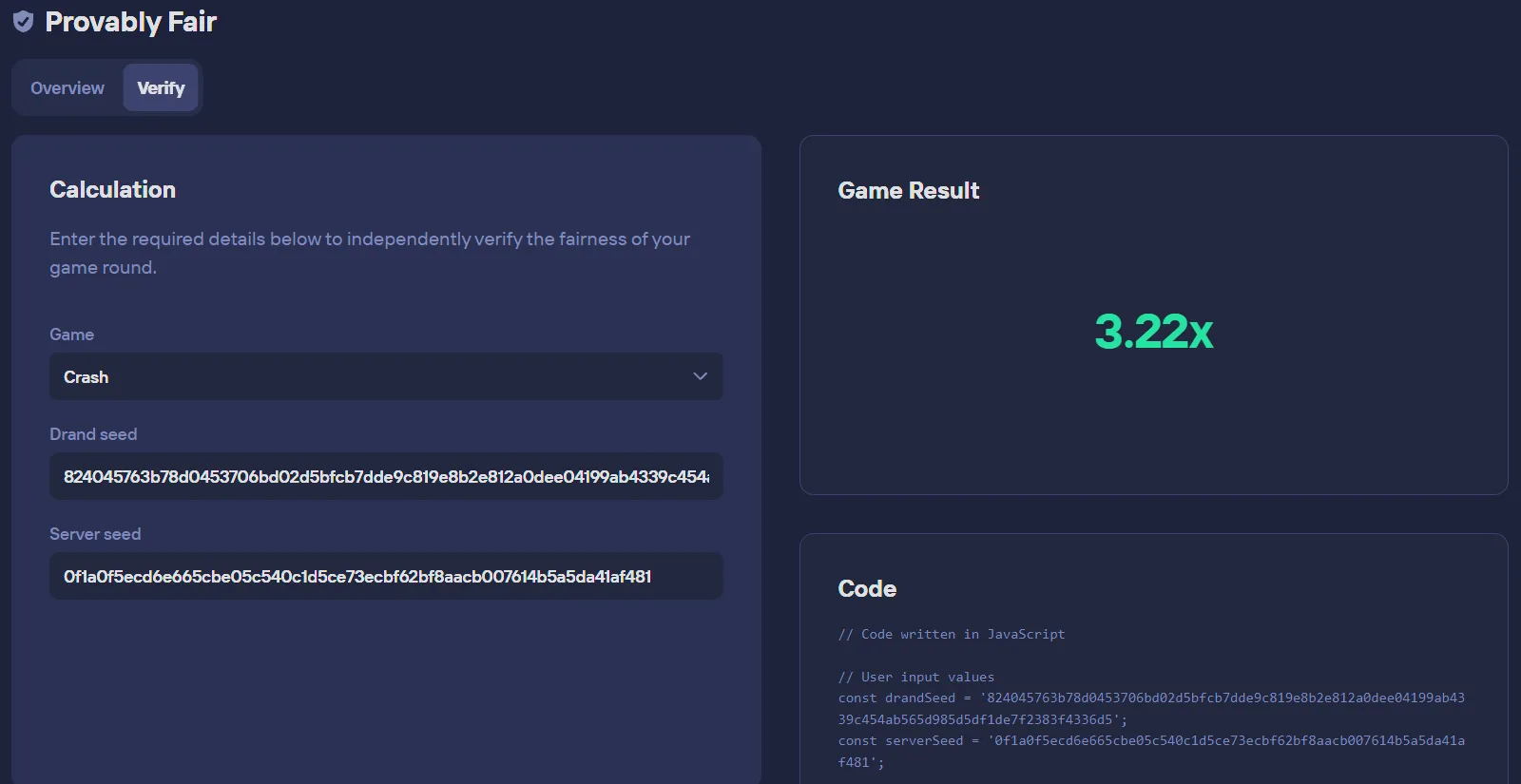
Provably fair verification is deterministic. Given a server seed, a client seed, a nonce, and the operator’s published algorithm, any correct implementation produces the same result. The difference between an in-browser tool and a third-party tool is not the mathematics; it is the boundary around the tool’s execution environment.
In-browser tools read values from the page and execute the calculation in the same runtime that renders the game. This is convenient, and it is why most casual checks happen in place. But it also means the tool sees the page the way the casino wants it to be seen. If the page code, the inputs, or the displayed hash have been modified, the tool cannot detect the modification unless the modification creates an inconsistency that the tool is designed to catch. For background on the underlying technique, see our provable fairness guides.
Third-party verifiers are not a magic solution. A third-party page or script is still code written by someone else. Its advantage is that it does not share a runtime with the casino’s game logic. You can inspect its source, pin a version, or run it offline. The remaining risk moves to the data entry process: the tool is only as good as the server seed hash, client seed, and nonce you give it.
What each tool can verify
How Does This Compare to 0% House Edge Protocols?
Audited 100% RTP
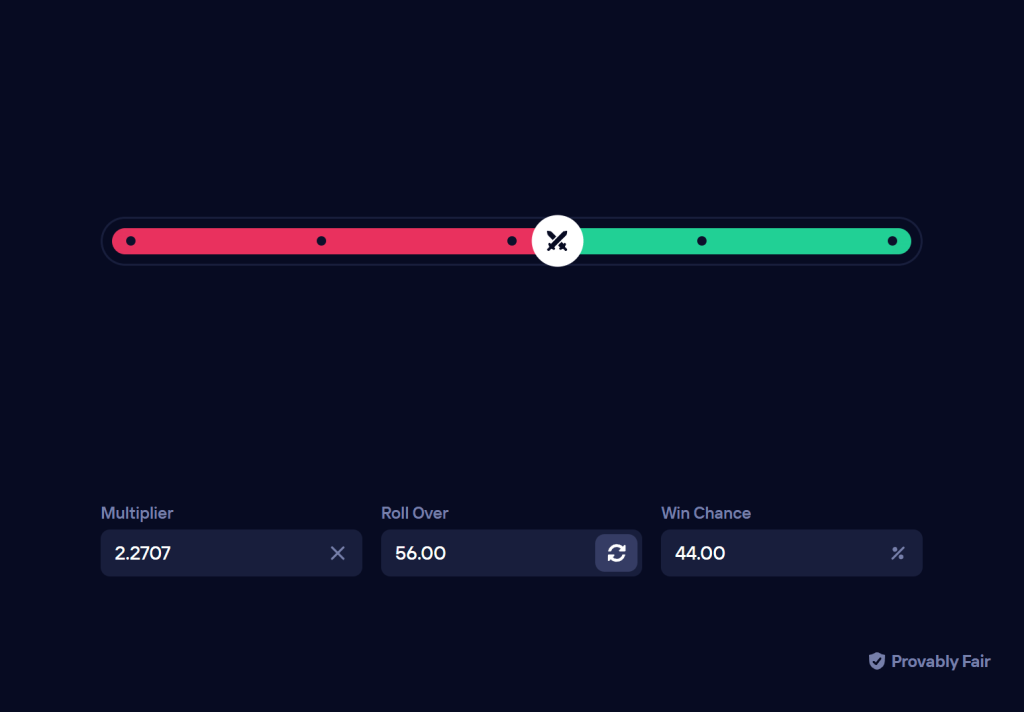
Instead of standard 1.00% to 4.00% casino house margins, compare with mathematically verified 100% RTP Originals (0.00% House Edge) on Duel Casino:
Both tool types can demonstrate a mathematical relation between seeds and output. Neither can prove that the shown seeds were the only seeds used, or that the commitment was made before the round, unless an external record exists.
In-browser tools
- Check that the seed data present in the page produces the result the page displays.
- Confirm that a revealed server seed hashes to the previously displayed hash, if the tool has access to that historical value.
- Provide immediate verification during or after a round.
The limitation is that none of these checks are external. A compromised game page can run a tool stub that prints ‘verified’ every time, because the same runtime controls both the game and the check. You can inspect the source, but many operators load code dynamically or obfuscate it, which makes casual review unreliable.
Third-party verifiers
- Compute the same deterministic algorithm from data you enter manually.
- Allow reproducibility: the same inputs must produce the same output across different implementations.
- Let you separate the calculation from the casino’s execution environment.
These properties matter only if the tool does not fetch its inputs from the casino’s API. If a third-party tool pulls the server seed hash, client seed, and nonce directly from the operator, it has the same blind spot as an in-browser script: a dishonest API response can make the tool appear independent when it is not. The user-facing label ‘third-party’ is not proof of independence.
Key questions for any verification tool
| Check | In-browser tool | Third-party verifier |
|---|---|---|
| Where do inputs come from? | Page DOM or operator API | Manual entry or operator API |
| Can you reproduce the algorithm? | Usually not, unless source is exposed | Often yes, if code is published |
| Can you run it offline? | No | Sometimes |
| Main attack surface | Malicious page code | Malicious tool or API-fed inputs |
| Can it prove pre-commitment? | No, without external anchor | No, without external anchor |
The anchor that actually matters
The strongest provable fairness setup does not depend on which tool computes the HMAC. It depends on a public commitment made before the seed is used. The casino publishes a server seed hash on a page, in a signed log, or in a blockchain transaction. Later, the server seed is revealed. If the revealed seed hashes to the pre-committed value, and that value existed before the round, the outcome can be trusted.
Neither tool type creates that anchor by itself. The only external anchor is a record that you or someone else can inspect later. On some chains, operators write the server seed hash, client seed hash, or round ID into transactions. You can verify timestamps and compare data. Many verification pages omit the commitment side entirely. If the operator only shows a script that takes seed data after the fact, casino reviews and community checks are places to compare observed behavior, but the underlying proof is still weaker than a pre-commitment.
Practical verification routine
For any session that matters, a single tool should not be the only checkpoint. A usable sequence, as of 2026, is:
- Before betting, record the server seed hash, client seed, and nonce for the next round. If the operator does not allow you to observe these values before betting, the game is not provably fair in the normal sense.
- After the round, obtain the revealed server seed. Compute its SHA-256 hash and compare it to the value you recorded.
- Run a separate offline script or a third-party verifier using the exact seed pair and nonce. Compare the produced result with the game history.
- Check whether the operator publishes a commitment log, on-chain record, or signed file. If it exists, compare the same hash against that record.
- Do not treat a short sample of results as evidence about RTP. The payout map defines long-run expected return; correctly calculating one outcome from a seed proves only that the transformation logic is consistent. Statistical RTP requires a larger sample than any casual session provides.
If you cannot verify a game, the rational response is to reduce exposure or walk away. Position sizing and session limits belong with the same discipline; for practical frameworks, see bankroll management guidance.
The words ‘third-party’ describe where code runs, not whether the code is honest. In-browser checks are fast but live inside the operator’s page. Third-party tools can be audited but may inherit the same data source. The reliable path is manual inputs, reproducible code, and an external pre-commitment.
FAQ
Can an in-browser tool display a valid result when the game is actually unfair?
Yes, in practice. If the script that performs verification is controlled by the same process that renders seeds and outcomes, it can generate a success message after selecting data that passes the display check. A third-party tool reduces that risk only when you give it seed material obtained from outside the page. The math itself is sound; the environment is the attack surface.
What should I look for in a third-party verifier?
Prefer one with published source code, a fixed version hash, and no automatic data ingress from the casino’s API. Manually copy the server seed hash, client seed, and nonce into the tool. Verify that the tool’s hash function and result derivation match the operator’s published algorithm. If the tool vendor cannot state the algorithm in exact terms, treat the tool as a convenience, not a proof.
Is it enough to use both an in-browser tool and a third-party verifier?
Not necessarily. Using both catches accidental divergence in some implementations, but it does not protect against a dishonest operator API that supplies the same fake data to both tools. The missing piece is the external anchor: a hash commitment recorded before the bet, ideally on-chain or in a signed log. If that anchor cannot be confirmed, no tool can repair the proof.