Stablecoin Casinos: USDT vs USDC Payout Reliability Compared

the author
ProvablySmart Research Desk
date post
Aug 28, 2026
Share


Stablecoins have become the dominant settlement layer for crypto casinos, with USDT (Tether) and USDC (Circle) accounting for the vast majority of transaction volume. For a player evaluating payout reliability, the choice between these two tokens is not merely a matter of personal preference—it depends on verifiable differences in reserve backing, blockchain security, and operator integration. This article provides a data-driven comparison of USDT vs USDC for casino withdrawals, based on publicly available information as of 2026.
Reserve Transparency and Audit Status

BTC

ETH

SOL

XRP

USDT

LTC
The core promise of a stablecoin is that it can be redeemed 1:1 for fiat currency. The reliability of that promise rests on the transparency and solvency of the issuer. Both Tether and Circle publish attestations, but they differ in scope and frequency.
- USDT (Tether): As of 2026, Tether publishes quarterly assurance reports from a third-party accounting firm (BDO Italia). The reports claim that the consolidated reserves exceed the liabilities. However, critics note that a significant portion of reserves are held in unsecured commercial paper and other non-cash assets. The exact composition is disclosed in the reports, but the level of detail is less granular than that of USDC. Players can verify the latest report at tether.to.
- USDC (Circle): Circle publishes monthly attestations from Grant Thornton, and since 2025 has moved to a fully reserved, cash-and-equivalent model. USDC reserves are held in U.S. Treasuries and cash, with daily reporting to the U.S. Treasury. The breakdown is available on the Circle Reserve Dashboard. This structure is generally considered more conservative and less prone to liquidity crises.
For a casino player, the practical implication is that a mass redemption event (a “bank run”) would likely affect USDT first, potentially causing a delay or depeg. USDC has historically maintained a tighter peg during market stress, though past performance is not a guarantee.
Redemption and Withdrawal Speed
How Does This Compare to 0% House Edge Protocols?
Audited 100% RTP
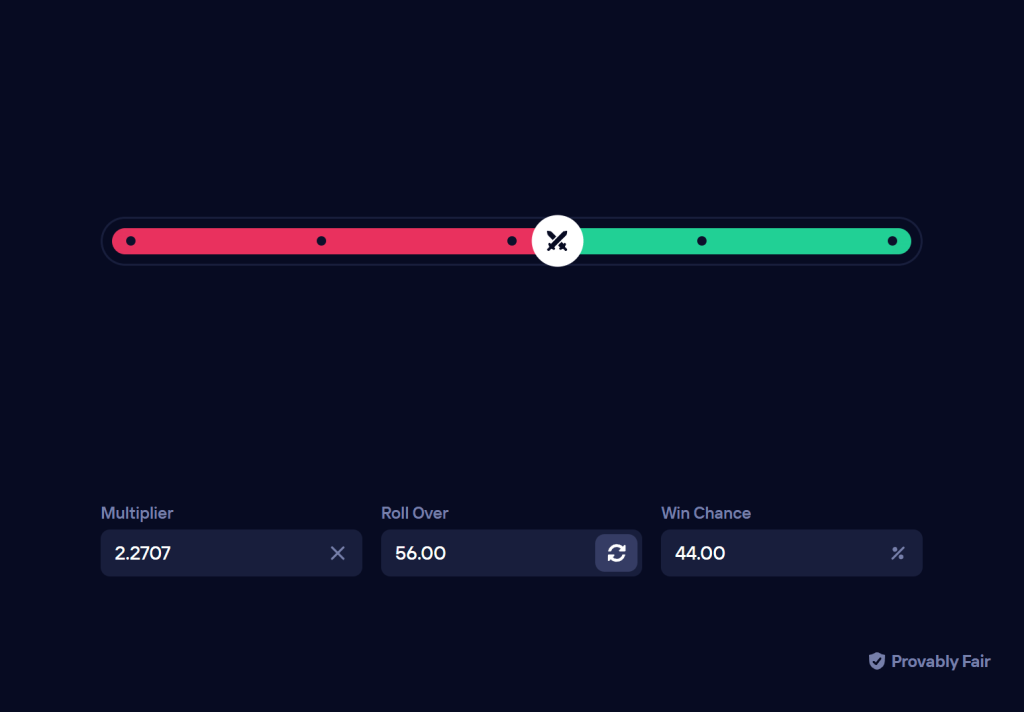
Instead of standard 1.00% to 4.00% casino house margins, compare with mathematically verified 100% RTP Originals (0.00% House Edge) on Duel Casino:
When a casino processes a withdrawal in stablecoins, the actual transfer speed depends on the blockchain used. Both USDT and USDC exist on multiple chains: Ethereum (ERC-20), Tron (TRC-20), Solana, BNB Chain, and others. The choice of chain affects transaction fees and confirmation times.
| Parameter | USDT (TRC-20) | USDC (ERC-20) | USDC (Solana) |
|---|---|---|---|
| Typical confirmation time | ~1 minute | ~2–5 minutes | < 1 second |
| Transaction fee (USD) | < $0.10 | $1–$5 (variable) | < $0.01 |
| Casino adoption (2026) | Very high (standard for TRC-20) | High (ERC-20) / Moderate (Solana) | Growing |
In practice, casinos that support USDT almost always offer TRC-20 withdrawals because of the low cost and fast confirmation. USDC is more commonly offered on Ethereum, which can be slow and expensive during network congestion. However, many casinos now also support USDC on Solana for near-instant, near-zero fee transfers. Check individual casino reviews to see which blockchains are supported for each stablecoin.
Freeze Risk and Regulatory Compliance
Both Tether and Circle can freeze or blacklist addresses if requested by law enforcement or if they determine that the funds are linked to illicit activity. However, the frequency and transparency of such actions differ.
- USDT: Tether has a blacklist that is publicly viewable on-chain (via the Omni layer and Ethereum). Freeze events are relatively rare but have occurred, often in response to hacks or sanctions. Tether’s cooperation with regulators is a plus for compliance, but it introduces a risk that a casino’s address (or a player’s address) could be frozen without notice.
- USDC: Circle actively enforces OFAC sanctions and has frozen hundreds of addresses in the past. The Circle Compliance team can freeze funds at the smart contract level—meaning that if a casino uses USDC, a player’s withdrawal could be blocked if the casino’s address becomes blacklisted. This is a double-edged sword: it reduces the risk of fraud but also gives the issuer unilateral control.
For a player, the practical takeaway is that USDT TRC-20 has a slightly lower freeze risk in practice because Tron-based transactions are not subject to the same contract-level freeze mechanism. However, no stablecoin is fully free from censorship. If you are concerned about sovereignty, consider using a non-custodial wallet and only withdrawing to addresses you control. Our guide on stablecoin wallet security covers this in more detail.
Casino-Specific Considerations
Beyond the token itself, the reliability of a payout depends on the casino’s integration. Some casinos process withdrawals manually, while others use automated smart contracts. The following factors are worth verifying for any casino:
- Whitelist requirements: Some casinos require you to whitelist a withdrawal address before sending funds. This adds a delay but reduces the risk of address poisoning.
- Minimum withdrawal amounts: USDT TRC-20 often has a lower minimum because fees are negligible. USDC ERC-20 may have a higher minimum to cover gas costs.
- Conversion risk: If the casino holds your balance in a different stablecoin, they may convert to your chosen token at withdrawal, incurring spread. Always check the casino’s default currency.
For a systematic approach to evaluating casinos, consult our latest news on stablecoin casino integrations. Also, recall that bankroll management principles apply equally to stablecoin deposits—never store large amounts in a casino balance for longer than necessary.
On-Chain Verification: What You Can Check Yourself
One of the advantages of using stablecoins in a casino is that every transaction is recorded on a public blockchain. You can verify the following without relying on any third party:
- Reserve attestations: Download the latest assurance report from Tether or Circle. Compare the reported total supply with the circulating supply shown on CoinMarketCap or the issuer’s dashboard.
- Transaction history: Use a block explorer (e.g., Etherscan for ERC-20, Tronscan for TRC-20) to see the casino’s withdrawal address. Check if it has a history of large, frequent withdrawals—this suggests liquidity.
- Depeg events: Monitor the stablecoin’s price on a CEX like Binance or Kraken. A sustained deviation from $1.00 indicates a liquidity problem. You can also use Chainlink oracles to see if the price feeds are healthy.
By performing these checks, you can independently assess the reliability of a stablecoin payout channel before depositing.
FAQ
Which stablecoin is more widely accepted at crypto casinos?
As of 2026, USDT is accepted at nearly all crypto casinos, primarily via the TRC-20 network. USDC is also widely accepted but is often limited to ERC-20 or Solana. The number of casinos accepting USDC on Solana is growing, but USDT remains the default for most operators. Check the casino reviews for specific supported assets.
Can a casino freeze my USDT or USDC?
Technically, the casino cannot freeze your tokens unless it controls the private key. However, the issuer (Tether or Circle) can freeze addresses if they deem the activity suspicious. This is more common with USDC because Circle actively enforces sanctions. For USDT on Tron, the freeze mechanism is less direct but still possible. Always withdraw to a wallet you control as soon as possible.
How can I verify the reserve backing of a stablecoin?
For USDT, visit tether.to and download the latest quarterly assurance report from BDO. For USDC, visit circle.com and view the monthly attestation from Grant Thornton, plus the real-time reserve dashboard. You can also compare the total supply on-chain with the claimed reserves to see if they match. Both issuers have been transparent enough for most users, but the level of detail differs.