Solana Casinos: What Sub-Second Finality Means for Withdrawals

the author
ProvablySmart Research Desk
date post
Aug 28, 2026
Share


Solana’s architecture is often quoted in terms of raw throughput: thousands of transactions per second, 400-millisecond block slots, and sub-second finality. For casino players, the most tangible effect is the withdrawal experience. If a casino processes payments on Solana, funds can move from the operator’s hot wallet to your personal wallet in seconds, not hours. But ‘can’ does not mean ‘will’. This article explains what sub-second finality actually gives you, what it does not, and how to verify a casino’s withdrawal speed using publicly visible chain data.
Why Finality Matters for Casino Withdrawals

BTC

ETH

SOL

XRP

USDT

LTC
Finality is the point at which a transaction is irreversibly recorded on the ledger. On proof-of-work networks like Bitcoin, finality is probabilistic. A block is considered safe after some number of confirmations, but a chain reorg can theoretically undo it. That is why exchanges wait for 30 or 60 confirmations before crediting deposits. On Solana, finality is determined by a supermajority (two-thirds) of validators voting on a block via the Tower BFT consensus algorithm. Once a block reaches that vote threshold, it is finalized and cannot be reverted without a massive coordination effort by validators. In practical terms, this happens in seconds.
For a withdrawal, the sequence is: the casino creates a transaction from its wallet to yours, signs it, and broadcasts it to the Solana network. Validators include it in a block. Once that block receives the required votes, the network marks the transaction finalized. You can observe each of these stages in a Solana explorer by looking at the transaction’s commitment level. The statuses are processed, confirmed, and finalized. Most users care about finalized, because that is the point at which the withdrawal is durable.
What Sub-Second Finality Does and Does Not Change
How Does This Compare to 0% House Edge Protocols?
Audited 100% RTP
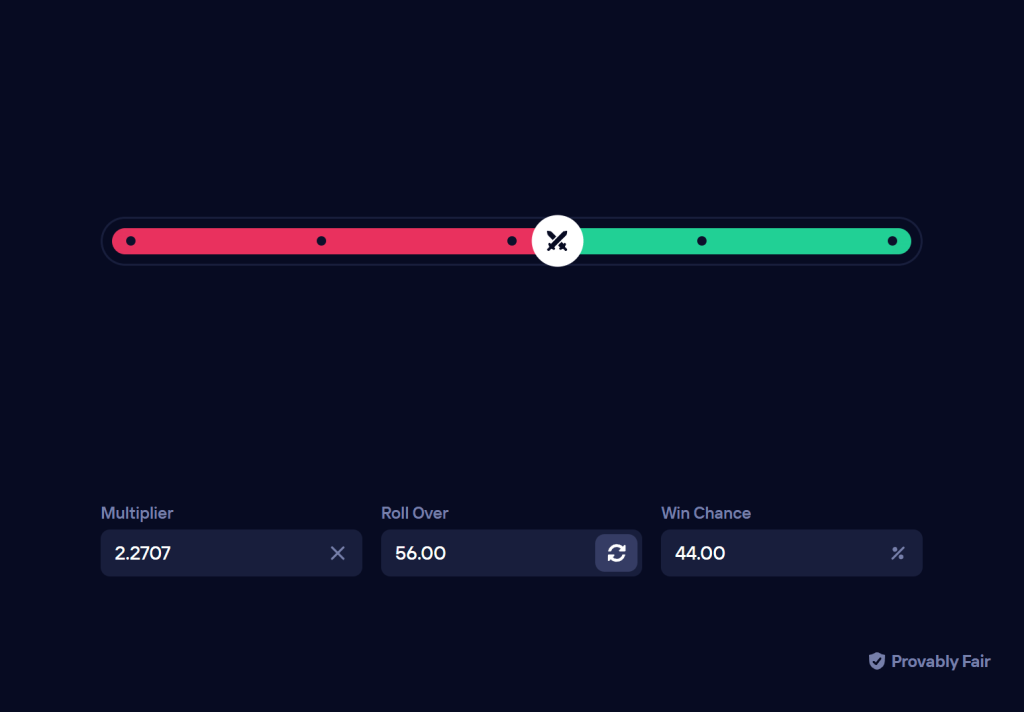
Instead of standard 1.00% to 4.00% casino house margins, compare with mathematically verified 100% RTP Originals (0.00% House Edge) on Duel Casino:
Sub-second block times mean the network’s latency is rarely the limiting factor. A transaction can be accepted into the ledger within a fraction of a second, and finalization typically follows within one to two seconds under normal conditions. In practice, the total time from clicking ‘Withdraw’ to seeing funds in your wallet is dominated by the operator’s own pipeline:
- Internal risk checks (fraud, bonus abuse, money laundering screening).
- Manual or algorithmic approval of the withdrawal request.
- Wallet availability and signing infrastructure.
- RPC node response time and network congestion.
If a casino claims ‘instant withdrawals’, the network side is only instantaneous after the signed transaction is broadcast. The casino may also choose to settle off-chain: sending a database credit to an internal player wallet rather than a real Solana transaction. In that case, you are not relying on Solana finality at all. You are relying on the casino’s promise to honor an internal ledger entry. Always check whether the withdrawal is an actual on-chain transfer. A real Solana withdrawal will have a transaction signature that you can look up in a block explorer.
Verifiable Metrics: What You Can Check Yourself
You do not need to trust a casino’s marketing. Any Solana transfer exposes the following data on-chain:
| Field | What It Tells You |
|---|---|
| Transaction signature | A unique identifier for the transfer. You can search it in a Solana explorer or block explorer. |
| Slot / block height | The exact position in Solana’s slot history. Slot time is approximately 400 ms, giving a precise timestamp reference. |
| Commitment level | Whether the transaction is processed, confirmed, or finalized. A finalized transaction is irreversible. |
| Sender and receiver addresses | Confirms that funds moved from the casino’s wallet to yours, not from a hot wallet that later gets drained. |
| Token amount | The exact sum transferred, often USDT or USDC on Solana. |
To measure a casino’s real withdrawal speed, request a small withdrawal and record the time you click submit. Then use an explorer to find the transaction signature and compare the transaction’s first appearance with the finalized slot. The difference between the casino’s internal processing time and the network’s finality time becomes obvious. If the casino says they sent funds but no transaction signature exists, the withdrawal was off-chain.
A Note on ‘Confirmed’ vs ‘Finalized’
Some RPC endpoints default to confirmed rather than finalized. A confirmed block has been voted on by a supermajority but may not yet have reached the finality threshold. For casino purposes, always ask the operator which commitment level they use when scanning the blockchain for deposits. If they accept a deposit at confirmed, and the network later reorgs, you could be left with unbacked credits. This is an edge case, but it is precisely the kind of thing that matters to skeptical players.
The Real Bottleneck: The Casino’s Hot Wallet and Risk Engine
Sub-second finality only helps if the casino keeps enough liquidity in a hot wallet to pay all concurrent withdrawals without batching or waiting for internal transfers from a cold store. A casino that runs an ‘instant withdrawal’ system will typically maintain a reserve of USDC or USDT on Solana. If that reserve runs dry, withdrawals slow down regardless of the network’s performance. You can observe this indirectly by checking the same casino wallet address over time via an explorer: a high turnover of outgoing transactions to many addresses suggests a working hot wallet system. A wallet that only receives microtransactions and then sends large amounts to a cold wallet may indicate a less efficient structure.
There is also counterparty risk. A Solana transaction only proves that the casino sent you tokens. It does not prove that the casino will honor future withdrawals, that their games are provably fair, or that their overall bankroll is solvent. Those concerns are independent of the network. For that, you need to evaluate the casino’s reputation, examined on our casino reviews page, and their approach to transparency.
Is This a Security Trade-off?
Faster finality can reduce certain attack surfaces. A player cannot double-spend the same tokens after a withdrawal is finalized, because the network rejects conflicting transactions. The casino also has a shorter window to reverse a payment mistakenly, which is a benefit for you. However, instant withdrawals increase the risk of the casino being exploited by a user who quickly deposits, withdraws, and then turns out to have used stolen funds or a chargeback (if any fiat on-ramp is involved). To mitigate this, operators may impose tiered withdrawal limits or hold funds for manual review. You should not be surprised if a casino runs a first-deposit hold or a discretion check on large withdrawals.
If you are managing a bankroll that includes frequent Solana withdrawals, understand that network finality is only one link in the chain. Your own strategy matters more. A fast withdrawal is no substitute for a solid bankroll management plan that sets limits on how much you expose to any single operator. The technical capability of the network does not change the house edge or the variance of the games.
2026: Solana’s Role in Casino Payouts
As of 2026, Solana is a common payment rail for crypto casinos, alongside Bitcoin, Ethereum, and Tron. But not every casino that accepts Solana actually uses it for withdrawals. Some convert Solana to an internal balance and pay out on another chain, or pay out via a custodied account. Before depositing, read the casino’s withdrawal policy or check their FAQ. Specifically, look for the phrase ‘on-chain withdrawal’ or ‘no manual review’ — but verify it with a test transaction.
You can also check whether the casino uses a dedicated Solana program or a simple transfer. A simple SPL token transfer is usually fine. Beware of casino-specific withdrawal requests that require you to provide a ‘memo’ or a ‘destination tag’ on Solana. That structure is more common on XRP, but some operators add a memo unnecessarily, which is not required for Solana. A memo adds no security and can be faked; a correct transfer should simply send tokens to your address.
For a broader look at what makes a crypto casino trustworthy, our guides cover provable fairness, RTP verification, and wallet security. The key point is: Solana gives you the infrastructure for sub-second payouts, but only an operator that chooses to use it will give you that speed. The network is a tool, not a promise.
FAQ
Can I verify that my withdrawal was finalized on Solana?
Yes. After you receive the transaction signature, open a Solana block explorer and look up the signature. The page will show the slot epoch and commitment status. To confirm finality, look for a status that says ‘finalized’ rather than merely ‘processed’ or ‘confirmed’. If the explorer does not display that, you can query an RPC endpoint with the getTransaction method and check the meta.status — either Ok or Err — and the slot plus the block height. Finalized votes are not always visible on third-party explorers, but the transaction being included in a block that is not part of a fork is a strong indication.
Is a sub-second withdrawal experience guaranteed with Solana?
No. The network can produce blocks in 400 ms and finalize them in seconds, but the casino controls when the transaction is signed and broadcast. The casino’s internal withdrawal approval, risk checks, and hot wallet liquidity are the real determinants of the total wait time. Some casinos still batch withdrawals or process them every hour. The word ‘instant’ should read as ‘after the operator decides to send it, the network is not the bottleneck’. Always test with a small withdrawal and observe the time between your request and the transaction’s appearance.
Are there any Solana-specific risks with casino withdrawals?
The main risk is not the network’s consensus, but the operator’s implementation. Some Solana wallets use token accounts that must be initialized before they can receive USDT or USDC. If your wallet has never received SPL tokens, you may need to create a token account first, which sometimes requires SOL for gas. A well-designed casino will cover that fee or send a small amount of SOL to your wallet. Also watch for network congestion or validator issues that can delay slot production. These events are rare but not impossible; the current 2026 network has a track record of occasional congestion. For ongoing updates on network health and relevant technical issues, see our news section.