RTP Ranges: Why the Same Slot Pays Differently at Two Different Casinos

the author
ProvablySmart Research Desk
date post
Aug 28, 2026
Share


You load the same slot title at two different online casinos and notice the theoretical return-to-player (RTP) percentage listed is 94.5% at one site and 96.2% at another. This is not an error — modern video slots are often released with a configurable RTP range. The operator decides which specific RTP to activate within that range. Understanding why this happens and how to verify the active RTP can significantly affect your long-term expected value.
How RTP Ranges Work in Slot Development

Slot game studios typically build a single game client that contains multiple RTP “tables” or parameter sets. The same underlying game logic, reel strips, and features remain identical; only the payout percentages for certain symbol combinations are adjusted. For example, a developer might certify a slot for RTP values of 94.0%, 95.5%, and 97.0%. The operator selects one of these pre‑defined values when they install the game on their platform.
This practice is widespread because it allows operators in different regulated markets to meet local minimum RTP requirements while still offering competitive products. A casino licensed in a jurisdiction that mandates at least 95% RTP will choose the 95.5% version; a casino in a jurisdiction with no such minimum may opt for the 94.0% version to increase house edge.
The RTP range is typically disclosed in the developer’s game documentation and often listed in the game’s help screen or paytable. However, the RTP you see in a casino’s lobby may be the maximum possible value, not the one actually configured. Always cross-check by opening the game itself.
Verifying the Active RTP at a Specific Casino
How Does This Compare to 0% House Edge Protocols?
Audited 100% RTP
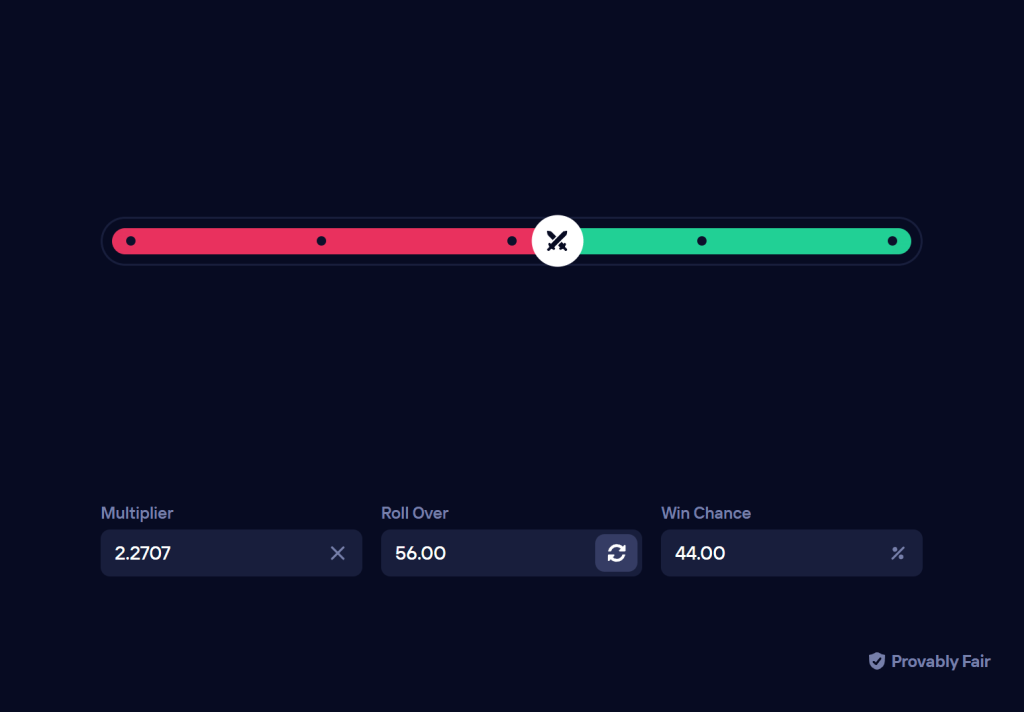
Instead of standard 1.00% to 4.00% casino house margins, compare with mathematically verified 100% RTP Originals (0.00% House Edge) on Duel Casino:

To determine the precise RTP of a slot at a given casino, you can perform the following checks:
- In-game information: Many slots display the current RTP within the paytable or an “info” screen. Look for a small print line such as “RTP 96.10%”.
- Casino’s game details page: Some casinos list the RTP next to the slot’s name, often with a note like “RTP range: 94.00% – 96.00%”. The actual value may be shown elsewhere.
- Regulatory seals: In licensed jurisdictions (e.g., UKGC, MGA), the casino is required to display the correct RTP. You can verify by checking the operator’s certificate of compliance, sometimes linked from the game.
- Provably fair crypto casinos: While RTP is not part of the provably fair seal (which concerns randomness), some crypto casinos publish the RTP parameter in their open-source game logic. Check the developer’s documentation or the casino’s guides on game fairness.
If you cannot find the active RTP, contact support. A reputable operator should be able to confirm which setting they have activated for each slot. Avoid casinos that refuse to disclose this information — it is a red flag.
Impact on House Edge and Player Expected Loss
The difference of 1–2 percentage points in RTP translates directly into a proportional change in house edge. For a slot with an RTP of 96%, the house edge is 4%. For the same slot set to 94%, the house edge doubles to 6%. Over thousands of spins, this gap compounds.
Consider a player who wagers $1,000 on a slot with different RTP settings:
| RTP | House Edge | Expected Loss per $1,000 Wagered | Difference from 96% RTP |
|---|---|---|---|
| 94.0% | 6.0% | -$60.00 | -$20.00 |
| 95.5% | 4.5% | -$45.00 | -$5.00 |
| 96.0% | 4.0% | -$40.00 | — |
| 97.0% | 3.0% | -$30.00 | +$10.00 |
The expected loss difference of $20 per $1,000 wagered between a 94% and 96% version may seem small, but over a typical session of $5,000 wagered, the gap becomes $100. For frequent players, this can represent a material reduction in bankroll longevity. Understanding RTP ranges is a core component of bankroll management.
Note that RTP is a theoretical long‑term average. Short‑term variance means you might win or lose far more than the expected loss. But over many sessions, the difference in house edge will manifest.
Regulatory and Licensing Considerations
Different jurisdictions impose various rules regarding RTP:
- UK Gambling Commission (UKGC): Requires operators to display the RTP of all games. The RTP must be at least the minimum specified by the developer (often 95% or higher).
- Malta Gaming Authority (MGA): Similar disclosure requirements, but no fixed minimum RTP; however, the operator must use one of the pre‑certified values.
- Curacao eGaming: Does not mandate public RTP disclosure. Many Curacao‑licensed casinos do not list RTP at all, and you must rely on in‑game info or support.
- Kahnawake / other: Varying degrees of transparency. Always check the regulatory body’s rules.
If you are registered at a casino licensed in a jurisdiction with weak disclosure, you are more likely to encounter lower RTP versions. It is worth reviewing the casino reviews to see if other players have noted RTP discrepancies.
What to Look for When Choosing a Casino
To minimize the risk of playing a lower‑RTP version of your favorite slot, take these steps:
- Check the game’s help screen at the casino before depositing.
- Compare the listed RTP with the maximum possible RTP announced by the developer (often found on the developer’s website or in the game’s documentation).
- Prefer casinos that openly display the active RTP next to each slot. Many reputable operators now do so.
- Read industry news for updates on regulatory changes that may affect RTP disclosure requirements.
Remember that the same slot title does not guarantee the same RTP across casinos. Treat RTP as an independent variable you can control by choosing the right operator.
FAQ
Can I verify a slot’s RTP using provably fair tools?
Provably fair verification concerns the randomness of outcomes (seeds, hashes, nonces), not the payout percentages. While you can verify that the game is fair (i.e., not rigged), the RTP is a statistical parameter selected by the casino. Some crypto casinos publish the RTP seed as part of their open-source code, but this is not universal. Always check the in-game info or contact support.
Why would a casino choose a lower RTP if it offers a worse experience?
Casinos operate on margin. A lower RTP directly increases the house edge, boosting short- and long-term revenue. Operators may also use high RTP as a marketing tool for specific games while setting others lower to subsidize bonuses or operational costs. The decision is purely commercial and based on the operator’s risk model and competitive strategy.
Does a higher RTP guarantee I will win more?
No. RTP is a long-term theoretical average over millions of spins. Short-term variance can easily overshadow the difference. For example, a player on a 94% game may hit a big win and end ahead, while a player on a 96% game may lose. However, over hundreds of hours of play, the higher RTP game will, on average, return more to the player. It is a matter of expected value, not certainty.