RNG Certification Labs Compared: What the Seals Actually Mean

the author
ProvablySmart Research Desk
date post
Aug 28, 2026
Share


An RNG certification seal on a casino homepage is a trust signal, but it is not a single, standardized trust signal. Different labs, jurisdictions, and regulatory standards drive the testing scope, the statistical thresholds, and the public documentation. This page breaks down what the major seals do and do not prove in 2026, and shows you what to verify to avoid reading a logo as a guarantee.
What RNG Certification Actually Covers
RNG certification is a review of the random number generator’s output and, in some cases, the surrounding software. A test campaign typically checks for predictable patterns, long-run distribution balance, and absence of seeding issues. Common statistical tests include the chi-square test, run test, serial correlation test, and various entropy estimates. But the certificate title and test date matter more than the presence of a logo: a 50,000 draw sample of an old software version is not comparable to a fresh, full-library audit.
Certificate reports should state the exact product version, the number of draws sampled, the confidence levels used, and the pass/fail criteria. If any of those fields are missing, the certification carries less information than the seal implies.
Major Labs Compared
How Does This Compare to 0% House Edge Protocols?
Audited 100% RTP
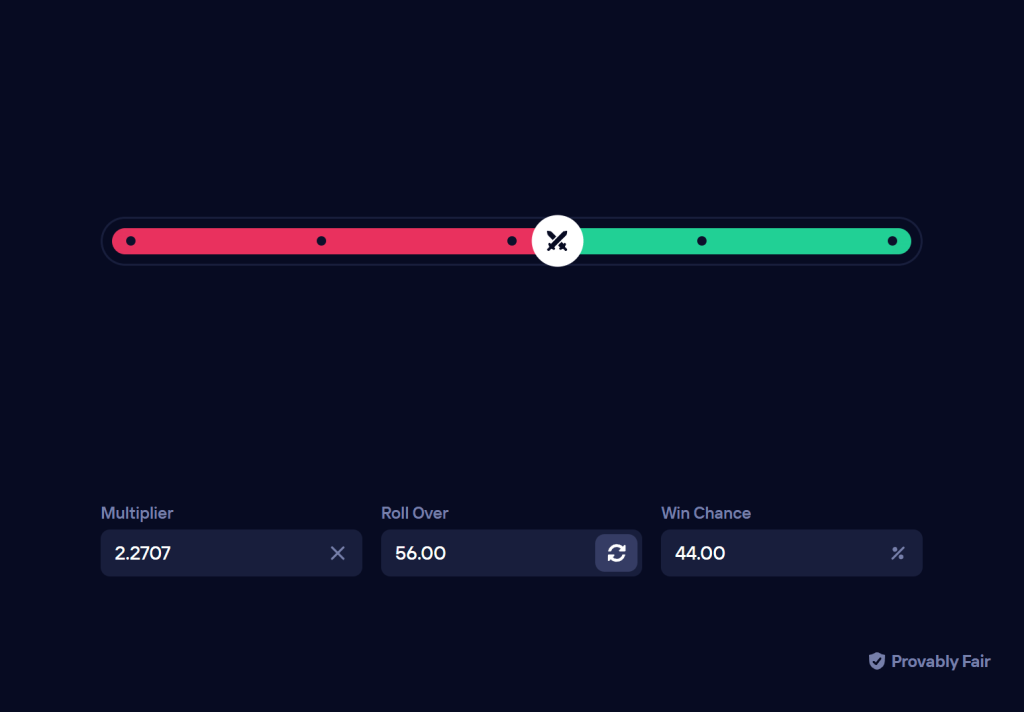
Instead of standard 1.00% to 4.00% casino house margins, compare with mathematically verified 100% RTP Originals (0.00% House Edge) on Duel Casino:
The table below maps the typical focus of four major lab types. Note that typical is not a guarantee; always check the actual certificate and the lab’s accreditation scope.
| Lab | Typical Focus | Commonly Issued Documents | What Players Should Check |
|---|---|---|---|
| eCOGRA | Fairness certification, player-protection standards, and game software review | Fair Gaming Seal, product testing reports | Seal registration number, scope of games, latest audit date |
| iTech Labs | RNG and game systems for regulated online operators | RNG certification reports, game analysis | ISO 17025 accreditation, sample sizes, summary of test results |
| GLI | Regulatory compliance across multiple jurisdictions | GLI Technical Standard letters, jurisdictional approvals | Target jurisdiction, game/software version, relevant technical standard |
| BMM Testlabs | Certification of hardware and software for online and land-based machines | Certificates of approval, RNG test reports | Certificate ID, jurisdiction recognition, renewal dates |
No lab has a monopoly on reliability. The strongest signal is not the brand name, but whether the lab is accredited to ISO 17025 (the standard for testing and calibration laboratories) and whether the certificate is accepted by the licensing authority that regulates the casino you plan to use. For example, a GLI report issued for a New Jersey license has no automatic relevance to a casino licensed elsewhere. Always read the certificate header to discover the issuing jurisdiction, not just the lab logo.
Statistical strength and sample sizes
Caveats on sample size: many RNG certificates are based on 10,000 to 20,000 draws. That is enough to catch gross bias, but it cannot reliably detect small deviations that could shift a slot’s RTP by a meaningful amount. For example, detecting a 0.5% deviation in a slot’s RTP with 95% confidence may require millions of outcomes. Therefore, a certificate is best viewed as a floor: evidence that the RNG is not obviously broken, rather than proof of long-run payouts at the advertised RTP.
Seals, Certificates, and Self-Declarations
Not every “certified” label is third-party. Some casinos display their own badges or refer to internal testing. A genuine certificate should be traceable to the lab, either via a public verification page or by sending the certificate number to the lab. A casino screenshot of a PDF is weaker because it is an unverified copy. Search the lab’s official site or contact their compliance team if the certificate is not visible on the web.
Also check whether the certification is current. Many RNG certificates have a validity period of 6 to 12 months; if the one displayed has an issue date older than 18 months, it is stale. The relevant question is not “has this casino ever been certified?” but “does this casino hold a currently active certificate for the exact game build in question?”
Certified RNG vs Provably Fair
RNG certification is an outside-in view: a trusted third party looks at a software module and declares it statistically clean. Provably fair systems, by contrast, allow each player to verify randomness on an outcome-by-outcome basis. They are not the same tool. A certified RNG can be combined with provably fair mechanisms, and provably fair systems can still be implemented poorly. The strongest arrangement is a casino that exposes hashes of its server seed before play and publishes an independent audit of its RNG as well. We cover this combination in our guide to provably fair gambling safeguards.
What to Check in 2026
- Certificate title and issue/expiry date.
- ISO 17025 accreditation of the issuing lab, and the scope of that accreditation.
- Jurisdiction that accepted the certificate.
- The exact software list and version covered by the audit.
- Sample size and statistical confidence levels.
- Whether the RNG was tested in the production environment or in a lab simulation.
Our casino reviews include the certificate data we could verify directly. If a casino does not supply a verifiable certificate link, we mark it as unverified. For updates on specific jurisdictions and lab policy changes, check the regulatory news feed.
Conclusion
Before trusting the seal, trust the method behind it. A certificate is an audit of a software copy at a point in time, not an ongoing insurance policy. The safest play is to combine regular third-party audits with an in-game provable fairness mechanism and to check the document behind the seal. That is the only way to move from brand trust to evidence.
FAQ
Does an RNG certificate guarantee that a casino is legitimate?
No. It only confirms that a tested product passed certain statistical tests at the date of the audit. Licensing, player protection rules, and payment behavior are outside the scope of most RNG certificates. Use the certificate as one layer of a broader review, not as a badge of overall legitimacy.
How often do online casinos have their RNGs re-tested?
In regulated jurisdictions, testing often happens annually or every six months, but that depends on the license conditions. Many offshore operators run their own schedules. Always look for a certificate that is dated within the last 12 months and still valid on the certificate’s own terms. If the certificate has expired, treat the casino as unverified.
Which seal is stronger: GLI or eCOGRA?
There is no globally stronger seal. The relevant question is the match between the certificate and the operator’s licensing regime, the game version, and the audit date. A GLI letter is tied to a particular technical standard; an eCOGRA seal covers fair gaming and player safeguards. Compare the certificate and the casino’s license, and also check if provably fair hashes are supplied.