Reading Payout Tables Before You Play: A 5-Minute Habit

the author
ProvablySmart Research Desk
date post
Aug 28, 2026
Share


Every online slot displays a payout table. Few players open it before betting. In 2026, with thousands of games and multiple RTP variants in the market, reading that table is a cheap five-minute habit that prevents avoidable mistakes. The payout table is the only game-specific economic disclosure you can inspect directly without running simulations.
What a Payout Table Actually Shows
Modern paytables list:
- Symbol values for base-game combinations, usually expressed as multipliers of the total stake.
- Line or ways mechanics: left-to-right paylines, all-ways, cluster pays, or scatter positions.
- Feature triggers: scatter counts, free spin awards, multiplier steps, and re-spin conditions.
- Maximum win caps and progressive jackpot rules, if any.
The RTP percentage is often stored in a separate help or info tab, not inside the paytable itself. You need both. The paytable gives you the payout multipliers; the RTP gives you the long-run average. Together they provide the only two numbers that matter before any spin: what a winning event pays, and how often the machine is expected to return money to players over a very large number of rounds.
Why the RTP Figure Is Not Enough
How Does This Compare to 0% House Edge Protocols?
Audited 100% RTP
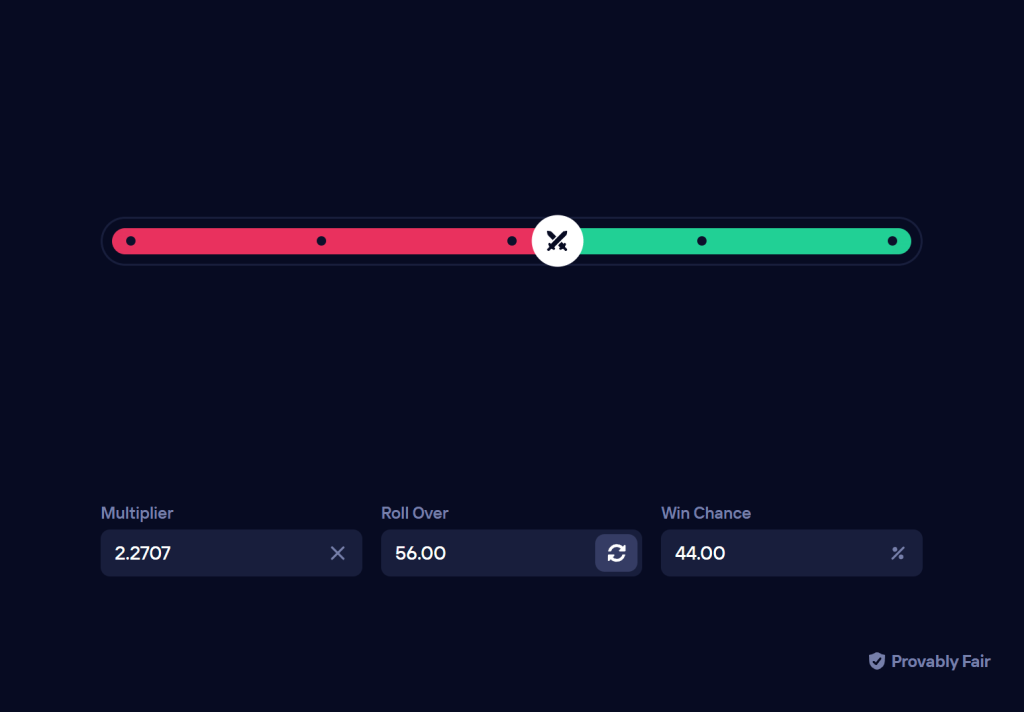
Instead of standard 1.00% to 4.00% casino house margins, compare with mathematically verified 100% RTP Originals (0.00% House Edge) on Duel Casino:

Return-to-player is a mean, not a distribution. A 96.5% RTP game can be a low-volatility title that pays small wins on one in four spins, or a high-volatility game that rarely pays but occasionally delivers a 10,000x multiplier. The long-run average may be identical; the bankroll impact is not.
The illustrative table below shows how the same RTP can hide very different payout distributions:
| Game profile | RTP | Hit frequency | Top max win | Expected experience |
|---|---|---|---|---|
| Low volatility | 96.5% | 28.5% | 200x | Frequent smaller wins, moderate drawdown |
| High volatility | 96.5% | 8.1% | 10,000x | Long dry spells, rare large outliers |
If you fund a session for 100 bets and choose the high-volatility game, the top symbol multiplier alone does not tell you how many rounds your bankroll must survive. That is why the payout table should be read together with a staking plan; see our bankroll management notes for how to calibrate bet size against volatility.
Volatility Quick-Read in 60 Seconds
Without a dedicated volatility rating, use these paytable proxies:
- Top symbol: A five-of-a-kind top symbol on a 6×4 grid is naturally rarer than a three-of-a-kind on a three-reel title.
- Ways or lines count: High ways counts create frequent small hits; low ways counts concentrate payouts in rarer combinations.
- Feature trigger distance: If free spins trigger only after four scatters, expect long interludes. Bonus rounds are often where a large share of the RTP is concentrated.
- Max win cap: A 10,000x cap indicates the tail has been moved upward. If the paytable shows no path to that cap outside the bonus, place even less weight on it.
Take the top symbol multiplier and divide it by the lowest symbol multiplier, then compare with hit frequency if stated. That ratio is a crude volatility index. The larger the ratio, the more bankroll you should allocate per session.
Provably Fair: The Paytable Is Only Half the Contract
A payout table is a static promise. The other half is the game’s ability to produce outcomes consistent with it. That is what provably fair mechanisms exist to prove.
A standard provably fair slot shows a server seed hash before the round. After the round, it reveals the original server seed, client seed, and nonce. You can recompute the displayed hash with SHA-256. If the hash matches and the game derives the RNG outcome from that exact seed pair, the outcome was fixed before the round, not after your bet. The payout table then defines the mapping from the random outcome to credits. To run that process yourself, use our step-by-step provably fair verification guide.
As of 2026, check three things before trusting a game contract:
- The server seed hash is visible before the first bet of a new seed.
- The game discloses the seed pair and nonce used for each round.
- You can recompute the outcome with the official game document or an open-source verifier.
If any of these is missing, the game is not provably fair in the cryptographic sense, regardless of what marketing language appears on the site.
RTP Variants: Check the Client, Not the Database
The same slot title can be released in different RTP versions. Operators may choose between a 96.5% version and a 94.2% version of identical gameplay. The paytable itself may be identical; the RTP number is the distinguishing field.
External game databases usually list one typical figure. What matters is the exact RTP shown inside the casino game client you are using. Before loading any balance, locate the game information screen and record the displayed RTP. If the operator publishes a list of configured RTP variants, compare it with the client. Our casino reviews note whether such lists are published, but the live client should always be your authority.
The 5-Minute Habit, Step by Step
- Open the paytable before choosing an RTP variant. One click, no deposit needed.
- Write down three numbers: top symbol multiplier, lowest symbol multiplier, and feature trigger count.
- Find the RTP and hit frequency. If hit frequency is not listed, estimate it from the gap between low and top symbols.
- Check maximum win and whether it requires a bonus. A huge max win listed only in free spins is conditional on reaching that game state.
- Choose stake with a worst-case dry streak in mind. The paytable tells you how long you may have to wait for a meaningful win.
This procedure does not eliminate the house edge. It aligns your bankroll with the actual volatility of a game before money is at risk. For industry-wide RTP changes and provably fair defaults, our news archive tracks the relevant updates.
Common Paytable Mistakes
- All lines are not the same. Left-to-right line slots only pay from the leftmost reel; cluster and any-way slots use different rules.
- Wild multipliers are not base symbol wins. Some paytables display an extreme top win from a wild-multiplier combination that requires multiple symbols and a feature. Do not treat it as a standard payout.
- RTP is not a refund on losses. A 96.5% RTP is a theoretical return across millions of simulated rounds, not a guarantee that a 100-spin session will return 96.5% of your stake.
- Max win is a cap, not an average. A listed maximum win of 5,000x does not communicate the probability of that event. The paytable alone cannot confirm that probability; only the game’s distribution audit can.
FAQ
Is the RTP shown in the paytable always the same across casinos?
No. Operators can configure different RTP versions of the same game. Always open the game client inside the actual casino to read the exact RTP for your session. Third-party screenshots and databases are not a binding representation.
Can a provably fair game be audited against its payout table?
In principle, yes. If the seed pair, nonce, and game algorithm are known, the random outcome can be computed. The paytable then determines the credit result. In practice you need the official game algorithm document. If the provider does not publish it, you cannot verify that exact mapping, and the RTP should be treated as unaudited.
How quickly can I estimate volatility from a paytable?
In about a minute. Compare the highest base-game symbol multiplier to the lowest. Look at the number of symbols required for that high win and the number of scatters required to enter the bonus. The higher the required symbol count and the lower the stated hit frequency, the more volatile the game is likely to be.