Are Originals Games (Dice, Mines, Plinko) Easier to Verify Than Slots?

the author
ProvablySmart Research Desk
date post
Aug 28, 2026

Share


For players who prioritize transparency, the ability to independently verify each game round is a key differentiator between originals games (Dice, Mines, Plinko) and slot machines. While both categories can be built on provably fair foundations, the verification process is not equally straightforward. This article examines the structural differences in verification, focusing on what a skeptical player can actually check themselves using available seeds, hashes, and game logic.
Core Verification Model: Seeds vs. Reels
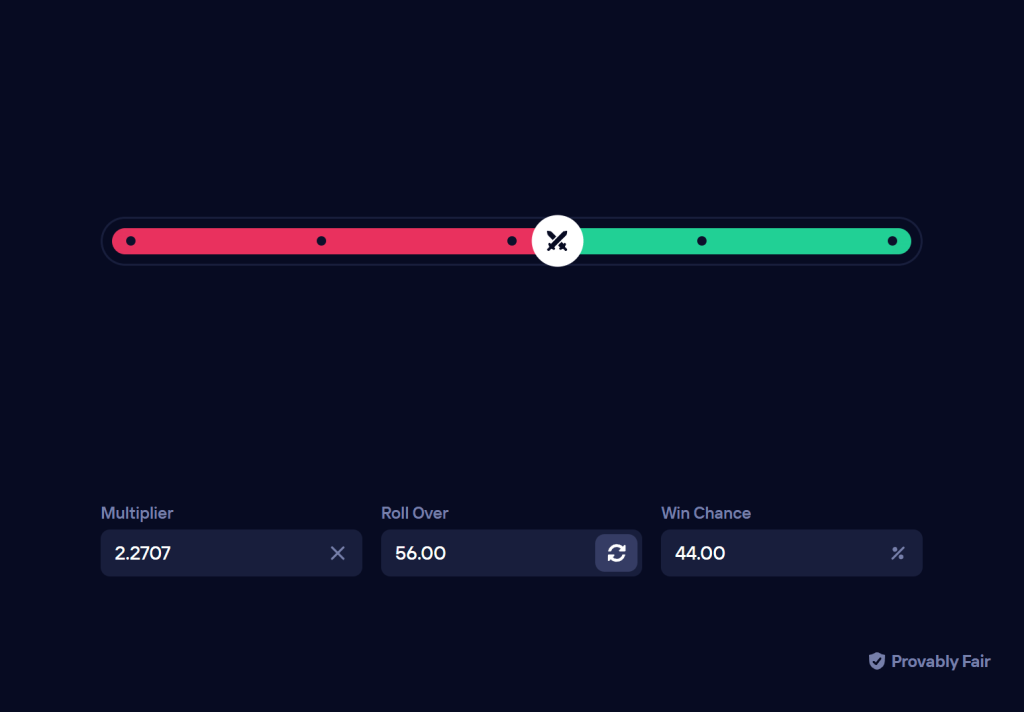

Originals games—Dice, Mines, Plinko—typically follow a deterministic algorithm that uses a client seed, server seed, and nonce to produce a single random outcome per round. The player can pre-commit to a client seed, receive the SHA-256 hash of the server seed before play, and after the round, the server seed is revealed. The player can then compute the same hash, combine seeds and nonce, and reproduce the exact result. This is a well-documented, open protocol.
Slots, on the other hand, generate a sequence of random numbers per spin—often five reels with multiple symbols each. Even when a slot employs a similar seed-based provably fair system, the mapping from the random number to the final outcome (e.g., which symbols land on which paylines) is more complex. The player would need access to the full game logic, paytable, reel strips, and symbol weighting to independently verify. In practice, many slot providers do not publish this level of detail, and verification is limited to checking that the RTP (return to player) reported by the casino matches a long-term statistical expectation, not a single spin.
Verification Steps: Originals
For a typical originals game, the verification process consists of four steps that any player can execute with a simple script or PF verifier:
- Store the pre-commitment: Before the round, note the hashed server seed and your chosen client seed.
- Record the nonce: The round number (nonce) is shown in the game history.
- Reveal and verify: After the round, the server seed is revealed. Compute SHA-256 of the server seed and compare to the pre-commitment hash.
- Generate outcome: Use the seeds and nonce to compute the random number, then apply the game’s result function (e.g., for Dice:
rand % 10000 / 100to get a multiplier). Compare to the actual outcome displayed.
This protocol is deterministic and open. A player can verify every single round independently, without trusting the casino’s server. The only assumption is that the game’s result function is correctly implemented—but that function is usually simple and documented in the casino’s fairness ledger.
Verification Steps: Slots
Verifying a slot spin is inherently more complex, even when the slot is advertised as provably fair. The random number generation (RNG) may still be seed-based, but the mapping to a visual outcome involves multiple layers:
- Symbol assignment: The random number selects a position on each reel strip. Reel strips are internal data that the casino rarely publishes per spin.
- Scatter and wild logic: Special symbols modify the result in ways that are not always fully disclosed.
- Multiple random numbers: A single spin may require several random numbers for reel stops, bonus triggers, and secondary features.
Even if the casino provides the seed values and nonce, the player would need to simulate the entire slot engine—reel strips, paytable, symbol interactions—to reproduce the exact spin result. This is feasible in principle (e.g., through the PF verifier if the casino exposes the game logic), but many casinos only provide the seed hash without the reel mapping. Consequently, verification often reduces to checking that the server seed hash matches and trusting that the unexposed logic is consistent with the claimed RTP.
Comparison Table: What You Can Verify
| Aspect | Originals (Dice, Mines, Plinko) | Slots (standard provably fair) |
|---|---|---|
| Seed pre-commitment | Always available | Often available |
| Result function documentation | Simple, 1–2 steps | Complex, multi-step |
| Reel strips / symbol weights | Not applicable | Rarely published |
| Single-round verification | Full, deterministic | Partial (seed hash only) |
| Verification tool availability | Wide (many open-source scripts) | Limited (casino-specific tools) |
Practical Implications for the Player
For a player who wants to verify every round, originals games are clearly easier. The verification can be done with a few lines of JavaScript or a dedicated PF verifier. Slots, by contrast, require a higher degree of trust in the operator’s implementation of the game logic. Even when a slot is provably fair, the verification process is more arduous and often incomplete—you can trust the seed, but not the mapping.
This difference has two practical consequences:
- Bankroll management: If you rely on deterministic verification to ensure fairness, you may prefer originals games. See bankroll management for strategies that account for verification confidence.
- Casino selection: When choosing a casino, check the casino reviews for details on which games provide full seed-based verification versus partial.
Common Misconceptions
“All slots are provably fair”
Not all slots use a provably fair RNG. Many traditional online slots rely on a server-side RNG that the player cannot verify. Even among crypto casinos, many slots are imported from third-party providers that do not expose seed hashes. Always check the game’s info or the casino’s fairness ledger.
“Originals games are completely trustless”
They are nearly trustless, but the player must still trust that the result function is correctly implemented. However, because the function is simple and often open-source, the risk is minimal. The provably fair glossary explains the remaining trust assumptions.
Conclusion
Originals games (Dice, Mines, Plinko) are structurally easier to verify than slots because they require only a single random number per round and a simple outcome mapping. Slots, even when provably fair, involve multiple layers of logic that are rarely fully disclosed, making independent verification of a single spin impractical. For players who prioritize verifiability, originals offer a clear advantage. When evaluating casinos, use the PF verifier and cross-reference with the casino reviews to determine which games allow full seed-based verification.
FAQ
Can I verify a slot spin the same way I verify a Dice roll?
Not in practice. Even if the slot uses a seed-based random number generator, you would need the full reel strip data, symbol weights, and bonus logic to reproduce the spin. Most casinos do not publish these details. Originals games require only the seed values and a simple formula, which are always visible.
What if the slot provider publishes the reel strips?
If the provider publishes the exact reel strips and logic used for each spin, then verification is possible in principle. However, as of 2026, very few slot providers do this. You can check the fairness ledger of a casino to see if such data is exposed. If not, verification is limited to the seed hash.
Does the difficulty of verification affect the RTP?
No, the RTP is a statistical expectation over many spins, not a guarantee of individual round fairness. Verification difficulty does not change the RTP; it only changes your ability to confirm that the game is operating as advertised. For originals, you can verify each round against the claimed RTP distribution. For slots, you must rely on long-term audits or third-party testing.