The Near-Miss Effect: The Psychology Math Behind Almost-Winning
the author
ProvablySmart Research Desk
date post
Aug 28, 2026
Share


Slot machine players often report that a near-miss—two matching symbols on the payline with the third just above or below—feels more motivating than a complete loss. This phenomenon, known as the near-miss effect, has been studied extensively in gambling psychology. However, from a mathematical standpoint, a near-miss is simply a specific type of loss. Its probability is determined by the game’s random number generator (RNG) and, in provably fair casinos, can be verified by the player. This article examines the psychological mechanisms, the underlying math, and how to check whether near-misses in a given game are truly random—or deliberately programmed to exploit this cognitive bias.
What is a Near-Miss in Slot Machines?
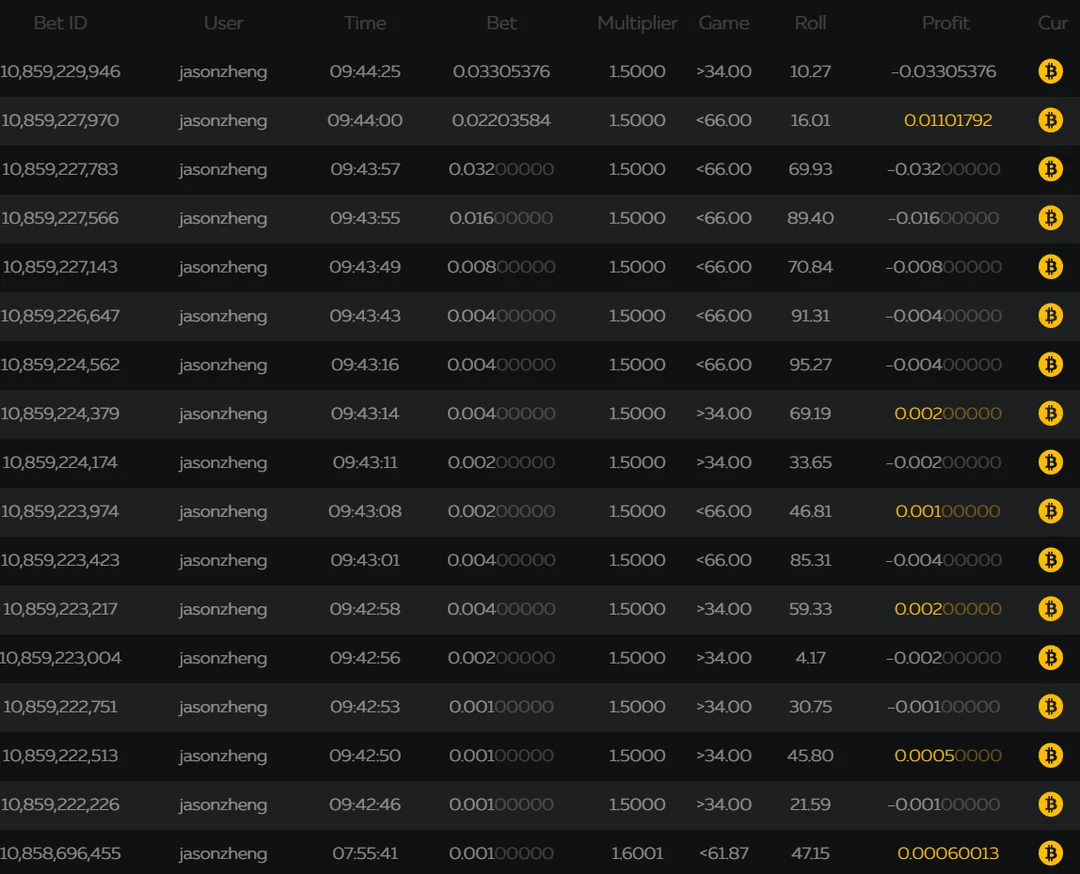
A near-miss occurs when the result of a spin almost matches a winning combination but falls short by one symbol. For example, on a three-reel slot with a single payline, if two ‘cherry’ symbols land on the first two reels and the third reel stops just above or below a cherry, the player sees two cherries—a visual cue that is very close to a win. In a purely random game, such events happen at a rate determined by the number of near-miss configurations relative to total outcomes.
The Psychological Mechanism
Neuroscientific studies (e.g., using fMRI) have shown that near-misses activate the same dopamine-rich brain regions as actual wins, particularly the ventral striatum. This neural response can create a sense of ‘almost winning’ that reinforces continued play, despite the fact that the player did not receive any payout. The effect is strongest when the near-miss occurs on the last reel, because the player has already ‘invested’ attention in the first two reels forming a potential win. Understanding this mechanism is crucial for bankroll management, as it can lead to prolonged sessions and higher total losses.
Mathematical Reality: Near-Misses Do Not Affect Expected Value
How Does This Compare to 0% House Edge Protocols?
Audited 100% RTP
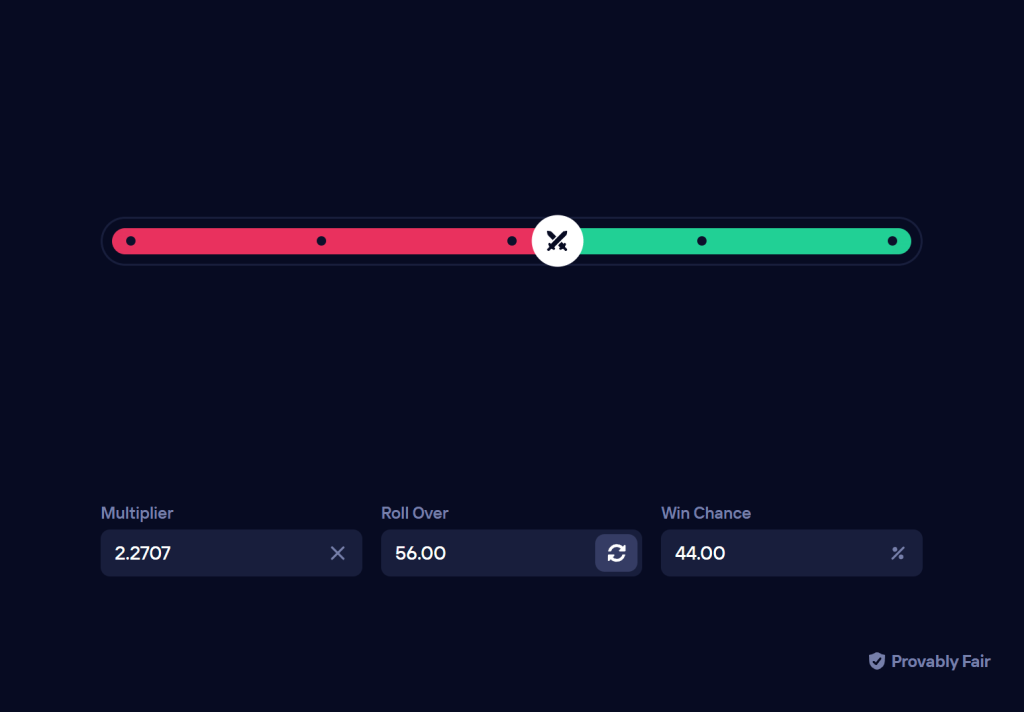
Instead of standard 1.00% to 4.00% casino house margins, compare with mathematically verified 100% RTP Originals (0.00% House Edge) on Duel Casino:
From a mathematical perspective, a near-miss is a loss. The probability of each specific outcome (including near-misses) is fixed by the game’s design. In a simple three-reel slot with 10 symbols per reel and one payline, the total number of equally likely outcomes is 10³ = 1,000. A win (three identical symbols) occurs with probability 1/1,000 per symbol, i.e., 10/1,000 = 1% for any triple. A near-miss (two identical symbols on the first two reels and a different symbol on the third) occurs with probability 9/1,000 per symbol pair, or 90/1,000 = 9% in total. The crucial point: the presence of near-misses does not alter the return-to-player (RTP) percentage. The RTP is calculated solely from actual payouts—a near-miss contributes zero.
How Near-Miss Frequency is Programmed
In land-based and many online slots, game designers can intentionally increase the near-miss rate by weighting symbol positions. For example, a reel strip might be arranged so that the ‘cherry’ symbol appears more often just above or below the payline. This is a deliberate design choice to exploit the near-miss effect. However, in provably fair crypto casinos, the game logic is recorded in a client-side seed and a server seed, and all outcomes are deterministically derived from them. The player can verify that the game’s internal probabilities match the stated RTP. Therefore, while a provably fair slot can still be designed to have a higher near-miss rate, that pattern is transparent and verifiable. Players should check the game’s ‘probability document’ or ‘verify’ page to see the symbol frequencies.
Verification: How to Check Near-Miss Randomness
For a player who wants to confirm that near-misses are not deliberately inflated beyond what is stated, the verification process is straightforward. In a provably fair game, the player can:
- Obtain the server seed, client seed, and nonce for each spin.
- Use a local script or the casino’s verification tool to regenerate the spin outcome.
- Compare the regenerated symbols to the observed ones—they must match exactly.
- Compute the empirical frequency of near-misses over a large sample (e.g., 10,000 spins) and compare it to the theoretical probability derived from the game’s symbol layout.
This process is explained in detail in our guide to provably fair verification. If the observed near-miss rate deviates significantly from the expected rate (accounting for variance), it may indicate a flaw in the implementation—or a deliberate design that is not transparent. Most reputable casinos publish their game logic and seed hashes, allowing this check.
Example: Near-Miss Probability in a Typical 3-Reel Slot
Consider a simple slot with 10 symbols per reel, where each symbol has equal probability (1/10). The probability of a near-miss (two identical symbols on reels 1 and 2, and a different symbol on reel 3) is:
| Outcome Type | Formula | Probability |
|---|---|---|
| Win (three same) | 10 * (1/10)³ | 0.001 (0.1%) |
| Near-miss (two same on reels 1-2, different on reel 3) | 10 * (1/10)² * (9/10) | 0.009 (0.9%) |
| Any other loss | 1 – (0.001 + 0.009) | 0.99 (99.0%) |
Note that near-misses are nine times more frequent than wins. This is not a design trick—it is a simple consequence of having more near-miss combinations than winning combinations. In more complex multi-payline slots, near-miss probability can be even higher. The key is that the player can independently verify these numbers.
Implications for Player Behavior and Bankroll Management
The near-miss effect can lead players to overestimate their chances of winning and to persist longer than they would after a clear loss. From a bankroll management perspective, it is important to recognize that a near-miss is a loss; it does not increase the probability of a win on the next spin. The gambler’s fallacy—believing that a near-miss makes a win ‘due’—is a common cognitive error. To mitigate this, players can set session limits based on time or money, and use a predetermined loss limit. Many provably fair casinos provide tools to self-exclude or set deposit limits, which can be found in their casino reviews.
Recent research in 2026 continues to explore the neurological basis of the near-miss effect, but the mathematical consensus remains unchanged: near-misses are mathematically irrelevant to expected value. The only way to profit from slots is to have a positive expectation (which does not exist in standard games) or to rely on bonuses and promotions. For a player focused on verification, the near-miss effect is a psychological trap, not a mathematical opportunity.
FAQ
What is the near-miss effect in slot machines?
The near-miss effect is the psychological phenomenon where a loss that appears close to a win (e.g., two out of three matching symbols) triggers a similar dopamine response in the brain as an actual win. This can increase the motivation to continue playing, despite the loss, and is a well-documented cognitive bias in gambling research.
Does the near-miss effect change the RTP of a slot game?
No. The return-to-player (RTP) percentage is calculated solely from actual payouts. Near-misses are losses and contribute zero to the RTP. The presence of near-misses, even if deliberately increased, does not alter the expected value of a spin. The RTP is determined by the paytable and symbol probabilities, which are fixed and verifiable.
Can I verify that near-misses in a provably fair slot are truly random?
Yes. In a provably fair game, you can use the server seed, client seed, and nonce to regenerate each spin outcome. By comparing the regenerated symbols to the observed ones, you can confirm that the outcome is deterministic and consistent with the game’s stated probabilities. Over a large sample, you can compute the empirical near-miss rate and compare it to the theoretical rate to check for any manipulation.