Mobile Casino Play: Browser vs App From a Security Perspective

the author
ProvablySmart Research Desk
date post
Aug 28, 2026
Share


Mobile casino access is split between two primary vectors: a dedicated native application (Android or iOS) and the mobile browser. While both can deliver the same games and banking functions, their security models differ in several critical dimensions. This analysis examines the differences from a technical, verifiable standpoint, focusing on sandboxing, code integrity, transport security, provably fair verification, and update patching. All claims are based on publicly observable platform behavior and standard cryptographic principles. The year is 2026, and the mobile OS landscape remains divided between Apple’s iOS and Google’s Android, each with distinct security postures.
Security Boundaries: Native App vs Browser Sandbox
The fundamental security difference lies in the attack surface exposed to the casino software. A mobile browser operates within a sandbox that strictly limits access to the device’s file system, contacts, SMS, and other sensitive APIs unless the user explicitly grants permission via a web API (e.g., geolocation, camera). The browser’s sandbox is enforced by the OS kernel and the browser engine itself (WebKit on iOS, Chromium on Android). In contrast, a native app has direct access to the device’s operating system APIs, subject only to the permissions granted at install time.
Permission Model
On iOS (2026), native apps must declare each permission in the Info.plist, and the user is prompted at first use. Android (2026) uses a similar runtime permission model for dangerous permissions (e.g., SMS, storage, location). However, the critical point is that a casino app could request permissions that are unnecessary for its core function—such as access to contacts, camera, or phone state—and a user might grant them without scrutiny. A browser-based casino site cannot access these resources unless the user interacts with a web API prompt, and even then only for specific, usually evident purposes (e.g., camera for live dealer).
What to check: Before installing any casino app, review the permissions listed on the app store page. If a casino app requests access to your contacts, SMS, or camera without a clear functional need (e.g., document verification), consider that a red flag. For browser play, verify that the site does not attempt to request unnecessary permissions via JavaScript.
Code Integrity and Authenticity
How Does This Compare to 0% House Edge Protocols?
Audited 100% RTP
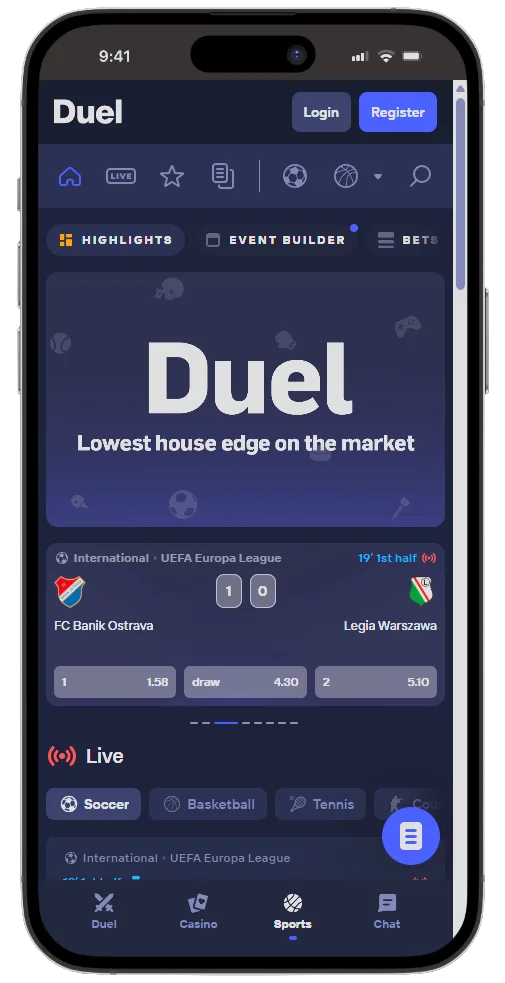
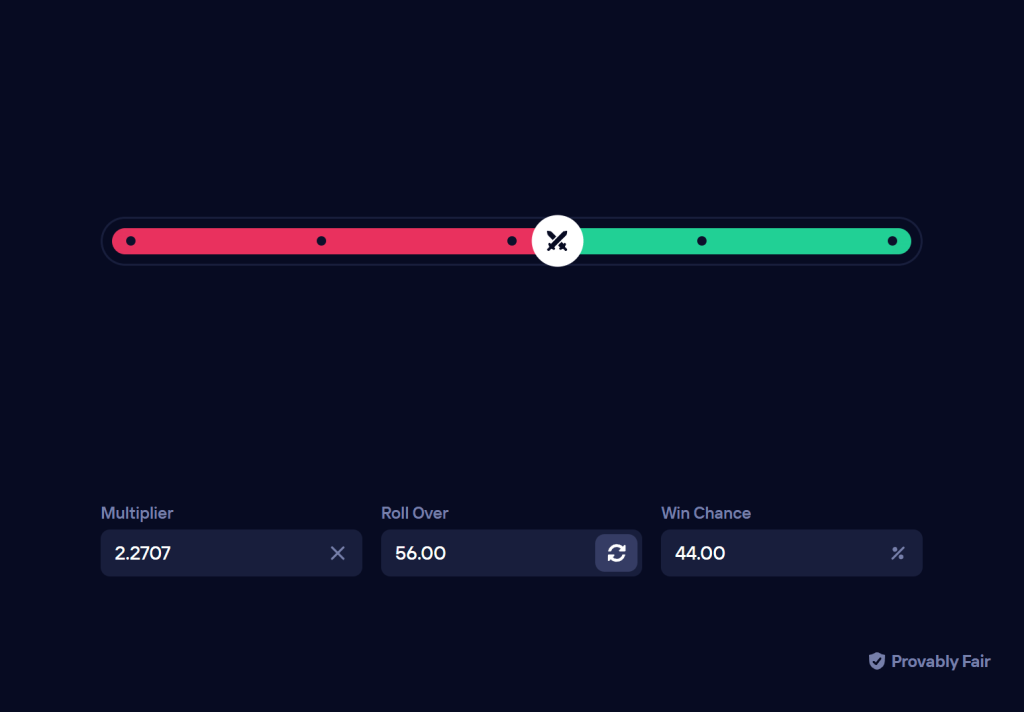
Instead of standard 1.00% to 4.00% casino house margins, compare with mathematically verified 100% RTP Originals (0.00% House Edge) on Duel Casino:

Native apps are distributed through official app stores (Apple App Store, Google Play Store) which perform automated code reviews and sign the app with the developer’s certificate. This provides a chain of trust from the developer to the device. However, side-loading remains possible on Android (and, to a limited extent, on iOS through enterprise certificates or third-party stores). A casino app downloaded from a third-party source carries an elevated risk of tampering or malware injection. The browser, by contrast, loads code on the fly from the casino’s server. The user’s browser automatically fetches the latest version of the HTML, JavaScript, and WebAssembly files. This eliminates the need to manually update the app, but it introduces a different trust model: the user must trust the server’s TLS certificate and the integrity of the CDN.
Transport Layer Security
Both apps and browsers rely on TLS to protect data in transit. A browser will display a lock icon when the connection is secured with a valid certificate. A native app typically uses URLSession or OkHttp under the hood, which also perform certificate validation. However, a casino app can implement certificate pinning—embedding the exact public key of the server—to prevent man-in-the-middle attacks even if a Certificate Authority is compromised. Most mobile casino apps do not disclose whether they use certificate pinning. The browser’s security is heavily dependent on the OS trust store and the browser’s own rules (e.g., Chrome’s Certificate Transparency policy).
What to check: For browser play, inspect the certificate by clicking the padlock icon. Ensure the certificate is issued by a known CA and is not expired. For apps, there is no easy way to verify pinning without network analysis tools (e.g., mitmproxy). You can search for the developer’s security practices on their website or in guides that discuss casino app security.
Provably Fair Verification in Browser vs App
Provably fair systems rely on the player to verify the outcome using a seed, a server seed, and a hashed algorithm. In a browser, the verification can be performed directly in the developer console: the player can inspect the JavaScript code that generates the provably fair data, copy the seed, and run the same algorithm offline. This transparency is inherent in the browser environment. A native app, however, is a compiled binary. The player cannot easily inspect the source code of the app to verify that the provably fair algorithm is implemented correctly and that the seed is not manipulated post-hoc.
Some casino apps provide a web-based verification tool or publish the seed details on their website. Others allow the player to export the seed data to a browser for independent verification. The key is whether the app exposes the cryptographic material in a human-readable format that can be reproduced outside the app.
What to check: Before using a casino app, verify that the operator provides a clear method to retrieve the client seed, server seed, and the hashed result. The news section of many casino review sites often covers whether a particular operator allows verification from within the app. If the app does not offer any way to verify outcomes outside its own interface, the provably fair claim is significantly weaker.
Update Frequency and Vulnerability Window
Native apps require the user to download and install updates. On iOS, updates are typically pushed automatically, but only if the user has enabled automatic updates. On Android, updates are handled through the Play Store, but the user may delay them. The vulnerability window—the time between the release of a security patch and its installation on the user’s device—can be days or weeks. A browser-based casino loads the latest version of the code on each page refresh. If the operator fixes a security flaw in their JavaScript, the fix is deployed instantly to all users. However, the browser itself may have its own vulnerabilities that are patched by the OS vendor. The user must keep their browser up to date.
Additionally, native apps may have access to hardware-backed storage (e.g., iOS Keychain, Android Keystore) for storing sensitive data like API tokens. Browsers use the Web Crypto API and the IndexedDB for storage, which are sandboxed but may be less robust against malware that compromises the browser process.
Platform-Specific Considerations
iOS (2026) enforces that all apps are sandboxed, and the App Store review process adds a layer of scrutiny. However, casino apps on iOS cannot use WebView to load arbitrary casino sites without proper disclosures. Android is more open: side-loading, while risky, allows users to install apps from unknown sources, but also allows the installation of casino apps that may not comply with Google’s policies. The browser on both platforms is equally capable of running advanced casino games via WebGL and WebAssembly, with performance comparable to native apps.
From a security perspective, the browser offers a more uniform and auditable environment. The player can verify not only the provably fair algorithm but also the network requests and the absence of suspicious data collection. The app, on the other hand, may provide a smoother user experience but at the cost of transparency.
Conclusion
Neither the browser nor the native app is inherently more secure for mobile casino play. The security of the browser depends on the user’s OS patch level, browser updates, and the casino’s TLS configuration. The security of the app depends on the developer’s integrity, the app store review, and the user’s willingness to grant only necessary permissions. For the skeptical technical reader, the browser is generally the safer choice because it allows direct inspection of the code and data flows. However, a well-designed native app that provides full provably fair transparency and uses certificate pinning can be equally secure. The final decision should be based on the specific operator’s practices, which can be evaluated through independent reviews and casino reviews that detail security features.
FAQ
Can I verify provably fair outcomes in a mobile casino app?
Yes, if the app exposes the seed data (client seed, server seed, nonce) and provides a way to reproduce the hash or function outside the app. Many apps include a web-based verification page or allow you to export the data. If the app only shows the result and does not let you copy the seeds, provably fair verification is not possible. Always check the operator’s documentation.
Is it safer to use a browser for mobile casino play?
Generally, yes, because the browser sandbox is more restrictive, the code is inspected on every load, and you can verify encryption through the padlock icon. However, the browser is still susceptible to phishing attacks and XSS if the casino site is compromised. The key is to use a reputable casino that implements HTTPS, HSTS, and proper content security policies.
How do I check if a casino app is legitimate and secure?
First, check the app’s permissions. They should only request access to what is necessary for gameplay (e.g., storage for asset caching, but not contacts or SMS). Second, verify that the app is published by a known operator with a valid developer certificate. Third, search for independent bankroll management and security reviews of the app. Fourth, test the provably fair system by playing a minimal bet and verifying the outcome using the operator’s verification tool. If the app fails any of these checks, avoid it.