Losses Disguised as Wins: How Slot Feedback Distorts Reality

the author
ProvablySmart Research Desk
date post
Aug 28, 2026

Share


Losses disguised as wins (LDWs) are spin outcomes in which a slot returns an amount less than the player’s stake, but presents the event as a win. The result is a net loss, yet the game fires the same audio-visual sequences used for genuine wins. This pattern is not a bug; it is a deliberate design choice. For a technical reader, the problem is not merely psychological—it is a distortion of the probability feedback loop that any rational bankroll model depends on. This article breaks down how LDWs work, how to detect them, and why you should not trust the celebratory effects when assessing slot performance.
The Mechanics of Slot Feedback

A slot machine communicates outcomes through multiple channels: reels, payline highlights, sound effects, and payout counters. In a loss-disguised-as-win, the total payout after a spin is greater than zero but strictly less than the bet. The game registers this as a ‘win’ in its feedback layer, even though the accounting ledger shows a negative return.
What Counts as a Win
The formal definition of a win in gambling regulation is generally a payout exactly equal to or greater than the stake. Most regulators and independent testing laboratories use that definition for RTP calculations. If you wager 1.00 and the slot returns 0.80, the mathematical result is a loss of 0.20. The game’s presentation, however, often renders this as a ‘win’ of 0.80, with flashing lights and upbeat sounds. The distortion matters because the human brain files this event as a success, biasing future decisions.
Feedback Types
Not all positive feedback is equal. Slot designers use several categories of spin outcomes:
- True win: payout ≥ stake. Net change is zero or positive.
- Loss disguised as win: 0 < payout < stake. Net change is negative, but feedback mimics a win.
- Partial loss: payout > 0 but with clearly different feedback—usually a quiet animation or no win sound.
- Full loss: payout = 0. No celebratory feedback.
The boundary between the second and third categories is internal and often not documented. To know which one you are facing, you must either observe the game directly for many spins or read its certified payout report.
How to Verify a Slot’s True Behavior
How Does This Compare to 0% House Edge Protocols?
Audited 100% RTP
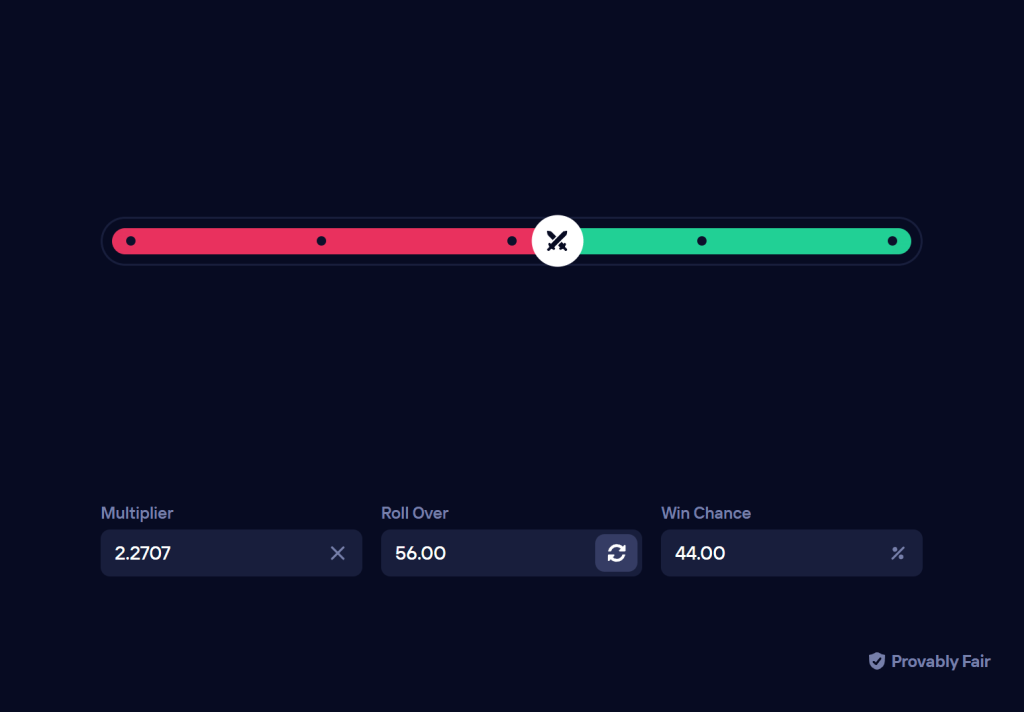
Instead of standard 1.00% to 4.00% casino house margins, compare with mathematically verified 100% RTP Originals (0.00% House Edge) on Duel Casino:
The casino cannot be trusted as a source of truth on subjective audio-visual categorization. What you can check is the payout table and the game’s statistical returns. Regulated casinos are required to publish RTP percentages, and many display them in the game’s info section. But RTP is an average over millions of spins; it tells you nothing about the frequency of LDWs.
Steps You Can Take
- Open the paytable and note the bet-to-payout ratio for each symbol combination. A combination that pays 2x for a 5x bet is an LDW when the game triggers a win sequence.
- Play in free-play mode, if available, and record the feedback type for every spin with a payout between 0 and your stake. Count how many are presented as wins.
- Read the game’s signature or certification summary from an independent testing laboratory. Some reports include hit frequency and distribution, which helps you estimate the LDW rate.
- Compute your own expected value from the paytable, not from the displayed win animations. Standard slot EV formulas are covered in our guides.
- Compare the game’s RTP to its variance. High-volatility games often have many near-miss or low-payout spin outcomes, increasing the chance of dramatic LDW effects.
A Simple Payout Table Example
| Stake | Payout | Net Change | Typical Feedback |
|---|---|---|---|
| 1.00 | 1.20 | +0.20 | Win |
| 1.00 | 1.00 | ±0.00 | Win |
| 1.00 | 0.80 | −0.20 | Win (LDW) |
| 1.00 | 0.40 | −0.60 | Often minimal or absent |
| 1.00 | 0.00 | −1.00 | Loss |
The third row is the loss disguised as a win. The fourth row is also a loss, but many games do not celebrate it. This asymmetry is the core of the deception: the player experiences a losing outcome with winning-like excitement.
Why Casinos Use LDW Mechanics
LDWs exploit a cognitive error known as the near-win effect, but with a narrower target: instead of just missing a jackpot, the player receives a partial payout that feels like a reward. The brain does not automatically compare the payout to the stake; it compares the payout to the baseline of zero. A positive number, especially one with celebratory animation, triggers the same reward pathways as a real profit.
The effect is measurable. Player sessions in games with high LDW frequency tend to be longer, and players are more likely to continue after a loss-DW than after an equal-sized partial loss without win feedback. For anyone managing a bankroll, the practical implication is that your mental scoreboard is unreliable. If you are tracking wins and losses by feel, you are systematically overestimating your wins.
This is where discipline matters. The correct unit of measurement is currency, not positive feedback events. When you do a session review, you should only count spins where the payout equalled or exceeded the stake as wins. Everything else is a loss, regardless of the sound effects. For structured bankroll methods, see our bankroll management section.
Regulatory Status and What to Check
Regulators have been slow to address LDWs. As of 2026, no major jurisdiction mandates a visual distinction between a net-win spin and a net-loss spin. Some jurisdictions require a warning when a payout is below stake, but it is rarely enforced. Independent testing laboratories report mathematical return rates, not feedback semantics. The consequence is that LDWs are pervasive in both land-based and online slots.
What you can check on any casino review page is whether the operator provides game-specific RTP and whether the casino displays certifications. Our casino reviews list verified RTP data and licensing details. You should also check whether the game provider publishes a probability report. Some providers include hit frequency and a full distribution of payout multipliers, which lets you calculate the probability of each outcome class.
Legislative updates are slow, but the conversation is not static. For the latest on regulatory discussions around slot design, see our news section.
Conclusion
Losses disguised as wins are not a niche quirk. They appear in the majority of modern slot games, and the frequency is not easy to determine from the paytable alone. The only reliable defense is to stop using the game’s audio-visual cues as a score. Track every spin as a number: stake and payout. If the payout is less than the stake, it is a loss. A player who understands this has a measurable edge in decision-making over one who trusts the slot’s feedback system.
FAQ
How can I tell if a slot is using losses disguised as wins?
Play in free mode, record your stake, and every payout below that stake. Note which of those spins triggered a celebratory animation or sound. If more than half of those sub-stake payouts are presented as wins, the game is using LDWs. For audited data, look for a game’s payout distribution report from an independent testing laboratory.
Does a loss disguised as win affect the RTP?
No. The RTP calculation only uses the mathematical payout relative to stake. Whether a sub-stake payout is presented as a win has no effect on the return percentage. The effect is on player perception and subsequent betting behaviour, not on the house edge.
Can I make a slot legal action against a casino for using LDWs?
That depends on the licensing authority. As of 2026, most regulators do not explicitly prohibit misleading win feedback. To build a case, you would need to prove that the casino misrepresented the payout as a profit when it was a loss—a difficult claim since the numerical payout is visible. Check the casino’s terms and the local gambling act, or contact the regulatory body listed in our casino reviews.