Live Dealer Games: Why They Cannot Be Provably Fair (Yet)

the author
ProvablySmart Research Desk
date post
Aug 28, 2026

Share


Provably fair is a specific cryptographic property, not a marketing badge. In most crypto casino games, the player can verify that the round’s outcome was determined by a hashed seed, a client seed, and a nonce through a deterministic algorithm. Live dealer games cannot meet this standard, even in 2026, because the outcome is produced by physical equipment and human action rather than by an open algorithm. This article explains the structural reasons, what partial mitigations exist, and what a player can actually verify.
What “Provably Fair” Actually Requires
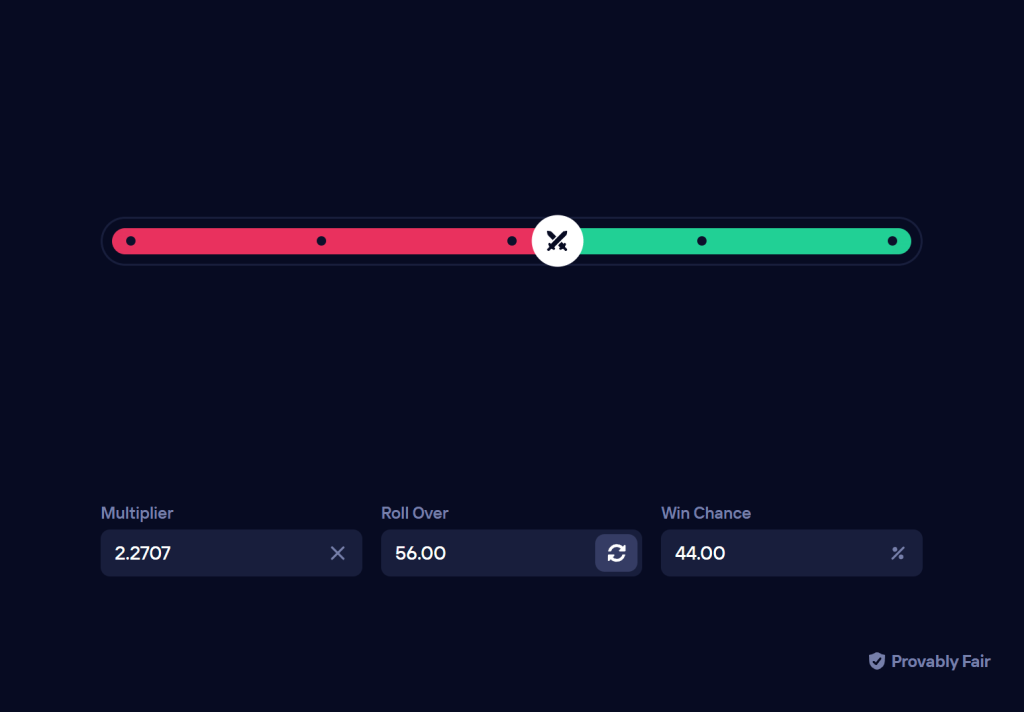
A game can be called provably fair only if the player can independently confirm, after the round, that the outcome was generated in a fixed way and was not altered after the fact. The standard elements are:
- A deterministic algorithm that maps seeds to a game outcome.
- A server seed commitment, usually a SHA-256 hash, revealed before the game.
- A client seed chosen by the player, plus a nonce that increments each round.
- Simple verification code that the player can run offline or in a browser console.
When those conditions hold, the player does not need to trust the operator’s word. They can recompute the outcome and see that the revealed seed matches the prior commitment. That is a meaningful check. No video feed, optical scan, or dealer transcript can substitute for it, because none of those objects are deterministic functions of a pre-committed secret.
Where Live Dealer Games Diverge
How Does This Compare to 0% House Edge Protocols?
Audited 100% RTP
Instead of standard 1.00% to 4.00% casino house margins, compare with mathematically verified 100% RTP Originals (0.00% House Edge) on Duel Casino:
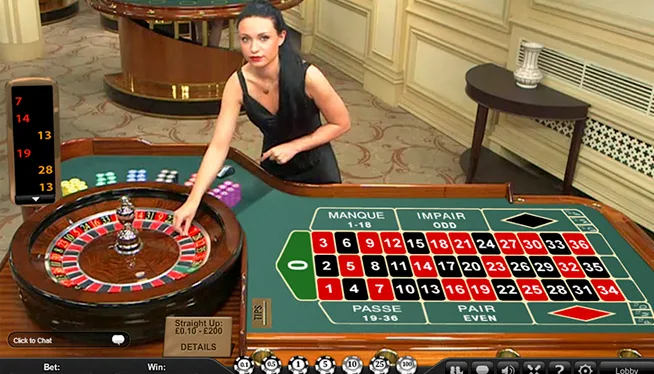
In a live dealer table, the outcome is a physical event. A card is pulled from a shoe, a roulette ball lands in a slot, or a baccarat hand is dealt. The result can be observed on a video stream, but observation is not verification. Key issues remain:
- Video compression and camera angle can hide or alter details. A player cannot prove that the card visible in the final frame is the same card originally dealt.
- The dealer or operator controls shuffle order, deck assembly, and the moment of dealing. None of this is committed to before the round.
- Wheel bias, table wear, and ball physics are not modeled in a verifiable algorithm.
- There is no pre-round hash commitment that covers the physical state of the deck or wheel.
In other words, live dealer games are not provably fair because the causal chain from secret seed to observed outcome is broken. The outcome is not computed; it happens. After it happens, the operator can log the result and show it to you, but you cannot prove that the log is causally linked to the physical event. You are relying on the operator’s recording integrity.
Partial Measures: Optical Recognition and Automatic Shufflers
Some live dealer rooms attempt to close that gap by digitizing the physical event. Cards are read by optical recognition or RFID, and the system produces a machine-readable outcome per round. Roulette wheels are sometimes equipped with sensors that register the winning number. These systems make the game faster and reduce manual entry errors, but they do not create provable fairness.
Consider an automatic card shuffler with an internal RNG. The operator may publish the shuffler’s output log, but a player cannot verify that the log matches the actual deck order unless they trust the manufacturer, the operator, and the video feed. There is also no way to know whether the shuffler was manipulated before the round. An auditor might certify that the equipment works correctly, and that certification is valuable, but it is not the same as a cryptographic proof.
A separate category is “live” game-show style games where a computer draws the outcome and a human host reveals it. In that case, the outcome generation can be provably fair (or at least RNG-based), but the human presentation is not the source of randomness. These are not live dealer games in the strict sense. They fall under the same verification framework as standard RNG games, which is why operators tend to publish separate RNG certificates for them. For true live dealer tables, no equivalent open verification exists.
Could Live Dealer Games Ever Become Provably Fair?
The word “yet” in the title suggests future potential. There is some progress. Smart tables can read each card and publish a hash of the deck order before the round. A player could theoretically verify that the dealt cards correspond to that committed deck using the video feed. But the verification would still rely on accurate hardware and tamper-evident sensors. A physical attack on the card reader is not detectable from outside the room.
Another route would be to eliminate the physical source of randomness altogether: the dealer performs a scripted action, but the outcome is generated by a verifiable RNG. In that design, the game can be provably fair, but it is no longer a pure live dealer game. It becomes an RNG game with a live interface. That distinction matters. If an operator advertises a live dealer game as provably fair, the first question to ask is whether the actual cards, wheel, or dice determine the outcome. If they do, then the claim is logically false. If they do not, then the game is only live-presented, not live-dealt.
As of 2026, no mainstream implementation has solved the sensor tampering and video verification problem in a way that a typical player can execute themselves. The best systems are audited and certified, but they remain trust-based. That is why our provably fair guide consistently distinguishes between self-verifying RNG games and externally audited physical games.
What a Player Can Verify Today
If you choose to play live dealer games, you should understand exactly which checks are available:
- RTP and house edge: For standard baccarat, blackjack, and roulette, the theoretical RTP is determined by rules and strategy. You can calculate it yourself and compare to the operator’s published figures. That checks the game design, not the randomness of each round.
- Audit certificates: Look for reports from testing labs covering the RNG used in any automatic shuffler or wheel sensor. Those reports are useful but are not an open proof.
- Round history and game logs: Some casinos provide per-round data, including dealer IDs and timestamps. You can check for internal consistency, but you cannot verify that the data came from physical cards.
- Hash-chained video anchors: A few platforms publish a hash of each round’s data to a blockchain. This proves the data existed at a certain time, but it does not prove the data truthfully corresponds to the physical event.
Because live dealer games rely on authorized recording and audit, the practical approach is to prioritize operators whose reputation and licensing are solid. Reviewing an operator’s casino payout and regulatory history provides more signal than a clever UI animation. For bankroll purposes, remember that a non-verifiable house edge is still negative expectation in the long run, so your bankroll management cannot be relaxed merely because you are watching a human dealer.
On-Chain Data Does Not Solve the Physical Oracle Problem
Blockchain enthusiasts sometimes propose that anchoring a live dealer outcome to a smart contract would make it provably fair. This is a misconception. A blockchain can prove that a hash was recorded before a deadline. It cannot prove that the hash corresponds to the ball that landed on number 17, because the link between the physical wheel and the digital record is an external oracle. The oracle itself must be trusted.
If the dealer’s shoe sends an RFID signal, and that signal is hashed and written to a chain, the chain proves only that the RFID signal was received. It does not prove that the signal matched the physical card. The gap remains. Until tamper-evident hardware can be independently verified by a player, the term “provably fair live dealer” will remain an oxymoron.
That conclusion is consistent across reputable crypto casino operators in 2026. Those who care about transparency disclose exactly which parts of their platform are provably fair and which are audit-only. They do not blur the line. If you see a live dealer page claiming provable fairness, the technical documentation should contain a reproducible algorithm and seed commitment for the actual table equipment. In practice, it will not. The latest industry news continues to show that physical games favor operators with strong internal controls, not open verification.
FAQ
Is a live dealer game provably fair if the cards are scanned electronically?
No. Scanning converts a physical event into a digital record, but it does not provide a pre-committed, deterministic seed that you can verify. The scan could be altered, and the link between the physical card and the digital value is not independently verifiable. It is a trustworthy input logging system, not a cryptographic proof.
Can I calculate the RTP of a live dealer game myself?
Yes, for standard games. Live roulette RTP is straightforward from wheel layout and rules. Live blackjack RTP depends on rule variations and player strategy. Live baccarat RTP is simple for player, banker, and tie bets. These calculations tell you the expected value over infinite rounds, but they say nothing about the fairness of any single physical outcome.
What should I look for before playing a live dealer game?
Check whether the operator publishes RTP tables, audit certificates, round-specific data, and any hash or timestamp records. Also check if there is a clearly stated distinction between provably fair RNG games and live dealer games. If the operator uses phrases like “provably fair” for a physical table without explaining the trust assumptions, treat that as a red flag.